Finding Light After Darkness
Sara’s Story
In 2014, Sara left her home in South Asia and came to the Bay Area carrying hope in her heart.
“Yes,” she says gently. “It was for a better life.” But the life she imagined and the life she found were painfully different. This is the story of how community helped pick herself back up.
A Relationship Built on Promises
An arranged relationship brought her to the United States—one built on brief phone calls and scattered text messages. “We were totally two different people,” she explains. “I never actually knew him. We only spoke over the phone. Whatever he told me, that’s only what I knew.”
What followed was not simply a troubled marriage. It was abuse. It was exploitation. “It was not just domestic battery,” Sara said. “It was human trafficking as well.”
Before he could face the consequences in court, her partner fled the country. She was left behind—alone in a new land, traumatized, and fighting to survive.
Living in Constant Fear
“I had been through a lot,” she says. “I have been hospitalized back and forth. I was diagnosed with PTSD, panic attacks, severe depression.”
In San Jose, the hospital became a revolving door. Ambulances came so often they began to feel routine.
“Sometimes, even every day,” she recalls. “Two, three times I was in the hospital. The ambulance was coming.”
At first, she didn’t understand what was happening to her.
“I didn’t know what a panic attack was,” she says. “I didn’t know what that means. But I felt like I was dying. I could feel slowly, little by little, my senses leaving me. I no longer felt alive. I felt like I was dying.”
The fear never fully left her. “Even when I tried to sleep, I was scared.”
It was a nightmare she could not wake up from.
Her story is part of a larger picture. Survivors of sexual abuse and domestic violence have PTSD rates even higher than those experienced by combat veterans; but they often experience barriers to receiving the diagnosis and treatment they need.
Alone, But Still Protecting Others
Her family was thousands of miles away in South Asia. Though she has sisters there, she tried to shield them from the weight of her suffering.
“They know I’m okay,” she says. “But sometimes I don’t want to give them stress. Everybody has their own life.” Isolation deepened her depression. “I’ve been lonely,” she shares. “I don’t have family here. It was really hard for me to pull myself out from home.”
The First Steps Toward Healing
Gradually, small openings of support began to appear. After another stay at Good Samaritan Hospital, she was connected to community resources and support groups. She began learning coping skills for her panic attacks. Slowly, she started to understand what her body and mind had endured.
Then in 2017, she moved to San Francisco. And she began searching—not just for services, but for belonging.
“I was looking for a communal space where I could actually heal,” she says. “A safe place where I can be with other people. I only wanted to come out from home for a reason—to meet people and be happy.”
That search led her to GLIDE.
“I got to know about GLIDE from some other community friends,” she says. “And I keep coming because I found this is a place where we can share our thoughts, share our feelings, and do group activities.”
For the past several months, the Women’s Center at GLIDE has become part of her healing rhythm. She joins women’s groups. She participates in painting and crafts. She attends special gatherings that bring warmth into ordinary days.
Small Moments, Big Meaning
One memory still makes her smile—a Valentine’s celebration organized just for the women.
“We don’t have a place to go for a Valentine’s celebration,” Sara says, her face lighting up. “Nikysha (Program Coordinator at the Women’s Center) organized something for us. We were making cards. She provided all the supplies. It was really great.”
Those small moments—glue sticks and colored paper; laughter shared over handmade cards—carry more power than most people realize.
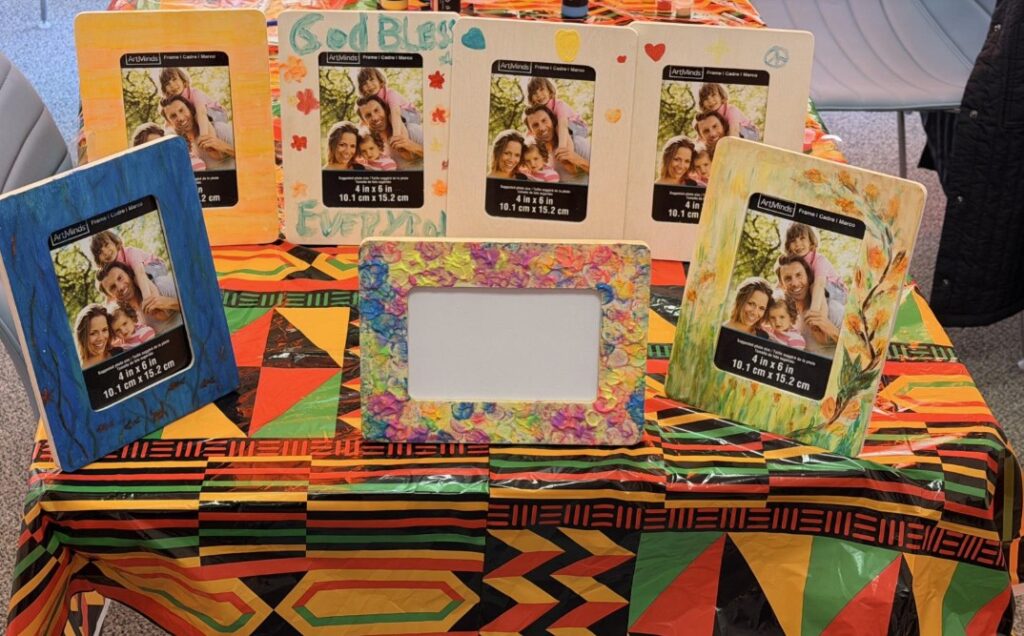
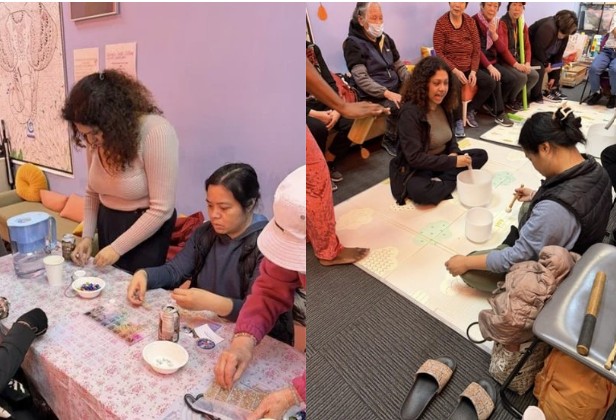
“Enjoying the craft, the painting, the creative things—that actually can engage us, make us happy, do something,” she says. “I really love and appreciate that GLIDE is initiating these kinds of activities.”
Through art therapy and support groups, hope began to return. “I felt much better,” she says. “I was feeling hope from the support I was receiving—from this community and other communities as well.”
More Than Services
GLIDE is more than a program schedule. It is connection. It is dignity. It is nourishment for both the body and spirit.
“I really like their menus for lunch and dinner,” she laughs softly. “I got to meet some of my friends coming to GLIDE for lunch and dinner.” To accommodate women with gender-based trauma, GLIDE has a table reserved in its dining hall for women only.
She’s especially encouraged by new opportunities on the horizon. “I hear they’re going to start resume making and a job searching group, which is also going to be good for people like me. I am looking actively for a full-time job at this moment.”
However, the funding for the workforce development program Sara is anticipating is currently under threat of budget cuts. Please write to the city here and ask them to keep the funding.
From Receiving to Giving
Even as she rebuilds her own life, she is already imagining how she might give back.
“I was also asking if I could run an art group or session,” she says. “Because I love to do painting and crafts. In the future, I might volunteer. I might lead something wonderful with GLIDE. When I’m receiving some kind of support from this community, I can also provide the same thing in return.”
For Sara, healing is not just about survival. It is about transformation—about becoming a light for someone else still sitting in the dark. “This is really helpful for people like us who don’t have family here,” she says. “Who doesn’t have somewhere to go and share things. When we’re going through a lot of things, coping and healing—it’s a process.”
Surviving—and Becoming Stronger
Today, she speaks about what she endured not from a place of shame, but from strength. “Life has now given me a lot of experience,” she reflects. “Ups and downs. But still, I’m thankful. I’m glad that I’m actually surviving.”
And when asked what she would say to someone who is struggling, she does not hesitate.
“I definitely recommend GLIDE to others who need any kind of help or assistance. GLIDE offers support for all people who need it.”
Then she adds, exuding a hard-fought wisdom: “Sometimes we just need a reason to come out of the house. A reason to see people. A reason to feel happy again.”
At GLIDE, Sara found that reason.
And in finding community, she is no longer just surviving—she is healing, creating, and slowly, bravely building the life she once dreamed of.