

GLIDE has many programs to help women and families: affordable childcare, free formula and diapers, support groups for parents, assistance for survivors of domestic violence and trafficking, and aid with job training and applications, to name a few.
For this article, we interviewed Denise Moody, a Workforce Navigator in GLIDE’s Women’s Center, to understand on a deeper level the challenges that women in our programs face and overcome. But before we dive into that, some numbers:
Data Spotlight: Who are the women GLIDE helps?
- We help many immigrant women. 24% of the women in GLIDE programs don’t have English as their primary language. Spanish, Cantonese, Mandarin, Vietnamese, and Arabic are some of the languages spoken besides English.
- Women who have experienced racial oppression are more likely to seek help at GLIDE. 35% of the women in GLIDE programs are Black, 16% are Asian, 16% are Hispanic, and only 20% of the women in GLIDE programs are white.
- Unsheltered, unhoused, and low-income women all need our help. Only 46% of the women in GLIDE programs are housed; the rest have a variety of housing statuses, from sleeping on the street or a vehicle, to staying in a homeless shelter, to temporarily staying with loved ones.
- Only 51% of the women we help are from the Tenderloin. The rest come from all over San Francisco to seek help at GLIDE.
But what does it feel like to be a woman seeking help at GLIDE? What stories exist behind these numbers?
Survivors Helping Survivors
Denise Moody was hired to be a Workforce Navigator at GLIDE’s Women’s Center not only because of her exceptional skills and experience, but because she has overcome in her own lifetime many of the same challenges our clients have faced.
From a young age, Denise faced abuse which caused her to run away from home. She navigated abusive relationships, and drugs became a way to self-medicate for trauma. This led to unfortunate encounters with the criminal justice system. When she lost custody of her children, she became filled with determination to turn her life around.
Not only did she become sober, but the people at the homeless shelter where she was staying recognized her determination and potential and gave her a job as a program monitor. She worked her way up from program monitor to case manager, and eventually found her passion in workforce development.
“I’ve been working in the community for 19 years since I’ve been sober,” says Denise. “I have worked with domestic violence survivors for many years, and I have worked with those re-entering society from prison for many years. I can relate to them. When I talk to them and share my own background, it gives them hope and helps them trust me.”
This is exactly why GLIDE hires from the communities we serve; people are inspired when they see someone just like them be successful and serve their community. It shows them that they can do it too.
Barriers Low-Income and Unhoused Women Face in Job Seeking
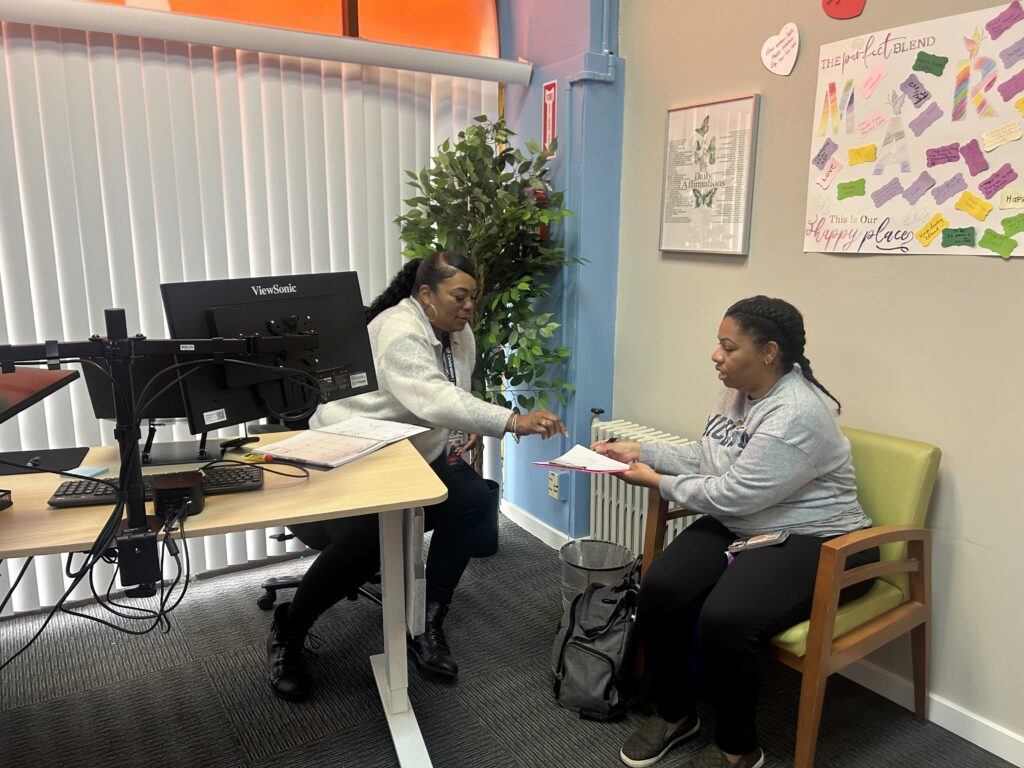
Denise helps people in our Women’s Center make career plans, access job training, and apply to jobs. She says, “I love being in the midst of clients and watching the journey of them succeeding: whether it’s filling out an application for the first time in a long time, or sitting in front of me and tellling me their goals and aspirations.”
“Homeless women in particular face huge barriers,” she continues. “If they want to work and they don’t have housing, it makes it harder to hold a job, because getting ready in the morning and sticking to a routine is so much harder. For women with children, finding childcare is a challenge– how do they pay for the childcare and transportation required for their job? But one of the biggest challenges is overcoming trauma, overcoming their fear of being judged for asking for help. That’s why I let them know all about me: so they know I won’t judge them.”
“Our clients love coming here,” Denise continued. “They are excited to check in with me, whether or not they’re working on an application or a resume. No matter where someone is on their journey, I help them find the next step. If someone doesn’t have interviewing skills, I might do a practice interview with them before we start working on applications. We always focus on the soft skills involved in getting a job. My goal is to nurture people to get a job they’re going to stay at, learn from, and move up in!”
Some clients who have strong skills and education can be judged by employers for “looking homeless,” meaning having a bedraggled appearance and carrying around large bags of possessions. So provision of clothing and referrals to hygiene services are essential parts of workforce development as well.
Radical Inclusion Means Treating Everyone as an Equal
To help women feel more empowered, Denise shares affirmations, helps them find clothing, and above all, makes sure she never talks down to anybody. “Clients respond better when they feel like they’re being treated like an equal,” Denise said. “Sometimes the way people speak to them makes them feel dehumanized.” A simple example of humanizing language is to say, “How are you doing?” rather than “What do you want?” when someone walks through the door.
Denise is 62 years old and still lives with the mental health effects of her early trauma– but she is optimistic and full of life. She loves working at GLIDE, being around her coworkers, and helping people find opportunities.
So many women have faced unimaginable horrors both inside and outside the home, but GLIDE is a place that offers unconditional love, hope– and support from those who understand what it’s like to go through it.