I’ve died seven times
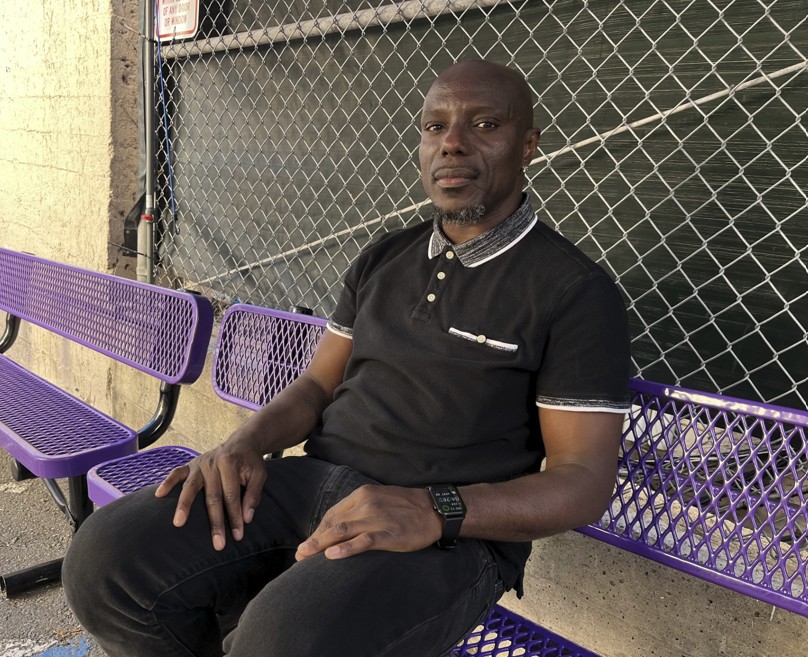
Chalu Banarsee doesn’t tell his story in a straight line. He starts in Guyana — singing in church as a kid — and then you’re in Brooklyn, then on tour, then deep in the streets of San Francisco. Then he circles back. Faith, music, survival, loss, all layered together.
But one thing comes through clearly: he’s still here.
And there were moments when that wasn’t guaranteed. “I’ve been cut, stabbed, punched, beat, poisoned,” he says. “I’ve died seven times.”
He was born in Guyana and raised in the church, where music was woven into daily life. “The first song I ever sang was ‘We Are the World,'” he says, smiling. His voice carried him far — to New York, to LaGuardia High School of Music & Art, then to Berklee College of Music. By his mid-twenties, he was touring professionally. It was everything he’d worked toward.
It was also when things began to shift.
“I’d never heard of drugs before that,” he says. “Then I got on tour… and the packages started coming to my room.” It didn’t feel like a turning point at first — just part of the world he’d stepped into. But it followed him home. “And before I knew it, I was addicted.”
Looking back, he understands it differently now. “Addiction, for me, was the end result of unresolved emotional pain.” Things from childhood. Feelings he didn’t yet have words for.
Years passed in cycles — music, addiction, attempts at recovery, relapse. Eventually that path brought him west.
In 2019, a friend offered him a place to stay in San Francisco. For a moment, things seemed like they might stabilize. Then that fell apart, and Chalu found himself alone in a city he didn’t know.
Finding purpose with pain
“I didn’t want to be homeless,” he says. “But that’s exactly what happened.”
He took a train into the city and got off at Powell Street with almost nothing. No place to live. No job. Barely any clothes. Hungry.
What followed was survival — day to day, moment to moment. “I was literally outside… doing anything that I needed to do to survive.”
The streets weren’t just dangerous. They were relentless. The unpredictability, the exhaustion, the constant vigilance. People disappeared around him — people he knew, people he’d talked to that same morning. “I lost over 30 people… right out here,” he says, pointing toward Ellis and Taylor streets.
And still, something held on inside him. “I still felt like there was a purpose for my life.” That thread — purpose, faith, something not fully extinguished — kept him moving, even when everything else was gone.
Eventually, someone pointed him toward GLIDE. The words spoke for themselves. “Come here. You can eat. You can get help.”
So he did. “I would come here for food,” he says. “This place was a beacon in the stormy waves.” At first it was basic — meals, a change of clothes, somewhere to sit. But over time it became something else.
Meeting Liz, GLIDE Health Systems Navigator
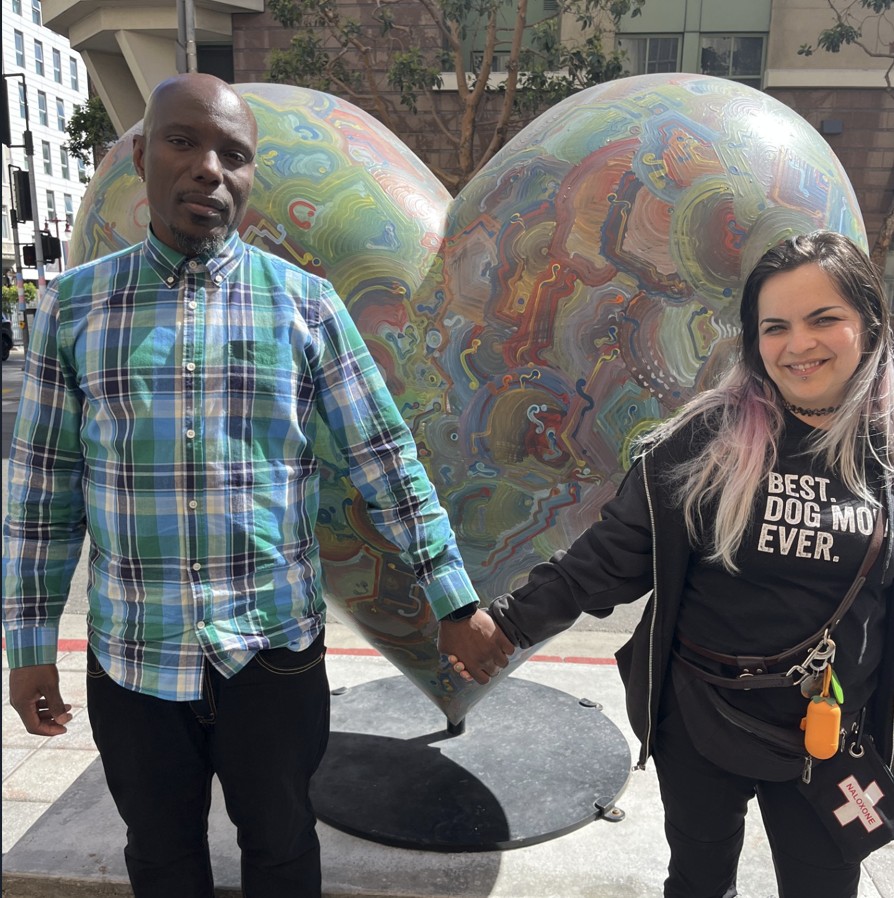
At GLIDE, he met Liz, a health navigator who became a steady presence in his life. She didn’t rush him. She didn’t judge him. She showed up, and kept showing up. They’d sit together for hours — sometimes just talking through what he was carrying. “She would just let me pour out,” he says. When he felt ready, she helped him find his way into treatment — making calls, following up, staying with him through rejections and waitlists and false starts.
“It’s not about fixing a person’s problem,” Chalu says. “It’s just being there with them.”
That presence mattered more than anything. Because for Chalu, addiction was never just about substances. It was about disconnection. “The opposite of addiction is connection,” he says.
Through GLIDE — through Liz — he began to feel that again. Even when he struggled, even when he relapsed, the door stayed open. “They don’t give up on people,” he says.
By early 2025, something shifted. “I was done,” he says. He went to Liz and told her he needed help. Not later. Now. They tried again to find a path into treatment, and this time — something inside him had changed too. “I was ready for the healing.”
Eventually, Liz got him into a residential recovery program. For the first time, he began to face what had been underneath everything all along.
“I wanted to heal… I wanted to be whole again.” He didn’t push it away this time.
“I incorporated my pain… my shame… my guilt… everything. It wasn’t easy, and it wasn’t clean. But it was real. The greatest good can come from the darkest moments,” he says.
Going on one year of Sobriety
Today, Chalu is approaching a year of sobriety — the longest stretch of his life. “I’m almost a year clean. This has never happened before.”
He’s rebuilding, piece by piece. He’s in school, training to become a peer support specialist. He’s writing music again. And he’s reconnecting with his son.
Chalu became a father during his early years on tour. His son, Jorien, was born at a time when life was already shifting in ways he didn’t fully understand. As addiction took hold, distance grew. He saw his son once when Jorien was very young, and after that, their connection became occasional — calls, messages, long stretches of silence in between.
“I haven’t really been a part of his life,” he says quietly.
While Chalu was still on the streets, Jorien’s mother passed away. He didn’t find out until months later, after he’d begun his recovery. That news could have sent him backward. Instead, it became part of what pushed him forward.
He started searching for his son. When they finally spoke again, it wasn’t about the past — it was about what might still be possible. Today, they talk regularly over video and text. “I told him, ‘One day I’m going to be able to take care of you the way I should have.'”
He still comes back to GLIDE. Still sits with Liz. Still checks in.
“I’m still learning how to love myself again,” he says. Not finished. Not perfect. Just learning — day by day.
When asked what made the difference, he doesn’t hesitate. “When I had nowhere else to go… I came to GLIDE. If it wasn’t for GLIDE…”
He doesn’t finish the sentence.
Chalu talks sometimes about the word through.
“The word ‘through’ means going in one way and coming out the other,” he says. “And I made it out.”
He knows there are people still out there, in the same place he once was. And if his story does anything, he hopes it reminds them of one thing:
It’s possible to come through.