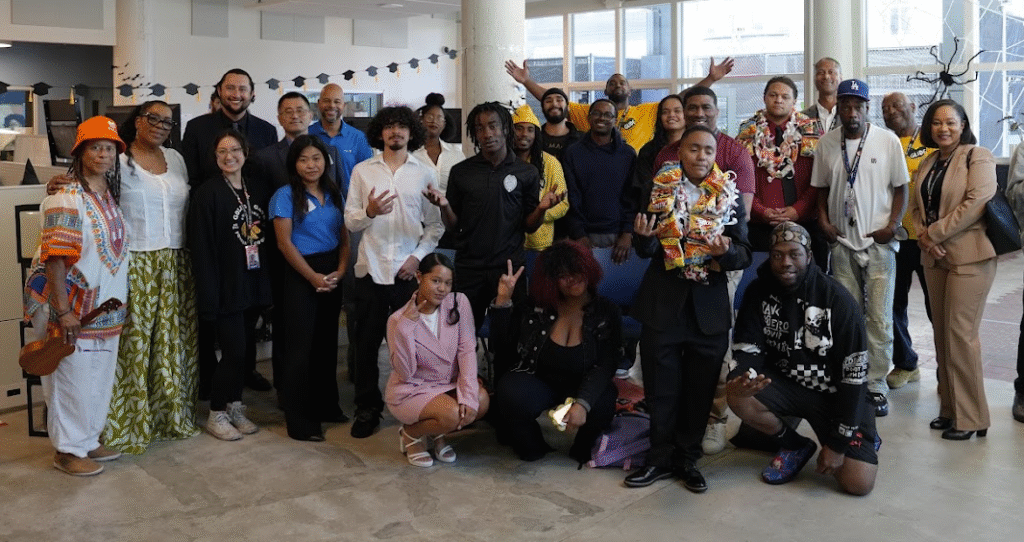
Shuantavia turner

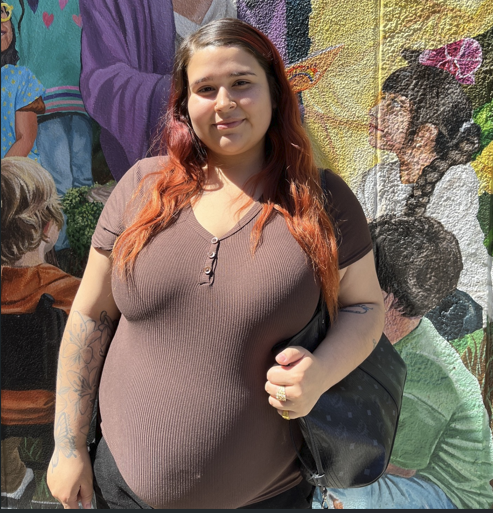
At just 18 years old, Shuantavia Turner has already navigated more than most—crossing states, facing family rejection, and rebuilding her life from the ground up.  

Today, she’s doing that rebuilding with the support of GLIDE’s Transitional Age Youth (TAY) services, where compassion meets real, tangible help. 

“I’m from Atlanta, Georgia,” Shuantavia says. “I lived in Indiana before I came to San Francisco. The resources out there were very slim to none… so I started doing my research.”  

That research led her here—to San Francisco, and ultimately to GLIDE. 

Her journey to GLIDE began with a simple recommendation at a youth shelter. 

“They told me, ‘There’s this place open 24 hours—it’s called GLIDE TAY Center. And I came. I was so grateful it was open. That meant everything.” 

“As a transwoman, there were things I needed for my transition that Indiana couldn’t provide,” she explains. “So I made the decision to come out here. When I got here, I was struggling—no housing, no job. I was just trying to survive.”  

From the moment she walked through the doors, she found more than just services—she found people who showed up for her. “They gave me clothes, helped me with therapy, and connected me to shelter,” she says. “That support—it really mattered.”  

Today, Shuantavia is currently working with case managers and taking meaningful steps toward independence. “I love TAY, ” she says. “They offer food, support… and they really listen. When I say something, they try to find solutions—and they act on it.”  

She speaks especially warmly about the staff who have helped guide her. “Cheyenne and Miss Toni—they’ve been amazing. They’re there emotionally, helping me through the process of getting housing. I’m very grateful for them.”  

That support is already translating into forward momentum. On the very day of this interview, Shuantavia landed a new job. 

“I just started today,” she says, beaming. “I’m giving out government phones—and I got the job on the spot.”  Her goals are clear and grounded. 

“My next steps are to get permanent housing, get some furniture, and just establish a place for myself.”  

Shuantavia engaging with TAY Staff

ACCESS to the TAY Services Makes the Difference

In 2026, Transitional Age Youth (TAY)—generally ages 18–27—navigating foster care face significant instability, with 22–30% experiencing homelessness after aging out and only half employed by age 24. Roughly 56% of youth aged 14–21 exit foster care without finding permanent family connections. 

Key 2026 data indicates a high need for supportive services, with 57% of TAY reporting serious mental health disorders. 

What stands out most in Shuantavia’s story is not just her resilience—but how critical access to the right support has been. 

“San Francisco stood out to me because the resources are easy to access—they’re in your face,” she says. “People help you find what you need. Nothing’s really hidden.”  

For other trans youth who may be struggling or unsure where to turn, her message is simple—and powerful: 

“TAY can help you with referral services, putting you in touch with clinics. In my case, that meant getting the hormones I needed for my transition. TAY has been a huge help with my life,” she says. “They have so many resources. Just let them help you… that’s what I’ve been doing, and I’m loving it.”  

At GLIDE’s TAY Center, that spirit of care goes beyond basic needs. It’s about building community and restoring joy. “We have fun here,” she adds, laughing. “Trivia nights, movie nights, karaoke… it’s not just services—it’s a place where you can feel good, too.”  

She also speaks candidly about areas for improvement—like the challenge of enforcing “no sleeping” rules in a space where many arrive exhausted and without shelter. But even in raising concerns, her perspective reflects something deeper: trust. 

“I can voice my concerns and be heard,” she says. “And I’ve seen things change because of it. I appreciate that.”  

In the end, Shuantavia’s story is a reminder of what’s possible when young people are met with dignity, resources, and genuine care at a critical moment in their lives. 

“GLIDE is amazing,” she says simply. “They’re very helpful. And they help you figure out what’s next.” 

P-LO
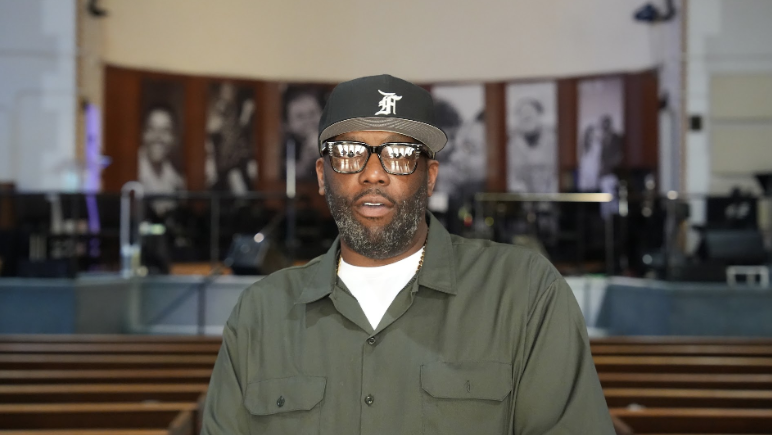
P-LO speaking his truth

At GLIDE’s Transitional Age Youth Health and Wellness (TAY) Center, creating space for young people to be seen, heard, and inspired is at the heart of everything we do.

Having opened just three months ago, the TAY Center is open 24/7 to serve youth between the ages of 18-27, who are facing homelessness or housing instability in San Francisco with coordinated care, vital resources, and long-term support. That mission came to life on the afternoon of Friday, April 3rd 2026 with connection, food, and powerful storytelling, as Bay Area artist P-Lo joined us for a youth-led conversation.

As youth arrived, they were welcomed with food from event sponsors, Señor Sisig and Square Pie Guys, as the room quickly filled with energy, conversation, and anticipation. Andres Carlin, Director of the TAY Center and the event’s MC, opened the program by grounding everyone in the purpose of the space: a community where young adults can access support, find belonging, and explore their potential. 

Dr. Gina Fromer, GLIDE President and CEO, and Joi Jackson-Morgan, 3rd St Youth Center and Clinic CEO, followed with meaningful inspiration and reflections, reinforcing GLIDE and 3rd St Youth’s commitment to investing in young people and creating opportunities for them to lead. And lead they did.

Before the conversation began, the audience was reminded why P-Lo’s voice carries such weight in the Bay Area and beyond. A rapper, producer, and cultural tastemaker, P-Lo has built a career that extends far beyond music – creating experiences that authentically connect fans, local businesses, and brands.

Born and raised in Pinole, California, he is a foundational figure in the Bay Area music scene, known for blending West Coast sound with deep community roots. As both an artist and producer, he has helped shape the region’s sound, collaborating with major artists like Yo Gotti, Kehlani, and Wiz Khalifa, while also gaining recognition for his own hits like “Same Squad” and “Put Me On Somethin.”

His work reflects a powerful blend of Bay Area authenticity, cross-cultural connection, and an energy rooted in positivity, creativity, and cultural pride.

The heart of the event was a youth-led interview with P-Lo, facilitated by TAY participants Emanuel and Jhakari. Their questions were thoughtful, and deeply relevant for a conversation that went far beyond music.

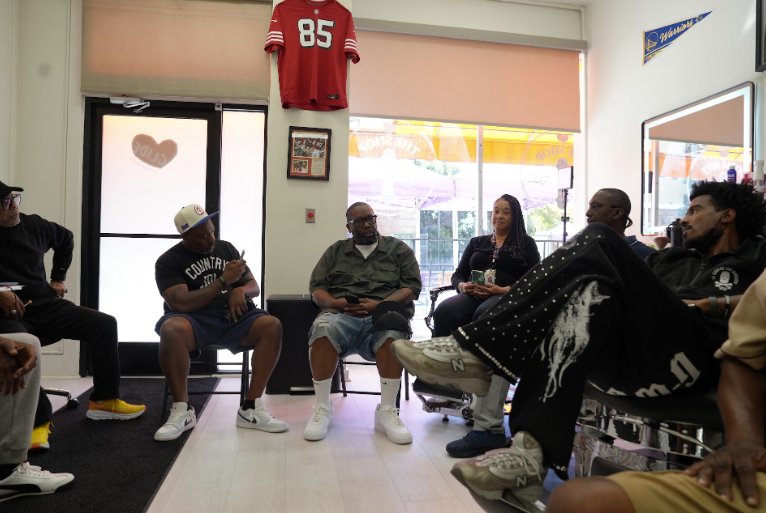
TAY P-LO audience                                                      TAY audience listening to P-LO

P-Lo reflected on his experience growing up in the Bay Area and how that shaped his identity and artistry. He spoke about the influence of local culture, the importance of staying true to himself, and the lessons he learned while navigating the music industry as a young artist.

The conversation didn’t shy away from the harder truths. When asked about challenges, setbacks, and moments of doubt, P-Lo was candid. He shared that there were times when giving up felt like a real possibility, but what kept him going was consistency, belief in his vision, and the support of his community. Mentorship and relationships, he emphasized, played a critical role in his journey.

For many of the young people in the room, the most powerful moments came from his reflections on being in their exact stage of life. Speaking about his late teens and twenties, P-Lo offered insight into both the uncertainty and opportunity that define that period. His advice to his younger self, and to the audience, was clear: stay focused, take risks, and trust that setbacks are part of the process, not the end of it.

The conversation also made space for joy and connection. From favorite Bay Area artists and memorable collaborations to local food spots and current playlists, there were moments that reminded everyone of the shared culture and pride that ties the community together.

The final portion of the program opened to audience Q&A, where youth had the opportunity to engage directly with P-LO, asking their own questions and sharing their own perspectives. It was a powerful reminder that this wasn’t just an event to listen to, but a space to participate.

Events like this are what make the GLIDE TAY Center so special. They are not just about bringing in influential voices, they are about creating opportunities for young people to lead conversations, ask real questions, and see pathways forward in their own lives.

We are grateful to P-Lo for showing up with authenticity and openness, and to our TAY youth, especially Emanuel and Jhakari for shaping a conversation that reflected the strength, curiosity, and leadership of this community.

Gina and P-LO
(L) GLIDE President & CEO Dr. Gina Fromer (R) P-LO
chalu solo
Chalu Banarsee visiting GLIDE's Health Hub

I’ve died seven times

Chalu Banarsee doesn’t tell his story in a straight line. He starts in Guyana — singing in church as a kid — and then you’re in Brooklyn, then on tour, then deep in the streets of San Francisco. Then he circles back. Faith, music, survival, loss, all layered together.

But one thing comes through clearly: he’s still here.

And there were moments when that wasn’t guaranteed. “I’ve been cut, stabbed, punched, beat, poisoned,” he says. “I’ve died seven times.”

He was born in Guyana and raised in the church, where music was woven into daily life. “The first song I ever sang was ‘We Are the World,'” he says, smiling. His voice carried him far — to New York, to LaGuardia High School of Music & Art, then to Berklee College of Music. By his mid-twenties, he was touring professionally. It was everything he’d worked toward.

It was also when things began to shift.

“I’d never heard of drugs before that,” he says. “Then I got on tour… and the packages started coming to my room.” It didn’t feel like a turning point at first — just part of the world he’d stepped into. But it followed him home. “And before I knew it, I was addicted.”

Looking back, he understands it differently now. “Addiction, for me, was the end result of unresolved emotional pain.” Things from childhood. Feelings he didn’t yet have words for.
Years passed in cycles — music, addiction, attempts at recovery, relapse. Eventually that path brought him west.

In 2019, a friend offered him a place to stay in San Francisco. For a moment, things seemed like they might stabilize. Then that fell apart, and Chalu found himself alone in a city he didn’t know.

Finding purpose with pain

“I didn’t want to be homeless,” he says. “But that’s exactly what happened.”

He took a train into the city and got off at Powell Street with almost nothing. No place to live. No job. Barely any clothes. Hungry.

What followed was survival — day to day, moment to moment. “I was literally outside… doing anything that I needed to do to survive.”

The streets weren’t just dangerous. They were relentless. The unpredictability, the exhaustion, the constant vigilance. People disappeared around him — people he knew, people he’d talked to that same morning. “I lost over 30 people… right out here,” he says, pointing toward Ellis and Taylor streets.

And still, something held on inside him. “I still felt like there was a purpose for my life.” That thread — purpose, faith, something not fully extinguished — kept him moving, even when everything else was gone.

Eventually, someone pointed him toward GLIDE. The words spoke for themselves. “Come here. You can eat. You can get help.”

So he did. “I would come here for food,” he says. “This place was a beacon in the stormy waves.” At first it was basic — meals, a change of clothes, somewhere to sit. But over time it became something else.

Meeting Liz, GLIDE Health Systems Navigator

At GLIDE, he met Liz, a health navigator who became a steady presence in his life. She didn’t rush him. She didn’t judge him. She showed up, and kept showing up. They’d sit together for hours — sometimes just talking through what he was carrying. “She would just let me pour out,” he says. When he felt ready, she helped him find his way into treatment — making calls, following up, staying with him through rejections and waitlists and false starts.

“It’s not about fixing a person’s problem,” Chalu says. “It’s just being there with them.”

That presence mattered more than anything. Because for Chalu, addiction was never just about substances. It was about disconnection. “The opposite of addiction is connection,” he says.

Through GLIDE — through Liz — he began to feel that again. Even when he struggled, even when he relapsed, the door stayed open. “They don’t give up on people,” he says.

By early 2025, something shifted.  “I was done,” he says. He went to Liz and told her he needed help. Not later. Now. They tried again to find a path into treatment, and this time — something inside him had changed too. “I was ready for the healing.”

Eventually, Liz got him into a residential recovery program. For the first time, he began to face what had been underneath everything all along.

“I wanted to heal… I wanted to be whole again.” He didn’t push it away this time. 

“I incorporated my pain… my shame… my guilt… everything. It wasn’t easy, and it wasn’t clean. But it was real. The greatest good can come from the darkest moments,” he says.

Going on one year of Sobriety

Today, Chalu is approaching a year of sobriety — the longest stretch of his life. “I’m almost a year clean. This has never happened before.”

He’s rebuilding, piece by piece. He’s in school, training to become a peer support specialist. He’s writing music again. And he’s reconnecting with his son.

Chalu became a father during his early years on tour. His son, Jorien, was born at a time when life was already shifting in ways he didn’t fully understand. As addiction took hold, distance grew. He saw his son once when Jorien was very young, and after that, their connection became occasional — calls, messages, long stretches of silence in between.

“I haven’t really been a part of his life,” he says quietly.

While Chalu was still on the streets, Jorien’s mother passed away. He didn’t find out until months later, after he’d begun his recovery. That news could have sent him backward. Instead, it became part of what pushed him forward.

He started searching for his son. When they finally spoke again, it wasn’t about the past — it was about what might still be possible. Today, they talk regularly over video and text. “I told him, ‘One day I’m going to be able to take care of you the way I should have.'”

He still comes back to GLIDE. Still sits with Liz. Still checks in.

“I’m still learning how to love myself again,” he says. Not finished. Not perfect. Just learning — day by day.

When asked what made the difference, he doesn’t hesitate. “When I had nowhere else to go… I came to GLIDE. If it wasn’t for GLIDE…”

He doesn’t finish the sentence. 

Chalu talks sometimes about the word through.

“The word ‘through’ means going in one way and coming out the other,” he says. “And I made it out.”

He knows there are people still out there, in the same place he once was. And if his story does anything, he hopes it reminds them of one thing:

It’s possible to come through.

chalu and liz
Chalu (L) and Liz (R) in front of the GLIDE heart
womens center denise moody
Denise Moody (L) assisting a client at the Women's Center

GLIDE has many programs to help women and families: affordable childcare, free formula and diapers, support groups for parents, assistance for survivors of domestic violence and trafficking, and aid with job training and applications, to name a few.  

For this article, we interviewed Denise Moody, a Workforce Navigator in GLIDE’s Women’s Center, to understand on a deeper level the challenges that women in our programs face and overcome. But before we dive into that, some numbers:

Data Spotlight: Who are the women GLIDE helps?

  • We help many immigrant women.  24% of the women in GLIDE programs don’t have English as their primary language. Spanish, Cantonese, Mandarin, Vietnamese, and Arabic are some of the languages spoken besides English.
  • Women who have experienced racial oppression are more likely to seek help at GLIDE. 35% of the women in GLIDE programs are Black, 16% are Asian, 16% are Hispanic, and only 20% of the women in GLIDE programs are white. 
  • Unsheltered, unhoused, and low-income women all need our help. Only 46% of the women in GLIDE programs are housed; the rest have a variety of housing statuses, from sleeping on the street or a vehicle, to staying in a homeless shelter, to temporarily staying with loved ones. 
  • Only 51% of the women we help are from the Tenderloin.  The rest come from all over San Francisco to seek help at GLIDE.

But what does it feel like to be a woman seeking help at GLIDE? What stories exist behind these numbers?

Survivors Helping Survivors

Denise Moody was hired to be a Workforce Navigator at GLIDE’s Women’s Center not only because of her exceptional skills and experience, but because she has overcome in her own lifetime many of the same challenges our clients have faced. 

From a young age, Denise faced abuse which caused her to run away from home. She navigated abusive relationships, and drugs became a way to self-medicate for trauma. This led to unfortunate encounters with the criminal justice system. When she lost custody of her children, she became filled with determination to turn her life around. 

Not only did she become sober, but the people at the homeless shelter where she was staying recognized her determination and potential and gave her a job as a program monitor. She worked her way up from program monitor to case manager, and eventually found her passion in workforce development. 

“I’ve been working in the community for 19 years since I’ve been sober,” says Denise. “I have worked with domestic violence survivors for many years, and I have worked with those re-entering society from prison for many years. I can relate to them. When I talk to them and share my own background, it gives them hope and helps them trust me.”

This is exactly why GLIDE hires from the communities we serve; people are inspired when they see someone just like them be successful and serve their community. It shows them that they can do it too.

Barriers Low-Income and Unhoused Women Face in Job Seeking

Denise helps people in our Women’s Center make career plans, access job training, and apply to jobs. She says, “I love being in the midst of clients and watching the journey of them succeeding: whether it’s filling out an application for the first time in a long time, or sitting in front of me and tellling me their goals and aspirations.”

“Homeless women in particular face huge barriers,” she continues.  “If they want to work and they don’t have housing, it makes it harder to hold a job, because getting ready in the morning and sticking to a routine is so much harder. For women with children, finding childcare is a challenge– how do they pay for the childcare and transportation required for their job? But one of the biggest challenges is overcoming trauma, overcoming their fear of being judged for asking for help. That’s why I let them know all about me: so they know I won’t judge them.” 

“Our clients love coming here,” Denise continued.  “They are excited to check in with me, whether or not they’re working on an application or a resume. No matter where someone is on their journey, I help them find the next step. If someone doesn’t have interviewing skills, I might do a practice interview with them before we start working on applications. We always focus on the soft skills involved in getting a job.  My goal is to nurture people to get a job they’re going to stay at, learn from, and move up in!” 

Some clients who have strong skills and education can be judged by employers for “looking homeless,” meaning having a bedraggled appearance and carrying around large bags of possessions. So provision of clothing and referrals to hygiene services are essential parts of workforce development as well.

Radical Inclusion Means Treating Everyone as an Equal

To help women feel more empowered, Denise shares affirmations, helps them find clothing, and above all, makes sure she never talks down to anybody.  “Clients respond better when they feel like they’re being treated like an equal,” Denise said. “Sometimes the way people speak to them makes them feel dehumanized.” A simple example of humanizing language is to say, “How are you doing?” rather than “What do you want?” when someone walks through the door. 

Denise is 62 years old and still lives with the mental health effects of her early trauma–  but she is optimistic and full of life.  She loves working at GLIDE, being around her coworkers, and helping people find opportunities.

So many women have faced unimaginable horrors both inside and outside the home, but GLIDE is a place that offers unconditional love, hope– and support from those who understand what it’s like to go through it.

sara
Because Sara’s story contains sensitive personal details, she requested a photo with her face obscured and a fictitious name be used instead.

Finding Light After Darkness

Sara’s Story  

In 2014, Sara left her home in South Asia and came to the Bay Area carrying hope in her heart. 

“Yes,” she says gently. “It was for a better life.” But the life she imagined and the life she found were painfully different. This is the story of how community helped pick herself back up. 

 A Relationship Built on Promises 

An arranged relationship brought her to the United States—one built on brief phone calls and scattered text messages. “We were totally two different people,” she explains. “I never actually knew him. We only spoke over the phone. Whatever he told me, that’s only what I knew.” 

What followed was not simply a troubled marriage. It was abuse. It was exploitation. “It was not just domestic battery,” Sara said. “It was human trafficking as well.” 

Before he could face the consequences in court, her partner fled the country. She was left behind—alone in a new land, traumatized, and fighting to survive. 

 Living in Constant Fear 

“I had been through a lot,” she says. “I have been hospitalized back and forth. I was diagnosed with PTSD, panic attacks, severe depression.” 

In San Jose, the hospital became a revolving door. Ambulances came so often they began to feel routine. 

“Sometimes, even every day,” she recalls. “Two, three times I was in the hospital. The ambulance was coming.” 

At first, she didn’t understand what was happening to her. 

“I didn’t know what a panic attack was,” she says. “I didn’t know what that means. But I felt like I was dying. I could feel slowly, little by little, my senses leaving me. I no longer felt alive. I felt like I was dying.” 

The fear never fully left her. “Even when I tried to sleep, I was scared.” 

It was a nightmare she could not wake up from.   

Her story is part of a larger picture. Survivors of sexual abuse and domestic violence have PTSD rates even higher than those experienced by combat veterans; but they often experience barriers to receiving the diagnosis and treatment they need. 

Alone, But Still Protecting Others 

Her family was thousands of miles away in South Asia. Though she has sisters there, she tried to shield them from the weight of her suffering. 

“They know I’m okay,” she says. “But sometimes I don’t want to give them stress. Everybody has their own life.” Isolation deepened her depression. “I’ve been lonely,” she shares. “I don’t have family here. It was really hard for me to pull myself out from home.” 

The First Steps Toward Healing 

Gradually, small openings of support began to appear. After another stay at Good Samaritan Hospital, she was connected to community resources and support groups. She began learning coping skills for her panic attacks. Slowly, she started to understand what her body and mind had endured. 

Then in 2017, she moved to San Francisco. And she began searching—not just for services, but for belonging. 

“I was looking for a communal space where I could actually heal,” she says. “A safe place where I can be with other people. I only wanted to come out from home for a reason—to meet people and be happy.” 

That search led her to GLIDE. 

“I got to know about GLIDE from some other community friends,” she says. “And I keep coming because I found this is a place where we can share our thoughts, share our feelings, and do group activities.” 

For the past several months, the Women’s Center at GLIDE has become part of her healing rhythm. She joins women’s groups. She participates in painting and crafts. She attends special gatherings that bring warmth into ordinary days. 

 Small Moments, Big Meaning 

One memory still makes her smile—a Valentine’s celebration organized just for the women. 

“We don’t have a place to go for a Valentine’s celebration,” Sara says, her face lighting up. “Nikysha (Program Coordinator at the Women’s Center) organized something for us. We were making cards. She provided all the supplies. It was really great.” 

Those small moments—glue sticks and colored paper; laughter shared over handmade cards—carry more power than most people realize. 

valentine day cards
Valentine Day activities at the Women's Center

“Enjoying the craft, the painting, the creative things—that actually can engage us, make us happy, do something,” she says. “I really love and appreciate that GLIDE is initiating these kinds of activities.” 

Through art therapy and support groups, hope began to return. “I felt much better,” she says. “I was feeling hope from the support I was receiving—from this community and other communities as well.” 

More Than Services  

GLIDE is more than a program schedule. It is connection. It is dignity. It is nourishment for both the body and spirit. 

“I really like their menus for lunch and dinner,” she laughs softly. “I got to meet some of my friends coming to GLIDE for lunch and dinner.”  To accommodate women with gender-based trauma, GLIDE has a table reserved in its dining hall for women only.  

She’s especially encouraged by new opportunities on the horizon. “I hear they’re going to start resume making and a job searching group, which is also going to be good for people like me. I am looking actively for a full-time job at this moment.” 

However, the funding for the workforce development program Sara is anticipating is currently under threat of budget cuts. Please write to the city here and ask them to keep the funding.  

From Receiving to Giving 

Even as she rebuilds her own life, she is already imagining how she might give back. 

“I was also asking if I could run an art group or session,” she says. “Because I love to do painting and crafts. In the future, I might volunteer. I might lead something wonderful with GLIDE. When I’m receiving some kind of support from this community, I can also provide the same thing in return.” 

For Sara, healing is not just about survival. It is about transformation—about becoming a light for someone else still sitting in the dark. “This is really helpful for people like us who don’t have family here,” she says. “Who doesn’t have somewhere to go and share things. When we’re going through a lot of things, coping and healing—it’s a process.” 

Surviving—and Becoming Stronger 

Today, she speaks about what she endured not from a place of shame, but from strength. “Life has now given me a lot of experience,” she reflects. “Ups and downs. But still, I’m thankful. I’m glad that I’m actually surviving.” 

And when asked what she would say to someone who is struggling, she does not hesitate. 

“I definitely recommend GLIDE to others who need any kind of help or assistance. GLIDE offers support for all people who need it.” 

Then she adds, exuding a hard-fought wisdom: “Sometimes we just need a reason to come out of the house. A reason to see people. A reason to feel happy again.” 

At GLIDE, Sara found that reason.  

And in finding community, she is no longer just surviving—she is healing, creating, and slowly, bravely building the life she once dreamed of. 

heat ambassador threshhold management
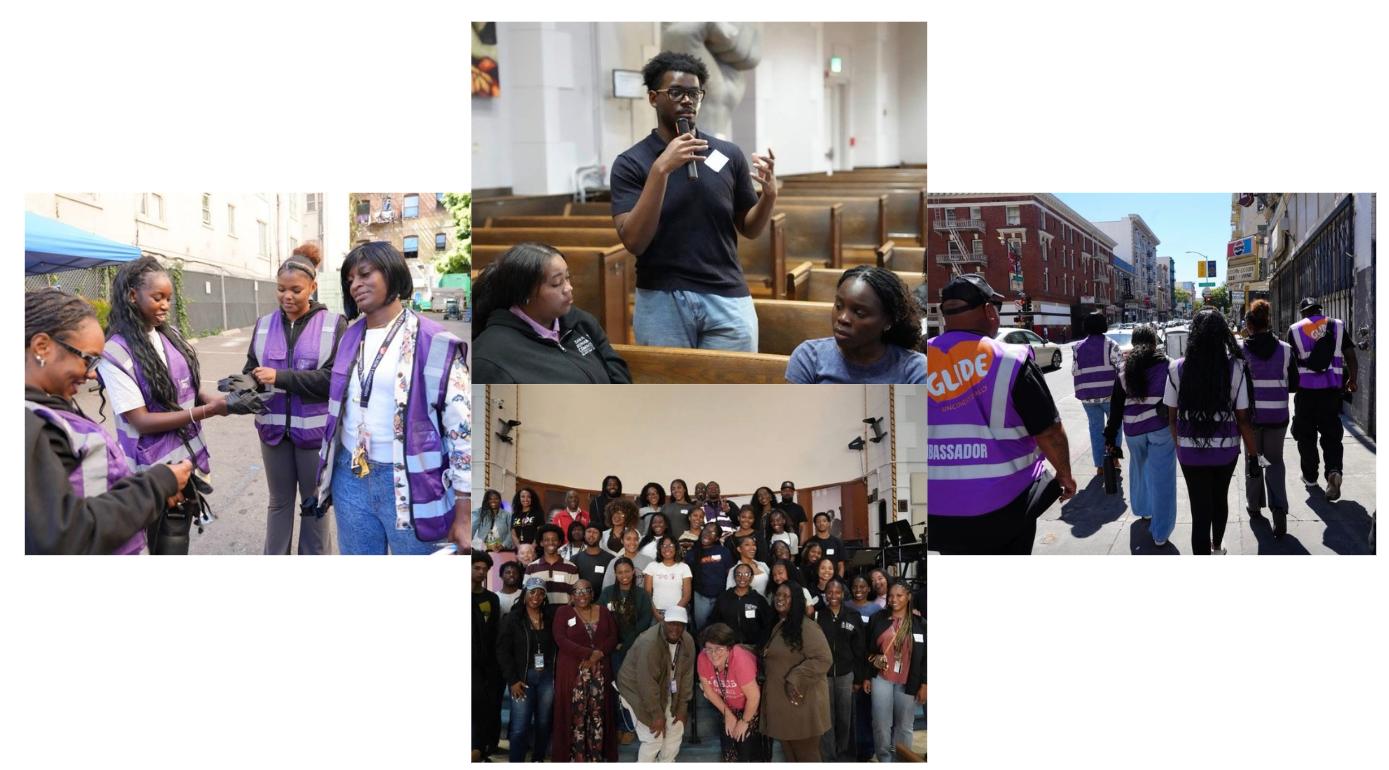
GLIDE Ambassador providing Fentanyl test kit to a houseless person in the Tenderloin

How Hiring Relatable People Inspires Hope in Client Populations

Myravanni Alefosio works on the front lines, providing low threshold case management on the streets around GLIDE. She says, “I want all my clients to know and believe: I’m just like you, I’m not better than you.”  People are willing to trust her when they know that she can relate to their struggles.  “I used to be homeless,” said Myra.  “I’ve dealt with addiction, and my family deals with it. So helping people is a passion for me. I’m a walking testimony that things can get better: seeing is believing.” 

Myra says, “Being a walking testimony means demonstrating by example: I made my life better, and you can too!”  Hiring from the populations we serve closes the cultural distance between the people in need and the workers who support them– and more. It gives people a goal to visualize. They see how easily those being helped transform into helpers. 

Myra has close relationships with many of her clients– they don’t just look up to her– she looks up to them, too! This blog post is a story of three clients whose personal qualities Myra particularly admires.

“Consistency and Grit” 

“Part of being a community ambassador is texting people every day, motivating them,” said Myra. “The most important thing is to prevent people from giving up.”   Her client James stands out as someone who was motivated from start to finish– who never gave in to the temptation to give up. 

When a man we will call James (which is a pseudonym chosen to protect his privacy) got out of prison at Modesto, someone told him to go to GLIDE.  Myra found him sitting on the floor next to her Resource Table, so she engaged him in a motivational interview (a technique used by many social services workers to uncover a client’s intrinsic motivation and goals).  Myra discovered that James was eager to get into recovery and have a clean start.  So she connected him to Soma Rise, a four-day detox program, but that was just the first step.  “Come back when you get out of detox and we’ll move you on to the next step!” Myra told James. 

When he returned,  she helped him get into a long-term rehab treatment program.  After graduating from that program, he came back to look for housing, and the community ambassadors referred him to the Street Crisis Team, who found him a Single Resident Occupancy room to live in.  Now that he has a place to live, he volunteers every Friday with GLIDE.  

“I admire James’s consistency,”  said Myra.  “Once he completed detox, he came back. He stuck with his recovery, and he trusted me. A lot of people struggle to trust because of all the times people have given up on them– or the system has failed them.  Turning your life around takes consistency and grit.” 

                                                  Myravanni Alefosio

She’s a fighter.

Myra glows when she talks about her client Sonya, who gave us permission to use her true first name, and will be featured in a later episode of
the GLIDE podcast; make sure you subscribe to be notified when Sonya’s episode comes out.  

“The first time we met, we just clicked! We have so much in common!” Myra says. They had so much in common that they started affectionately calling each other by the nickname “twin twin.”  Sonya comes to see her nearly every day at GLIDE’s outdoor Resource Table. This deep support makes a difference– and it goes both ways, with Sonya expressing care for Myra in return, asking about her day.

“I want her to know, we’re both in the struggle, I’m in process too,” Myra explained. “Long-term case management is important: it’s not just finding shelter for someone in an emergency. It’s not about checking the box.  It’s about the follow-up. It’s about building a relationship that motivates them to succeed.  They don’t need a service: they need someone to believe in them!”

Myra met Sonya several months ago, when she was mourning the death of her husband from an overdose. Today, Sonya has found a job with a small nonprofit supporting under-served and re-entry fathers, where she does low threshold case management just like Myra. Myra is incredibly proud of Sonya for finding a job and maintaining her SRO (Single Room Occupancy) housing status.  

“Sonya’s still a fighter, despite everything she’s been through,” says Myra.  “She’s always being productive, always on the go.  Listening to her is like–  ‘I have an interview– I gotta do this– I gotta do that!’  She has that spark. We help keep the spark alive in each other: we hold each other accountable.” 

“I Know Someone’s Going to Help Us.” 

When a young man’s auntie saw GLIDE’s logo, she flagged the ambassadors down. (We will call this young man by the pseudonym of Ivan in this article to protect his privacy.)  Ivan was a twenty-two year old young man, and his auntie advocated for him, saying, “My nephew is homeless! He needs your help!” Myra made an appointment with him at GLIDE and took him to Larkin Street, where she advocated for him and hooked him up with his case manager. 

His case manager was able to tell him his “score” within the city’s rapid rehousing system– your score determines how many people are ahead of you on the waitlist.  Of course, Ivan immediately asked, “Where can I stay while I’m waiting for my spot?”  So the ambassadors called the Homeless Youth Alliance and explained that Ivan needed a long-term bed, not just an overnight shelter. An hour later, they received a call-back with a bed opportunity at Transitional Age Youth Navigation.  Then the Cecil Williams Community Ambassadors escorted him to shelter. 

Myra admired Ivan’s refusal to give up.  While they were bouncing from one program to another, dealing with closed doors and red tape, he kept saying, “It’s okay, Myra. I know someone’s going to help us.” She said, “His attitude made me not want to give up on him.” 

When Ivan finally got to his turn on the waitlist, he called Myra to let her know he was apartment searching with his case manager. The rapid rehousing program would be funding his housing stability. These systems are not easy to navigate, so it was a big win for Ivan and Myra. 

What Really Makes a Difference for Unhoused Clients 

We asked Myra what would make things easier on her clients.  “More low barrier services,” she said “More trauma-informed services.” She also explained why long-term case management can be so much more effective than on-the-spot emergency services. 

Everyone benefits from consistency and compassion: they need relationship-oriented care. When you’re in relationship with someone who’s rooting for you to succeed, it’s easier to be persistent and resilient.  The relationships Myra was able to form with Sonya, James, and Ivan helped them remain emotionally resilient as they battled for the changes they needed in their lives.  

Social service workers in programs are not interchangeable cogs– each has a unique network of relationships with people who count on them as individuals. The importance of relational care is vital to consider in any social services strategy. 

If you want to see how we build relationships at GLIDE, we encourage you to sign up for community ambassador walk-alongs or meal services on our volunteer page.

 “Volunteering will give you a personal perspective on how we help our clients,” Myra said.  “You’ll see the relationships we’ve formed. It’s not just a one day thing.  Every day we greet them and get to know them better is part of their journey towards a better life. Community ambassadors may pick up garbage; but no one should see us as glorified janitors. What we’re doing is spreading hope.”

ribbon cutting the shop
From L to R: Daniel Tsai, Supervisor Bilal Mahmood, GLIDE President & CEO Dr. Gina Fromer, and GLIDE Senior Director of Health & Clinical Services Jason Finau

Last week, GLIDE celebrated a joyful and hopeful milestone for the Tenderloin: the ribbon cutting of The Shop, a groundbreaking new program that pairs free haircuts with access to health services and community support. 

The Shop is the first program of its kind in the country to combine barbershop services with health resources and case management. Inspired by the historic role of barbershops in Black communities as places of community and connection, The Shop will transform a familiar cultural space into a doorway to healing.  

Community care reduces inequity in health results 

Dr. Gina Fromer, GLIDE’s President and CEO, opened the ribbon cutting by saying, “Everyone will be welcome here at GLIDE and The Shop. The Shop will be a place and space where you can go to feel heard– where people will say ‘How are you doing?’ and really mean it.”

The program was created in partnership with the San Francisco Department of Public Health, which recognized the need for innovative approaches to closing health equity gaps in the city. Daniel Tsai, the Director of the San Francisco Department of Public Health, shared the city’s broader vision for the work: “One of our goals is for SF to be the healthiest place on earth for ALL it’s people.”

Daniel Tsai shop
Daniel Tsai, Director of Department of Public Health

San Francisco currently has high average health outcomes, but severe inequity. Those inequities are especially stark when it comes to overdose deaths. Older Black men represent 12% of overdose deaths in the city, even though they make up less than 1% of the population. These outcomes are not accidents; they reflect decades of displacement, discrimination, and unequal access to care.

The Shop was built specifically to address these realities with culturally responsive care. Jason Finau, GLIDE’s Senior Director of Health and Clinical Services, said it well: “Today isn’t just about opening a barbershop, it’s about opening doors to dignity, healing, and connection. Here at GLIDE health is never just clinical: it’s about community.” Supervisor Bilal Mahmood expressed support for the project, saying, “GLIDE to me has always been a community hub, a concierge service for the well being of the Tenderloin.”

Culturally responsive intervention  

Minister Jabari Jackson spoke directly to the deeper meaning of the moment, addressing both the audience gathered for the event and the unhoused neighbors nearby. “What I say is for the people across the street, and not for the people under this tent for this ribbon cutting,” he declared. “We all know what it feels like to fail and we all know what it feels like to fight our way back up. We are street soldiers. What The Shop represents is a sanctuary for us.”

The ribbon-cutting included a visit from longtime GLIDE supporter Danny Glover, who helped bring energy and excitement to the opening by getting a haircut during the ceremony.

Gina and Danny Glover
GLIDE President & CEO Dr. Gina Fromer and actor Danny Glover

Throughout the afternoon, speakers returned again and again to the same idea: that healing begins with human connection. A haircut might seem simple, but the conversations that happen in the barber’s chair can open the door to something much bigger — trust, support, and a path toward stability.

Opening The Shop is about building a place where people feel welcomed, seen, and valued. In a neighborhood that has faced decades of inequity and displacement, The Shop may turn the tide towards more equal healthcare outcomes.

On Thursday, February 26th, GLIDE hosted a powerful and timely Black History Month event called,  “Legacy and Liberation – A Conversation with Dr. Angela Y Davis.” 

For decades, Dr. Angela Y. Davis has shaped global movements for Black liberation, prison abolition, and intersectional justice. Among her trusted supporters was GLIDE’s Reverend Cecil Williams, whose leadership positioned GLIDE as a sanctuary for the revolution.

On Thursday, February 26th, GLIDE hosted a powerful and timely Black History Month event called,  “Legacy and Liberation – A Conversation with Dr. Angela Y Davis.” 

For decades, Dr. Angela Y. Davis has shaped global movements for Black liberation, prison abolition, and intersectional justice. Among her trusted supporters was GLIDE’s Reverend Cecil Williams, whose leadership positioned GLIDE as a sanctuary for the revolution.

An evening of justice, hope, and faith

Minister Marvin K. White opened the evening with a heartfelt interfaith blessing, saying Angela Davis teaches us to “refuse the lie that Empire is inevitable,” and Center for Social Justice Director Naeemah Charles reminded us that “freedom is a constant struggle, and struggle is sustained by community.”  Both urged the audience to join GLIDE’s Social Justice Warriors

Then Director of Music Ministries Zoë Ellis introduced the Glide Ensemble to sing gospel songs.  She urged the audience to interpret the lyrics mentioning “God,” their own way. “God can be love, ocean, moon, sky stars,” she cried– “All we want you to know is that God has got a blessing waiting for you!” Nearly the whole audience was on their feet clapping and stomping along to the gospel– even those who had never participated interactively in live gospel before. 

Joy is resistance

Then it was time for GLIDE’s current President & CEO, Dr. Gina Fromer to interview Dr. Davis. Asked how she endured the racism of her childhood in Birmingham, Dr. Davis laughingly corrected that she remembered her childhood as a time of joy.  While acknowledging the terror of racist violence—including church bombings and the ever-present threat of the Ku Klux Klan—she refused to let trauma be the whole story. 

She recalled mischievous resistance—children dashing into the forbidden white side of town, ringing the doorbells of KKK members, and running away as fast as they could. “Resistance was woven into every aspect of our lives, even our joy,” she reflected. Joy, she insisted, is not a distraction from struggle; it is what makes sustained struggle possible.

The importance of women in liberation struggles

Throughout the conversation, Dr. Davis illuminated histories too often erased.  She urged us to understand that the Civil Rights Movement did not emerge spontaneously in the 1950s—it was built on groundwork laid by Black organizers, including Black communists, in the 1940s and earlier. She spoke emphatically about the importance of collective political education and organizing, reminding us that the Black Panther Party’s community programs—such as the free breakfast initiative for children—were powered primarily by women. 

“Did you know that two-thirds of Black Panther members were women?” she asked. “The programs happened because of them. But we all know that women always do all the work anyway.” The line, “women do all the work,” received the most roaring applause of the evening– causing Dr. Davis to smirk knowingly at the audience. 

How political activists can deal with fear and anxiety

When Dr. Gina Fromer asked how she found courage during the most terrifying moments of her life—including her imprisonment and the threat of the death penalty—Dr. Davis answered with disarming honesty: “I wasn’t courageous. I was scared to death.” Courage, she explained, does not mean the absence of fear. 

Courage comes from knowing you are not alone. Seeing “Free Angela Davis” signs around the world and receiving messages of solidarity—even smuggled notes from Palestinian political prisoners—transformed her fear into collective strength. “As one person, we can do very little. But as hundreds and thousands and millions of people, we can change the world.”

Divest from capitalist thinking, invest in the discipline of hope

Dr. Davis warned against the individualism rooted in capitalism and urged us to free ourselves from “capitalist temporalities” that demand quick wins and short-term thinking. “Hope is a discipline, not an emotion,” she said. “Hope is that which we must generate and produce if we want anyone to witness a better world.”

We ended the evening with questions from the audience and a final song from Regina Wells Rashida Oji, our Senior Manager of Transformative Learning. We love how many hundreds of you showed up for GLIDE’s living vision for Black liberation!  Black History Month reminded us that liberation is not a chapter in the past — it is an unfolding story.  

Do you want to be part of the story of liberation? Definitely consider joining GLIDE’s Justice Warriors. Depending on your preferences, we can let you know about marches, rallies, phone banks, letter-writing, and outreach– because it’s going to take all of us to move the country’s story forward!

You can watch Angela’s appearance below. 

michelle browder glide

Honoring the Black Women Who Shape Our Past, Present, and Future

To launch Black History & Futures Month, GLIDE held She Carried Us Forward, a celebration honoring the brilliance, courage, creativity, and enduring leadership of Black women.  Black women are too often unnamed background characters in history– even when their actions should earn them the spotlight! 

Naeemah Charles welcomed the crowd by praising Michelle Browder’s landmark achievements in health equity.  Minister Marvin K. White blessed the evening with a tribute to GLIDE’s co-founder, Janice Mirikitani, who would have been celebrating her 85th birthday on that day.  Then Rabbi Michael Lezak discussed our collaboration with Michelle on the Alabama Pilgrimage, saying, “GLIDE dreams about healing hearts, and minds, and souls, but beyond that we dream about healing streets, neighborhoods and communities… Michelle is the fiercest truth-teller I’ve ever met.” 

GLIDE will always be part of the fight for racial justice! To stand by our side during the struggle, consider joining our Justice Warriors:

Fighting for Health Equity and Black History in Alabama 

Michelle Browder is an activist, artist, and historian whose work exposes how Black women were tortured for medical knowledge and erased from history. 

She began by acknowledging Glide Memorial Church’s interfaith nature, and praising the diverse beliefs in the room. Then she admitted, “I’m bringing Jesus into the room with me tonight, because we need to change the narrative. The narrative around Jesus has been hijacked.” She spoke of the need to reclaim Christianity as a faith that fights for the marginalized and oppressed.  Dr. Gina Fromer agreed: “If Jesus was in town, he’d be in the Tenderloin.” 

Michelle then acknowledged the racial justice struggle in our country, warning: “Just remember: without dignity, empathy, and integrity, DEI is just an acronym.” Then we heard how her work began: as a 19-year old art student, when she became fascinated by Anarcha, Lucy, and Betsey, the enslaved experimental subjects of the so-called “father of gynecology,” J. Marion Sims.

“They were kidnapped, abused, and used for experiments, used as breeders–  were basically tortured in the name of healthcare and science,” Michelle explained. A statue of J. Marion Sims, their torturer, stands at Alabama’s state capital– you can sign a petition here to have him be re-located to the museum Michelle founded and recontexualized for his infamy. 

Medical racism in gynecology is far from over. Michelle recommends the book Medical Apartheid to learn more about how involuntary medical experimentation still happens on people of color today. 

The Role of “Creative Extremism” in Creating Equitable Black Futures

Not only does Michelle Browder create spectacular art honoring the enslaved victims of medical torture, she leads The Mothers of Gynecology organization to provide anti-racist medical education and healthcare for low-income people centered on reproductive freedom. 

Michelle calls her artistic and educational work, “creative extremism,” and praised GLIDE’s founders, Cecil Williams and Janice Mirikitani, for being likewise creative extremists, or “extremists for love,” in the tradition of Martin Luther King Jr. 

After sharing her work, Michelle was joined in conversation by Dr. Gina Fromer, CEO of GLIDE and a lifelong champion for racial and economic justice. Dr. Gina discussed how her mom’s heroic work raising six kids in conditions of generational poverty made her determined to break the cycle of poverty.

They both discussed the importance of having Black role models when it comes to instilling hope in Black people. “When you start the discussion of Black history with slavery and end with slavery, you miss a lot,” said Michelle. “People who were enslaved kings, they were queens, they were innovators, they were astronomers– understand that.”

From L to R: Naeemah Charles, Senior Director of the Center for Social Justice, Michelle Browder, & GLIDE President & CEO Dr. Gina Fromer

How Love Drives the Struggle

Since GLIDE and Michelle Browder initially connected on the Alabama Pilgrimage, Dr. Gina shared her own experiences with the pilgrimage. “At first, I didn’t want to go to Alabama, I was afraid… I felt like when I got off the plane, the KKK would be waiting for me. But eventually, I realized: Tenderloin or Alabama, the fight is the same everywhere.” 

Dr. Gina then discussed GLIDE’s work transitioning people of color in crisis to employment and leadership, and how that work is impeded by the political currents in our country.  “What’s happening right now, the dismantling of civil rights, human rights, the dignity of our Black and immigrant communities– we CANNOT let this happen,” she said. 

Michelle was in agreement.  “Hatred makes you sick,” she said, “And love is the cure. My Jesus says love those who hate you. That’s creative extremism.” 

The evening closed with eager questions from the audience. And it was just the beginning of a whole month of celebrating Black History and Futures. If you missed this event, perhaps you can catch us for the next one: learn more about our line-up here.

woman at michelle browder
good pretty

It’s hard to find words for the grief and rage our nation is feeling today. First Renée Good, then Alex Pretti—two lives lost after being shot and killed by federal ICE officers while trying to protect their neighbor’s rights. We’ve lost a loving mother of three. We’ve lost a dedicated ICU nurse. Just as we have lost so many Black and Brown people over the course of our nation’s history. All their names lie heavy on my heart: Breonna Taylor, Oscar Grant, George Floyd, Sandra Bland, Rekia Boyd, and so many more.  

What gives me hope is to see a nation rising up. A nation that’s had enough.
​​​Join me in emailing Congress to:


These killings are intended to send a message. They want us to know that standing up for our immigrant neighbors is something that will be met with deadly force. History is repeating itself. Those who stood in peaceful protest with Martin Luther King Jr. also sometimes died for their beliefs.

I have spent my entire life fighting for justice and I won’t stay silent now. I hope you join me in speaking up and speaking out for our GLIDE values: 

  • We support AB 1537, legislation to prevent police officers from also working for ICE

  • We stand with Supervisor Bilal Mahmood’s resolution for ICE-free zones — Alameda County has already passed similar legislation, San Francisco needs to catch up.  

  • We call on Sheriff Paul Miyamoto to continue to uphold sanctuary protections by refusing pressure to cooperate with ICE

In last Sunday’s Sermon, Minister Marvin K. White said, “Do you know how tiring it is, day after day, night after night, hour after hour, to brace yourself for pain? It’s exhausting! Do you know how tiring it is when you have to plan your way home by the police who are out on the block, and you have to plan an escape route just to get home? It’s exhausting!” That’s how our immigrant neighbors are feeling in Minneapolis right now– and across the nation. It’s also how many people living in the Tenderloin have felt for a long time. We must act

What our country is doing right now is not new. America has done it before. But that does not make it right. We must take action as a community to put a stop to this bigotry and violence once and for all! 

ICE could come to any city in the years to come. If they come to San Francisco, we must be prepared. Here’s what you can do today:  
  • Check on your neighbors — especially those living with fear of enforcement or separation. 

  • Educate and organize — know your rights, share them, and build solidarity networks. 

  • Support mutual aid efforts that provide food, legal help, accompaniment, and community care. 

  • Show up together — to vigils, to city hearings, to council meetings, to rallies — in the name of shared humanity. 

We refuse to accept a world where families live in fear. Where the powerful commit crimes and then lie about it. Alex Pretti and Renee Good should not have died because they stood up for their neighbors.  

In response, let’s summon our collective strength and create the beloved community we know is possible. GLIDE is committed to remaining a sanctuary for all. Nothing will stop us from loving and serving the people who need our help the most.  


Dr. Gina Fromer
GLIDE President & CEO