
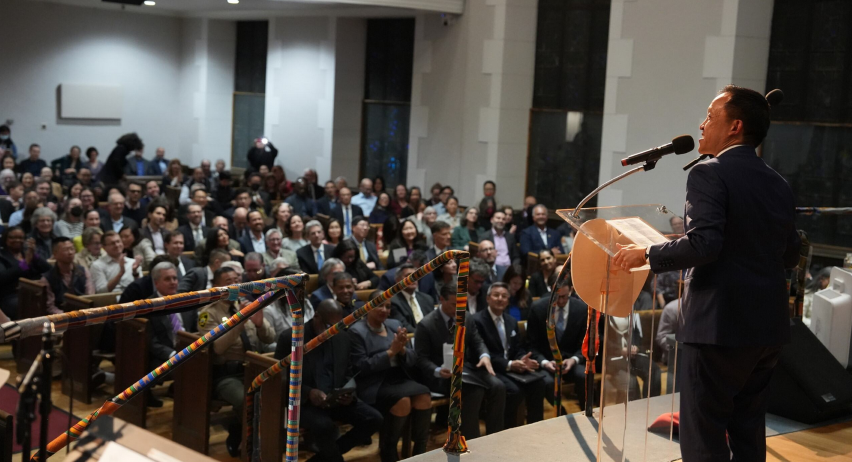
GLIDE is a proud supporter of Proposition 6, the End Slavery in California Act. California’s current constitution actually allows slavery and involuntary servitude when it is a punishment for a crime. Proposition 6 would prohibit slavery and involuntary servitude in any form.

In 2022, voters in Alabama, Tennessee, Oregon, and Vermont voted to remove slavery and involuntary servitude from their states’ constitutions. In November, Californian voters can weigh in on this historic ballot measure, taking a stand to remove language in our constitution that is a threat to human dignity and justice for all.   

If you would like to phone bank for Prop 6, please sign up here. 

Proposition 6 would prohibit the California Department of Corrections and Rehabilitation from disciplining any incarcerated person for declining a work assignment. Proposition 6 would still allow the Department of Corrections and Rehabilitation to award credits to an incarcerated person who voluntarily accepts a work assignment.

It would not guarantee minimum wage, but it may assist separate efforts to get prisoners fairer wages.  

As it is now, incarcerated people do not have basic workers’ rights or protections, yet they face severe penalties for just declining to work. As of 2021, California’s prisons held about 64,7888 incarcerated workers who make less than $1 per hour.

Declining to accept or perform a work or training assignment can lead to reduced privileges, including limitations on visits, phone calls, canteen purchases, yard time, entertainment and recreation access. One of the most impactful punishments to an incarcerated person is delayed or denied parole. 

Nationally, the United States government profits from allowing slavery by forcing incarcerated workers to generate more than $2 billion dollars each year in products and services. In California, government entities and private companies generate and save at least hundreds of millions of dollars each year from incarcerated people’s labor.

For example, incarcerated workers make up about 30% of California’s firefighters, but even after some were released from prison, they were barred or faced significant barriers to serve as firefighters. Unfortunately, when they leave prison, incarcerated workers face challenges securing similar jobs to those they held while incarcerated, which affects their ability to reenter society and stabilize their lives.   

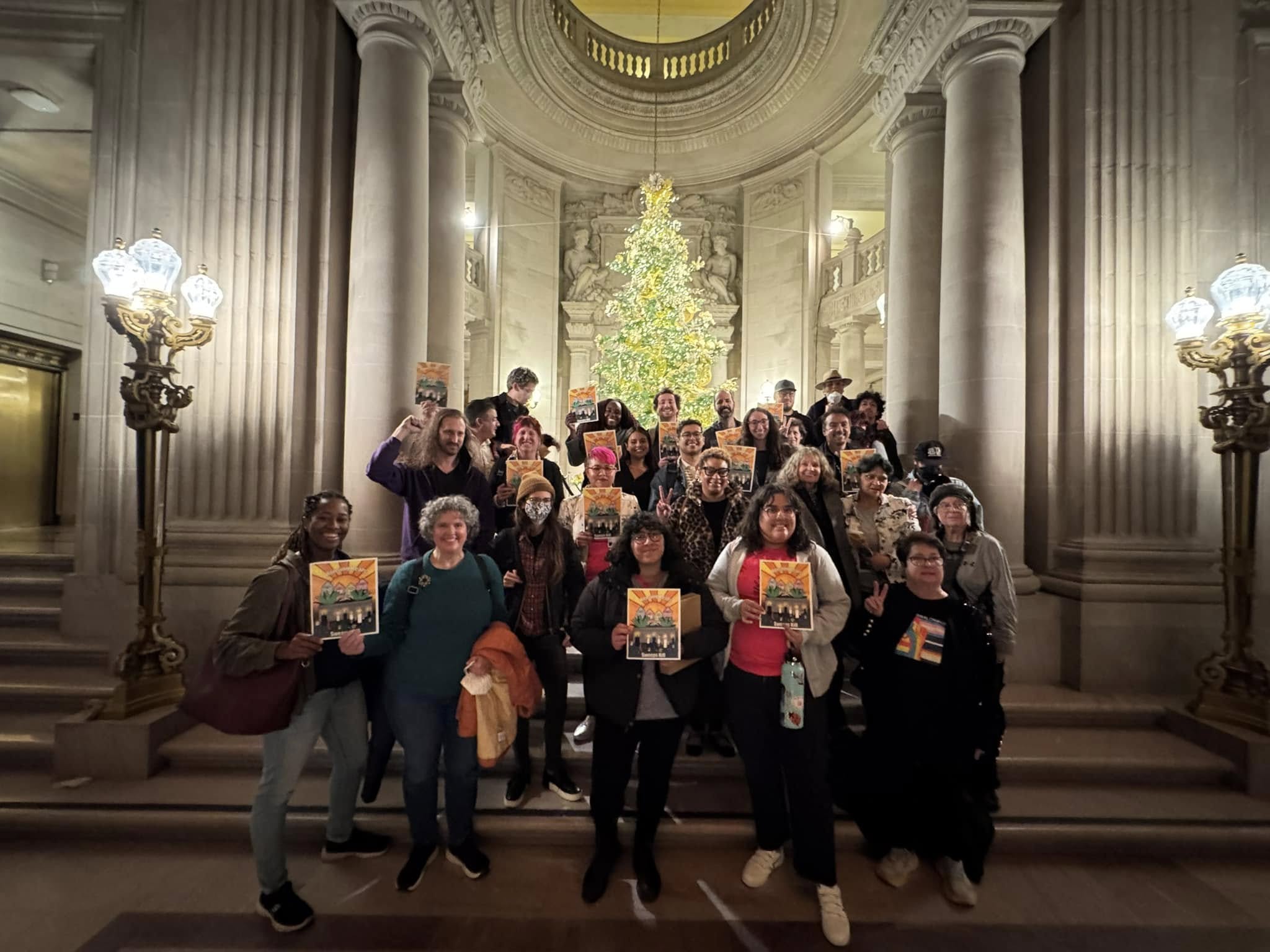
To qualify for the ballot and become Proposition 6, a piece of legislation had to pass successfully through the California Legislature. GLIDE co-sponsored the previous bill (ACA 3) in 2022 and the latest bill (ACA 8) starting in 2023, which ultimately passed with bipartisan support on June 27, 2024. Now, GLIDE proudly stands with our community as a vigorous supporter of Proposition 6. 

At GLIDE, we support the purpose and intention of Proposition 6, which allows our clients and community members who are incarcerated to have a choice in their work assignment.  

Proposition 6 would give incarcerated people more flexibility to engage in rehabilitative programs like education, emotional intelligence courses, mental health and substance use treatment, which can reduce recidivism; they would no longer be punished for choosing those activities over a work assignment.

Join us in supporting Proposition 6 through your vote and your time; lend your voice to our community members who are incarcerated in their fight for human dignity, morality, and justice.  

If you would like to phone bank for Prop 6, please sign up here. 

vernon bush farewell august 2024

When I think of how He brought me through 
and how, how the Lord changed my life; 
my soul, my soul is overwhelmed. 
I’ve got joy, joy, joy, unspeakable joy.  

-Unspeakable Joy lyrics by Douglas Miller 

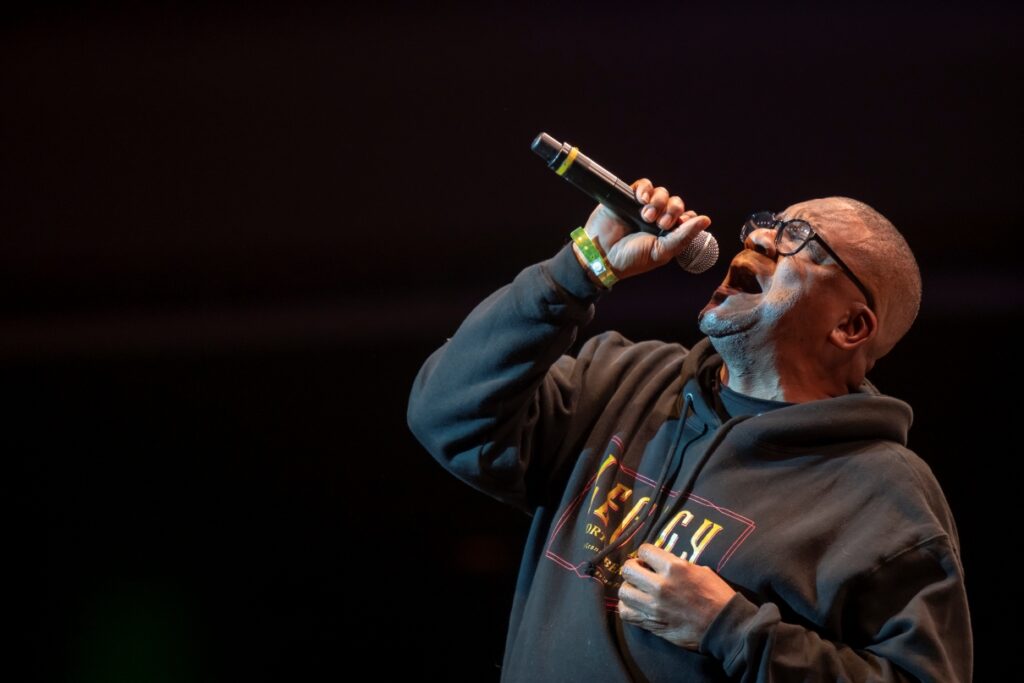
For eight years GLIDE’s Music Director, Vernon Bush, has embodied unspeakable joy. His infectious smile, open heart and his dedication to Beloved Community has made him a vibrant part of GLIDE.  

Sunday, August 4th, Glide Memorial Church encircled Vernon Bush’s and blessed his final Sunday at GLIDE.  Those gathered shouted “yes he did” as Minister Marvin K. White read Vernon’s accolades before the congregation. 

“Vernon my brother, my friend, my compatriot,” Minister Marvin declared, “for all the ways you have led us in spirit and for all the unspeakable joy you have brought into our lives, we give thanks for your ministry, for your movement and for your life.”  

Dr. Gina Fromer, GLIDE’s President and CEO, began her tribute to Vernon with a song.  “I’m going to miss that smile!” Dr. Gina declared, “On behalf of the board of trustees, the GLIDE board, the staff, we want to say that we love you and we are going to miss you.” 

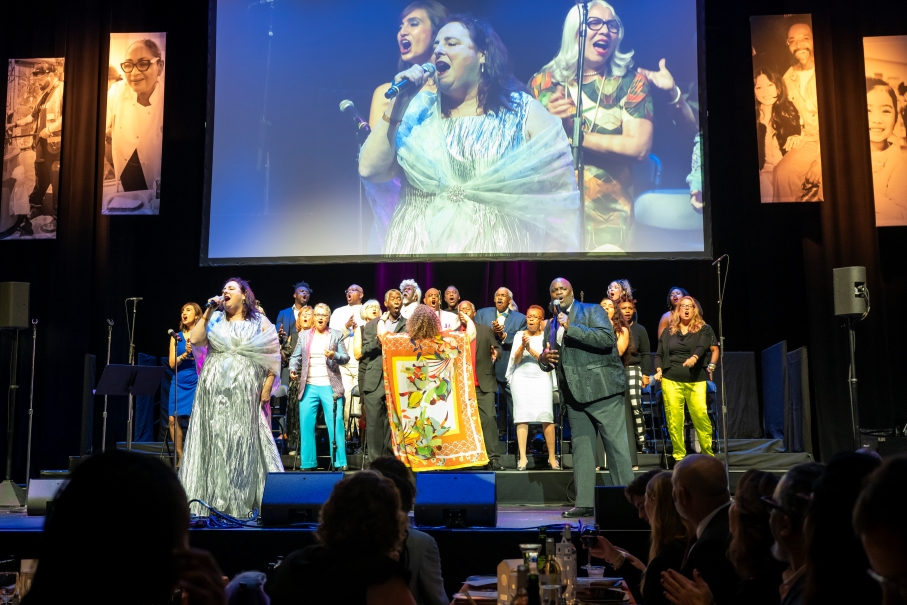
Other members of the GLIDE community also shared their memories and well wishes for Vernon, including former members of GLIDE’s teen choir, who surprised Vernon with a visit.  The GLIDE Ensemble said goodbye by singing the songs that Vernon led.  To maximize the songs performed on his final Sunday, the Ensemble sang different songs at the 9 and 11 am Celebrations, including: Unspeakable Joy, Standing in the Need of Prayer, Bless Me and Glory. 

In addition to providing the soundtrack for Glide Memorial Church’s Sunday Celebrations, the volunteer Ensemble also performs at events throughout San Francisco.  One of Vernon’s most iconic performances with the Ensemble took place at the 2009 Celebration for Cecil’s 45th Year at GLIDE.  Two days later, Vernon joined the GLIDE Ensemble on the Conan O’Brian Show.  The Ensemble also recently performed at the Celebration of Life for Willie Mays 

From its humble beginnings on Christmas Day, 1966, when it was only 10 singers and jazz legend John Handy, the Glide Ensemble grew to include more than 100 voices and eight musicians.

Beginning with the first choir director, Faith Winthrop, the Glide Ensemble has benefitted from the direction of such talented leaders as Donnell Hickman, Ronald Sutherland, John F. Turk, Jr., Clifford Coulter, and Vernon Bush, and has teamed up with a host of notable musicians such as Sammy Davis Jr., Leonard Bernstein, Marvin Gaye, Bono, and Maya Angelou.  

During Vernon’s tenure at GLIDE, the ensemble performed with Joan Baez, Michael Franti, Bobby McFerrin, Martin Luther McCoy and many other celebrities. Under his leadership, the Ensemble has provided the soundtrack from some of San Francisco’s most iconic events, including Juneteenth Celebrations at City Hall. Vernon also helped GLIDE navigate through tragedy and grief, during the COVID epidemic and the recent death of the Rev. Cecil Williams. 

Performing at fundraisers, programs and community events, Vernon’s effervescent energy touched every part of GLIDE’s work.  Participants of the Center For Social Justice’s Alabama Pilgrimages often celebrate Vernon’s compassionate witness and musical support.   

Vernon departs GLIDE to pursue his personal musical goals.  On Sunday he sang from his forthcoming album that celebrates his mother. 

“The joy that I have tried to live out, and be as an example,” remarked Vernon, “I really want you all to carry on.” Thank you, Vernon, for all the ways that you have touched the lives of GLIDE staff, participants and church members.  We send you off with joy, joy, joy, unspeakable joy. 

social justice mixer

There’s more to serving the people of the Tenderloin than providing free meals: GLIDE fights every day against the interlocking systems that cause our people suffering.  On the evening of August 1st, we threw a Social Justice Mixer to bring our advocacy community together and to unveil our plans for building power together.  

At the mixer, we urged people to sign up or renew their engagement with the Justice Warriors volunteer program.  Of the 101 people who registered for our event, 13 were joining the volunteer program for the very first time. Currently we have more than 300 Justice Warrior volunteers in our program. They support GLIDE’s policy agenda with whatever level of direct action feels most comfortable to them: attending marches, making phone calls, writing letters, leaving public comments, or raising awareness.  

If we grow our program to 1,000 Justice Warriors, we will truly be a force to be reckoned with! Are you ready to join us?  Sign up here to specify what kind of support you can offer and what issues interest you most. Justice Warriors fight for racial reconciliation and repair, safety for homeless people, safe paths out of substance use, and an end to poverty, among other things.   

At the mixer, Center for Social Justice staff also presented plans for a new Justice Warriors Council.  This council will lead in planning campaigns, organizing advocacy with the Justice Warriors, and throwing other mixers in the future.

Social Justice Academy graduates, as well as anyone who has been signed up for our Justice Warriors program for over a year, are all eligible to apply. Please contact Erick at earguello@glide.org to receive an application.  

social justice mixer attendees 2024 august

             (From L to R: Justice Warriors Steve Dalton, Mike Ilaw, and Joshua Siebalt)

I’ve been coming to GLIDE for years,” said Tenderloin resident Steve Dalton. “I did not know about the Center for Social Justice Warriors program. There is so much I care about in this neighborhood, particularly as it concerns senior citizens. I care about homelessness and other inequities in the TL too.

Perhaps you, like Steve, have been connected to GLIDE for a long time without knowing about our Justice Warriors program. Now is the time to sign up!   

We love how our community is full of ideas and energy for improving the Tenderloin.   

“Something that comes to mind after listening to this great session about Justice Warriors is maybe GLIDE could create something akin to a ‘GLIDE Village’ for seniors,” said Miki Ilaw. 

 And Joshua Siebalt added, “I have a podcast. I interview unhoused people to try and increase empathy and awareness… Especially after the recent Supreme Court decision, we need to do better at increasing empathy for the homeless.”  

We’re grateful for how many of our community members have been pursuing advocacy efforts of their own all these years. We plan to continue holding these social justice mixers quarterly to swap stories and join forces. We hope to see you at the next one!   

I can’t stay silent about the encampment sweeps currently taking place across California. Every step we take to criminalize poverty and homelessness takes us farther away from the empathy and compassion we actually need to resolve the homelessness crisis. Homelessness is not a crime. So-called “clean-ups,” aren’t solutions. 

The solution is finding people housing: or better yet, preventing them from losing their housing in the first place! If you agree, please join GLIDE’s Center for Social Justice in sending this letter to lawmakers

At GLIDE we care about lasting solutions; over the past three years, GLIDE’s rental assistance program has helped more than 1100 people and prevented more than 500 evictions. That’s why, when ABC 7 news interviewed me, I urged lawmakers to prevent homelessness with housing subsidies and rental assistance.

And when KQED interviewed me, I explained how we can help unhoused people who’ve got health and recovery challenges. When they turn their lives around, they can get off the street permanently. 

I can’t tell you how often I see families and children waiting to eat meals at GLIDE. In California, over 4% of children in schools are homeless. Do you think it’s going to help those children if their parents are criminalized for sleeping on the streets? If their possessions are swept up into plastic bags that might or might not be retrievable? We know that people have lost ID cards, medications, and job applications in the chaos of encampment sweeps, which is the last thing any homeless person needs.  

I expressed to KTVU that we see the pain that people are going through when their encampments are moved.  They have to lose their connections to organizations and resources.

Public health experts estimate that sweeps could lead to a 25% rise in deaths among unhoused people over the course of the next ten years. Even when the sweeps don’t result directly in arrests, they are shown to increase racial, gender, and health inequities. 

Countrywide surveys show that encampment sweeps result in police citations at least as often as they result in referrals to services, something for policy makers to keep in mind, given that compassion for the homeless has been rising over time

City shelters only have capacity for less than half our unhoused residents. Besides lack of space, there are other valid reasons why unhoused people sometimes find shelters undesirable. It could be lack of storage space for possessions, safety concerns, or a no-pets policy: all of those reasons make sense when you use a lens of compassion, rather than one of judgment. 

Why are we acting like moving tents from one neighborhood to another will solve homelessness?  At GLIDE, we know what helps people break the poverty trap: that’s trusting relationships built over time with service providers, and options to be permanently housed that won’t separate them from families, partners, and pets.

Every time we sweep up an encampment, homeless people become more suspicious of authorities, making it harder to connect them to services. 

Our newly launched Community Ambassadors program is targeted at the root causes of poverty, not simply sweeping poor people out of sight. The ambassadors will patrol a ten-block radius around GLIDE in the Tenderloin, providing low-threshold case management, connecting people to services and support groups, and cleaning up graffiti and trash. 

We work closely with the Mayor’s Office on holistic solutions to homelessness, because we’re determined to solve the underlying problems. We’re about creating lasting change in the Tenderloin and San Francisco. We’re about compassion.  

Unhoused people need support and resources to break the poverty trap. GLIDE’s Center for Social Justice has helped secure more than $20 million in state funding for housing subsidies, shelters, and mental health support through coalition work.

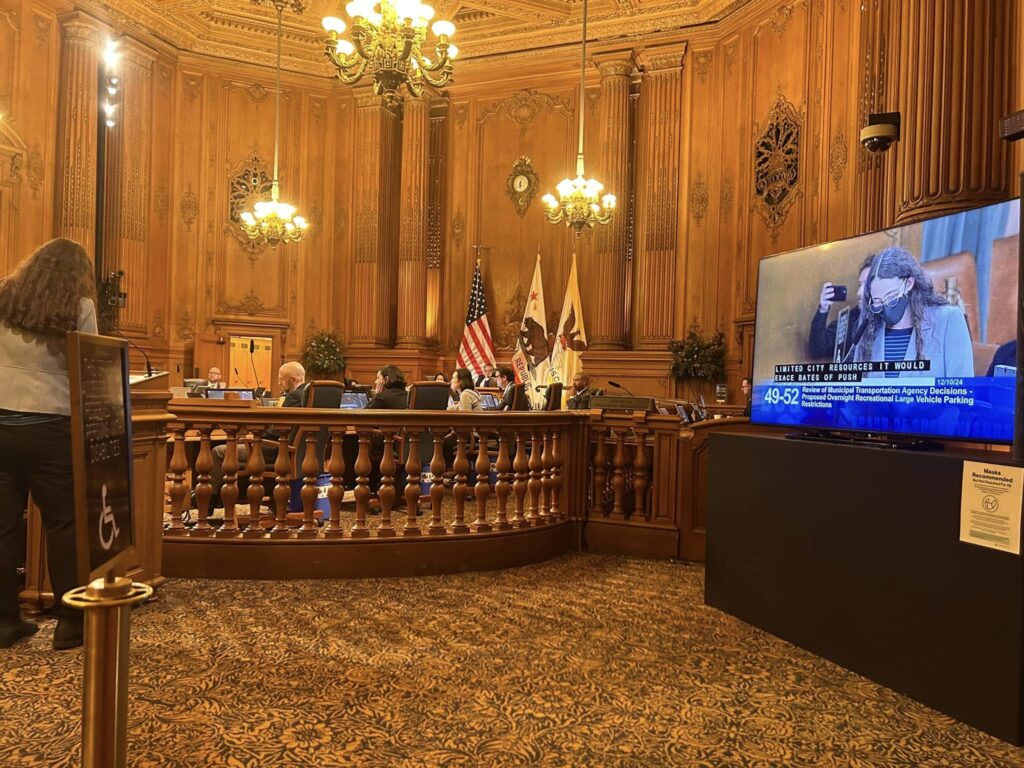
Let’s focus our City resources on increased access to shelter, rental subsidies, affordable housing, behavioral health services, and workforce development programs. Arresting the homeless is a step backwards, into the past.  

In 1966, GLIDE supported LGBT youth in resisting encampment sweeps. We continue to stand with the homeless through the decades, and we refuse to turn back the clock nearly 60 years on homeless support. 

gina, fromer

Dr. Gina Fromer
GLIDE President & CEO 

harm reduction overdose
I feel called to respond to an article published in the San Francisco Chronicle called, “S.F. nonprofits give foil and pipes to fentanyl users. Critics say it’s making drug crisis worse.”
 
While I appreciate diverse perspectives on how we best combat the overdose epidemic that is ravaging communities around the country, I also want to be clear about how GLIDE is responding to this challenge every day.
 
At GLIDE, we offer a 360 degree, personalized approach to treat substance use disorder. This approach includes introducing safer drug use habits to prevent intentional overdoses and the spread of disease, medically assisted treatment (including referrals for methadone and suboxone), detox/inpatient bed referrals, and everything along the continuum of care.
 
It includes the needs of drug users and non users alike with the goal of creating safer, healthier communities for everyone. We offer a series of twelve step programs for people needing abstinence-based recovery environments and the demand for these groups has been tremendous.
 
As the President & CEO of GLIDE, my job is to lead a love agenda. Every day, we invite people into our doors who are in need of physical, mental, and spiritual healing from so many afflictions in our world. When we lead with this kind of unconditional love, we see people who experience a true sense of the word recovery – a return to a healthy state of mind, body, and spirit. When you have a healthy GLIDE, you have a healthy San Francisco.
 
I’m a sixth generation San Franciscan. I grew up in the Bayview during the crack and heroin epidemic. I saw people I love suffer because of their addiction. I saw families torn apart as they fought to keep their kids and community members safe.
 
What did not work during this era was to shame people, to judge them, and to try and arrest our way out of it. What we know worked then and works now is surrounding people with a deep sense of love, radical inclusivity, and community – and the resources to offer a strong response to the core issues that drive addiction. This is the commitment of GLIDE’s programs and we know they work! 
 
When I think about what we’re going through everyday, I channel the legacy of my predecessor, Reverend Cecil Williams and Janice Mirikitani. They never turned away from the challenge of addiction that was rampant in San Francisco during the 80s and 90s, and they certainly never shamed a person struggling with the disease. They invited them in to share their stories, to lessen their pain, to help them heal on the road to recovery.
 
During one of those gatherings, Rev. Williams described how “All of those gathered stood up together. The GLIDE staff, Black community leaders, addicts, prostitutes, and grandmothers–poor, wealthy, illiterate and educated– we told our stories of recovery. We told our stories of faith and our stories of resistance.”
 
This is my love agenda. This is the pulse and the heartbeat of GLIDE. We know what works to create a more loving, just, and healthy society in which all people flourish.
 
I invite you to be part of it. Come by GLIDE and see our work first hand. Our doors are always open for you!
 
gina, fromer
Dr. Gina Fromer
GLIDE President & CEO
                              
csj rally city hall

GLIDE started the Social Justice Academy (SJA) as a community learning center to catalyze the wisdom and expertise of those affected by systemic inequities.

In April, we launched our inaugural cohort of nine women, each of whom has experienced systemic inequities like homelessness or incarceration. Over the past 12 weeks, the cohort has met weekly to practice and grow as community organizers and policy advocates. 

The last several weeks of the program have focused on City Hall. We started by scheduling meetings with the District 5 Supervisor, Dean Preston, and staff from the Mayor’s Office. Supervisor Preston told us about his office’s work protecting renters and keeping them in their homes.

At the Mayor’s Office, we talked about improvements for San Francisco’s transportation system. The cohort also got a peek at life working inside of City Hall. 

Last week, the group returned to City Hall to put our advocacy skills into practice. We were there to do a “walk-around,” knocking on the door of each supervisor and asking them to meet with us briefly about our issue. We first gathered in the North Light Court to review our agendas.

The issue we were advocating for was city funding for the next cohort of the Social Justice Academy, which is currently at risk of being cut. The women split into groups of three and started to workshop their stories. Each one brought moments from the last three months that illustrated to them why this program was so important. One shared she had been doing advocacy for 25 years but gained the confidence to do it in-person only through this program. Another shared that she hadn’t even considered herself an advocate for her community before joining. 

After working in small teams, we gathered in a large circle to practice in front of each other. Our Advocacy Manager, Erick Arguello, was our mock supervisor. The nerves were very real, but each person was excited to tell their story.

We workshopped our presentations all together, then went upstairs to knock on supervisors’ doors. We talked to the staff of four supervisors, including two heading this year’s budget. In each office, a different woman took the lead explaining our program and our goals for being there. Then the group shared their stories about how the program affected them. By the end of the visit, the group was already brainstorming next steps to keep up the pressure. 

shirley leiva sja city hall

SJA participant Shirley Leiva speaking to the San Francisco Board of Supervisors to not cut public health programs, including the Black Health Community Action Team

This program has provided a route forward for many community members who have been denied opportunities to be leaders. “I have learned about not only advocacy for childcare and education but also for hunger, for those who are formally incarcerated, and about re-entry, addiction and how to keep people healthy. I have learned how to fight the right way in words,” said fellow Margaret Wilson. 

“I remember asking myself one day while I sat in the cell, what can I do to help? For fellow inmates that were with me but had no voice. And when I came out of Santa Rita County jail in Alameda, I got connected to Glide for the Social Justice Academy. It turned my spirit. It turned my mind and inspired me so that I can have a voice on behalf of my fellow formerly incarcerated and those that are still incarcerated that do not have a voice.” 

We will focus on community-based research in the next few weeks before graduation. Fellows will explore surveys, focus groups, and document-based research as tools for conducting their own research and developing solutions to the problems they see facing their communities.  

Fellows have also made time outside of our weekly meetings to do a range of activities: voter education at San Francsico’s Juneteenth parade, lobbying in Sacramento for food access, and rallying for HIV services and programs. They’ve networked with other leaders, experienced different types of work, and grown confidence as advocates. 

Workshops on topics like social media for advocacy and telling your personal story have helped fellows develop their own style and understanding of advocacy work. And the group learns just as much from each other every week as they do from presenters. It’s a special group who are never afraid to ask questions, give their opinions, and show how much they care. 

“The Women’s Social Justice Academy offered many opportunities to network with inspirational women leaders from various sectors,” said Shauneke Roberson.

Summing up her experience, Shauneke had this to say: “Through guest lectures, panel discussions, and informal meet-and-greet sessions, I connected with activists, policymakers, and entrepreneurs who are making significant strides in social justice. These interactions were invaluable, as they provided me with insights into different career paths, the challenges these leaders have faced, and the strategies they have employed to overcome them. This experience broadened my perspective and motivated me to pursue my goals with renewed determination.” 

To protect the funding for the next cohort of the Social Justice Academy, which is in danger of being cut from the city budget, please send an email to the Board of Supervisors using this link. 

Ian James
Community Engagement Manager
GLIDE

recover pampthlets drug addiction sober support groups

Glide Memorial Church opens its doors to those suffering from addiction

Glide Memorial Church has opened its doors to those suffering from addiction. Narcotics Anonymous (NA) group meetings happen every Tuesday and Thursdays from 12:00 pm. Alcoholic Anonymous meetings are currently scheduled on Wednesdays at 11:00 am.  

Starting this past April, GLIDE Memorial Church began featuring sober support groups as part of its weekly offerings. The groups are open to anyone and are a safe space for those to come and go as they please. The only requirement is that you want to stop using narcotics. If you are not a recovering narcotic addict you may observe but are requested not to speak or share during the meeting. 

NA group meetings begin with participants reading from colored placards placed on a table. They cover subjects ranging from recovery, affirmation, and the mission of every addict: to not fall back into addiction. 

At this most recent NA meeting, five individuals showed up, each eager to share a little bit of their story and how they are coping since they embarked on a journey of drug abstinence.  

“I’m an addict. All the people I’ve hurt are a result of my addiction. I have only myself to blame,” said Dennis, who volunteered to lead the meeting.  

Dennis took out his mobile phone and out came a calming voice from a meditation app that encourages participants to stretch their spine, close their eyes, and clear their minds. It is a message that asks one to be mindful and focus solely on the moment at hand.  

The NA group began meditating. 15 minutes later, when they open their eyes, Dennis encouraged each person to introduce themselves.  

“Hi. My name is Alain. And I’m a crystal meth addict. I’ve been sober for the past 2.5 months. In that time, I’ve seen other addicts go through an amazing transformation once they’ve reached sobriety.”   

just for today sober support groups

For addicts, it can be very frustrating to get sober because of their desire for instant results, according to Alain. Your self-esteem can take a serious hit. “What matters is that you be easy on yourself and work to stop harming yourself and others,” said Alain.  

“Hi. My name is Victoria. And I’m a drug addict. I grew up in Fresno. I started using and selling drugs when I was in the 7th grade. First it was weed, then PCP, and then I got into the powders in my late teens. I ended up being in and out of jails and prisons due to my selling of drugs and I lived in that culture for decades.” 

For Victoria, who transitioned from being a man to a woman, living that type of life led her down a perilous path, including losing one of her arms in a terrible car accident. “When I was in the hospital, none of my friends came to see me. I was totally alone.”  

Victoria eventually made her way to a WestCare facility in 2022 when she received her sobriety date. She came to realize that she needed to focus on herself and find the beauty inside of herself.

“In hindsight, the car wreck was a blessing. If I hadn’t been bit by that car and lost my arm, I’d still be heading down the materialistic path of destruction.”  

She has begun volunteering at the Women’s Recovery Program in Santa Rosa and serves as a peer support specialist. She’s also attending school to become a certified drug and alcohol counselor.

“I now want to be of service to others. Helping another person is so rewarding. What’s important to me is having positive relationships and interactions with your fellow human beings,” said Victoria. “Above all else, I want to help people.”  

When the hour was up, the group stood on their feet, held hands, and recited a portion of theologian Reinhold Niebuhr’s most famous prayer, the Serenity Prayer.  

God, grant me the serenity to accept the things I cannot change, the courage to change the things I can, and the wisdom to know the difference. 

we do recover sober support groups


juneteenth march rally 2024

Happy Juneteenth!

Juneteenth, officially Juneteenth National Independence Day, is a federal holiday in the United States. It is celebrated annually on June 19 to commemorate the ending of slavery in the United States.

So, what happened and how did Juneteenth start:

The Emancipation Proclamation of 1863 freed enslaved people in Confederate states, but it did not immediately end slavery in places such as Texas that remained under Confederate control.

Two and a half years later, on June 19, 1865, Union troops led by Maj. Gen. Gordon Granger arrived in Galveston, Tex., and announced that more than 250,000 enslaved Black people in the state were free. (Nationwide emancipation would come only with the ratification of the 13th Amendment later that year.)

For Black people, the news was a moment of “indescribable joy” that was met with large celebrations in Texas. Also known as Freedom Day, Jubilee Day, Juneteenth Independence Day and Black Independence Day, the day remains deeply significant for the community.
 

Juneteenth is a bitter symbol of just how long African Americans have struggled for true freedom. While the announcement in Galveston was met with jubilation, I encourage you to sit for a moment with the knowledge that this blessed moment of liberation did not arrive for a full two and half years after slavery’s official end.

Despite this heaviness, we embrace the vibrant celebration of Juneteenth as a day of reflection and cultural pride. We can honor African American history and the strength of our African ancestors while acknowledging that our sacred work is not done.

As we continue the fight against systemic injustices in our community and around the world, it’s important that we share and learn from one another’s experiences and histories.

In lifting our stories, particularly those of triumph and achievement, we can continue to move forward together on a path with unconditional love and acceptance that GLIDE is built upon.

This Juneteenth, I am thinking about the tremendous achievements and contributions that Historically Black Colleges and Universities play in supporting the economic mobility of African Americans. In fact, the majority of HBCUs were founded directly after the Emancipation Proclamation. It is this rich tradition of HBCUs that we celebrate as they have created pathways for so many African Americans to flourish.

According to a report by the Biden-Harris Administration, HBCU graduates comprise:

●      40 percent of all Black engineers
●      50 percent of all Black teachers
●      70 percent of all Black doctors and dentists
●      80 percent of all Black judges
●      And the first woman and Black and South Asian Vice President of the United States

That’s why I’m so enthusiastic to learn of efforts to bring a HBCU program to downtown San Francisco.

This would bring new activity and development to our downtown and attract promising young talent to San Francisco. In addition to providing a great asset to the community, it would create new paths and opportunities for African American students to learn amongst our city’s most successful businesses and GLIDE.

This is part of the City’s plan to revitalize our neighborhood. Changes are underfoot today for GLIDE to take an active role in contributing to the well-being of our community on 330 Ellis Street and surrounding blocks.

But with each new step forward, there will be those who seek to halt our progress and path of unconditional love.

There are well-resourced groups fighting every day to undo many of the programs and opportunities that have enabled progress among underrepresented groups. One example of the obstacles we continue to face is a recent Appeals Court ruling that a venture capital firm’s grant program to support Black women business owners, the Fearless Fund in Atlanta, is discriminatory.

In the article linked above, the Fearless Fund’s lawyer Alphonso David, described the ruling as “the first court decision in the 150+ year history of the post-Civil War civil rights law that has halted private charitable support for any racial or ethnic group.”

At GLIDE, we will also be fearless in our fight for freedom, justice, and equality.

It is vital that we work to create new avenues for an equitable and just society here in San Francisco and beyond. Your voice, your advocacy and your votes will play a crucial role in cementing the gains we celebrate on Juneteenth, and in creating new opportunities for success in the years to come!

Join our movement as a social justice warrior, volunteer, or donate!
 
roberto vargas, ucsf

Roberto Vargas
Associate Director,
Center for Community Engagement & Senior Staff, Clinical and Translational Science Institute, UCSF 

Dismantling anti-Blackness in a full embrace of ourselves 

Last year, I decided I wanted to do a deeper dive into the history of the African Diaspora in Latin America, and some histories of African American solidarity with La Raza peoples in the United States.  

I wanted to do this not only for my own learning but also to share with my colleagues at UCSF during Black History Month.  

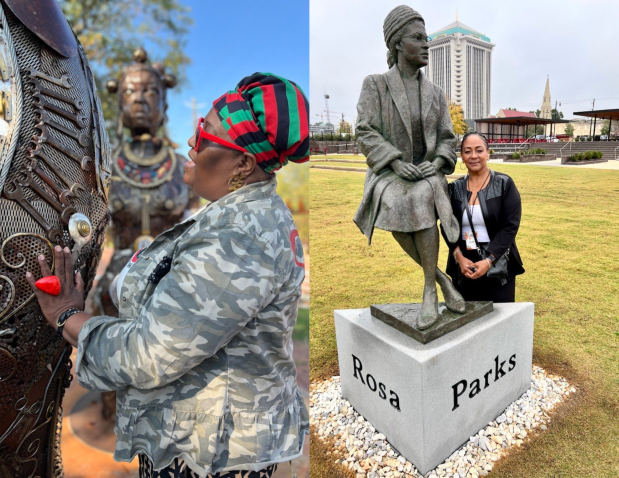
The Equal Justice Initiative’s Museum in Montgomery, Alabama reminded me of the extensive African presence in Latin America through their animated maps of the Trans-Atlantic Human Trafficking of African people into the Americas.

Those animated maps help demonstrate a fact that stunned me when I first learned it: approximately 80% or more of the people trafficked out of Africa in bondage were brought to the Americas between the Carribean and South America, and only about 6-10% of those people ended up in British North America, or what would ultimately become the United States. 

I was aware of these histories through my Ethnic Studies education at San Francisco State University in the 90’s, but that was several decades ago.  I needed a refresher, and I wanted to share these histories with my colleagues, so many of whom have not had the great blessing of an Ethnic Studies education—inspired by the education offered us by the Equal Justice Initiative. 

I want people to understand that as “Raza Latina,” — roughly translated as a “Latin Race” — we are a diverse group with multiple ethnic and racial backgrounds. These labels used to identify us, such as Latinx, Hispanic, and Latiné, focus on our European ancestry, but ignore our Native and African roots, just like many of our own family histories do. 

This is rooted in White Supremacy. Racism.  Both at the societal level and at the level of families and individuals who proudly lift up our European ancestry but ignore or deny our ancestors native to the Americas or Africa.  

I created a slideshow to introduce people to the history of how nearly six times the number of African captives were brought to the Caribbean and Central and South America, as compared to North America.  

I recounted the stories of various Quilombos, which were often small nations or fortified settlements comprised mainly of Africans seeking freedom from slavery, alongside indigenous and non-conforming Portuguese or Spanish individuals who rejected the racial hierarchy imposed by Portuguese and Spanish colonizers in colonial, mostly port-based settlements. 

I shared that one major difference between British colonies and colonies of the Spanish was that the Spanish allowed for inter-marriage.  While both systems of White Supremacy relied on the establishment of a Caste system that determined power relations based on phenotype—how we look—the Spanish version required an elaborate hierarchy based on the many mixtures of Native, African, and European lineage.

In my research, I found several versions of this social pyramid, but every version placed people with lighter skin at the top and those with more African features at the bottom. This is the genesis of anti-Blackness in the Americas.  It was the genesis of racist ideology in the Americas, even preceding that first ship to land in the British colonies in 1619. 

Sharing these histories help people understand that the people known as Latinos are also often descendants of Africans—like I am—though that history is unknown to current generations my family, and only revealed in our curly hair and now a DNA analysis.

I want people to know that anti-Blackness was imposed as part of our collective process of colonization, and I want people to know this at the same time I extend an invitation to us all to decolonize. Ourselves, our histories, and our institutions. Our minds. 

We must re-Indigenize and re-Africanize ourselves.  We must embrace all of who we are, as part of our collective healing. And as an invitation for us to understand that White Supremacy was imposed on us long ago. With a consciousness of these facts and this history, we are invited to abandon anti-Blackness not merely in solidarity with Black people, but as an embrace of our full selves. 

I also shared the history of La Raza solidarity between the Brown Berets and the Black Panthers in the SF Bay Area during the San Francisco Strikes of 1969 that helped produce the only School of Ethnic Studies in the world.  They joined forces to feed children, support families, and combat police brutality within our communities, and I am proud to say that my family was part of that important work. 

The Young Lords Party in Chicago and the Bronx stood in solidarity with the Black Panther Party, fighting for equity in garbage collection, access to vaccinations, and Patients’ Rights at Lincoln Hospital in the Bronx. The important community-based, grassroots efforts were some of the earliest efforts and successes of environmental justice, access to care and patients’ rights activism. 

I shared stories of our work across Black, Brown, and Asian and Pacific Islander communities in San Francisco—in partnership with UCSF—to reduce chronic disease inequity.  The stories I shared help to dismantle the narrative that our communities are in competition, or in conflict.  

All these stories I shared as part of a collective effort to dismantle anti-Blackness, and to see examples throughout hundreds of years of our collective alignment for liberation.  

In the future, I would like to lift up the many stories of white people who risked or lost their lives in the struggle for liberation of Black and indigenous people.  Those too, are histories that must be told and known, so that white people are not left with the misconception that they only descend from oppressors, or that they must only either identify with oppressors or be ashamed of their ancestors.  

I want white people to identify with brave freedom fighters like John Brown.  Or non-violent abolitionists who risked everything to support the Underground Railroad. I hope that through these histories, we will be inspired to do more for racial and social justice. It is my wish that we will feel compelled to do more for our collective liberation from racism and other forms of oppression. 

And in this way, I hope to help foster the learning and coalition-building that I believe to be two important elements of what we gain by way of this beautiful and imperfect experience we know as the Alabama Pilgrimage, #PursuingProgress. 

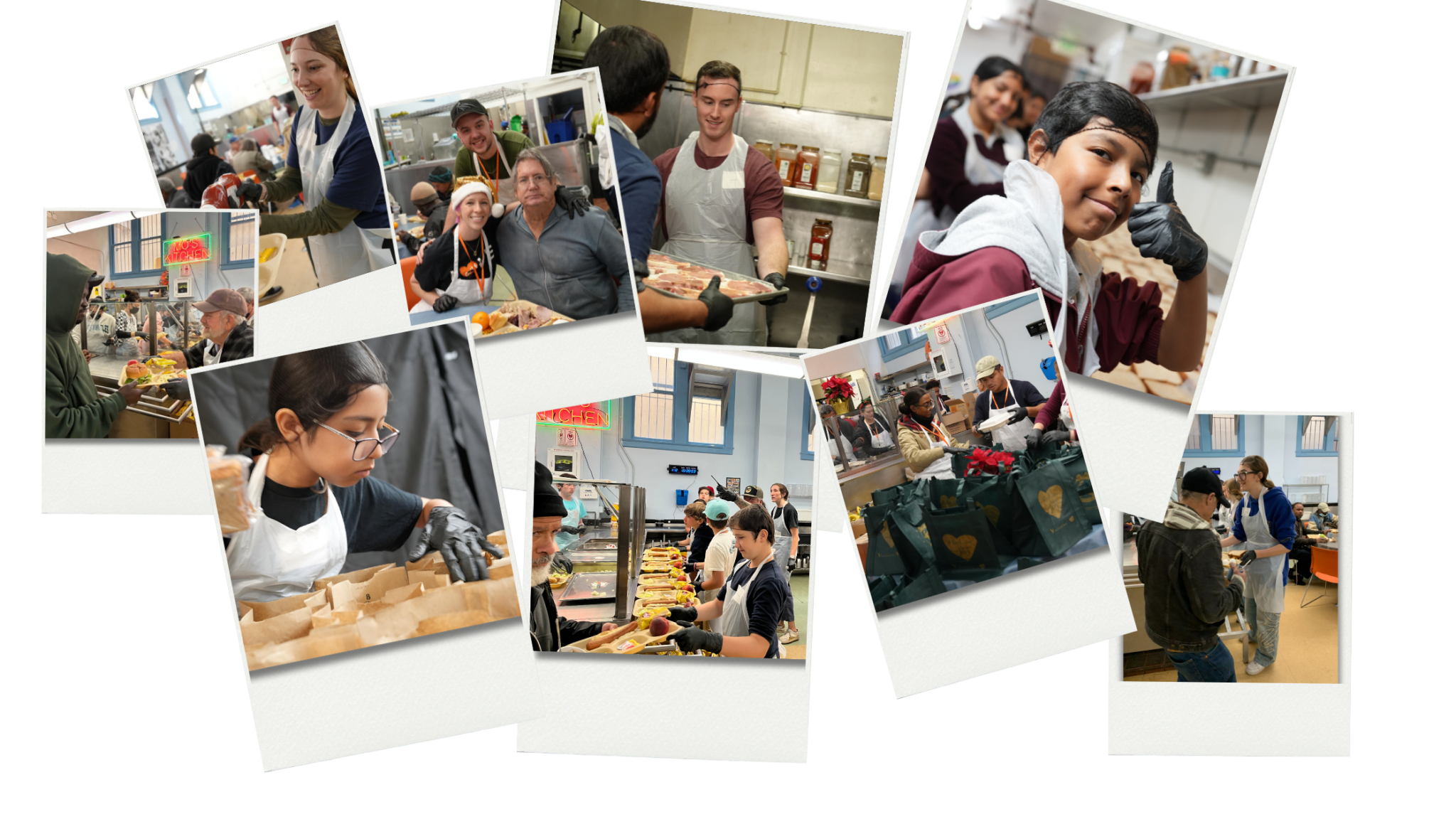
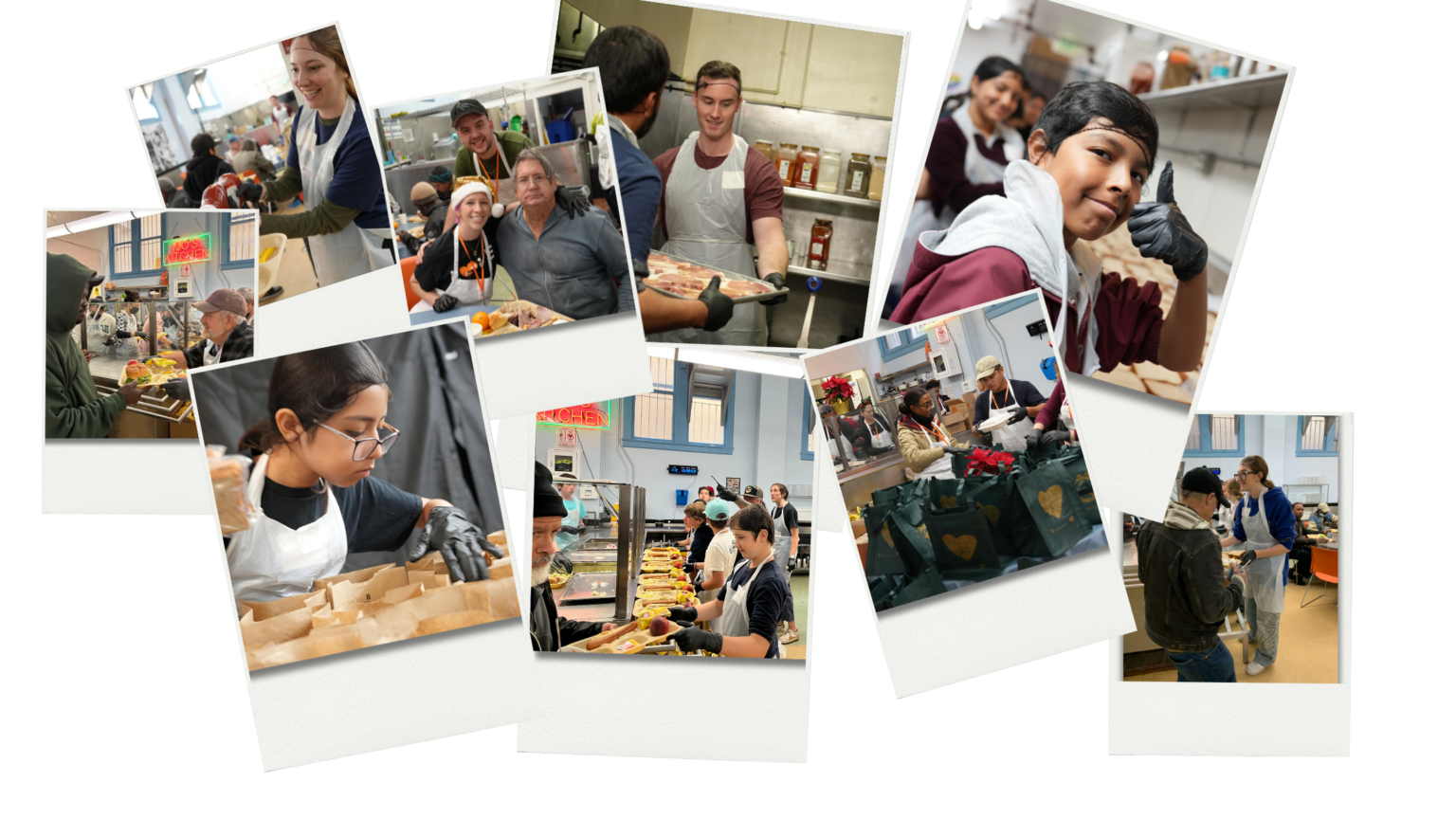
For 16-year-old San Francisco native Landon To, the mission to serve the less fortunate shows no signs of slowing down.

Over the past few years, Landon involved himself in a student-led group called The Lunchmakers. The volunteer group puts together free lunches that are distributed monthly to various communities here in the Bay Area. GLIDE first caught up with Landon back in 2023, when he was distributing lunches to the hungry in the Tenderloin.

To financially support this endeavor, Landon applied for a $500 grant through Youth Services America, which paid for the cost of making and delivering lunches. Fast forward, and Landon has done it again!

This time, Landon was the recipient of a $500 grant from the Heartwarming Project, a program supported by The Hershey Company, and designed to help kids and teens develop important social and emotional skills while celebrating the power of connection. Hershey sponsors programs that use social-emotional learning techniques to boost mental wellbeing and equip young individuals for success in education and employment.

Landon will use the Heartwarming Project grant to engage 50 more youth volunteers during Youth Service Month (April/May) to encourage them to create Lunchmaker programs of their own. 

glide volunteers with landon to

Landon To packing lunches with fellow GLIDE youth volunteers

For Landon, this grant only reinforces his deeply held commitment to helping others, while inspiring his peers at the same time.

 “A lot of people see community service as something of a chore, or something they have to do,” said Landon. “But I think that’s the completely wrong way to look at it. If you start from a young age, community service can become normalized, like if you were to do it every weekend, then it just becomes part of your normal routine. It’s not a “I have to do this” type of activity. “

For Landon, if you start volunteering when you’re young and make public service a part of your life, it develops positive attributes like kindness and consideration of others.

Landon enjoys working with GLIDE. As a student at San Francisco Urban High School, Landon is devoting time to school projects that actively align with GLIDE’s values.

In his words, “GLIDE is easy to work with and has welcomed me. I plan to continue my partnership with GLIDE as long as they’ll have me.”