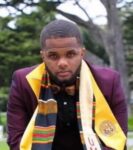
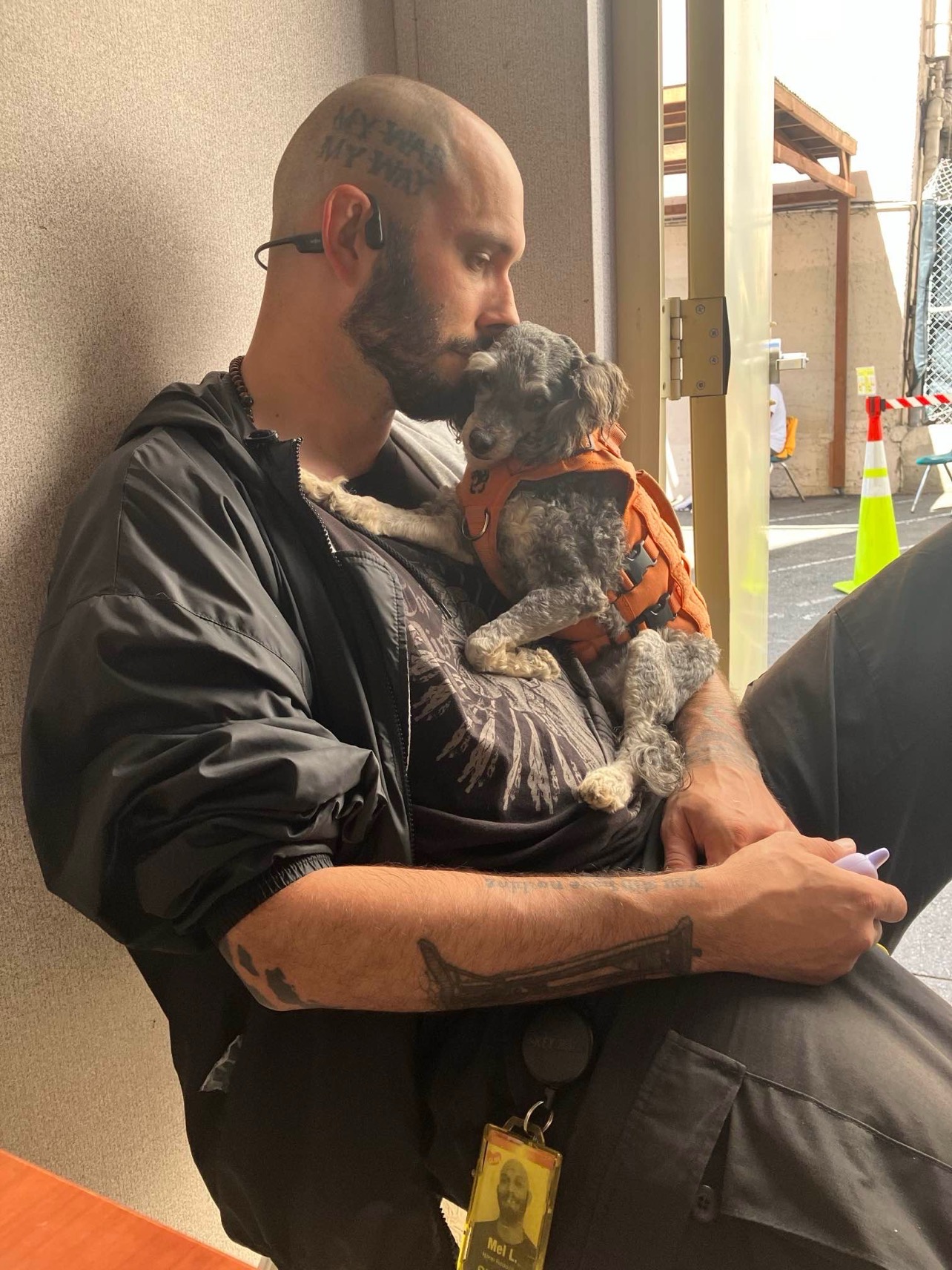
Mel Lester was someone you remembered. Born in San Leandro on January 29, 1987, he made people feel like they belonged through a deep conversation, a shared laugh, or a song recommendation that perfectly fit the moment.
Music was his language. He didn’t just listen; he lived it and shared it with everyone around him: Rock, jazz, hip-hop, country, and classical. Like a proper music historian, he could discuss everything, breaking down sounds, stories, and histories. He made you care about a song, even if you had never heard it.
Mel was self-contained, but if you engaged with him, he was well-spoken and insightful. As a Health Systems Navigator at GLIDE since 2022, he made it his mission to help people navigate complicated systems and get the care they need. He was thoughtful in his approach, ensuring those he helped had what they needed to move forward.
If you saw Mel at GLIDE, you likely saw his loyal companion Captain Doo Dad trotting along beside him. They were inseparable, a team in every sense.
Mel leaves behind his siblings and a community of people who were lucky to know him. His presence was one of kindness, thoughtfulness, and authenticity.
He was the kind of person who made you stop and listen, the type of person who left a mark just by being himself.
Rest easy, Mel. The music never stops.
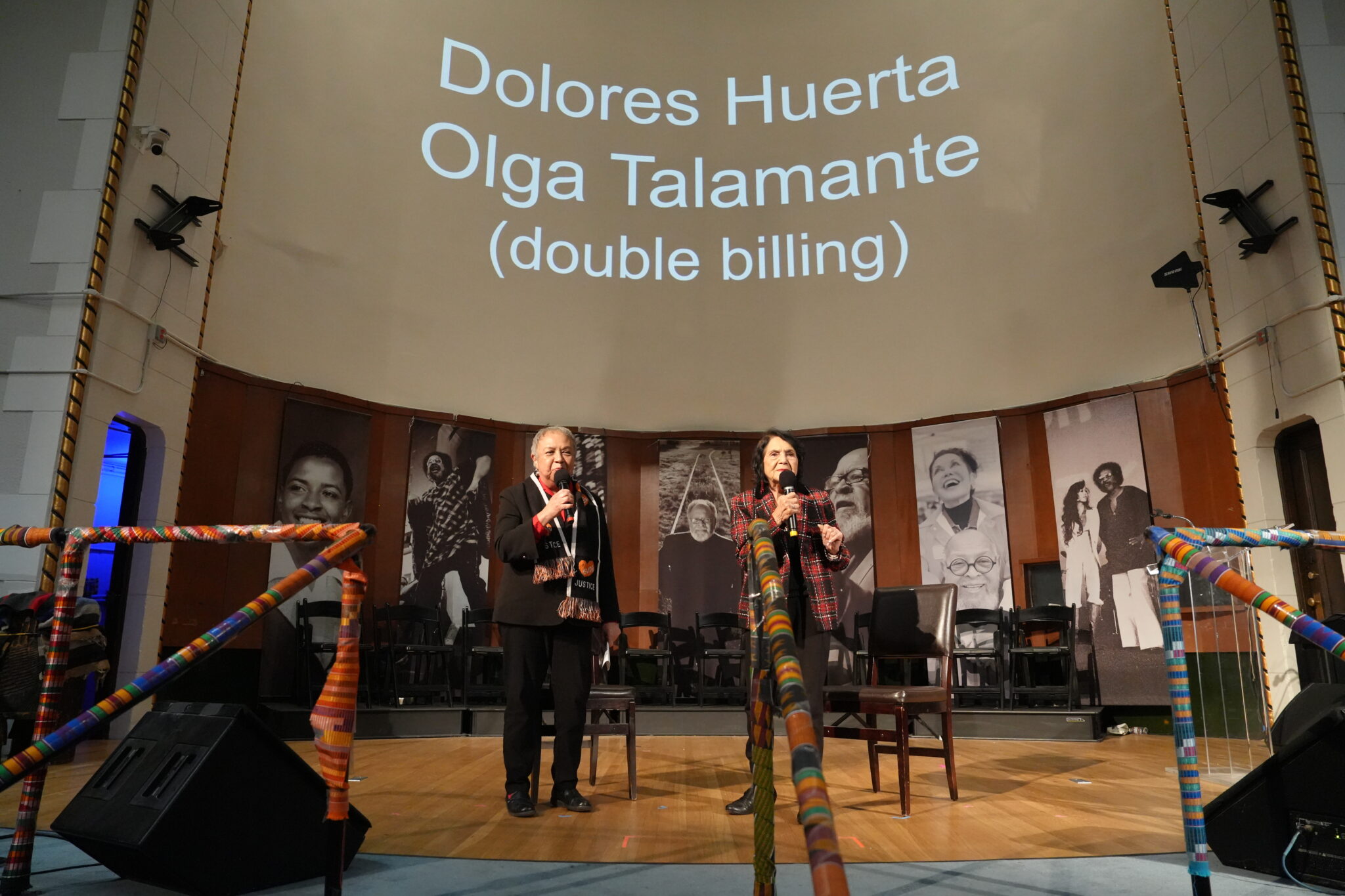
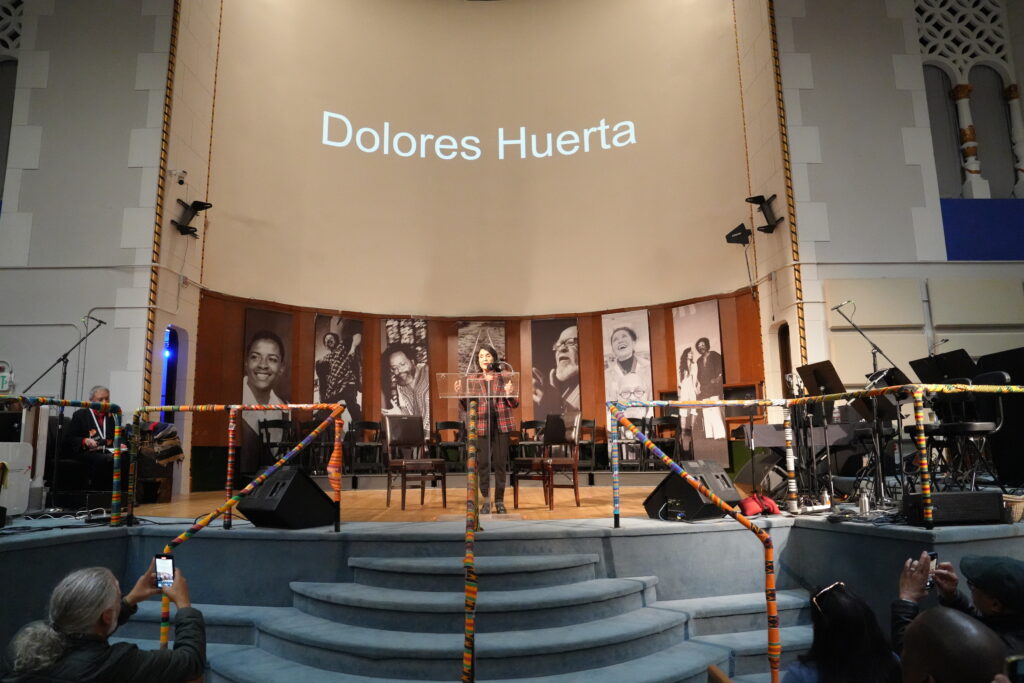
On March 6, 2025, Glide Memorial Church became a gathering place for activism, history, and movement building, welcoming civil rights icons Dolores Huerta and Olga Talamante. These two powerhouse leaders have spent decades fighting for labor rights, immigrant justice, and economic equity, uplifting farmworkers, women, and marginalized communities. Their stories reminded us that justice is never handed over. It is built through community, persistence, and action.
Dolores Huerta, co-founder of the United Farm Workers (UFW), has dedicated her life to securing fair wages, safer working conditions, and labor rights for farmworkers. Her famous rallying cry, “Sí, se puede” (Yes, we can), continues to inspire grassroots organizing and advocacy.
Olga Talamante’s activism began as a young Chicana leader in the U.S. Still, her fight for human rights took a sharp turn when she was imprisoned in Argentina for speaking out against the dictatorship. After her release, she fiercely advocated for immigrant rights, racial justice, and LGBTQ+ empowerment. As the longtime director of the Chicana Latina Foundation, she has helped young women access higher education and leadership opportunities.
Both leaders embody community-based advocacy and reflect GLIDE’s radical inclusivity and commitment to equity.
The event began with Minister Marvin K. White, who declared, “Justice lives in this house.” His words set the tone for a night dedicated to systems change and collective action.
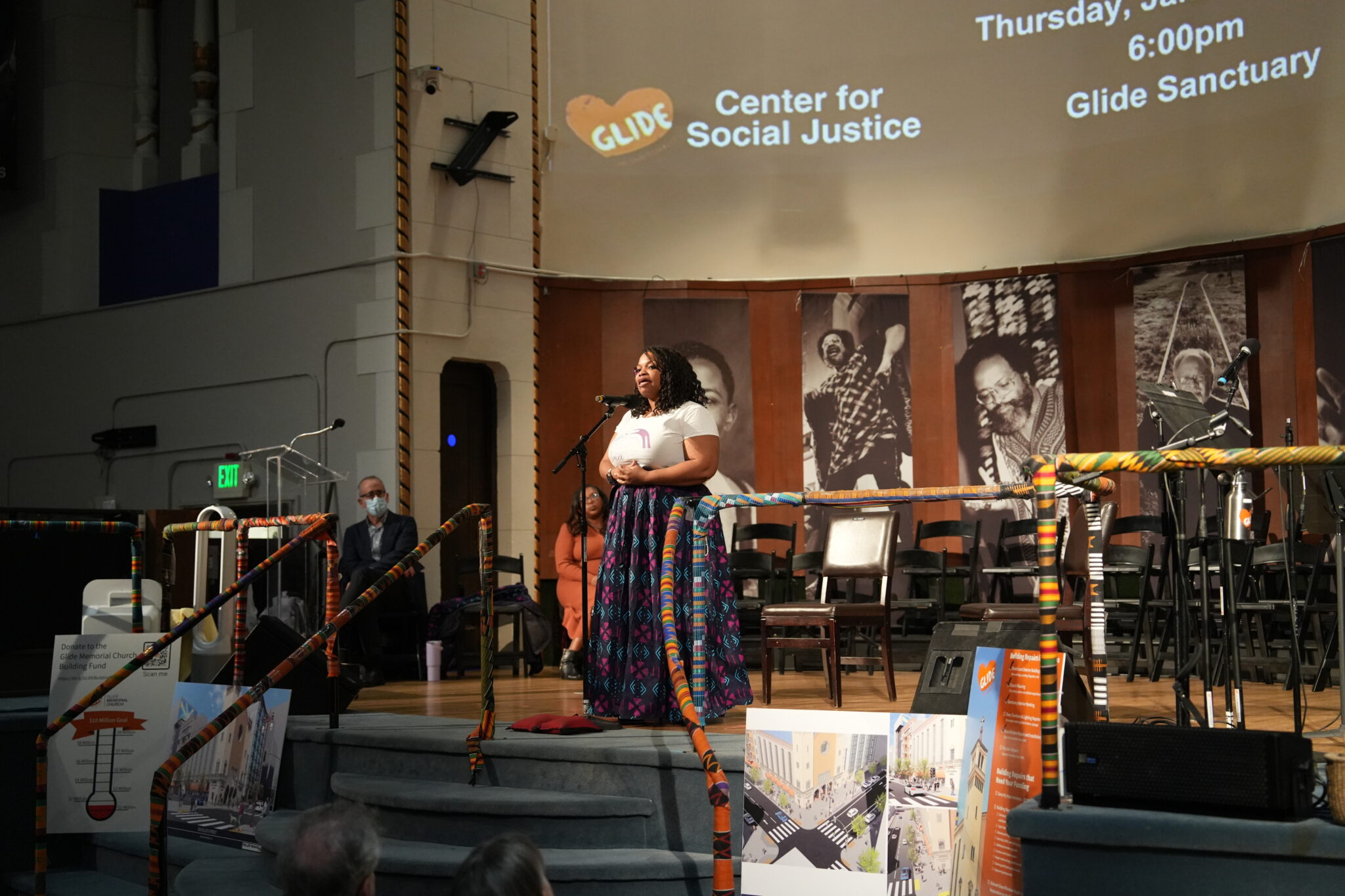
Naeemah Charles, Director of GLIDE’s Center for Social Justice (CSJ), connected the work of Huerta and Talamante to the struggles GLIDE continues to address. From labor rights and immigrant justice to economic equity, their stories highlighted the same issues GLIDE fights for daily.
Erick Arguello, CSJ’s Advocacy Manager, delivered a powerful land acknowledgment, honoring the Indigenous communities whose land we stand on. A longtime advocate for Latino representation and policy change, Arguello played a key role in organizing this event, ensuring the community heard directly from these activism leaders.
When Dolores Huerta and Olga Talamante took the stage, they spoke with wisdom from decades of grassroots organizing. Huerta reminded us that every movement begins with people willing to organize, while Talamante emphasized solidarity across struggles, from labor rights to LGBTQ+ justice. Their words were not just a history lesson. They were a call to action.
At GLIDE, we believe real change happens when people come together. Too many families struggle to meet their children’s basic needs, like food, education, and safe spaces. But when we act as a community, we create real solutions.
That is what the Social Justice Academy (SJA) is all about. It equips people with the tools to advocate for policies that break cycles of poverty. Through hands-on learning, storytelling, and grassroots organizing, fellows use their experiences to push for real change. If you believe every family deserves the chance to thrive, we would love to have you with us. Sign up today.
Dolores Huerta’s work does not end on the stage. It continues daily through the Dolores Huerta Foundation, which empowers communities through organizing, education, and civic engagement. If her words inspired you, take action. Support organizations that uplift women, immigrants, and children. Use your voice and stand in solidarity with those fighting for justice and economic equity.
The night ended with a real sense of urgency. Change happens when people come together, organize, and speak up. This was not just about looking back. It was about taking action. The fight for justice is not over, and when we stand together, we can build a future where women, children, and families survive and thrive.
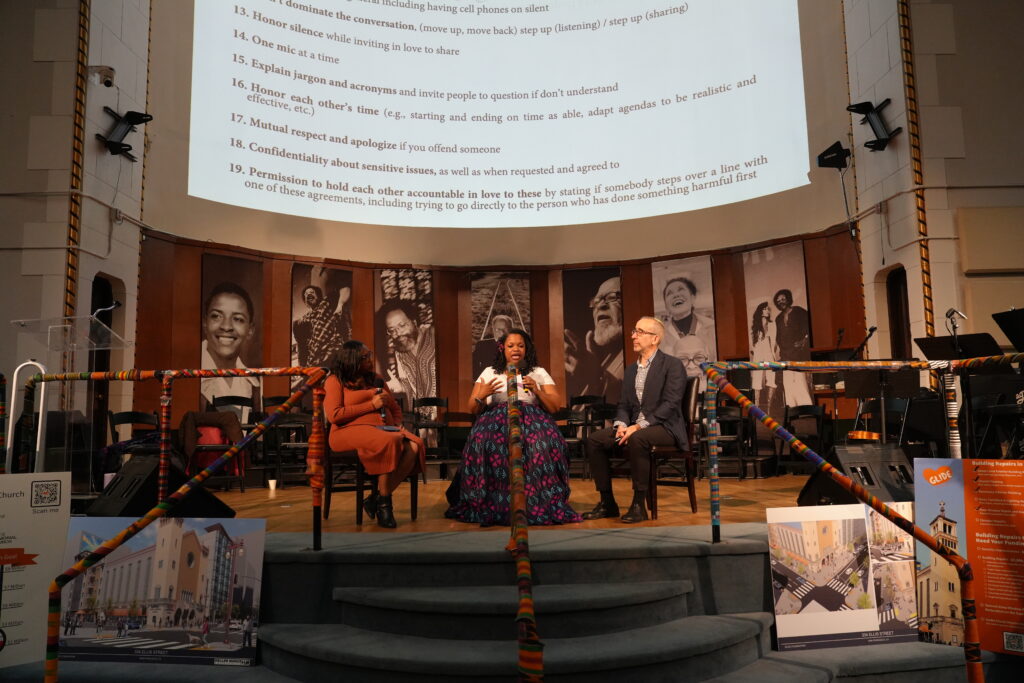
On January 30th, we gathered inside Glide Memorial Church’s sanctuary for Justice in Selma, Justice in the Tenderloin: An Invitation to Personal and Communal Introspection. The conversation brought together Ainka Jackson, Executive Director of the Selma Center for Nonviolence; Rabbi Michael Lezak, our Center for Social Justice Director; and Dr. Leanna Lewis from UCSF. We opened the evening the GLIDE way, with music and praise led by Regina Wells, our Senior Manager of Training and Development. It set the stage for real conversation.
Justice isn’t just about remembering history, it’s about acting today. At GLIDE, love demands justice, and that means standing up for racial and economic equity. Be part of the work. Show up, get involved, and push for change. Read more in our blog post, GLIDE’s Juneteenth: Honoring Freedom and Advancing Justice.
Ainka introduced herself and the Selma Center for Nonviolence, an organization continuing the unfinished work of the Civil Rights Movement. She shared the Shared Love Agreements, guidelines that set the tone for honest and respectful dialogue. These agreements remind us that understanding doesn’t always come first, but compassion should. With that foundation, we moved into a deeper conversation about justice, economic struggle, and the work happening in Selma and the Tenderloin.
Ainka explained that her organization is focused on changing harmful laws and addressing the deeper cycles that keep modern-day Selma struggling. While the city holds a significant place in civil rights history, economic disinvestment and systemic barriers continue to impact its residents today. She emphasized that policy reform alone isn’t enough, real change happens when people have access to jobs, education, and resources that allow them to build stable lives.
Through the Selma Center for Nonviolence work, her team is creating pathways for economic growth and community healing, ensuring that Selma’s legacy isn’t just remembered but actively sustained. Like Selma, the Tenderloin faces ongoing challenges rooted in systemic injustice, making long-term investment in people essential to real change.
In 2015, Selma was one of the most impoverished cities in the country and had one of the highest murder rates. Despite its place in civil rights history, years of economic disinvestment left many residents without opportunities. Ainka emphasized that addressing crime and poverty takes more than policing, it requires long-term investment in people’s futures. Without opportunities, the same cycles repeat.
That’s where Selma 2.0 comes in. It’s a call to action that connects Selma’s history to real solutions. The initiative is helping build a stronger, more sustainable community through job programs, economic development, and nonviolent intervention. Ainka pointed out that while Selma attracts visitors from all over the world to walk across Edmund Pettus Bridge, most leave without engaging with the people who live there. Her organization is working to change that by creating attractions and opportunities that encourage people to stay, support local businesses, and be part of Selma’s future, not just its past.
Selma and the Tenderloin may be on opposite sides of the country but share many of the same struggles. Both communities have been shaped by systemic injustice, economic hardship, and cycles of violence. Both are places where resilience is not just a word but a daily act of survival and hope. Just like Selma 2.0 is working to rebuild Selma from within, we at GLIDE are committed to ensuring the Tenderloin’s people have access to what they need, whether it’s meals, housing, health services, or advocacy.
This month at GLIDE, our theme is “Love Calls for Justice for Black Americans.” Justice is love in action, and that love must extend beyond remembrance and into real change. That means advocating for policies that lift communities, supporting organizations that do the work, and ensuring justice isn’t just an idea but something we live out daily.
This isn’t just a conversation; it’s a call to action. If we want to see real justice, we have to stay engaged. Please support the work of the Selma Center for Nonviolence by visiting their website at www.selmacenterfornonviolence.org. Get involved with GLIDE’s efforts in Tenderloin and beyond. Please find a way to step into the movement because justice isn’t something we wait for. It’s something we build together.
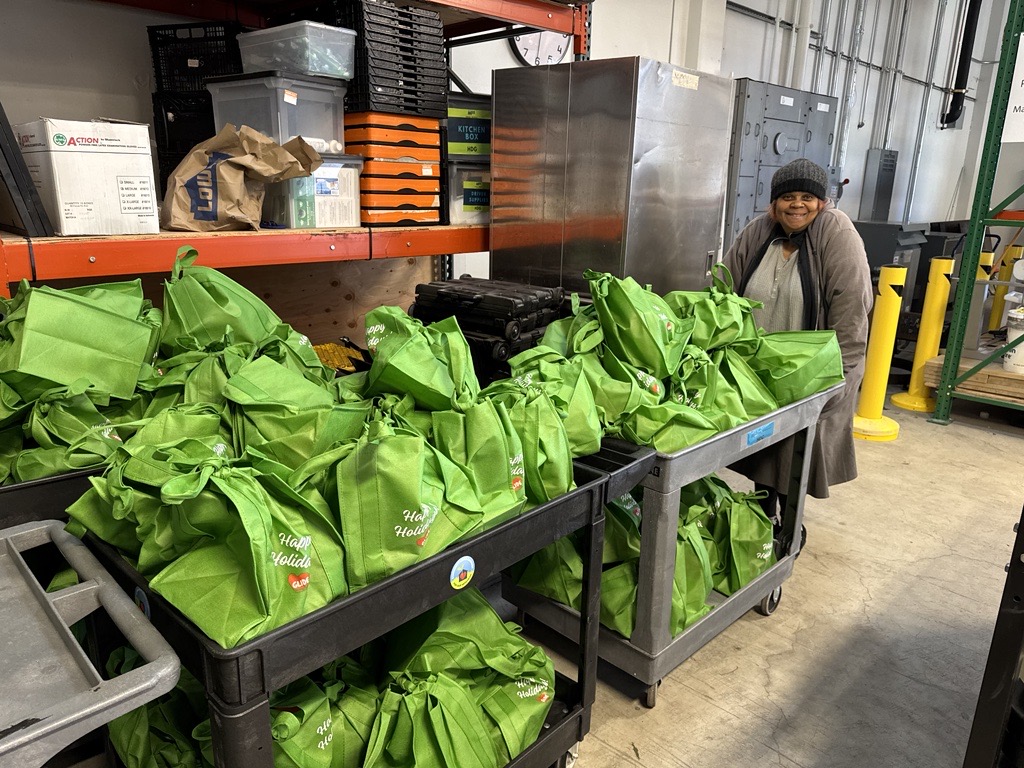
For over 20 years, GLIDE’s Annual Grocery Bag Giveaway has been a cornerstone of support for San Francisco. In her second year as President and CEO, Dr. Gina Fromer, alongside Jean Cooper, Chief Impact and Strategy Officer, and with support from GAP Inc., continued this tradition of delivering meals and care to thousands across the city.
GLIDE delivered 4,000 grocery bags to individuals and families at 11 pickup locations and 21 delivery sites. This effort relied on the dedication of volunteers, staff, and community partners to ensure everyone had access to meals during the holidays.
The preparation began on Monday, December 9, when GAP Inc. staff joined GLIDE volunteers to assemble the bags. By Wednesday, December 11, deliveries were in motion, with drivers and staff working to distribute bags to homes and community sites. Andy Chu, Executive Director of the YMCA, who helped manage one of the delivery sites, shared, “Our partnership with GLIDE is essential. We provide meals to families during the holidays, which everyone deserves.”
Reflecting on the event, Dr. Gina Fromer said, “In my second year as CEO, I’m proud to see our community come together once again to ensure no one is left out during the holidays. This year’s Grocery Bag Giveaway is a testament to what we can achieve together.”
The Grocery Bag Giveaway is about showing up for our community. Watch the video to see
At GLIDE, we’re proud to have built a strong partnership with Old Navy and Gap Inc. Over the past 21 years, this partnership has brought joy and excitement to the children at our Janice Mirikitani Family, Youth, and Childcare Center (FYCC) and Family Resource Center (FRC). We’re grateful for its lasting impact and look forward to continuing our work together to support the kids in the Tenderloin.
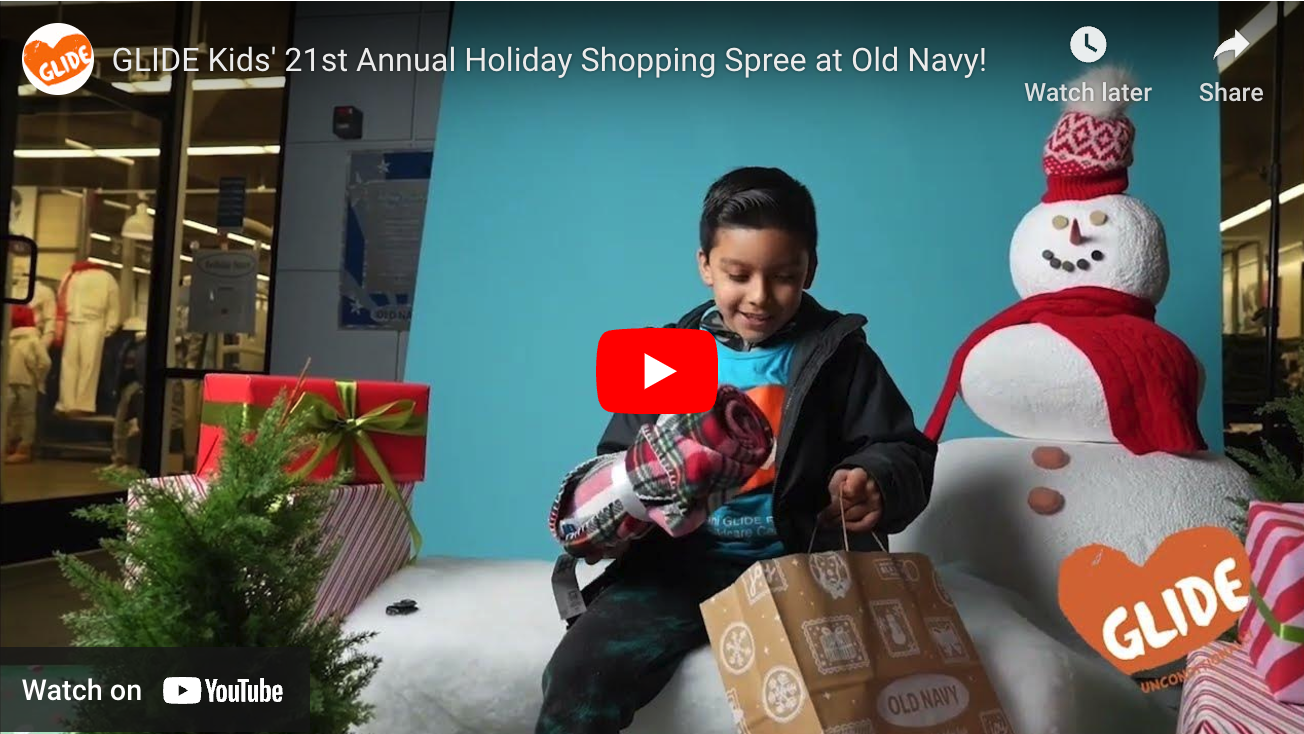
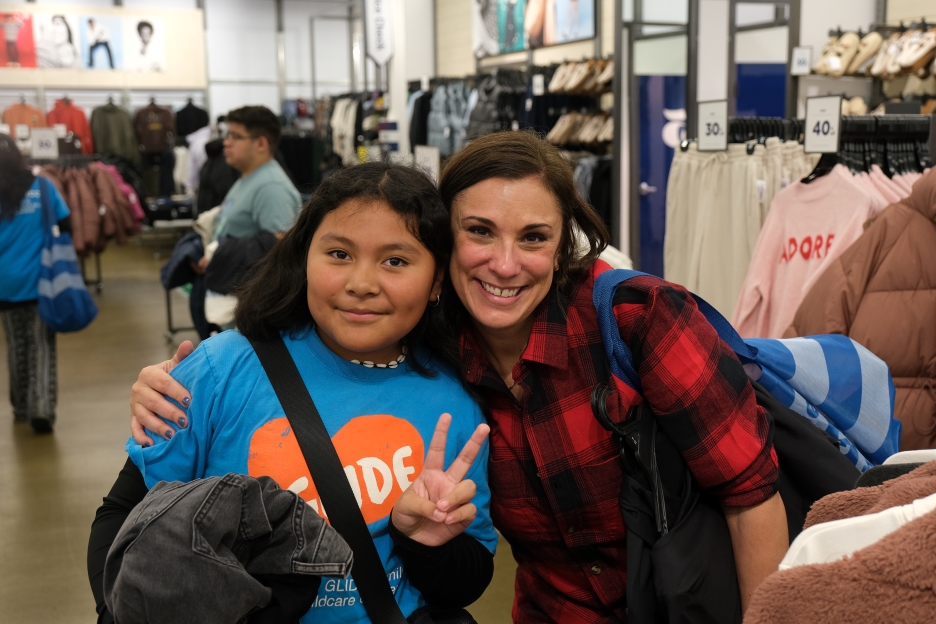
On December 5, GLIDE teamed up with Old Navy to treat 65 kids from FYCC and FRC to a holiday shopping spree. The kids were excited as they boarded the bus heading towards the Old Navy store in Colma, CA. This store is extra special; it was the first Old Navy to open in 1994. The kids couldn’t help but chant “Old Navy” the whole way!
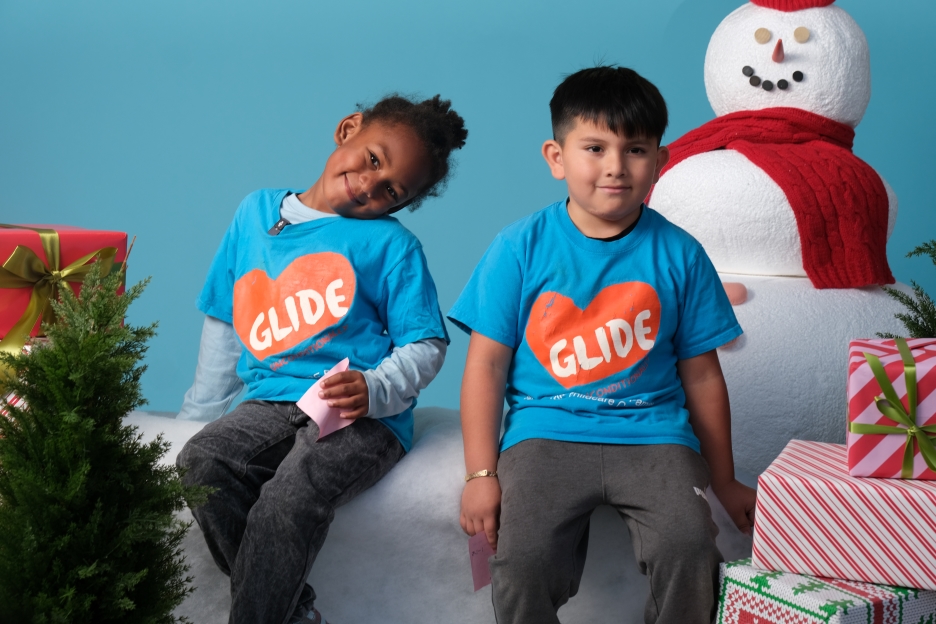
When the buses pulled up around 4:15 PM, the excitement was palpable. The store manager greeted the kids as they stepped off the bus, and their energy went through the roof when they found out they’d get to take photos with a snowman at a photo booth before starting their shopping. They couldn’t wait to jump off the bus and get started!
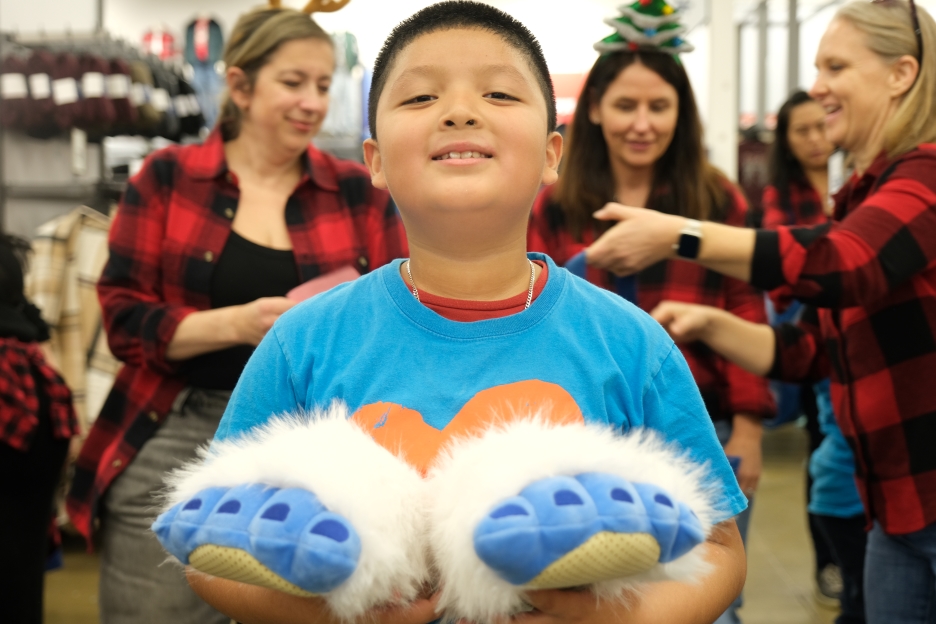
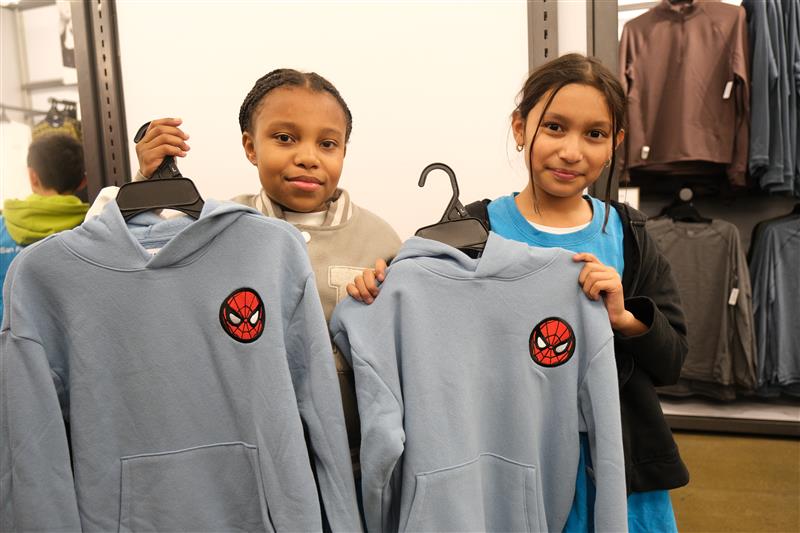
Each child was paired with a personal shopper, and the fun continued. They played hopscotch, participated in a drawing challenge, and got creative with holiday-themed artwork. While the candy bags were a nice treat, the shopping truly caught their attention. The kids were like pros, excitedly asking store attendants to help them find the perfect fit. The racks didn’t stand a chance!
District Manager Danielle Grayum said, “These kids are so creative with shopping. I’ve worked here for so many years, and it’s such a joy to see how excited they are for this event.” Katie Porter, Sr. Director of Photo + Video Production, added, “This partnership is important. GLIDE is a critical resource for the San Francisco community, and this collaboration gives these kids a chance to express their creativity, enjoy a fun day, and experience the excitement of shopping for themselves.”
FYCC student Lily shared, “I’m really happy; this is so cool.” At GLIDE, we’re all about making people feel loved and helping them build confidence. For years, our shopping sprees have allowed kids from the FYCC and FRC to shop, create their style, and make lasting memories.
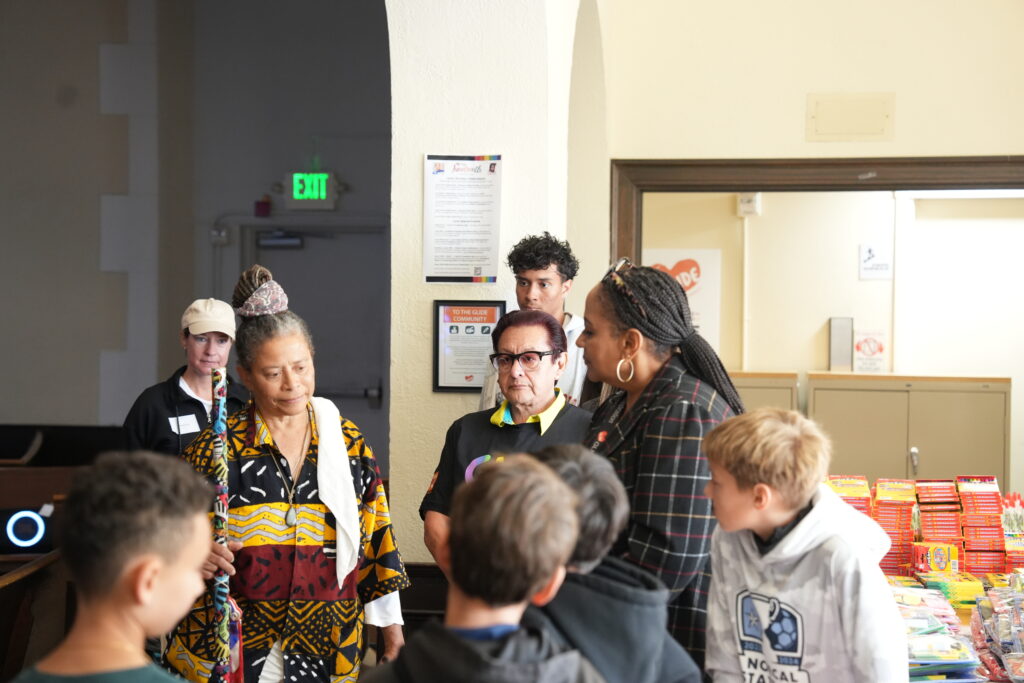
On October 17th, GLIDE staff celebrated the successful launch of our Reverend Cecil Williams Community Ambassadors program.
Kicking off at 10 AM with songs from our GLIDE ensemble, the event allowed the public to meet the ambassadors, each with a unique story and passion for their work. Funded by Mayor London Breed’s 30X30 initiative, these ambassadors are here to connect residents with services, work with local businesses, beautify neighborhoods, uphold safety, and strengthen community support in the Tenderloin.
Our lobby was filled with community members, staff, media, partner organizations, and guests. Our ambassadors shared their stories, illustrating their deep passion for serving this community, which resonated with everyone present.
Russell Roberts, a Reverend Cecil Williams Community Ambassador, said, “We know the struggles in this community because we have faced them ourselves. Our passion for this work comes from our experiences and the understanding that we are just a difficult day or a few missed paychecks away from the realities we see on our streets daily.” Ron Merkerson, another Community Ambassador, added, “We bridge the gap between clients and the organizations that serve this community.”
Our ambassadors in the Tenderloin community have been instrumental in preventing overdoses and assisting community members in finding housing. Shirleen McSpadden, the Executive Director of the Department of Homelessness and Supportive Housing (and former board member of GLIDE), recognized their efforts by saying, “You carry the spirit of GLIDE’s co-founders, Reverend Cecil Williams and Janice Mirikitani, in the work that you do.”
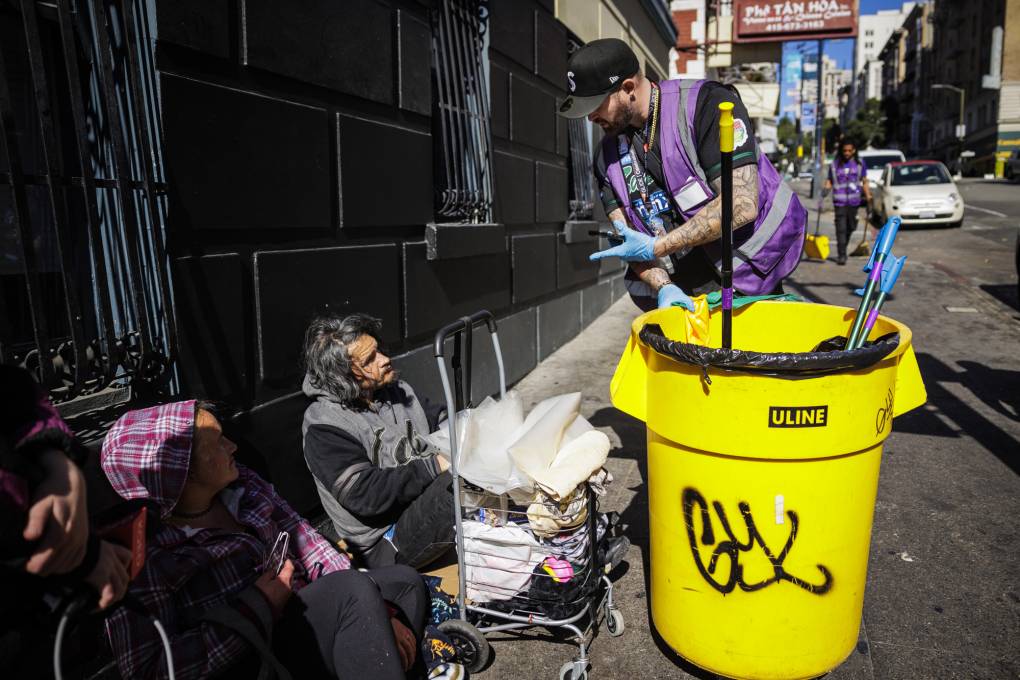
News crews from KQED and KPIX followed our ambassadors as they worked in the Tenderloin, capturing their vital daily routines. The ambassadors cleaned the streets and were greeted by business owners with hugs, handshakes, waves, and smiles. Reporters were surprised to see how each ambassador was known by name, not only by local business owners but also by unhoused individuals, displaying their strong relationships in the community.
It is not easy, and it certainly comes with its challenges. As Kenneth Holloway, one of our ambassadors, put it, “The reward is knowing that I’m making a difference—whether small or big every day I come to work.”
Our Ambassador Day was one to remember. Please say hello to our ambassadors if you see them in the Tenderloin; they are present every day of the week. They are easily recognizable in their purple vests as they continue the legacy of Reverend Cecil Williams and Janice Mirikitani. As we remember Reverend Cecil, we must ask ourselves, “What would Cecil do?” Our ambassadors embody the answer to that question.
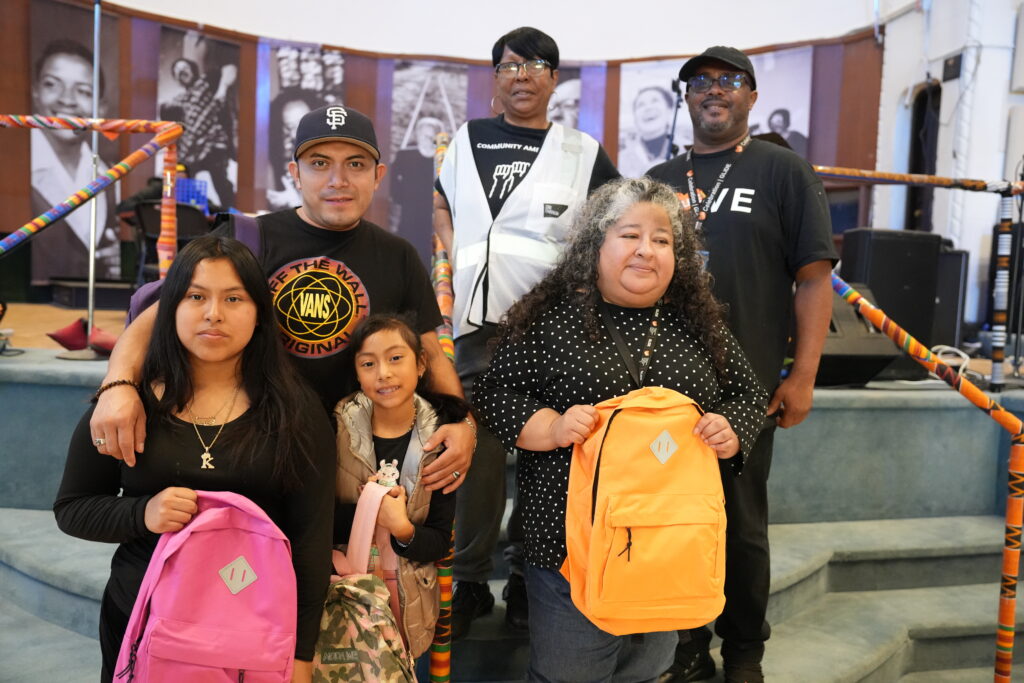
Young scholars are our future—tomorrow’s teachers, doctors, lawyers, and leaders. The education they receive today sets them on that path. With our 10th annual backpack giveaway, GLIDE ensured they started the school year ready and equipped for success.
To prepare for the Backpack Giveaway on August 15th, 2024, GLIDE staff and youth volunteers gathered in our sanctuary to fill 400 backpacks with school supplies—books, notebooks, crayons, and pencils.
Our President and CEO, Dr. Gina Fromer, engaged with the youth, emphasizing the importance of education. She reminded them, “You are our future.” Life Science Cares generously donated over one hundred of these backpacks.
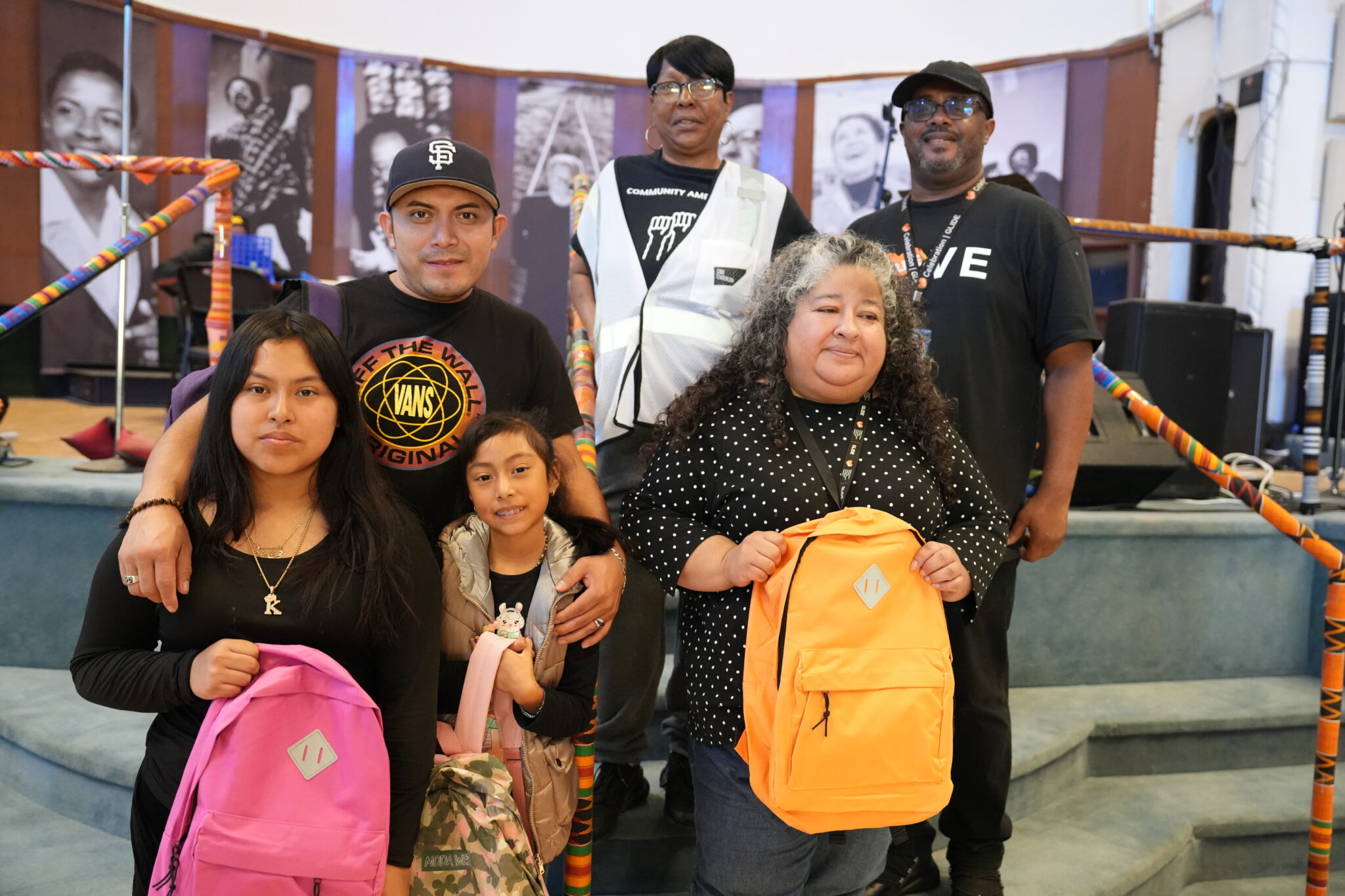
On August 17th, at 10 am, volunteers from Code Tenderloin and GLIDE staff set up tables with books for families while backpacks filled with school supplies were spread throughout the sanctuary. Families arrived, and kids eagerly chose their backpacks and played games like Goldfish and Tic-Tac-Toe with our staff.
The free book giveaway stood out, offering diverse titles like “Wow, Mom, You Speak Spanish!”, “I’m a Little King” and “Matzah Craze.” This event showcased our commitment to radical inclusivity, ensuring everyone felt included and valued.
Our community has no boundaries—everyone is dedicated to strengthening it. Del Seymour, our board member and the “Mayor of the Tenderloin,” was glad to see the youth in our community.
He talked with the kids and handed out school supplies, saying, “These kids remind me of the energy and curiosity I had at their age.” Local officials—Controller Malia Cohen, Assessor Joaquín Torres, and Supervisor Dean Preston—also joined us, showing their commitment to the community.
They answered questions from community members and connected with the children, providing a valuable opportunity for policymakers to engage directly with the people they serve and strengthen community ties.
The success of our 10th annual backpack giveaway demonstrated the strength of our community. GLIDE will continue supporting our youth by providing resources, mentorship, and opportunities, ensuring they have the tools to succeed in school and life.
Despite the negative portrayal in the media, the Tenderloin community is a vibrant and diverse neighborhood. It is a melting pot of people from all levels of society, including a significant African American population—about 11% of the residents.
Regrettably, the remarkable efforts of the Tenderloin and its African American leaders often go unnoticed. These leaders, whether they are nonprofit directors, police officers, doctors, teachers, or activists, are making a significant difference in our community every day. Their work deserves more recognition.
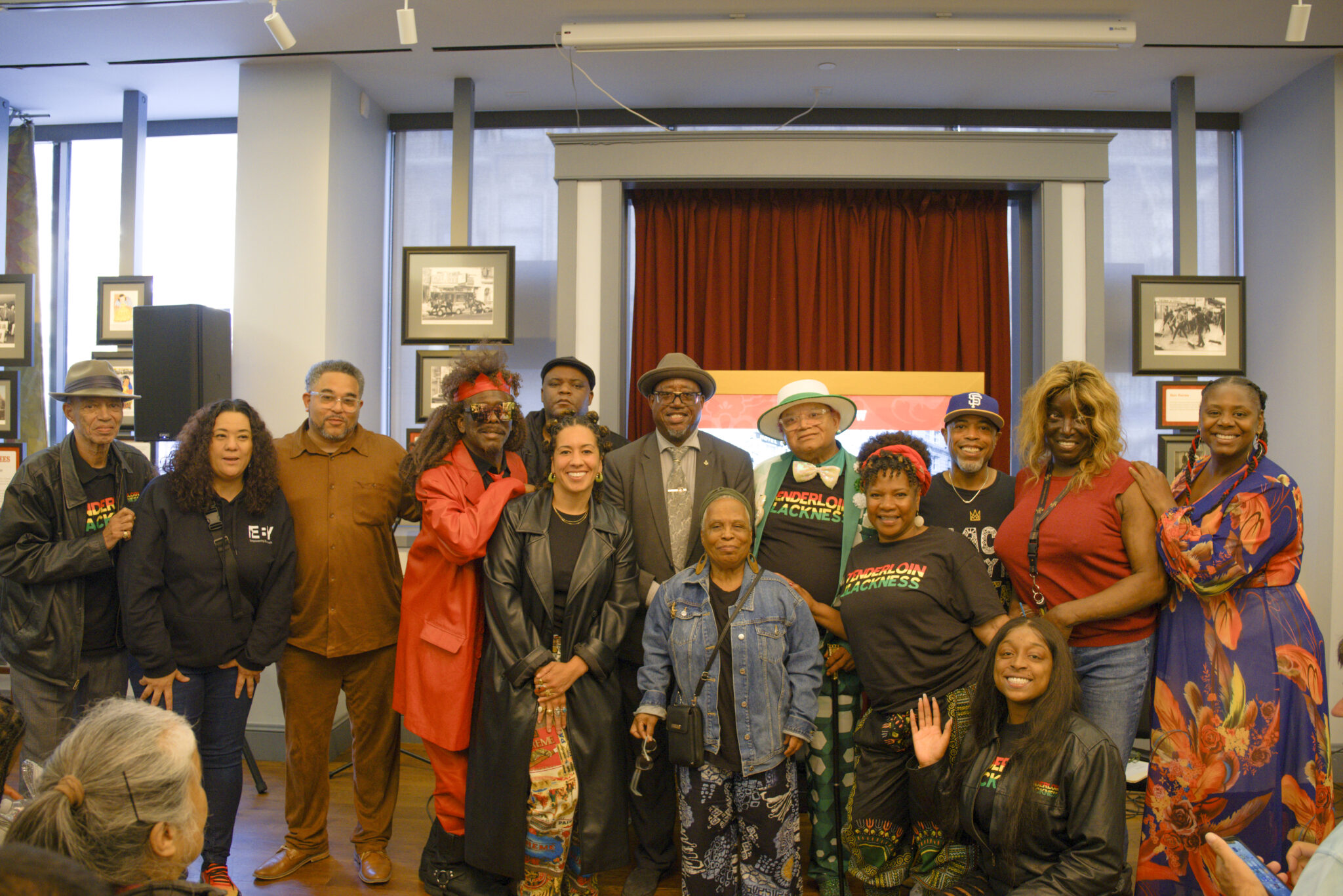
One such leader is Del Seymour, known as the “Mayor of the Tenderloin.” Del has put together an exhibit at the Tenderloin Museum called “Tenderloin Blackness,” highlighting African Americans’ significant contributions to our community. This exhibit honors their hard work and dedication, showing that the Tenderloin is much more than the negative press portrays. It is a tribute to the unsung heroes, making the Tenderloin a better place for everyone. To learn more about Del Seymour and his impactful work, visit Code Tenderloin.
The exhibit was unveiled on Thursday, August 1st, bringing together a diverse crowd from the Tenderloin community. The attendees included members of the San Francisco Police Department, GLIDE’s CEO, Dr. Gina Fromer, and the Fire Department, many of whom were African American. This event was a true reflection of our community’s unity and inclusivity.
Aliya Duong Stewart, an EMT who works in the Tenderloin, shared a powerful insight: “Being Black in the Tenderloin when we respond to someone in need, it’s different. There is a deeper understanding and connection when they see someone like them. We can calm situations better, and they relate to us more.”
GLIDE knows that powerful change happens when the change is led by those most impacted. That’s why GLIDE values hiring people who can truly relate to the communities we serve, including those who were formerly incarcerated or formerly substance dependent. This ensures a genuine connection and effective support.
The Tenderloin Museum’s exhibit also honors our late co-founder, Reverend Cecil Williams. It celebrates his legacy and impact on the community with photos and newspaper articles highlighting his work and how he reshaped GLIDE into what it is today.
Through its various programs, GLIDE stands at the forefront of advocating for and transforming marginalized communities, providing essential services like free meals, healthcare, and housing support.
Although this was not a GLIDE-led event, it embodied one of our core beliefs: Radical Inclusivity. During the unveiling, Del Seymour said, “I could’ve honored politicians, people in leadership positions, CEOs, and many others, but I wanted to honor the everyday working people here in the Tenderloin because most of them, like me, have a story to tell.”
A panel was held with people from various backgrounds, including a woman named Shavonne, who shared, “I was substance dependent. I began a new life and journey here in the Tenderloin when I recovered. I work here daily to set an example and show people there is a way out of substance dependence.”
The “Tenderloin Blackness” exhibit beautifully captures the spirit and perseverance of our community, shedding light on the incredible, often unsung contributions of its African American leaders. To explore these powerful stories and celebrate the heart of the Tenderloin, visit the exhibit at the Tenderloin Museum, located at 398 Eddy Street, San Francisco, CA 94102.
Do not just let the media and news educate you about the Tenderloin; learn about our community firsthand. For more details, click this link. Connecting with our stories will give you a deeper appreciation for the resilience, diversity, and strength that make our community unique.
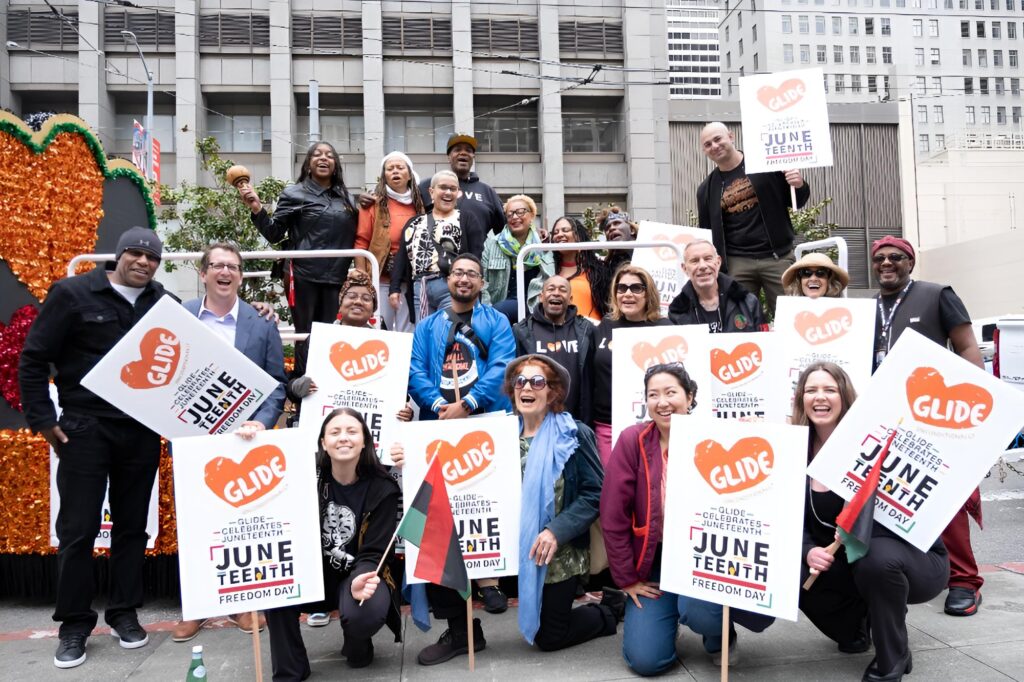
For African Americans, Juneteenth is a traditional celebration marking the beginning of freedom for Black Americans. While we celebrate with parades and festivities, it is essential to remember that this day of joy was once an unimaginable dream for many. During slavery, countless lives were lost, and women and children faced severe abuse. Human life was forced into labor, enduring unimaginable hardships. Juneteenth has been a federal holiday for three years now. At GLIDE, where we champion radical inclusivity, we celebrate this important day each year with our staff, clients, and community.
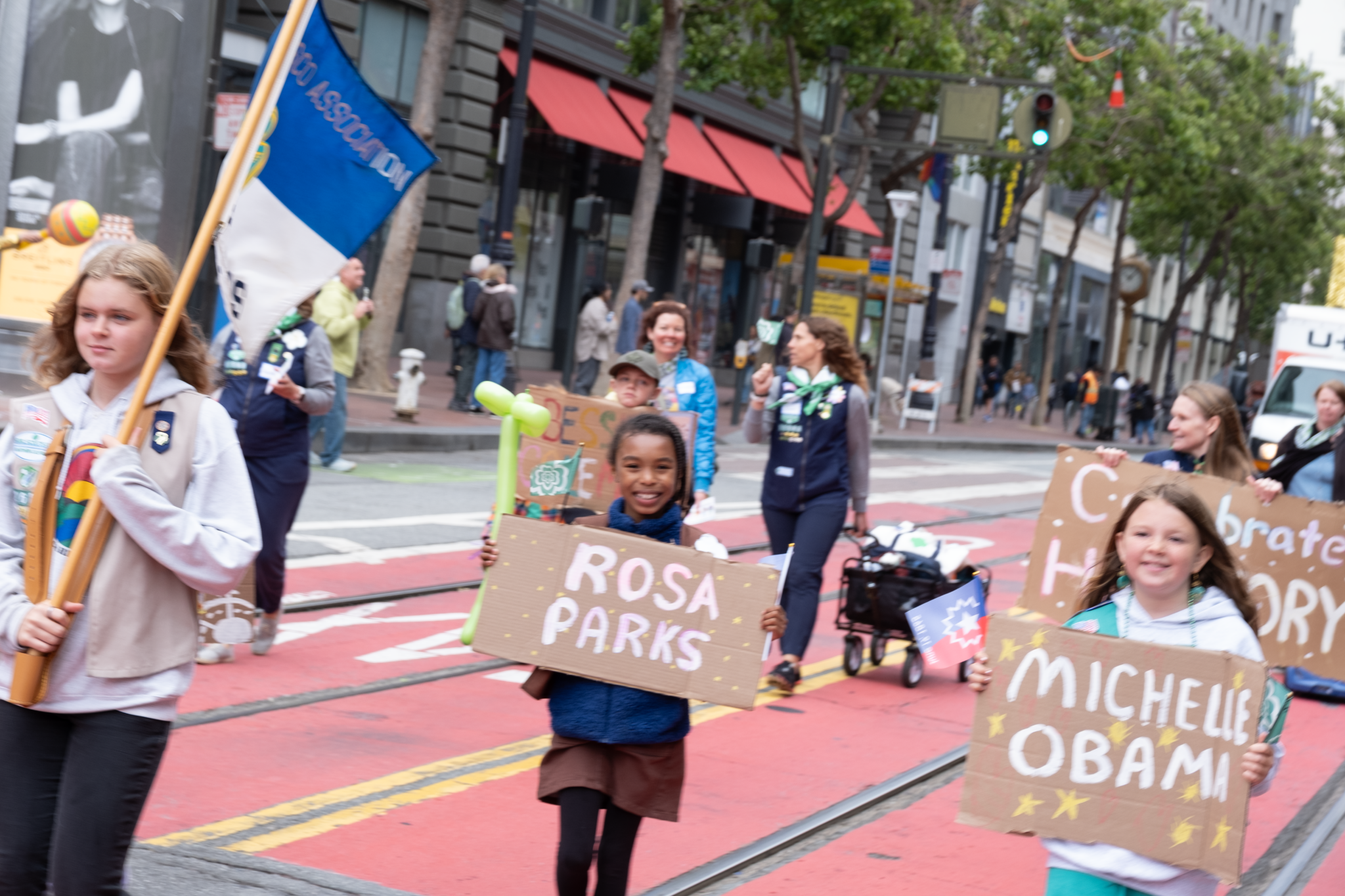
This year was no exception. GLIDE proudly participated in San Francisco’s annual Juneteenth Parade Celebration on Saturday, June 8th, 2024. Organized by the San Francisco Human Rights Commission, starting at 10 AM at Market and Spear Street, the streets were filled with people carrying signs of historical Black figures like Martin Luther King Jr., Malcolm X, Thurgood Marshall, and Harriet Tubman. Luxurious cars lined up, ready to cruise through the parade. Political figures, including Assemblymember Matt Haney and Mayor London Breed, joined the community in this lively and meaningful celebration.
GLIDE had its float, but this year, we did something different. We removed our loudspeaker, and instead, Regina Wells, our Senior Manager of Training and Development for the Center for Social Justice, led us in singing traditional African American songs. We followed her lead, singing and clapping, captivating the parade’s audience. GLIDE staff members rode on the float while others marched in the streets, dancing to the music and waving to the crowd. We were joined by Board of Supervisor Dean Preston, who marched with GLIDE to celebrate this historic day. The theme of the entire parade was the celebration of freedom, and as Regina Wells stated, “We honor our ancestors; their pain and suffering are why we are here today. Their spirit lives on within each one of us.”
Young Black children heard these powerful words in the crowd, embodying the future and reinforcing the importance of the Black community striving to inspire and uplift. As they listened, they saw themselves as the torchbearers of a legacy, understanding the responsibility to honor the past while forging a brighter path forward.
The parade continued to the Civic Center, where a concert celebrated Juneteenth. Our GLIDE ensemble, led by Vernon Bush, took center stage and captivated the crowd with their performance. They sang the mighty “Glory” song, resonating through the venue and drawing everyone in. The music created an atmosphere of unity and celebration, highlighting the day’s spirit. While we celebrate, we recognize that there is still work to be done for the true freedom of African Americans.
Despite the progress marked by Juneteenth, African Americans continue to face significant challenges within the criminal justice system. African Americans make up about 13% of the U.S. population but represent 37% of the prison population, reflecting a severe overrepresentation. Black Americans are imprisoned at a rate five times higher than White Americans, with Black men facing imprisonment rates 5.5 times higher than their White counterparts. These disparities highlight the ongoing systemic inequalities that must be addressed to achieve true justice and equality.
These disparities highlight ongoing systemic inequalities. At GLIDE, we combat these injustices through our Legal Aid Clinic, providing crucial support and resources, legal representation, and advocacy. We also offer comprehensive reentry services, including job training, housing assistance, and counseling, to help former inmates rebuild their lives and reduce recidivism. We work towards a more equitable future by addressing immediate legal needs and supporting re-entry.
Our Legal Aid Clinic and reentry services are vital to GLIDE’s mission to uplift and empower all individuals, ensuring access to justice and the opportunity to thrive. We commit to addressing the persisting systemic injustices as we celebrate Juneteenth and its progress.
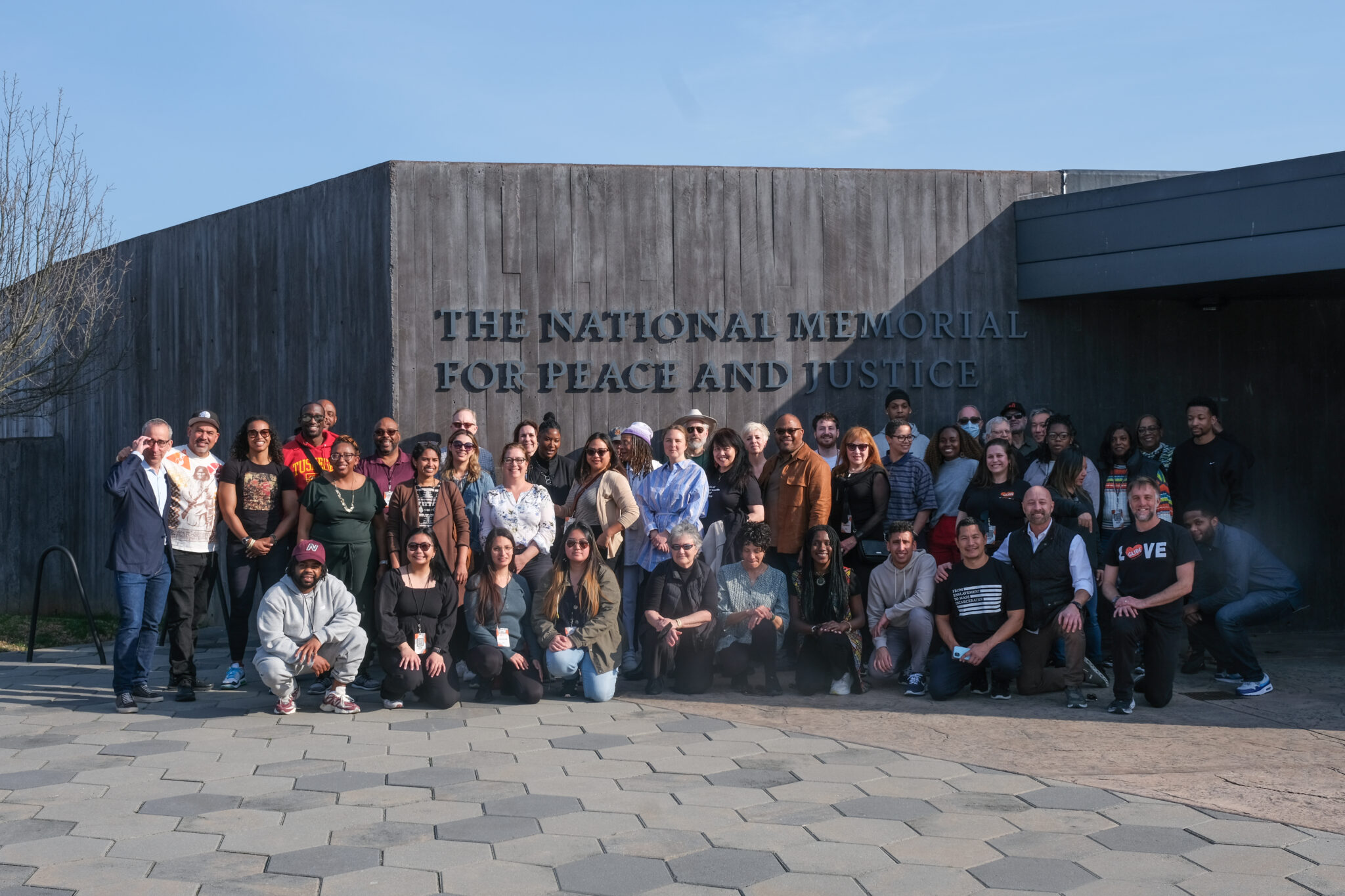
As I embarked on my second Pilgrimage to Alabama with GLIDE, I anticipated revisiting historic sites that held immense significance for African Americans and the entire nation. Our itinerary promised visits to poignant landmarks like the Selma Bridge, the 16th Street Baptist Church, the Legacy Museum, and the Mothers of Gynecology Museum. Little did I know that this journey would not only educate me deeper about the past but also force me to confront my emotional barriers.
During the Pilgrimage, we took a solemn walk across the Selma Bridge, symbolizing resilience and sacrifice in the struggle for civil rights. Standing on that historic ground, I felt the weight of the countless lives that had marched before me, fighting for equality and justice. Their footsteps resonated through the air, an urgent reminder of the battles fought and the progress yet to be made.
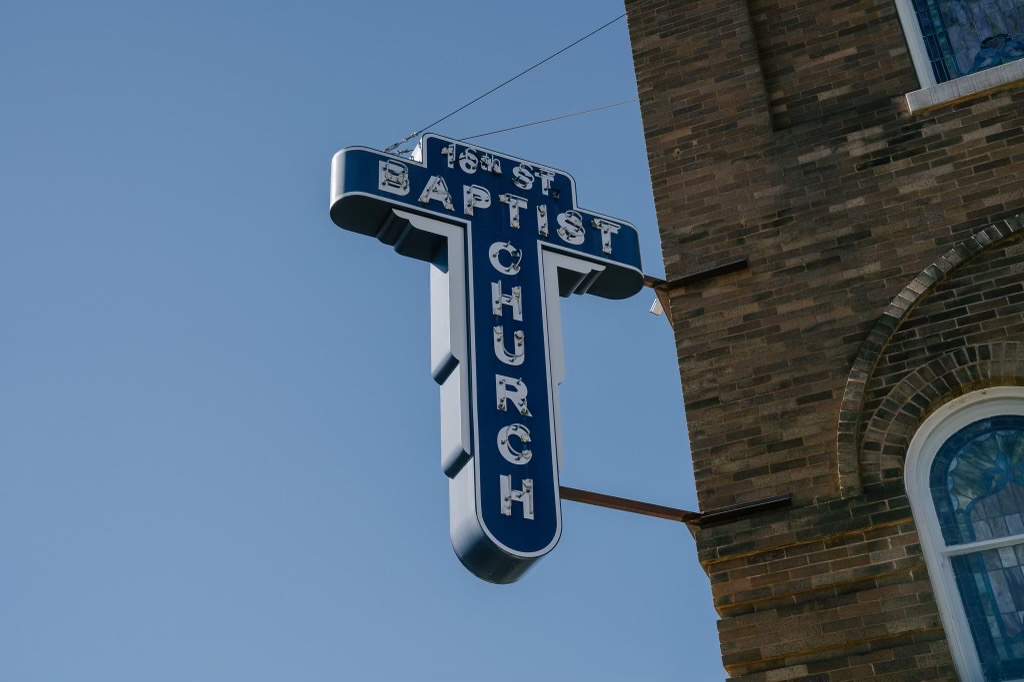
The 16th Street Baptist Church, among our itinerary’s additional stops, evoked a sense of bewilderment within me. The tragic bombing that claimed the lives of four young girls in 1963 was a stark reminder of the violence and hatred that permeated the era. It prompted me to ponder why anyone would harbor such hatred towards innocent individuals, leading them to commit such a heinous act. It’s profoundly perplexing to comprehend how someone could justify the brutal and senseless killing of young girls in such a sadistic manner. As I gazed upon the memorial honoring these innocent victims, I felt a sense of sorrow and anger at the senseless loss of life. Yet, amidst the darkness, there was also a glimmer of hope in the community’s resilience and unwavering commitment to justice. It showed me that I owe these girls to learn more about social justice, voting, feminism, and the roots of hatred and to support causes that aim to eradicate such injustices actively.
The Legacy Museum provided a harrowing glimpse into the horrors of slavery, lynching, and racial oppression that have plagued our nation’s history. Walking through the exhibits, I was confronted with the brutal realities of our past, and yet, I was struck by the profound lack of emotional response within myself. As my peers, irrespective of their racial backgrounds, were visibly stirred by the exhibits, I found myself oddly detached from the unveiled atrocities. This moment of introspection compelled me to confront the subconscious inclination to distance myself from the anguish of Black history.
In witnessing the visceral reactions of others, I realized that my automatic response was not one of empathy but detachment. I had become so accustomed to suppressing my emotions and numbing myself to the trauma of my ancestors that I had inadvertently distanced myself from their experiences.
The Pilgrimage was a powerful reminder that the fight for civil rights is far from over and that complacency is not an option. It challenged me to acknowledge my emotional barriers and inspired me to break free from the cycle of numbness and indifference. Reflecting on the journey, I realized that genuine empathy requires understanding the past, being willing to confront it head-on, and actively working toward a more just and equitable future.
A reflection by Kenneth Ward, GLIDE’s Social Media & Digital Content Specialist.


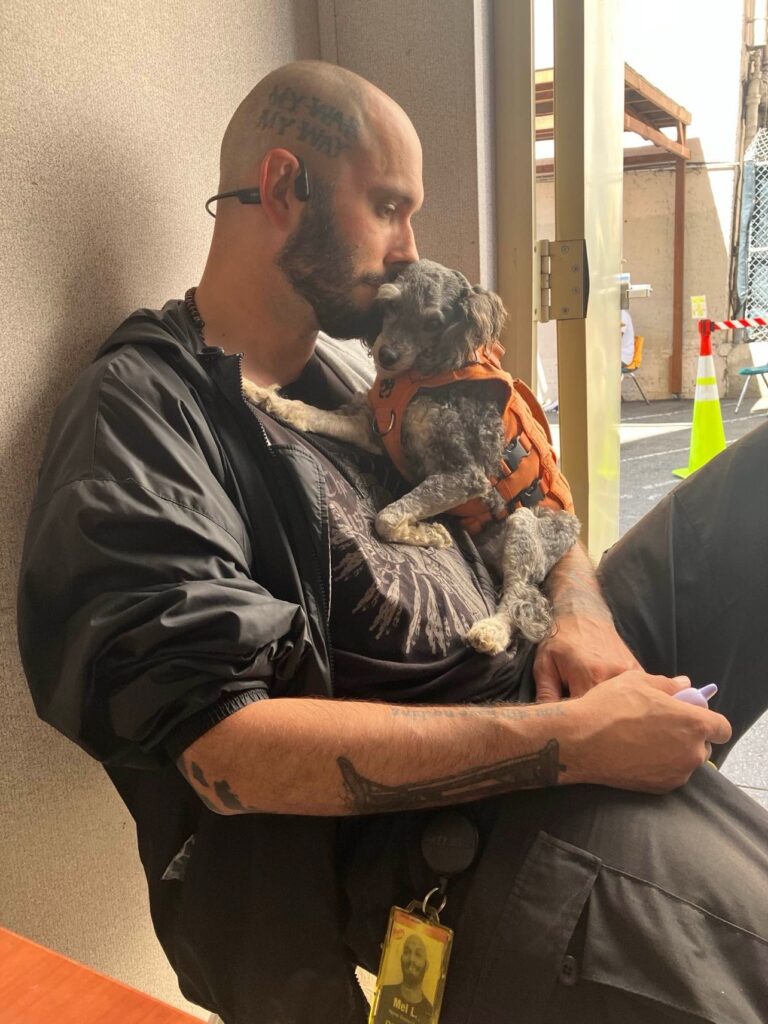 Mel Lester was someone you remembered. Born in San Leandro on January 29, 1987, he made people feel like they belonged through a deep conversation, a shared laugh, or a song recommendation that perfectly fit the moment.