
GLIDE’s response to the Governor’s announcement of a “Surge in Law Enforcement Operations” 
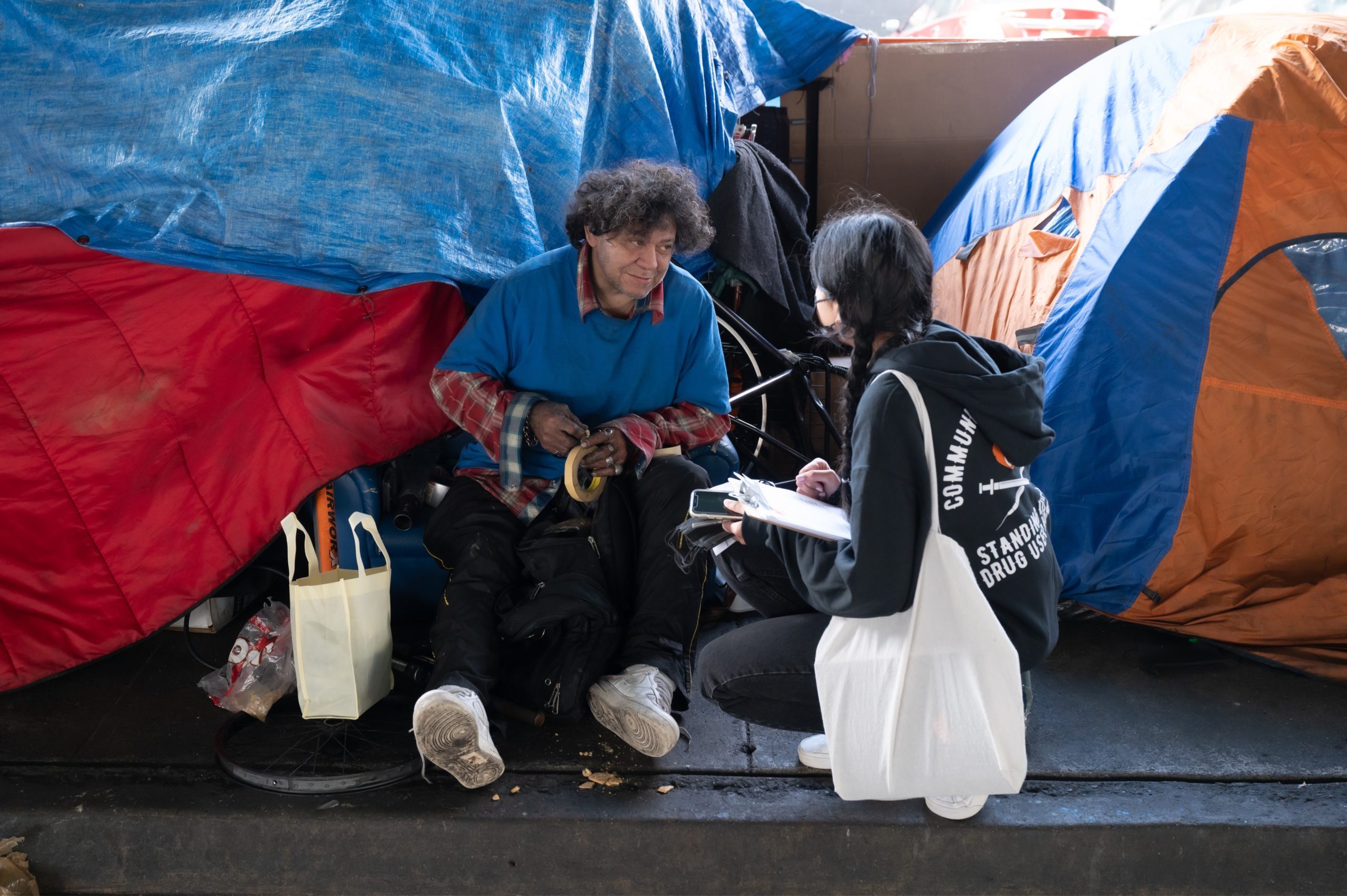
Our city, like many others, is facing a dire public health and safety emergency as we confront the escalating opioid overdose epidemic unfolding on our streets. In addition to the collective suffering and loss of life, this crisis is driving deep division and distrust at a time when our priority must be collaboration. Facing these critical challenges together is the only way through. At GLIDE, we transform adversity into unconditional love and healing to emerge stronger, safer, and more resilient. We’ve been doing it successfully for the past 60 years. 

We know we need to take bold, urgent action to address this crisis. However, decades of experience have shown us that the war on drugs, and drug users, will not increase safety, community cohesion, or stability.  Policing the drug crisis has not and will not solve addiction; seizures of narcotics will not curb demand. Rather, it initiates a chain of arrests that exacerbates struggles and pushes a healthier life further away, ultimately causing more damage than relief.  

For over two years during the pandemic, much of the world closed its doors to people suffering on the streets. As we reopen in a post-pandemic world that looks much different, our first response should be with healthcare professionals, harm reduction supplies, Narcan, and safe therapeutic spaces.  

It is out of an abundance of concern for those struggling with substance use disorder and extreme poverty – and for those who yearn for a safer, more equitable, and loving city – that we implore our leaders and residents to come together to solve this crisis through public health measures and not policing.  

Evidence based research makes clear that neighborhoods struggling with active drug-dealing networks suffer significant consequences to sudden and rapid increases in law enforcement without requisite access to low-barrier, public health resources. Residents of these neighborhoods experience a degradation in public safety and drug users face dire health consequences.  

Community-based organizations like GLIDE play a vital role in addressing immediate and long-term solutions. We serve as first responders, along with our coalition partners, to link people suffering from substance use disorder and poverty to a full spectrum of supports and services, ranging from access to safe consumption to abstinence-based recovery models. These services address the core issues driving this public health crisis – poverty, extreme income disparities, trauma, and social isolation. Because of our long history of work with the City’s most marginalized communities and our record of impact, we believe GLIDE should be invited to the planning table anytime a strategy is being developed that will impact our people.  

At GLIDE, the breadth of our programs and our approach to meet people where they are translates to increased stability and resiliency for our community. Every day, people turn to our integrated service model for meals, health care, case management, violence prevention, and spiritual healing. We drive bold systemic change through our Center for Social Justice to address the root causes of poverty and addiction and we channel the power of unconditional love through Glide Memorial Church. 

The good news is we have the power to solve this crisis. What changes lives for the better is hope, not handcuffs. By combining data driven solutions to treat substance use disorder with San Francisco’s unique legacy for compassion and acceptance, we can heal from the ails we face and come together as one city. GLIDE has and will stay true to that promise, unconditionally.
“I feel this Community Care event shows that the city has empathy for people’s plights and tribulations. People in the community love this.” 


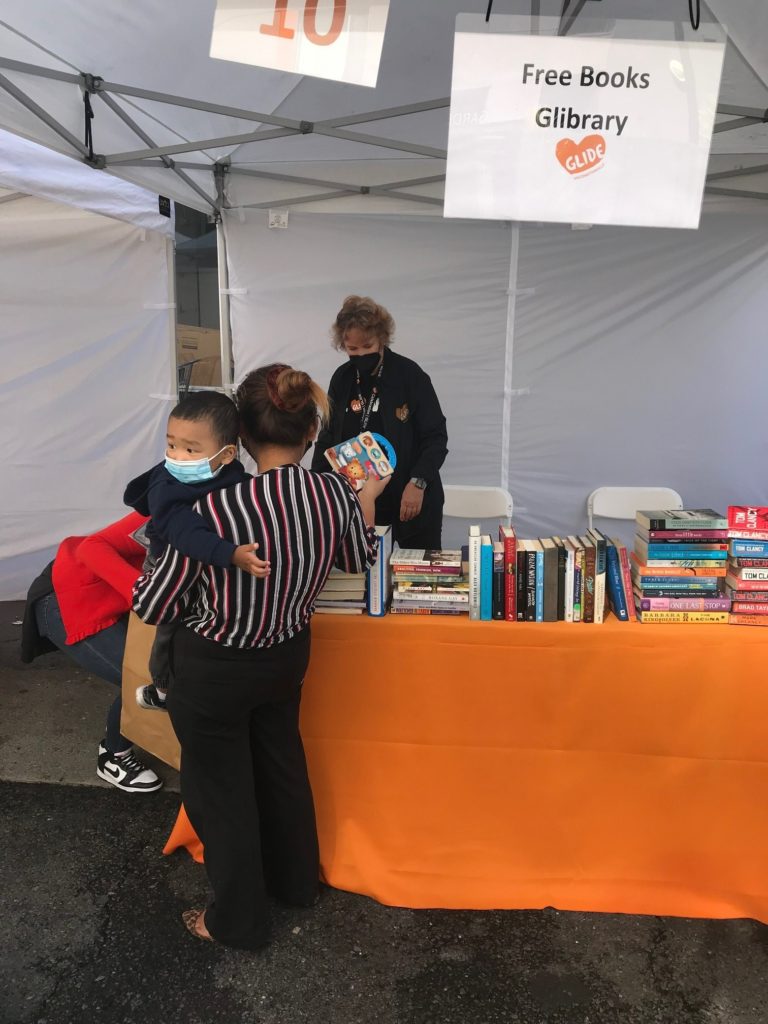
On a balmy day in late September, 50-year-old Tenderloin resident Giovanni Hoyt went walking with his girlfriend’s dog on his normal route through the Tenderloin, where he has resided since 2014. As he passed by the 300 block of Ellis St, he was drawn in by rows of canopies lining the road and lively music spilling out of a DJ booth. There were stalls offering free haircuts, housing resources, food, and massages, but Hoyt found himself gravitating toward the free Glide library booth, or Glibrary, where he picked up a copy of author Anthony Doerr’s Nobel prize winning novel, All the Light We Cannot See. “It’s for my son,” said Giovanni. “I frequent GLIDE quite a bit and love it. But this is my first time here at Community Care.” 


Picking up some books at GLIDE’s Library Booth (Glibrary)

This past September, GLIDE concluded a summer series pilot program, called Community Care, a prototype of GLIDE’s Integrated Mobile Service Initiative that will connect neighborhoods with direct access to essential services through sustainable and scalable pop-up resource hubs.  

The strategic initiative comes at a time when homelessness numbers have reached alarming levels – The City’s Department of Homelessness and Supportive Housing estimates that while 7,754 homeless individuals were observed on the night of the 2022 PIT (Point-in-Time) Count, as many as 20,000 individuals may experience homelessness in San Francisco over the course of a full year. Recognizing the growing need, GLIDE’s new generation of mobile services will extend its reach and impact across the city to under-resourced communities, including South of Market (SOMA), Potrero Hill, and Bayview Hunters Point.


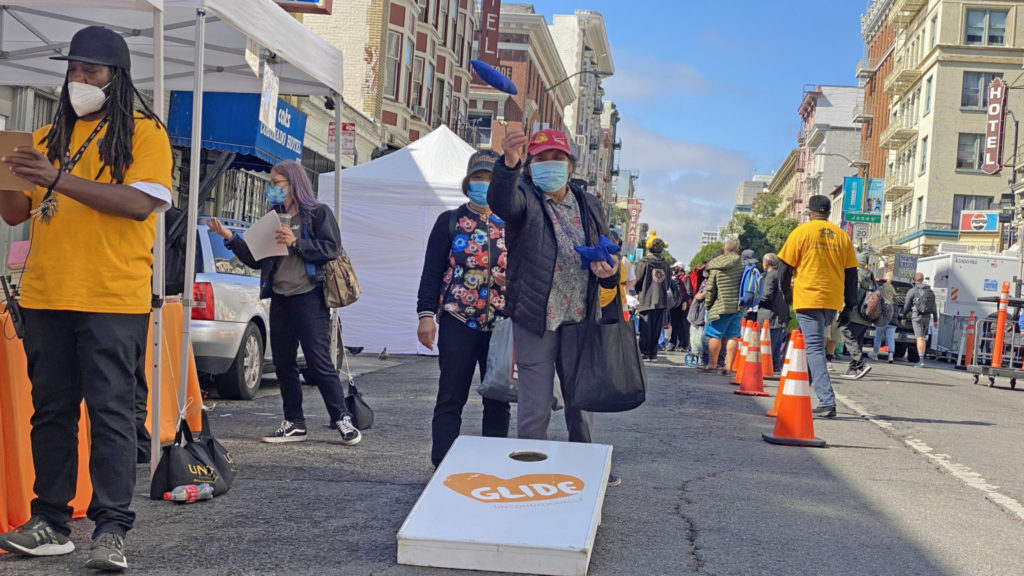
Playing Cornhole

“The turnout for the Community Care event was terrific,” said GLIDE’s Impact & Strategy Project Manager, Saba Teklu. “Thanks to our community partners, we were able to offer a multitude of amenities including haircuts, legal aid, self-defense workshops and so much more. We served approximately 200 of our most marginalized neighbors while embodying GLIDE’s values of being radically inclusive, loving, and hopeful, and for the people.”


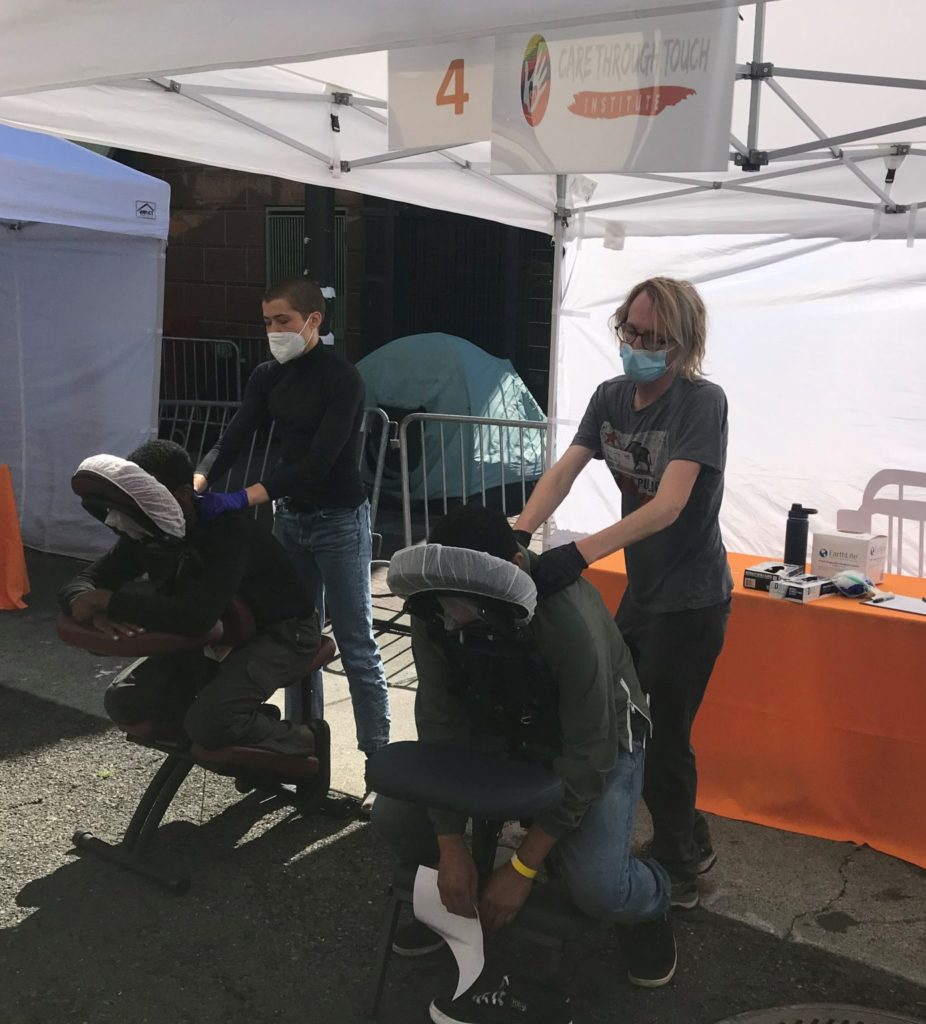
Free massages provided by Care Through Touch

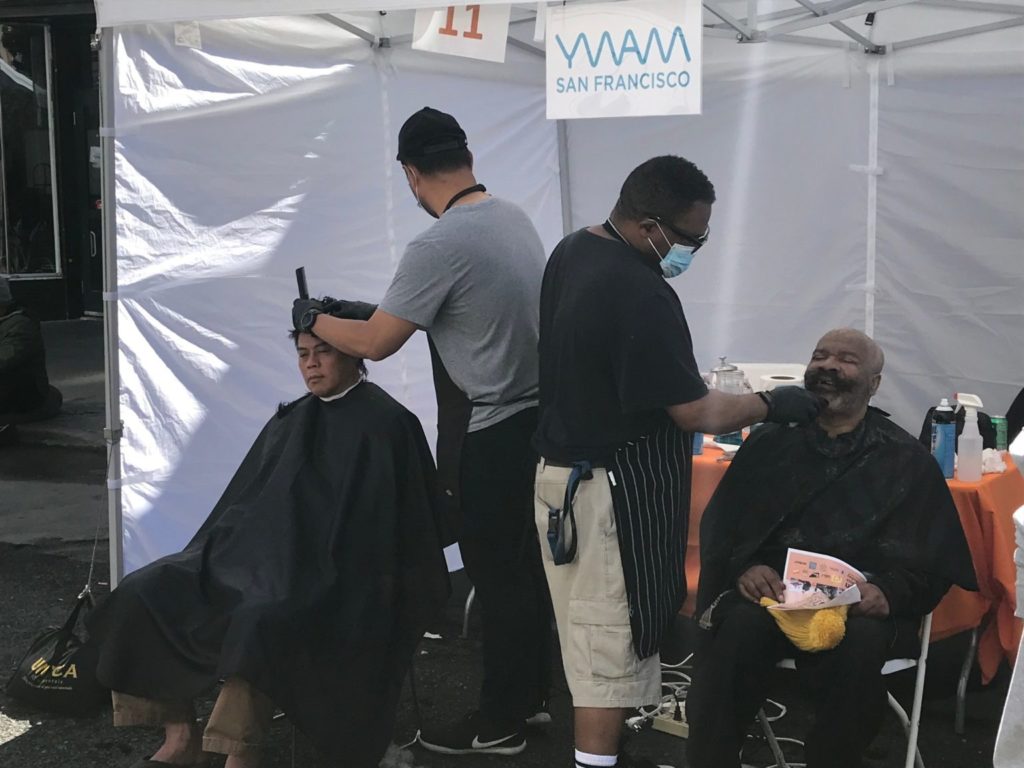
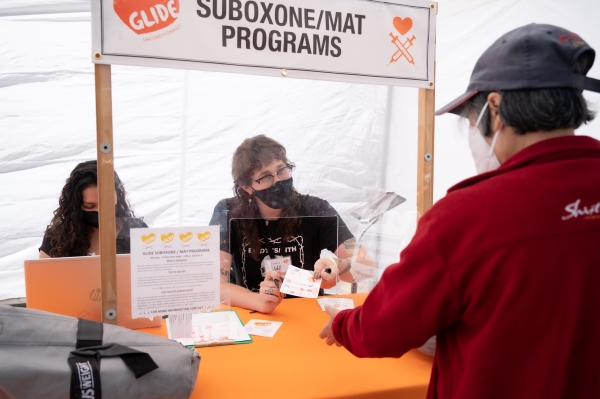
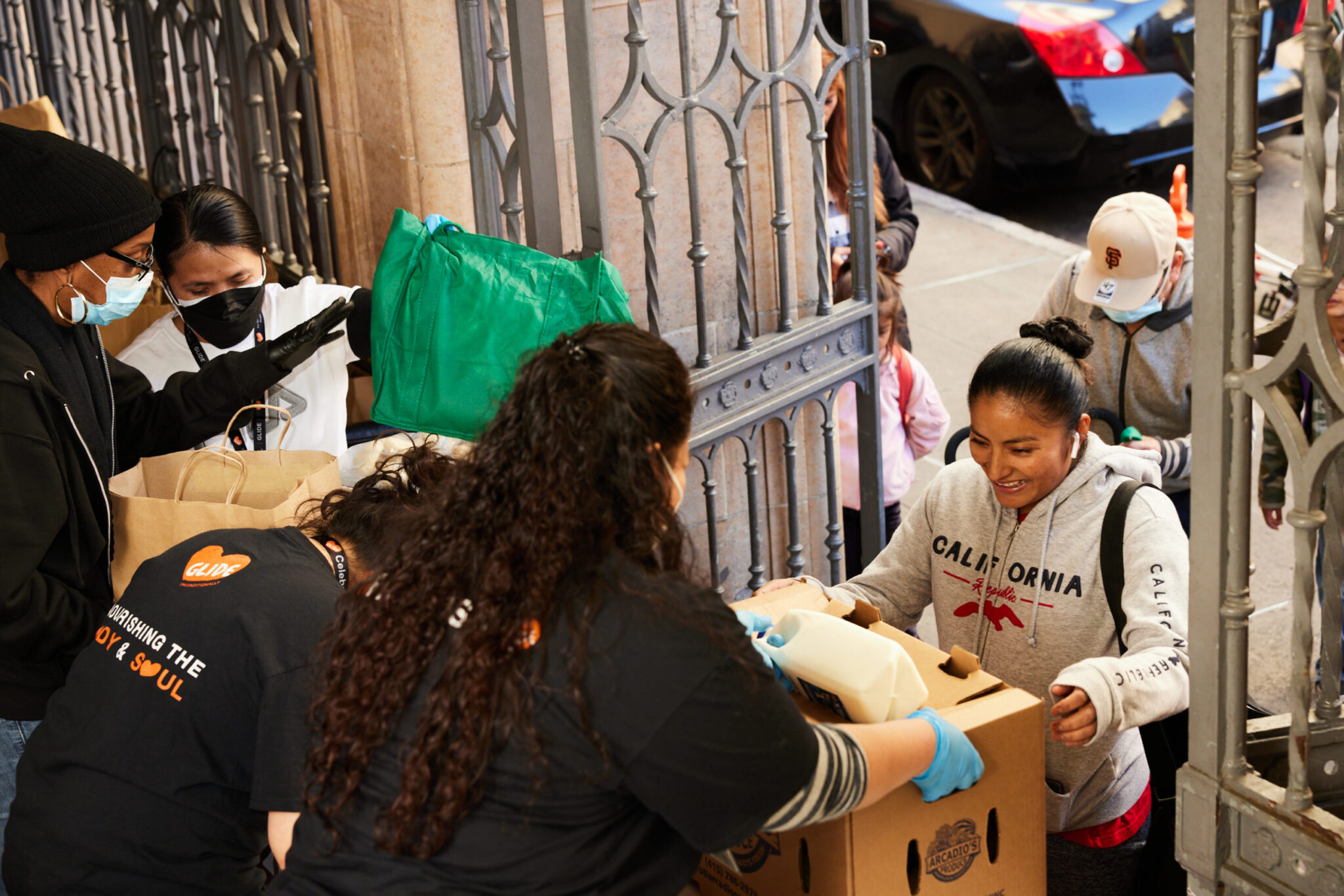
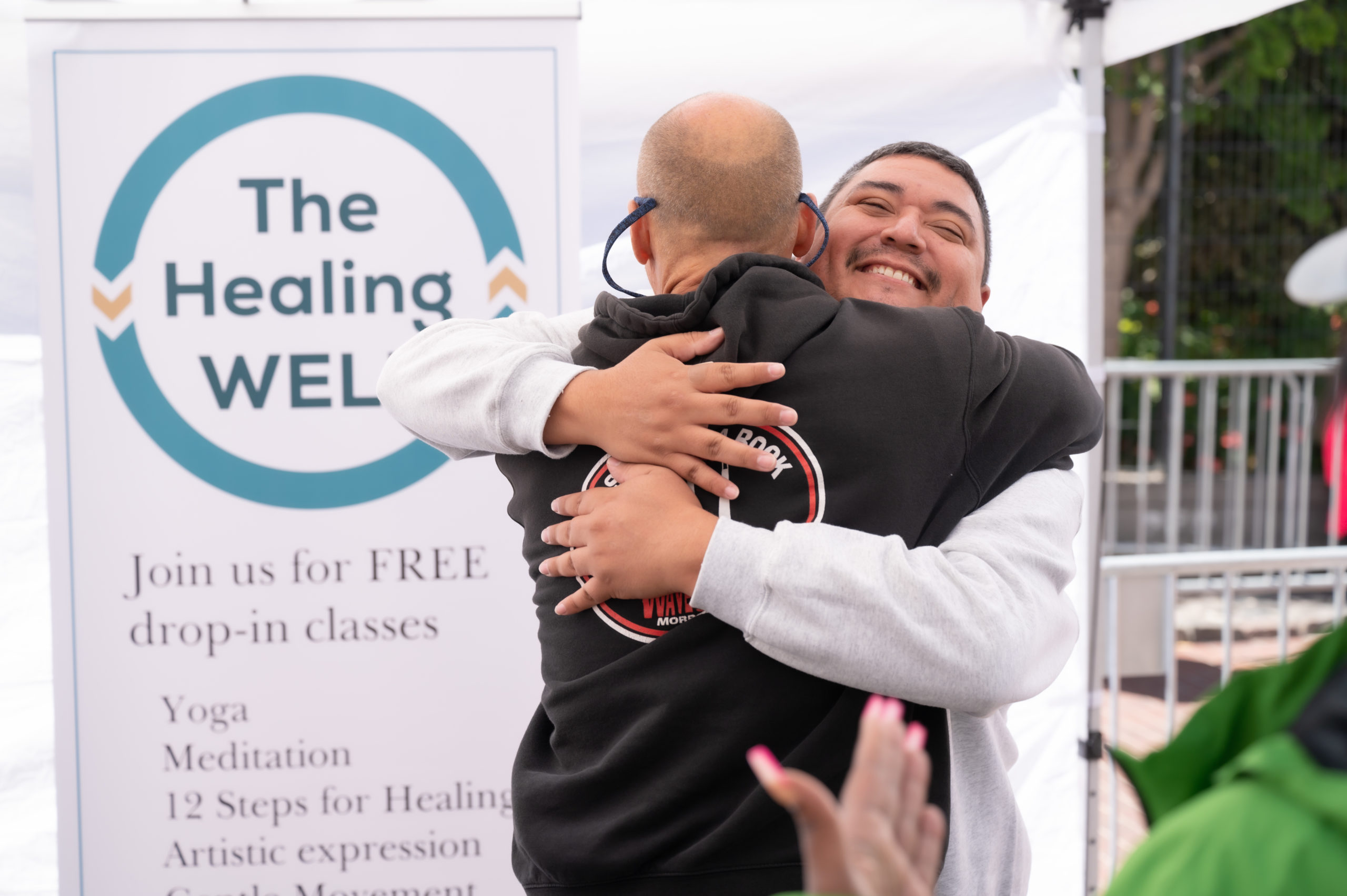
The Community Care pop-up at 330 Ellis Street saw a beehive of activity over the summer months, with visitors able to play games, enjoy a delicious lunch thanks to GLIDE’s Free Daily Meals, all the while accessing a wide range of important resources from participating community partners. In the span of one block, attendees could gain instant access to low-barrier legal counsel with the Lawyers’ Committee for Civil Rights (LCCR), self-defense workshops with Healing Well, free haircuts from Youth With A Mission (YWAM), employment resources from Code Tenderloin, and much more. GLIDE programs also offered their assistance, including the Glibrary with free books, Walk-in-Center with resource linkage, and Medication-Assisted Treatment (MAT) by GLIDE’s Harm Reduction (HRx) team.  


Free haircuts provided by YWAM

Medication-Assisted Treatment (MAT) services provided by GLIDE’s Harm Reduction staff

As the summer pilot series concludes, it has charted a course for GLIDE’s scalable mobile pursuits, fortified by the building blocks of Love, Hope, and Radical Inclusion. “I feel this Community Care event shows that the city has empathy for people’s plights and tribulations. People in the community love this,” Giovanni reflected as he made his way to the end of the tents. “Whether you’re poor, rich, doesn’t matter. There will always be people struggling who need help. I’m very grateful for GLIDE.” 

Justice In The News

Stories

The Rabbi and His Church
At San Francisco’s Glide Center for Social Justice, Michael Lezak brings his rabbinical training to a different kind of pulpit—one whose worship ‘celebrations’ include a gospel choir

How the World Should Be: Jews, Social Justice, and GLIDE
by Rabbi Michael Lezak
After a year working in GLIDE’s Center for Social Justice, the question I get most frequently is, “What does being a Rabbi at GLIDE mean?”

A Window Onto an American Nightmare
By Nathan Heller
As the homelessness crisis and the coronavirus crisis converge, what can we learn from one city’s struggles?

Reflections: The UCSF/GLIDE pilgrimage to Alabama
By Dan Lowenstein, MD Executive Vice Chancellor and Provost (EVCP)
The rain is pelting down from the dark gray and black cloud-covered Montgomery sky, and I find myself in a place I never knew existed.

At the National Memorial for Peace and Justice in Alabama, a Lesson in Memory and Responsibility
By Ari Y. Kelman
Individual acts of violence are horrifying, but coordination of violent action and inaction necessitated the infrastructure that allowed it to happen

The Day the Horses Rode By: Reflections on the Redemptive Potential of Black Practices of Overcoming
By Isoke Femi
One synonym for hope is optimism, which can be defined as a “disposition or tendency to look on the more favorable side of events or conditions and to expect the most favorable outcome

Podcast
https://www.kellycorrigan.com/kelly-corrigan-wonders/michaellezak

Contact Us to join the movement.

VICTORIES

Local

  • Ending Racially Biased Pretextual Traffic Stops via Department General Order (DGO) 9.07: After over 18 months of organizing and advocacy by CSJ and the Coalition to End Biased Stops, on January 11, 2023, the San Francisco Police Commission voted 4-2, with one abstention, to pass DGO 9.07, which curtails pretext stops and consent searches, and improves traffic stop data reporting requirements. That morning, CSJ and the Coalition hosted an hour-long press conference at City Hall, featuring members of the Board of Supervisors, victims of racial profiling by SFPD, and coalition representatives. Now, starting on July 17, 2024, the SFPD can no longer use certain infractions to conduct a traffic stop. Learn more here: https://www.endbiasedstopssf.org/
  • Through our work with the Homeless Emergency Service Providers Association (HESPA), we secured funding of $7,667,075 for FY 20222-23 and $16,597,075 over FY 2022-23 and 2023-24 in the budget in the areas of homelessness prevention, housing subsidies, behavioral health, and employment services. HESPA also garnered $53 million for unhoused people in FY 21-22 and 22-23 and $30 million in FY 23-24 and 24-25.
  • Through advocacy as part of the End Poverty Tows Coalition, beginning in July 2021, the San Francisco Municipal Transportation Agency implemented a series of discounts and vouchers for people experiencing homelessness who are impacted by the enforcement of various citations. You can learn more here: https://www.sfmta.com/discounts-low-income-individuals-and-people-experiencing-homelessness
  • Through coalition organizing, we got unanimous approval of the Compassionate Alternative Response Team (CART) by the San Francisco Board of Supervisors, and the program was partially funded at $3 million in FY 2021-22 to respond to 65,000 calls relating to homelessness that police are currently answering. We are still pushing for CART to be fully funded and fully realized according to its original vision.

State

  • In 2023, CSJ successfully advocated alongside coalition partners to secure $61 million (over the next four years) for statewide overdose prevention and harm reduction programs, including delivery of naloxone (Narcan), overdose prevention, and drug treatment and $10 million (over five years) to strengthen the capacity to prevent, test, and treat for hepatitis C in marginalized communities. This $61 million extends and expands an original $15 million state investment in the California Harm Reduction Initiative, from which GLIDE Harm Reduction receives funding. This latest victory creates a multi-year funding pool for GLIDE’s Harm Reduction program and programs like it across the state.
  • In 2023, through Hunger Action Week and other advocacy with the California Hunger Action Coalition (CHAC), CSJ successfully secured over $500 million in state funding to strengthen the emergency food system, improve food access for immigrants, boost CalFresh benefits, increase access to fresh fruits and vegetables, and support nutrition for school-age children.
  • In 2022, CSJ advocated as part of CHAC for Food4All, which ended up getting funded at $35.2 million in the 2022 state budget, so that immigrants 55 and over can receive state-funded food assistance. We also successfully advocated for $62 million in 2022-23 and $52 million in 2023-24 for California food banks to continue to address the ongoing need caused by record levels of hunger, rising inflation, and a decline in federal support.
  • CSJ advocated as part of the California Earned Income Tax Credit (CalEITC) Coalition to include several key investments in the final 2022 budget. One was expanding the Young Child Tax Credit income threshold to $0. This was a first step towards establishing a child allowance in recognition of unpaid caregiver work. Second, was creating a Foster Youth Tax Credit to provide a $1,000 credit to young adults who were in the foster care system. Third, was increasing funding for Free Tax Preparation, Outreach, and Education to $20 million annually for two years and $10 million ongoing; this will provide funding to support free tax preparation services and Volunteer Income Tax Assistance (VITA) programs so Californians can access the credits they are due.  Lastly, policy changes were included to ensure that tax credits to reduce poverty reach Californians in need and are not intercepted by government agencies.
  • CSJ is a member of End the Epidemic’s (ETE) Policy Subcommittee, and helped plan and lead the 2022 ETE Week of Action. As a result of our advocacy, the state budget included $38 million to address the syphilis and congenital syphilis crisis, as well as hepatitis B. In 2021, the majority of ETE asks ($13 million) were included in the state budget to fund programs that will end the epidemics of HIV, sexually transmitted infections (STIs), viral hepatitis, and overdose.

Contact Us to join the movement towards a system focused on justice for all.


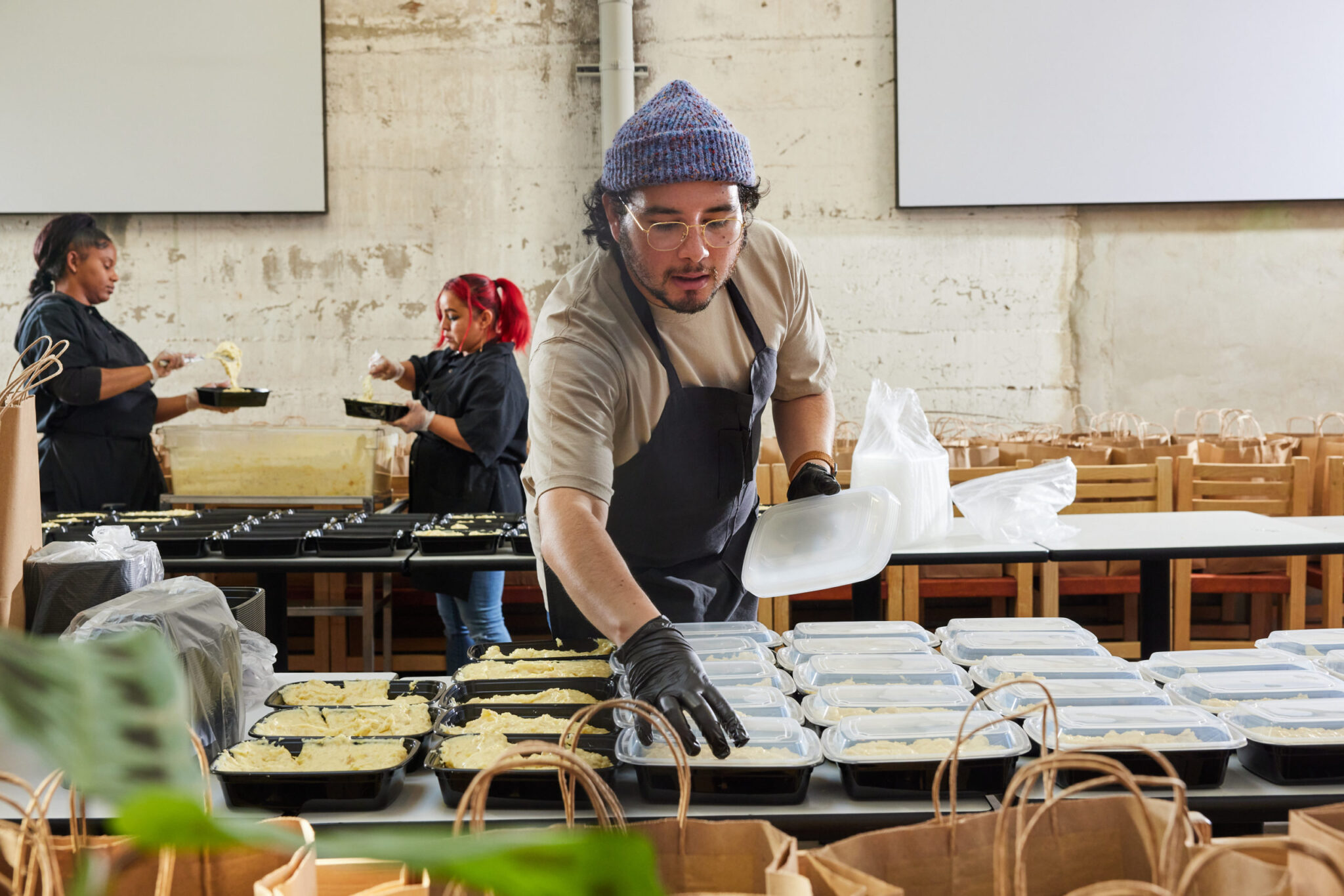
GLIDE’s eagerly awaited Harvest Dinner, held the week before Thanksgiving for the families GLIDE serves in San Francisco, traditionally heralds the start of the holiday season for the GLIDE community. This year, the dinner also marked the debut of a collaboration between GLIDE and Farming Hope, a nonprofit organization that provides culinary apprenticeships for people experiencing employment barriers such as homelessness.


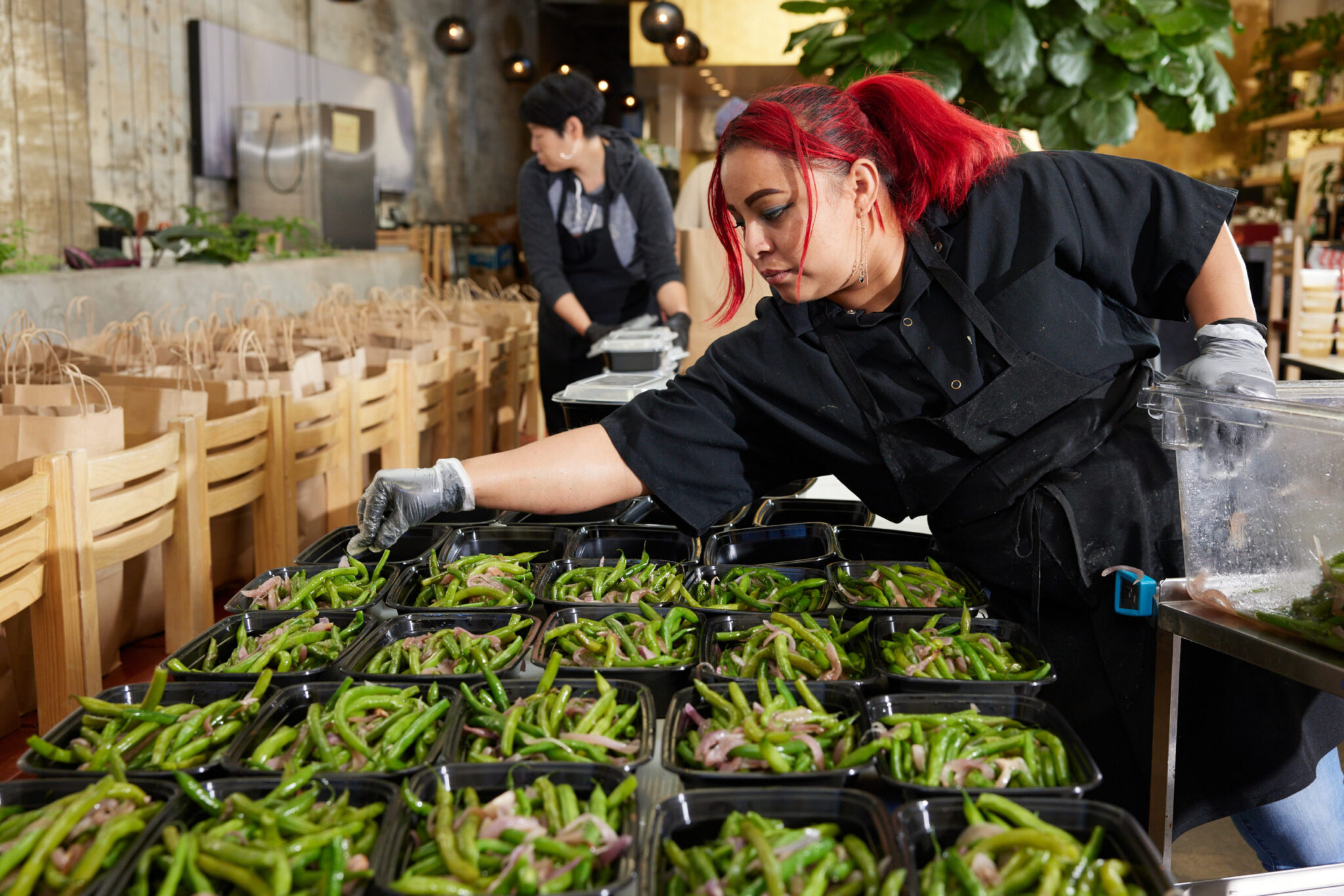
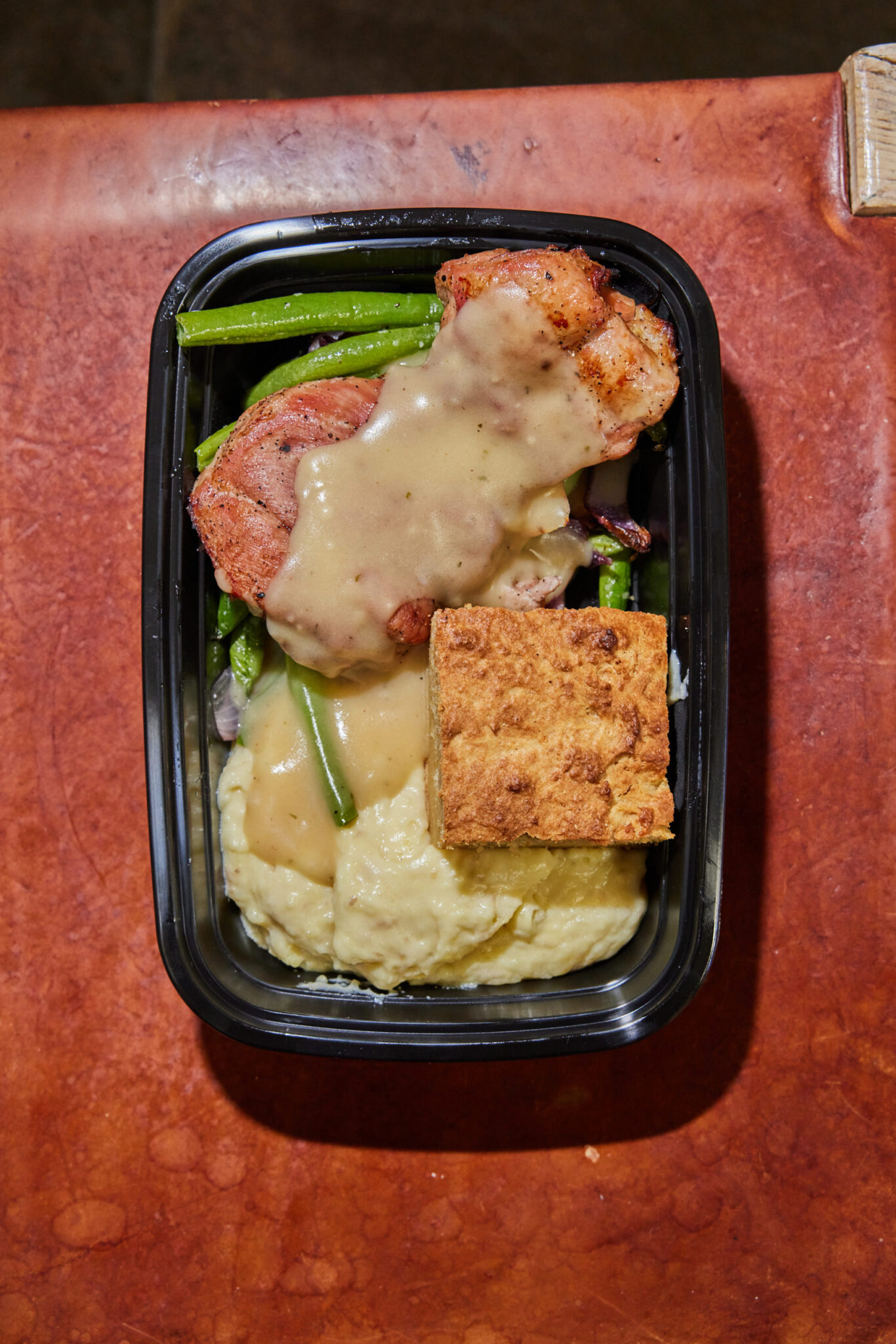
On November 15, GLIDE served a Harvest Dinner of Thanksgiving classics—including roast turkey, mashed potatoes, green beans and dessert—for 130 families, or nearly 800 people. Attendance increased 30% over last year’s dinner, when GLIDE fed 100 families. Inflation has heightened the food insecurity experienced by many of the guests, all of whom participate in GLIDE’s Family, Youth and Childcare Center or its Family Resource Center.

“It feels like everything’s gone up at least 5%,” said Ana Rosa Gonzalez, a Family Resource Center client who has come for the dinner two years in a row. “The Harvest Dinner is a really big help, especially considering how things are right now. And the GLIDE community is very kind… you feel like you are part of the family.” 

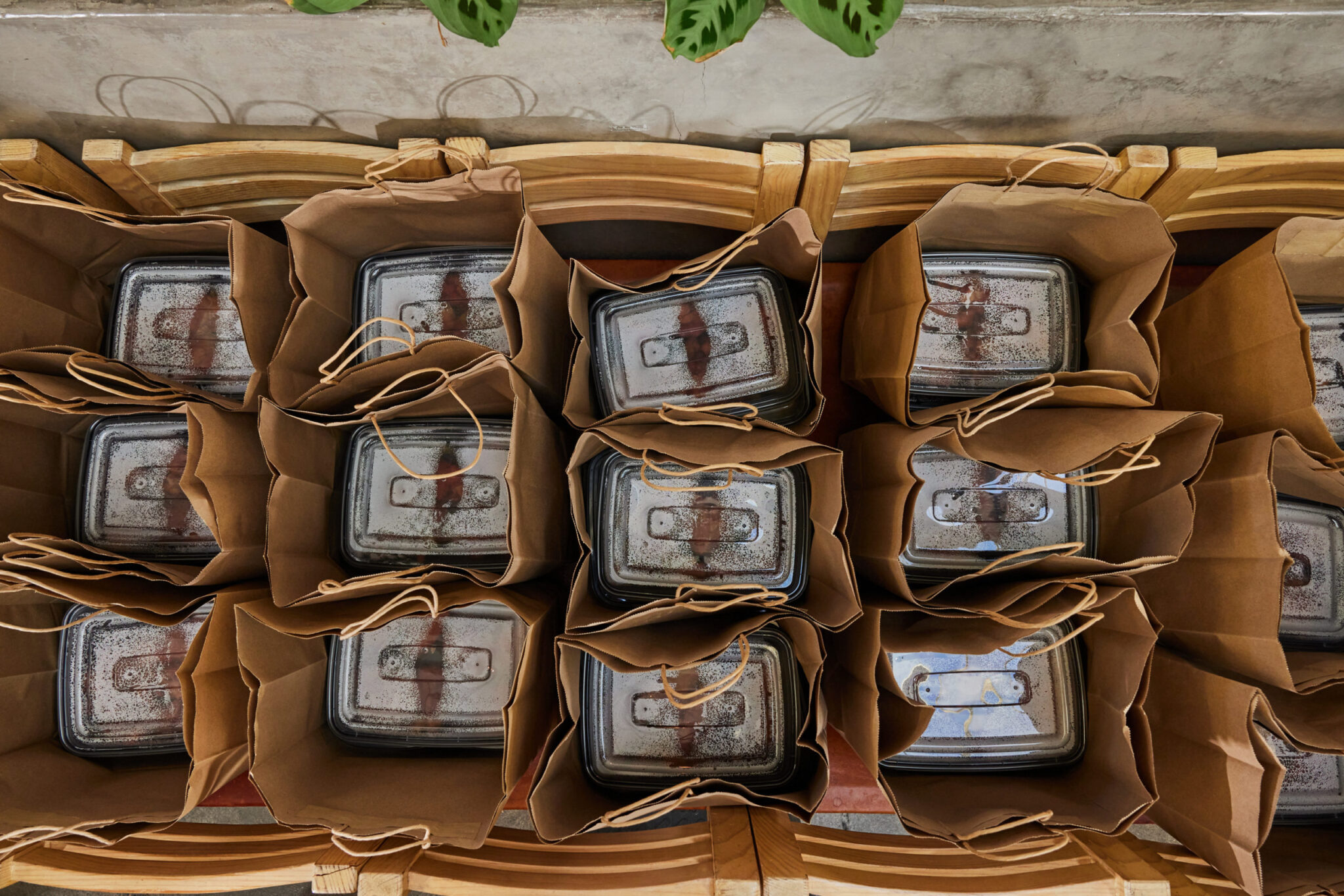
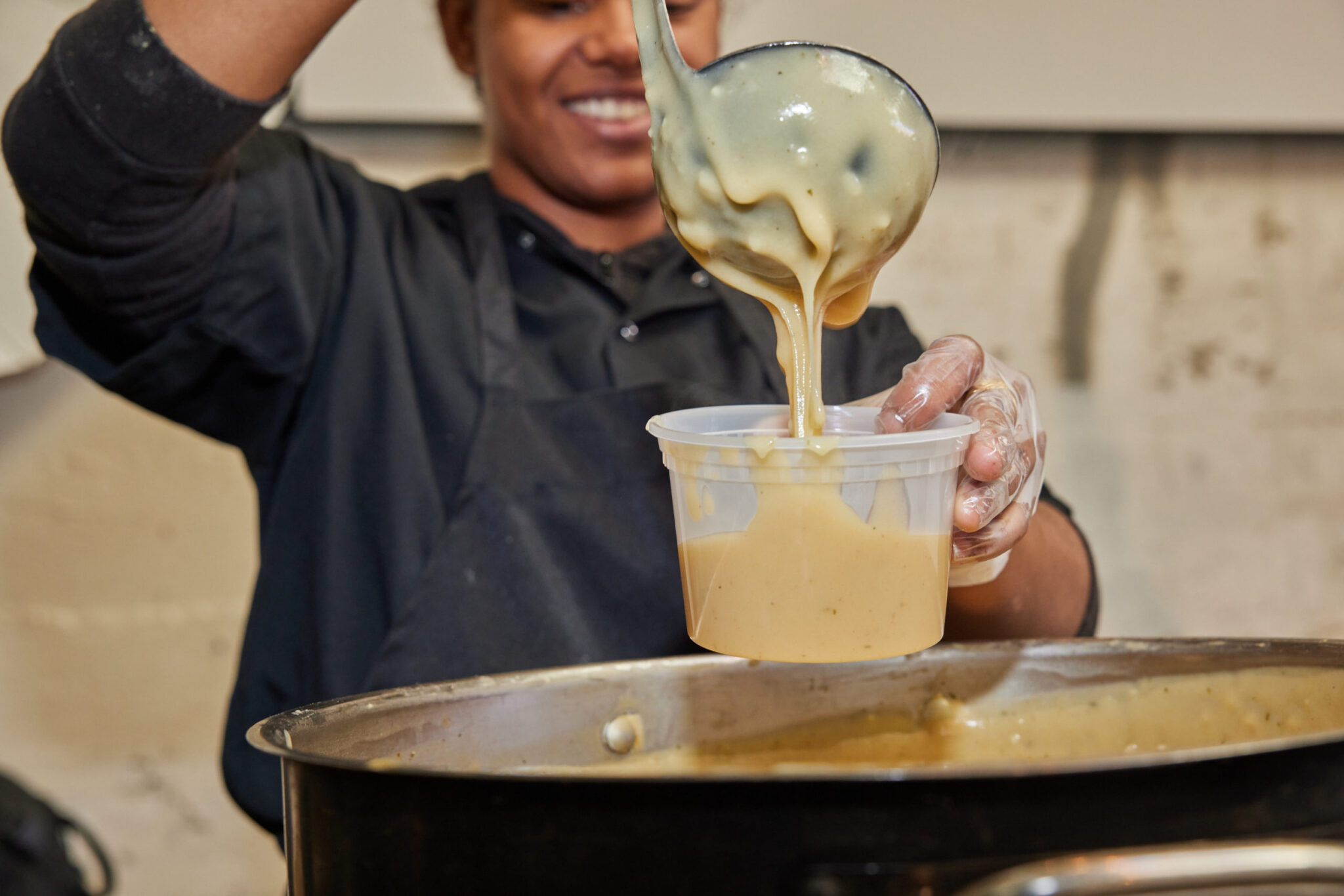
As with the last two Harvest Dinners during the COVID-19 pandemic, guests received this year’s dinner in to-go boxes instead sitting down together at the usual dinner venue, GLIDE’s Freedom Hall on Ellis Street. Behind the scenes, this year’s dinner came together in a very different way from any previous dinner, which have always been prepared on site by GLIDE: this time, the Harvest Dinner was catered by Farming Hope.


“The Harvest Dinner is a really big help, especially considering how things are right now. And the GLIDE community is very kind… you feel like you are part of the family.” 
Ana Rosa
GLIDE


Theresa Calderon, GLIDE Family Resource Center manager and dinner organizer, explained, “This partnership helped us to accommodate all the families interested in the dinner and to extend our reach in the community. We’re excited to continue growing our connection with Farming Hope.” At the same time, the collaboration gave Farming Hope a new opportunity to pursue its mission of training apprentices, feeding people experiencing food insecurity and rescuing food from landfill.

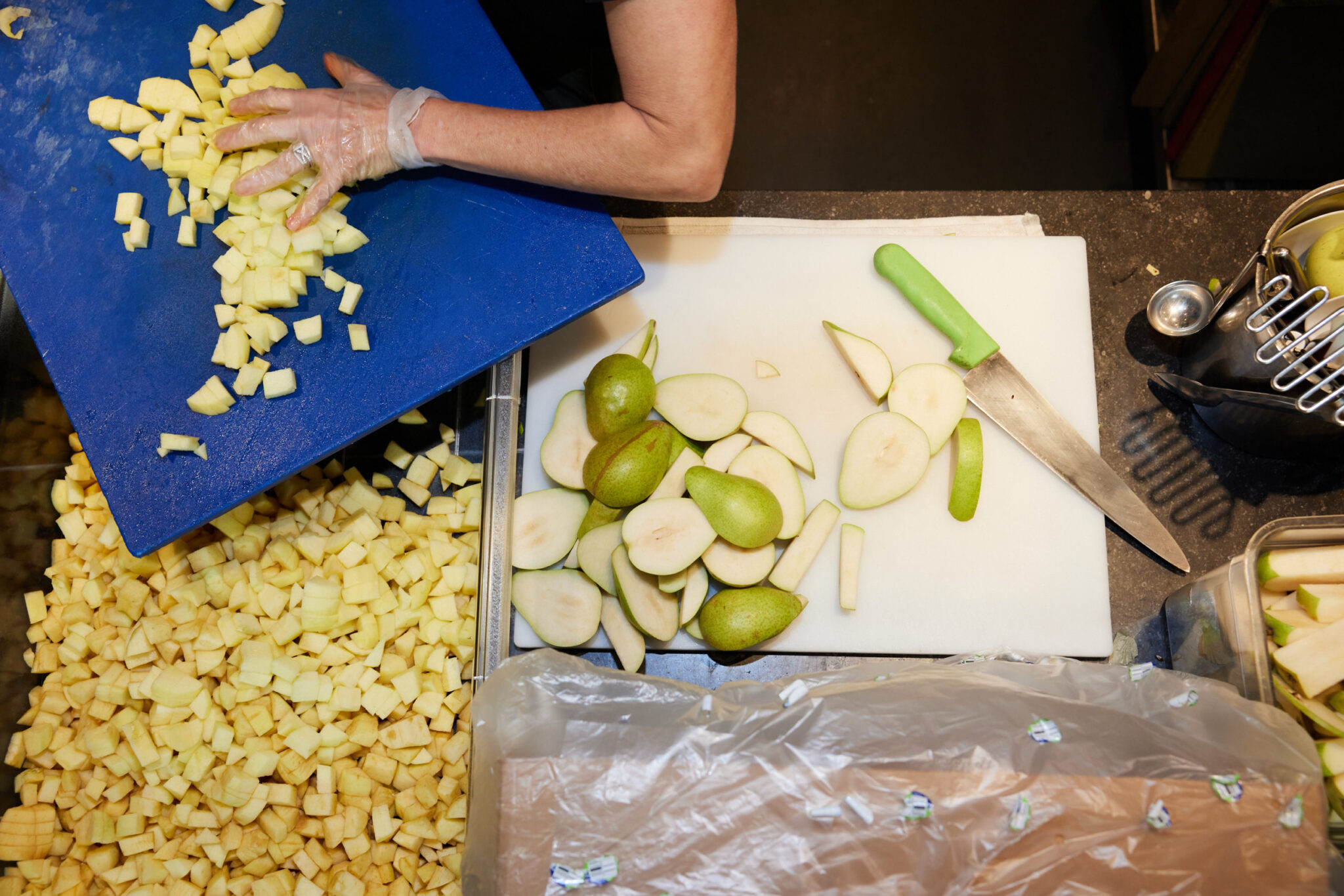
“It’s really all about creating and then sustaining community,” said Ram Olivares, general manager at the Refettorio, Farming Hope’s professional kitchen facility on Fell Street. At the Refettorio, Farming Hope cooks more than 1000 meals each week for community organizations that feed families in need. In addition, they host a three-course dinner there every Wednesday for more than 50 neighbors served by Compass Family Services. Whenever possible, Farming Hope uses “recovered” produce: imperfect but healthy food that might otherwise be thrown out by farmers and suppliers.

Much of the food preparation and cooking is done by the paid apprentices in Farming Hope’s 12-week training program. The program recruits people who have a hard time finding jobs—whether because of homelessness, past incarceration, recent immigration or some other obstacle—and teaches them professional cooking techniques, kitchen practices and the life skills it takes to hold any job. Past apprentices have included GLIDE clients.

Vianney Trujillo, program manager at Farming Hope, said, “The first six weeks are really focused on getting here on time, checking your schedule, clocking in and clocking out, taking your breaks, communicating with a manager if you’re going to be late.” As the program progresses, apprentices learn job search skills, such as how to do a job interview. Most graduates of the program find jobs with restaurants or other food service employers, but some are working in fields as diverse as landscaping and social services.

One of Farming Hope’s recent graduates, Mabel, returned to the Refettorio to help Ram prepare GLIDE’s Harvest Dinner. “It feels like coming into my own home when I come back to work here,” she said. “I get excited when they call me when they need extra hands…. I’m very proud of all the things that I’ve learned here.”


"It feels like coming into my own home when I come back to work here."
Mabel
Farming Hope

The Harvest Dinner served on November 15 reflected the love, hopefulness and inclusiveness that went into its preparation—and GLIDE’s guests appreciated it. As Ana Rosa got ready to carry her family’s dinner home, she said, “Because I’ve needed help and I’ve had the blessing of GLIDE’s help, I try to help others when I can… I wish happiness, health and love for everyone.”

Dear GLIDE Community,

I am thrilled to share the news of the record-breaking winning bid of $19,000,100 in the Power of One Charity Auction Lunch with Warren Buffett. We are honored and deeply grateful for Mr. Buffett’s unwavering friendship and support for so many years. And, we are astounded by the generosity of the winning bidder, who has not only made history in this final opportunity to enjoy the Power Lunch with Warren Buffett but has provided a gift that will transform the lives of many thousands of individuals and families in GLIDE’s growing community. 

On behalf of GLIDE and those we serve; I have expressed my deep appreciation to Mr. Buffett for his generosity and commitment to our work and values for over two decades. This unique partnership has left an indelible impact on our community, allowing us to transform hundreds of thousands of lives and families and influence the systems that drive poverty, injustice, and inequity. This year’s winning bid will build on that legacy of impact and support our efforts to build the next generation of GLIDE, where we are deepening our impact, extending our reach, and playing a central role in the recovery of San Francisco. 

A strong believer in the power of GLIDE’s values and impact, Mr. Buffett has said, “It makes a difference, and it translates into human beings finding that there is hope in life and that there is something better. The rest of society may have given up on them, but GLIDE is going to give them a chance to find out what their real potential is. And the people that buy the lunch feel good about that. I feel good about that, and the most important thing, though, is what it does in the end.” And while this is the grand finale of the Power of One Charity Auction Lunch, we look forward to many more years of treasured friendship with Mr. Buffet and our longtime partner, eBay.

This record-breaking bid is a tribute to Warren Buffett, a global icon who will go down in history not only as the “Oracle of Omaha,” but as an authentic champion of the transformative power of love and human connection. It is also a tribute to GLIDE’s unique power to inspire and transform people across all spheres, from those living on the streets to those who have had more opportunity in life. 

All proceeds from the Power of One Charity Auction Lunch, which have totaled $53 million since its inception, go towards GLIDE’s transformative programs. Each year, GLIDE helps 10,000 individuals and families to change their lives. We provide opportunity, dignity, and unconditional love to the most vulnerable among us, and we continue to lead and live out the change needed to advance justice, equity, and equality for all.

This record-breaking auction could not have come at a better time as GLIDE continues to step up to the growing crisis of inequity around us. We are expanding our mobile services to help those in underserved communities throughout San Francisco. We are ensuring more women and families of color get the support to make sustainable changes in their lives. And we are influencing institutions of power and advancing policies and investments that break cycles of intergenerational poverty and homelessness to enable people to thrive for good.

GLIDE remains rooted in our long-held values, focused on impact and evidenced-based results, and forever committed to meeting today’s biggest challenges.     
                  
To Mr. Buffett, to the winning bidder, I thank you – we all thank you – for your unwavering support of GLIDE. You are HOPE. You are LOVE. You are GLIDE. 

Sincerely,

Karen Hanrahan
​​​​​​President & CEO, GLIDE
@KarenJHanrahan


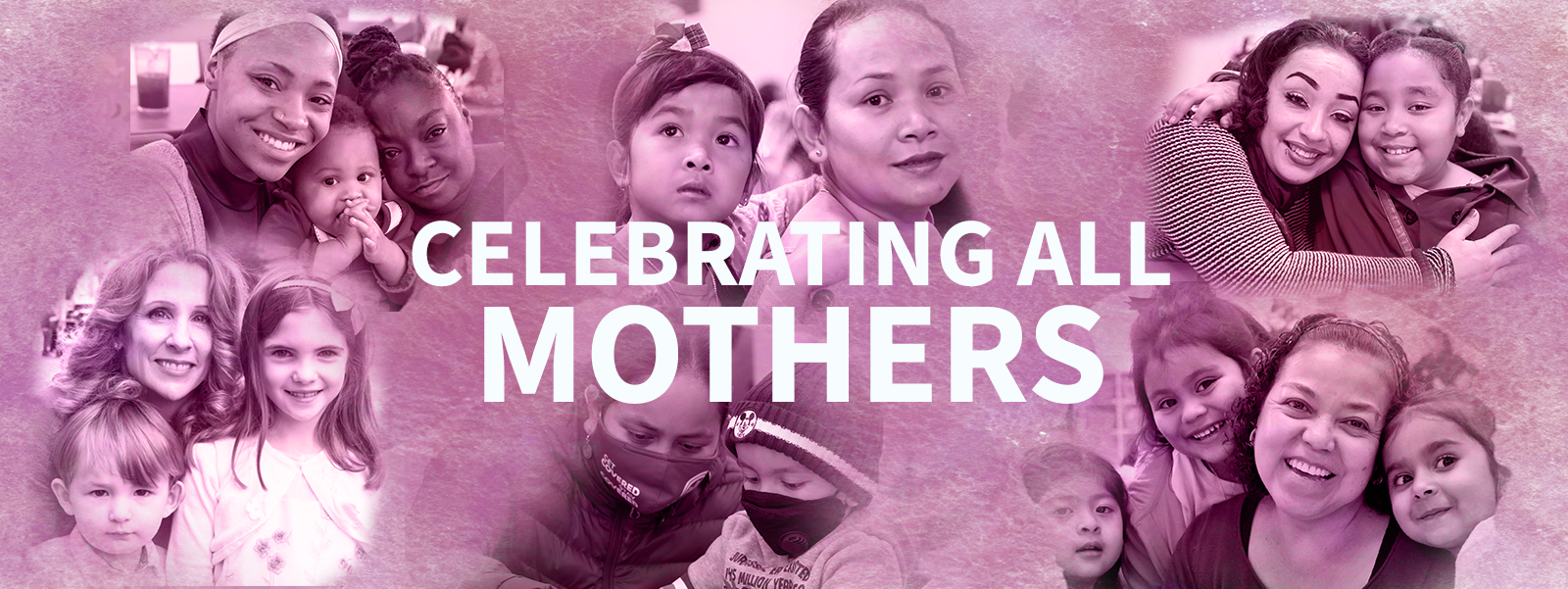
As GLIDE honors our mothers – alive and in spirit – we reflect on the essential roles they play as the first leaders in our lives, the first mentors, and the first caretakers. We celebrate our mothers for their accomplishments, contributions and humanity, but, as much as we’ve sought and made changes to laws, to systems and to our lives, progress for mothers and women remains frail. 

The past few years have created new realities that have worked against mothers, compounding with centuries of lagging policy and institutional support. As reproductive rights continue to be jeopardized in the United States, we face the highest maternal mortality rate in developed countries. At the same time, we have yet to establish universal parental leave and universal, subsidized childcare.  

As COVID-19 spurred an economic crisis, mothers – particularly those in the retail and service industries – lost their jobs. Women found themselves trapped at home with abusive partners, catapulting incidences of domestic violence and overwhelming hotlines and social service providers. Now, two years into the pandemic, new research is exposing an alarming increase in female suicide rates, worldwide. We see that all of these trends are worse for women of color and for low-income women. 

Despite the critical role they play and the disproportionate challenges that they face, mothers are often erased and forgotten, their stories untold. But when we don’t support mothers, we also hurt our children, our communities, and our national economy. 

“What if we asked how we could support mothers in return? What if we celebrated stay-at-home moms as the essential members of our society that they are rather than belittling their role? What if employers and colleagues recognize mothers as the ultimate test of multitasking, organization and empathy?” 

Anna Malaika Tubbs, author 

When mothers are celebrated for their contributions, when women are economically empowered to participate in workplaces, we see thriving communities. When men step into nontraditional caretaking roles as well, we see a balanced future. And when we change our narratives to center mothers, elevate their work, and articulate their value, we build a more representative, loving and just world. 
 
Happy Mother’s Day! 


In honor of Ramadan coming to an end, GLIDE Communications Associate, Humera Shaikh, and her sister, Fayeeza, share one of their favorite Ramadan recipes – Potato puff pastries!

Ramadan is the 9th month of the Islamic Calendar and is observed by Muslims all over the world. It is a sacred month of fasting, worship, charity and community. The purpose of fasting is to practice gratitude and to cultivate empathy for the less fortunate. Eid al-Fitr, which translates to “Festival of Breaking the Fast,” marks the end of Ramadan. It is celebrated during the first three days of Shawwal, the 10th month of the Islamic calendar. Eid is an occasion for special prayers, family visits, gift-giving and charity.

Eid Mubarak to everyone who is celebrating!

GLIDE Voices is honoring Ramadan; we asked Humera Shaikh, Social Media & Communications Associate, what does Ramadan mean for you?

“Ramadan is the most sacred month of the year in the Islamic calendar. It’s also the month where the first revelations of the Quran were revealed to Prophet Muhammad (PBUH), who is the prophet and founder of Islam. During this month, Muslims fast for thirty days, from sunrise to sunset. It starts with a pre-dawn meal before sunrise, called suhur, and then it ends at sunset with a meal called iftar. Eid al-Fitr is the celebration after the thirty days of fasting. It’s a celebration where you get together with your community or your family, and you celebrate with your loved ones.  

When a lot of people think of Ramadan, they think about it as a month where Muslims abstain from eating and drinking. But it’s so much more than that. It is a month of spiritual reflection, worship, and charity. When I was young, I never really understood why we, as Muslims, fasted during the month. I was always that kid who was complaining about being hungry and counting down the hours until iftar. It wasn’t until I got older that I experienced the true significance of the month. 

For me, the month is really about empathy. I think that’s a huge takeaway – empathy for those who are suffering. When I’m fasting for these hours of the day, at the end of it, I get to break my fast. I think of the people who don’t have food and water and how they must feel. It makes you empathize with people and feel grateful for what you have. I wish more people knew about that spiritual side of Ramadan, that it isn’t just a month of abstaining from food and water. It’s a month that’s so beautiful – I think it’s so beautiful that billions of Muslims all over the world are coming back to their roots and re-grounding themselves.”

Humera Shaikh, Social Media & Communications Associate

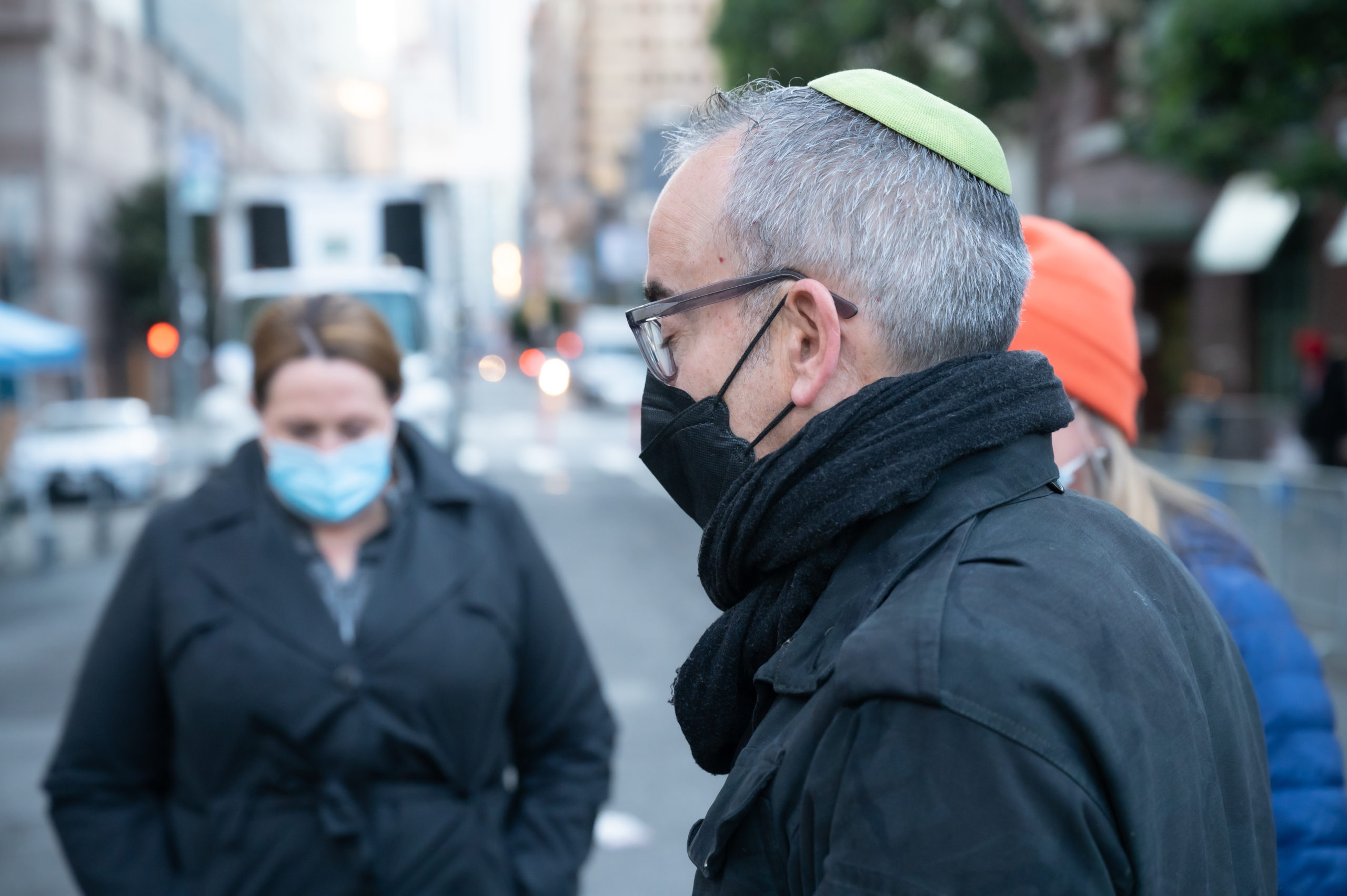
GLIDE Voices is honoring Passover; we asked Rabbi Michael Lezak, what does Passover mean to you?     

“Passover might be the best Jewish story, because it’s a story of hope. It’s a story of finding the deep courage to look head on at pain, to know that pain does not last forever. It can be transformed, can be transformed by God, or it can be transformed by human beings. We see it on a daily basis, how we at GLIDE transform people’s lives. 

In the Torah, which is the Jewish Bible, we read many stories. One of the central stories there is about how the Israelites, the Jewish people, were enslaved in Egypt for over 400 years. They were enslaved by a series of leaders that were called Pharaoh. The Hebrew word for Egypt is Mizraim, and it means a narrow or squeezed place. When you are enslaved, you cannot make any choices, you are hurt physically, you have no time off. So, I think about that ‘being squeezed’ notion. I have never been enslaved, but mythically, my people have been, and every year at Passover we retell the story. We live the story. We eat the story. We share meals that make that story come to life. 

Passover is an eight-day festival. We clean our houses fervently before. We take any leavened products, any baked goods out of the house and we only eat flat bread that we call matzo. Matzo is the bread of poverty in the Passover story book, which is called the Haggadah. It is the bread we eat for Passover because when we were running away from Pharaoh, we didn’t have time to let our bread rise. So, for eight days in a row, my kids, my family, and my community eat this bread that we ate when we were running out of Egypt. It is a reminder you came from brutality; your people were born out of an experience that forged you as a people, an experience that was brutal and intense. 

36 times in the Torah, it says, ‘Remember, you were a stranger in a strange land.’ So, to my mind, it’s like, ‘Don’t ever forget you came from that horrific place,’ which fuels me into looking to people living in dire straits today and saying, ‘What can I do to help?’ And one of the main answers is GLIDE. GLIDE helps, as does the Jewish community. I want to be a part of that. I’m at GLIDE in many reasons because of the Passover story, because the force of grabbing liberation is a story I wanted to tell and wanted to be a part of.” 

Rabbi Michael Lezak