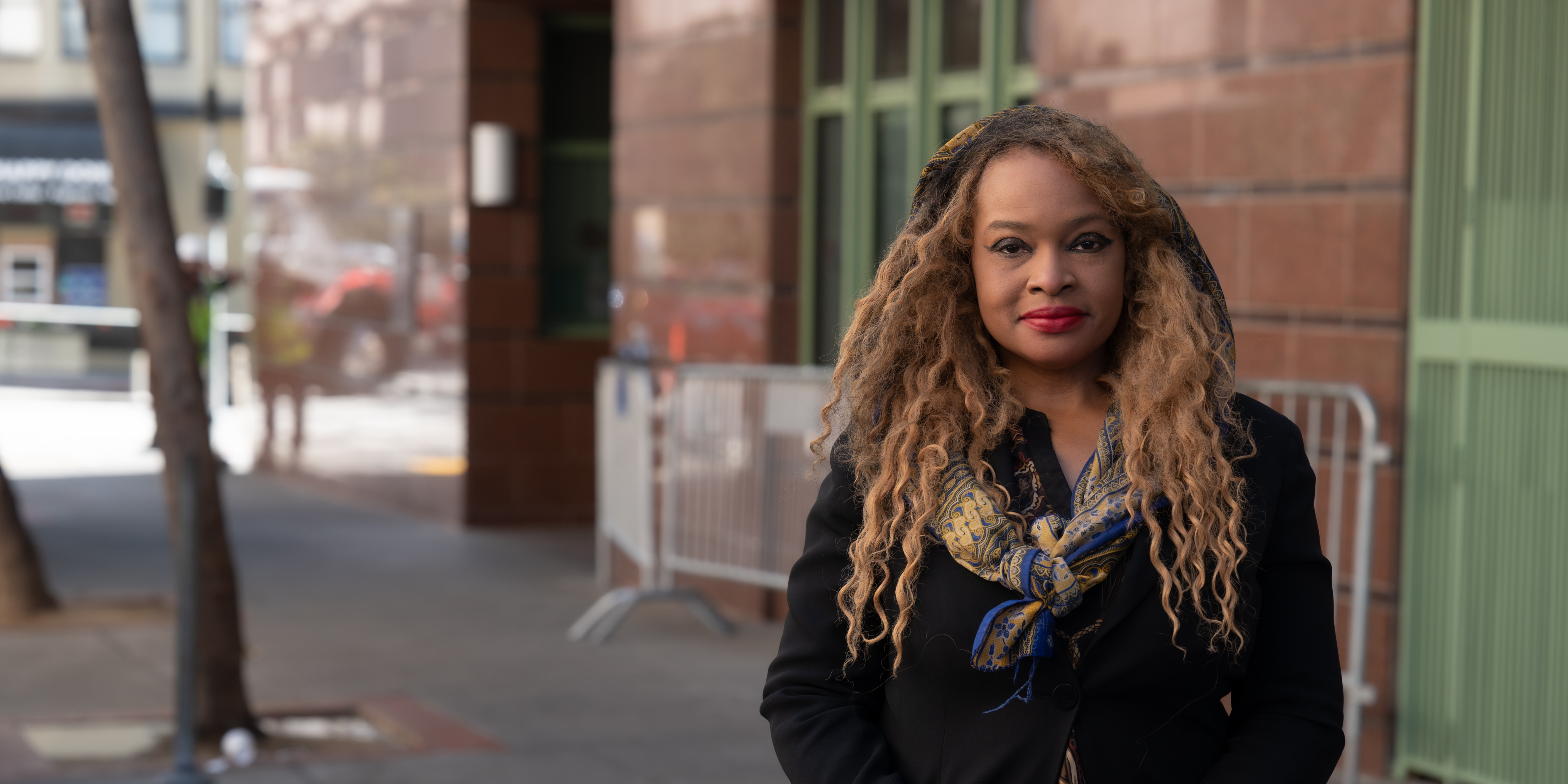

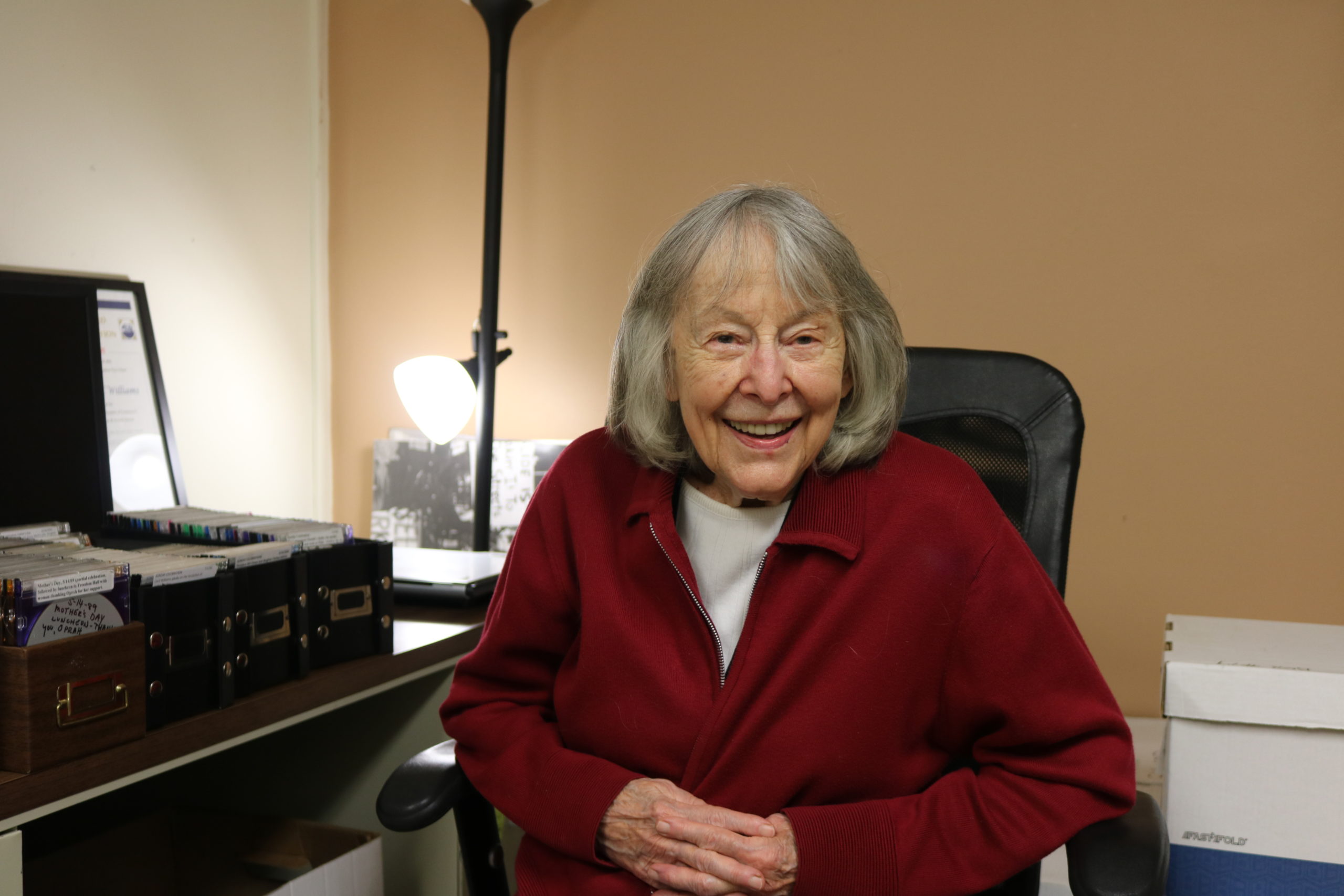
As GLIDE continues its celebration of Women’s History Month, we reflect on the achievements and contributions women have made to the GLIDE community and to the racial and social justice movements in American history. In keeping with our recognition of remarkable women, we present a special feature on GLIDE Archivist Marilyn Kincaid. Marilyn began working at GLIDE in 1998 as an assistant to Co-Founder Janice Mirikitani, and worked closely with Co-Founder Reverend Cecil Williams, who she fondly refers to as just Jan and Cecil. After many years of witnessing GLIDE history, Marilyn was later tasked with preserving it. Read more from Marilyn below as she talks about her journey, influential women of GLIDE, and how she keeps GLIDE’s history alive.
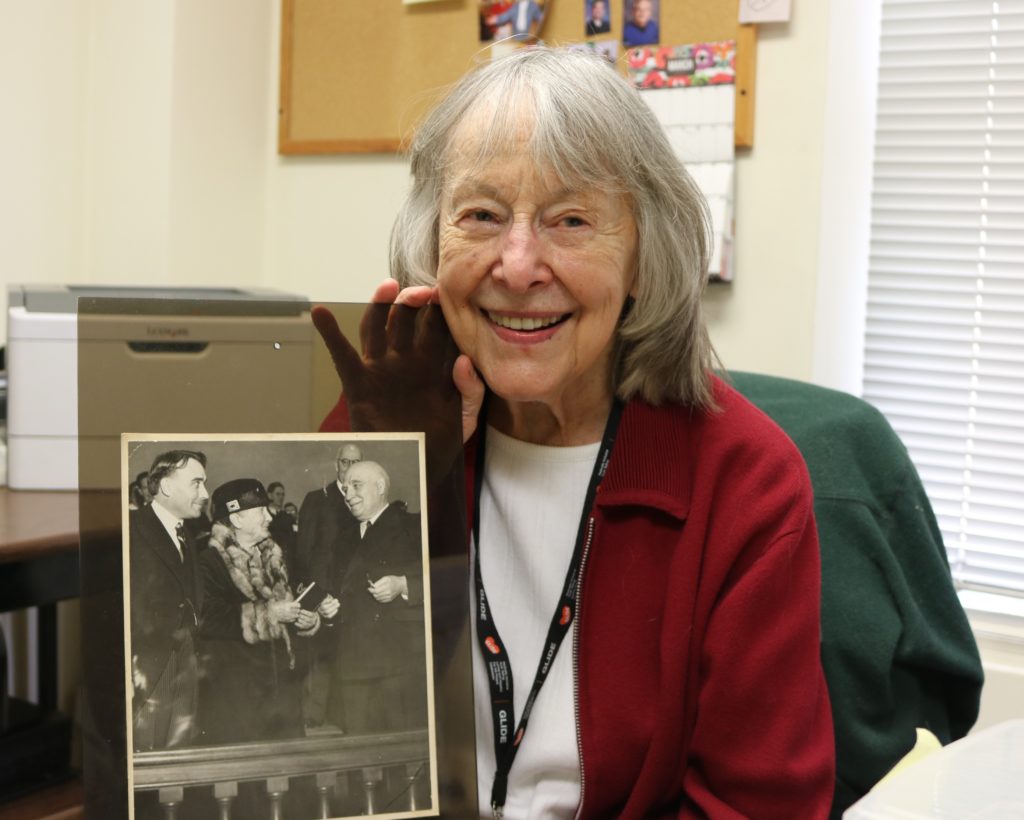
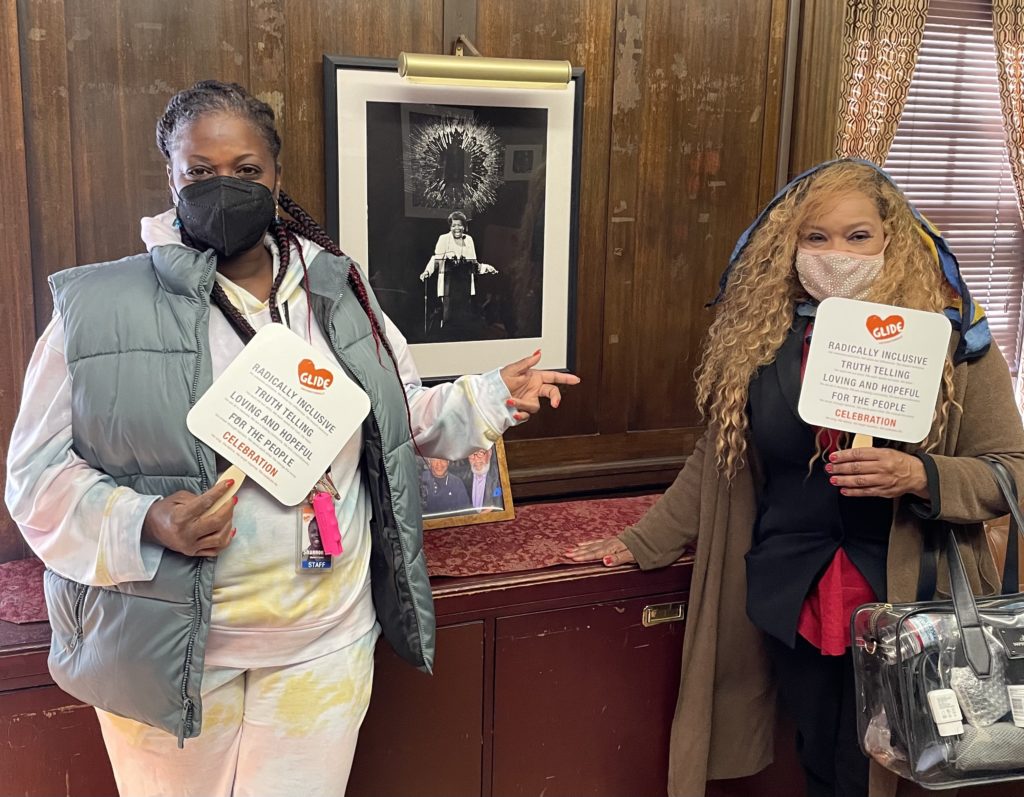
Marilyn posing with an original photo of GLIDE’s namesake, Lizzie Glide

Q: Can you talk about your background and what drew you to GLIDE?

A: I’m from Chicago originally and moved out here in 1992. I saw Glide Memorial Church and instantly recognized the name, primarily because of Cecil’s prominence in the news and in the San Francisco area. I thought, “What the heck, give it a shot.” I applied for a job and Jan interviewed me. The position was to be Jan’s assistant, and we really connected during the interview. You could tell we had a real good feel for each other. 

So, I got the job and I worked as Jan’s assistant in the Celebration office. The Celebration office was a wild, crazy place working for those two dynamic people, who were constantly coming up with ideas and programs and things that they wanted to make happen at GLIDE. Cecil was very good at coming up with ideas and Jan was very good at executing them. The other thing I loved about working for Jan and Cecil was that they were totally open to clients as well as staff. People were streaming in and out of that office all the time wanting to talk to them, wanting to get counseling about something. But when you understood what was happening, you realized that the time you were putting in was more than worthwhile. That you were literally helping to save lives, to change lives, because that’s what Jan and Cecil were doing, with both clients and staff.

Jan was the one who was meeting with all the women’s groups, children’s groups and the poetry groups that she had formed. Jan herself suffered abuse, sexual abuse, as a teenager from her stepfather. And also, her family was interned in a Japanese internment camp during World War II. So she really suffered some very negative experiences growing up. But ironically, that’s what also enabled her to reach out to other women and create these programs, especially for women who had been sexually abused as children, and encouraged them to write poetry, express their feelings. So, just amazing how those programs literally saved lives. Women’s lives were changed.

Q: How did you become GLIDE’s archivist?

A: When I first started the archives, which was in 2010, I had gotten old and decided to retire. Jan said, “Well, maybe you could step in and work just part-time in the archive.” So, I began to create files and an organizing system for all of the records, documents, newspaper clippings, videos, awards and tons of photographs. Most of these came out of the Celebration office where Jan and Cecil had drawers full of stuff. And sometimes I would accumulate records and files from the specific programs, the recovery programs and the women’s programs, the walk-in center, and we had a health clinic. So eventually, I would have to get these into boxes. And they also included, by the way, things like posters and flyers and publicity materials and newsletters. It was a huge project, still going on. It’ll never end because GLIDE is still here and still creating history! 

Q: Is there anything in particular from the archives that means a lot to you? 

A: Lizzie Glide building this church and the history of GLIDE’s office building as apartments for women. It was just a real eye opener and it steeped me and grounded me in the history, the original history of GLIDE going all the way back to Lizzie, a remarkable woman who was ahead of her time, who started the whole thing.  The office building used to be a hotel and apartments, containing 50 single rooms, and 15 two-room apartments. The pastor and his family lived here and the rooms rented out to single working women cost $20 a month. This was happening in 1931 when this was all completed. And remember, this was before the Golden Gate Bridge or the Bay Bridge were even built. So, that just puts the history of this in perspective. 

Q: What do you love about working at GLIDE?

A: For me, GLIDE is not just a job. Every day brings an intense feeling of being alive, an acute awareness of being in the world that comes from the sense of making a difference. This exhilarating sense of being alive is nourished by the energy, the enthusiasm, the commitment and the joy shared by the whole collective community that we call GLIDE. The community made up of our staff, our clients, our donors and supporters, our board members and even the celebrities who come here. It’s a spiritual high. 
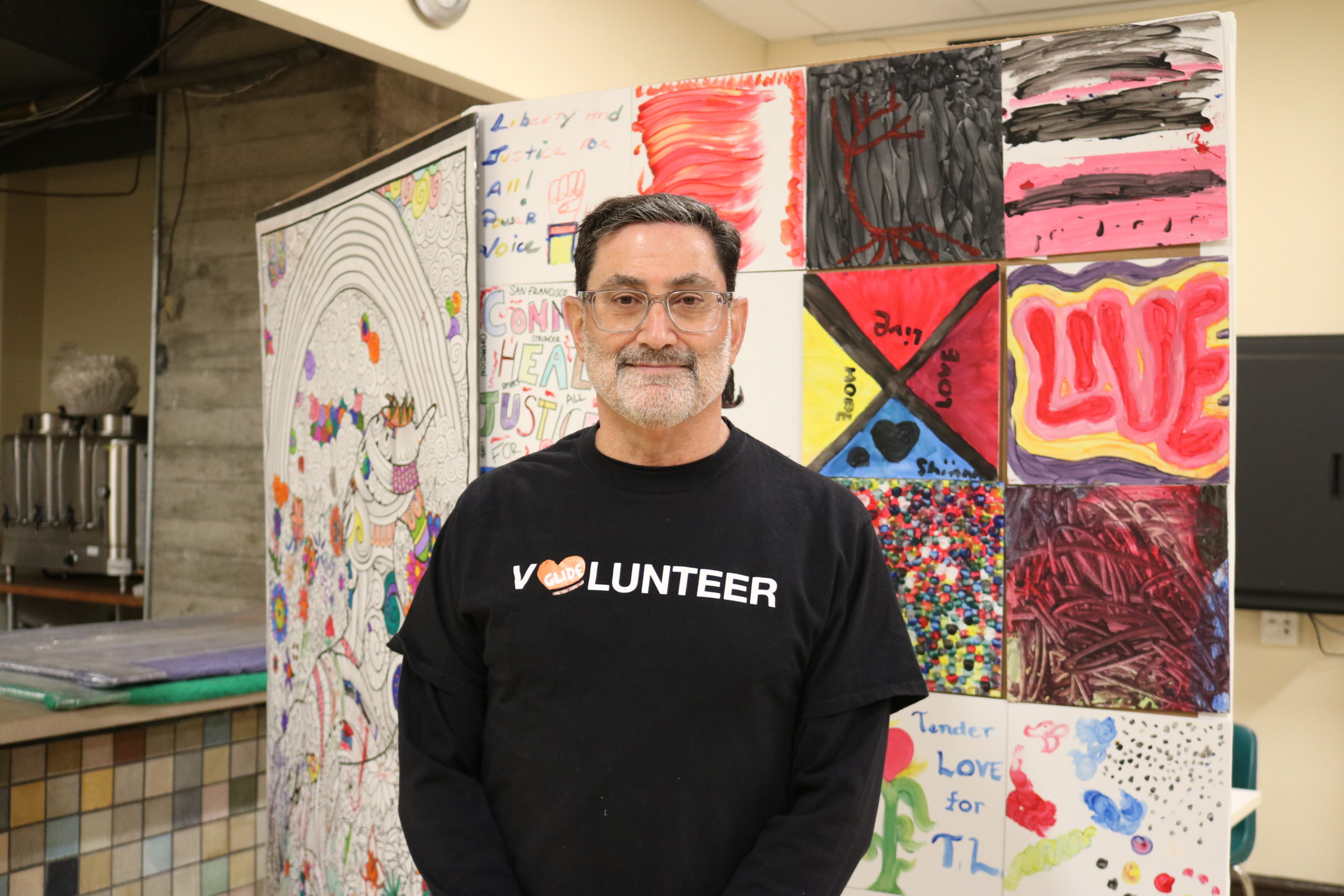
This week, GLIDE is honoring National Volunteer Week by celebrating our amazing volunteers! We are kicking the week off with a spotlight on Andy Shapiro, who has been volunteering at GLIDE for over two years. Tune in below as Andy recalls his first volunteer shift at GLIDE, what he loves about volunteering, and what it’s like to be apart of the GLIDE community.

We are so grateful for our volunteers and their impact. Thank you, Andy, for all that you do and making a difference in our community! To learn how you can get involved with GLIDE, visit our Volunteer page.

After losing her job due to cutbacks, and then being evicted from her apartment, Nikki found herself living on the streets of San Francisco. People experience homelessness for various reasons and the impact of being unhoused can be extremely detrimental to an individual or family. It exacerbates existing health problems, increases risks for new ones, including communicable diseases and the potential for encountering physical, mental and emotional harm. For women, there is often an added layer of abuse. For Nikki, the Women’s Center at GLIDE was pivotal in finding shelter in single residence occupancy housing, and giving her the unwavering love and emotional support that she needed to thrive. In this special Women’s History Month feature, tune in as Nikki shares her story and engages in a conversation with Shannon Wise, GLIDE’s Women’s Center Manager, about the unique challenges many unhoused women face. 

Shannon (left) and Nikki (right)

Read more on Nikki with this Q&A session:

Q: Can you tell us a little bit about yourself and how you found out about GLIDE?

A: At one point, I was housed in San Francisco. I actually worked for the city. However, they did have cutbacks and I ended up getting an eviction notice after only one month of late rent. The landlord wanted to start the eviction process right away. Back then, I didn’t want my credit messed up. My credit was decent. I tried to make payment arrangements, but unfortunately there’s not enough rental reform, and they wanted me out after only one month of late rent.

I did end up homeless and, long story short, I actually was street homeless. I slept in front of the public library for two weeks – it’s the library across from City Hall. That was just the best place for me as a woman to feel safe, because the lights are on 24 hours and there’s security there all night. They can check on you from inside the library. So I slept in front of the library two weeks and that was actually my first experience of being street homeless.

GLIDE is so well-known in the community for feeding people and providing resources I would come up here for my free meals. Just coming here to eat one day, I saw the Women’s Center’s table. I just decided, “Okay, let me just pop in.” And the ladies were such good listeners. They were very welcoming. They were serving coffee, tea, and some nice bakery products. They had pamphlets and information. The greatest asset I found was that they were willing to listen. They were very unconditional. I had all this luggage every time they saw me, so it was obvious I was homeless. I had a suitcase, pulling it.

GLIDE has a very established reputation in the community. I remember coming here when Maya Angelou was here. I remember coming here for church. So, this place is a staple of the community. 

Q: What’s something you wish people understood about women experiencing homelessness?

A: It’s a very unique experience. I believe that a homeless woman has more of a unique experience with her safety. There’s a lot of violence. God is good. I didn’t have any kind of rape, but I had aggression, cursed out, trying to intimidate me so you could have my place in line for my bed, grabbing things that are supposed to be for me, my own resources, but you want to take them. And I’ve heard other women say that that’s happened to them on the streets. People taking their money, men stealing their money and their resources and different things like that. So I really think that women’s unique issues as homeless women have to be addressed.

And speaking to the safety, when I had my interview at my SRO, they actually really pushed that whole safe space. They are huge about that. They have a certain amount of clients that have been referred through domestic violence. They really pushed that you are not allowed to have male guests. They want to really control the environment. It’s peaceful. If it starts getting loud or anything, they take care of it right away. Because it’s like, you can sense that women are going through their healing.

Q: What solutions do you think we need to address discrimination and bias towards women? 

A: As a homeless woman, the thing that I found most distressing is that they mix women and men all together. Women have no separate services, no privacy. Living at an SRO, the reason it is easier for me to heal, go through my process, do what I need to do, is because it is a safe space. Everyone goes to their room. They’re quiet. It’s orderly. Because those are the boundaries and protocols. When you mix men and women, all of our services together, it’s completely different. Because, as a homeless woman, it was a lot of competition with the men for resources and even space in line for the shelter, which you could be in line, but sometimes they wanted to fight you for your place. A woman should never have to go through that. There needs to be a separate space. We need a healing place. Places to heal. 

Q:What are some goals you have in place now that you’re in a transition state? 

A: I want to get more involved with the community to help, because I’ve been through it. This is my mentality, my consciousness, people still deserve humanity. They still deserve to be able to be clean. They still deserve to be able to be fed and clothed. So I feel like it’s a great asset, the knowledge. I’ve used the resources, so I can actually speak to the resources. I can speak to what GLIDE’s food program can do. I can speak to GLIDE’s Women’s Center.

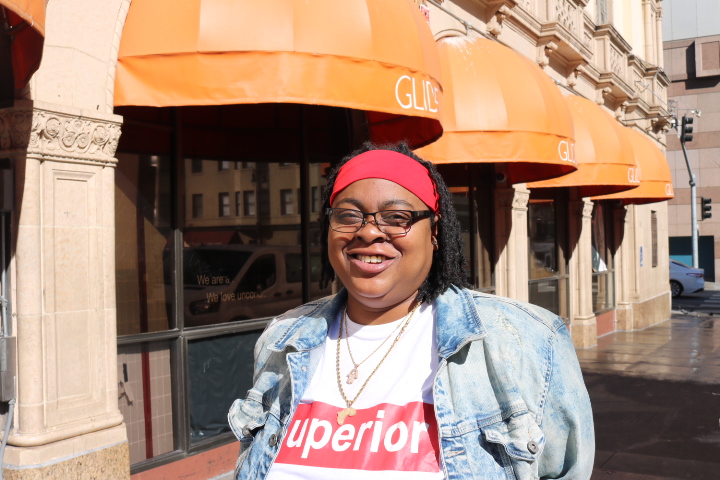
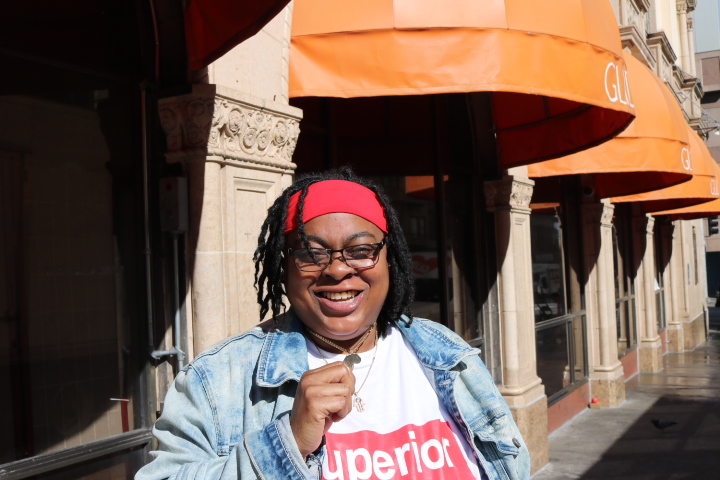
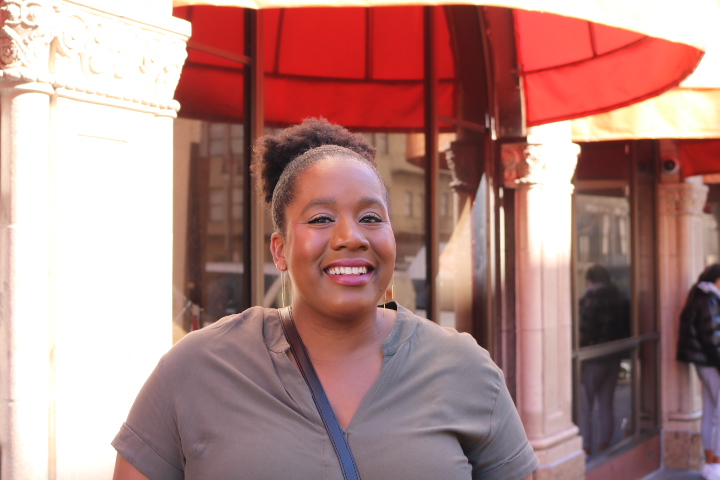
GLIDE Voices is honoring Black History Month; we asked Senecca Vaughn, Women’s Center Peer Advocate, what does Black History Month mean for you?    

Senecca holding up her Africa pendant necklace

“Black History Month used to be a week back in the ’50s and ’60s. I am happy we do have at least a month out of the year in which we are recognized and acknowledged for all of our accomplishments, because this country would not be what it was without Black people, period. 

My grandmother was born in 1928 in Mobile, Alabama. When she was young, she saw her family’s farm taken from her. Her and my uncle had a horse, the family had horses and farm animals. And she said she watched the white folks come and take the land from them. I often wish I would’ve known exactly where that land was because I’d try to go fight for it in some way, shape or form. My grandmother raised 11 kids during Jim Crow. Those were the laws that kept Black people from having full, equal rights. You know, you’d have two schools, but the white schools had the better everything. Black folks barely had a book to share, kept people from buying, kept us from voting properly, just pretty much the same fundamental systematic racism that we have today. It’s just back then it was more outright, blatant.  

I feel like the more things change, the more they stay the same. One thing I do love is that I can fight back. My grandmother, I guess she didn’t feel like she could have. And even growing up in the ‘80s and ‘90s, I saw her kind of just, keep her head down and do what she was told when it came to the white establishment. I told myself, I’m not doing that, because I feel like you fought and your people fought, and your ancestors and great grandparents fought so that I wouldn’t have to do that. Now, the voice may go unheard still, but it definitely goes unheard if you don’t speak up. So, I believe in speaking up now. 

Being Black in America is a beautiful disaster. It is dope to be Black, but it’s also dangerous and it’s scary. In my lifetime, I didn’t think I would have to worry about getting shot walking down the street, or I never thought I’d see a cop and see danger, as opposed to safety. But one thing I can and will do, I will speak up for myself. I don’t have to keep my head down. I’m not going to dim my light because it’s too bright for you.” 

Senecca Vaughn, Women’s Center Peer Advocate

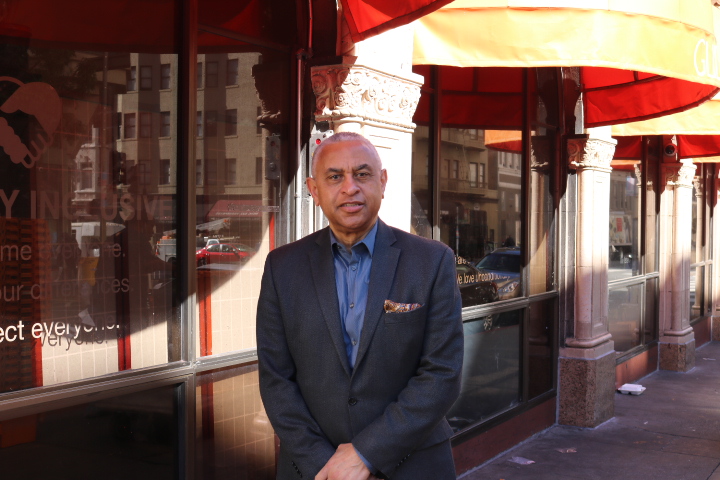
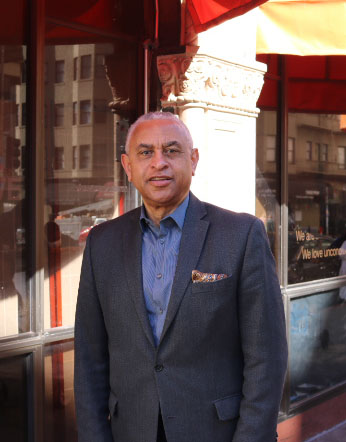
GLIDE Voices is honoring Black History Month; we asked Erby Foster, Chief Financial and Operating Officer, what does Black History Month mean for you?    

“Black History Month is an opportunity to learn and share.  We want to celebrate differences and bring people along the journey. To me, it should be a way to use what happened in the past to inform the future. I like to say that the past is a place of reference, not a place of residence. We want to be able to see what happened and elevate it, so people have a better appreciation for what they don’t know. I’m a great, great, great grandson of an ex-slave. I am proud that my family has persevered and overcome a lot of challenges that we had, but I don’t let the past paralyze me. I try in a very intentional way to overcome it.

 In 1921 John W. Cromwell Jr. was the first Black CPA in the United States. He had an undergrad and a master’s degree from Cornell. But he was not allowed to take the CPA exam, because of discrimination, because he’s Black. He couldn’t take it from DC, Virginia, or Maryland, where he lived. He had to go all the way up to New Hampshire and take the exam, and that’s how he passed. That’s how he became a CPA. Then, it took 45 years before there were 100 Black CPAs in the entire United States.  

A hundred years later, there’s only 5,000 Black CPAs in the nation, out of 500,000 total CPAs. There’s more Black attorneys, doctors, and lawyers than there are CPAs. And I say, ‘Why is that?’ They had the education, they passed the exams. It was the work experience requirement. If you were Black, particularly in the ‘60s and ‘70s, the big firms wouldn’t touch you. They wouldn’t hire Black people, because the clients didn’t want a Black person looking at their financial books. 

There’s something called ‘Black Tax’ and what I mean by that is, as a Black person, I had to work harder than my white counterparts to get the same recognition. If people are coming in at 9:00, I’m coming in at 8:00. If they’re leaving at 5:00, I’m staying until 6:00. I’m doing 20% more work for the same money as people who work less, because of their privilege just by the nature of their background and their skin color.  

It’s systemic racism. It’s an unknown story. When people think of racism, they think of other things, but in the profession like accounting, there was racism, and the big accounting firms wouldn’t hire Black people. That’s why the numbers are so small.  

In a sense, I was a trailblazer. It made me become an advocate to help the next generation. I feel I’m here to create a path for the people that follow me. I got hired by one of the major accounting firms, Arthur Andersen. I got promoted to manager level, which was an even more rare thing. I was the first Black audit manager in the Western United States at Arthur Andersen. I became a role model that other people could see someone like them in a major firm and advancing. It encouraged me to help the next generation.” 

Erby Foster, Chief Financial and Operating Officer

GLIDE Voices is honoring Black History Month; we asked Renesha Westerfield, Project Manager and Executive Assistant, what does Black History Month mean for you?    

“I often joke that during Black History Month, I tend to slow down a little bit. I get a little bit of Senioritis, if you will. I always feel like the ancestors would want me to do less during a time like this to recognize that there’s more to me than to produce. That we’ve done enough, we can hang up our hats and take a break. I try to reflect on all the contributions that my people have made to this country, and it feels restorative in that way. 

I think to be Black in America means to be in mourning and in celebration at the same time, because the people have overcome so much, and there’s so much to celebrate every day. But there’s a lot to mourn because it’s very heavy to be Black in America, it is very scary sometimes. I think that duality weighs on us in different ways. It’s a rollercoaster of emotions, but we’re able to hold space for all the pain and the death, and then turn around and smile and have something to appreciate and celebrate. I couldn’t imagine being anyone else, and I’m thankful for that community.  

Growing up, I had a lot of family members who’ve been on and off drugs, in and out of jail, and I personally have survived foster care. I know what the carceral state has done to me, the time that I’ll never get back, the ways my family hasn’t been able to get back on their feet.  

The cycle of poverty I’ve experienced just by being Black, and the constant threat of being a Black woman today – like walking on the street, being outside with my son, going in and out of stores. How am I going to be received? What are people going to say? Is this going to be a moment where I’m driving, doing something very innocuous, I get pulled over and that’s it? I hope that I can give my son a little bit more, that he won’t face the same thing. But there are truly no guarantees. I can go out with just prayers and hope and do as all Black mothers have done before. 

The most radical thing a Black person can do in this country is choosing to find joy and happiness, because that’s the biggest threat, our joy, and that’s what’s under constant attack from appropriation to the invisible glass ceiling for Black folk, to whatever ways they try to cut us off from making money and taking care of ourselves. We still find joy with very little, and we make it look damn good. Choosing yourself has got to be one of the priorities, because we have got to take care of our mental health. And also, do something fun for yourself. It isn’t all hand wringing and tears.”


Renesha Westerfield, Project Manager & Executive Assistant

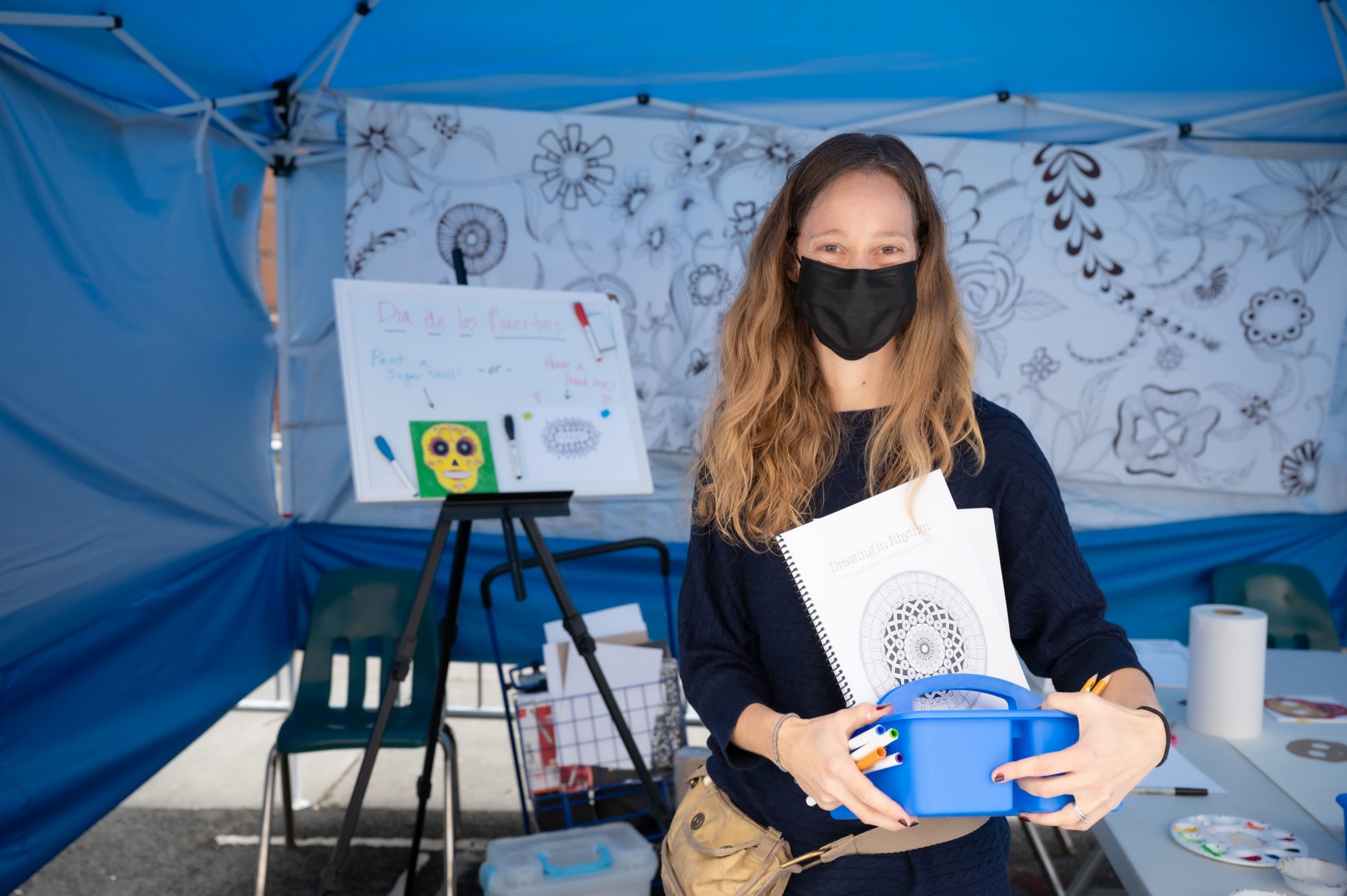
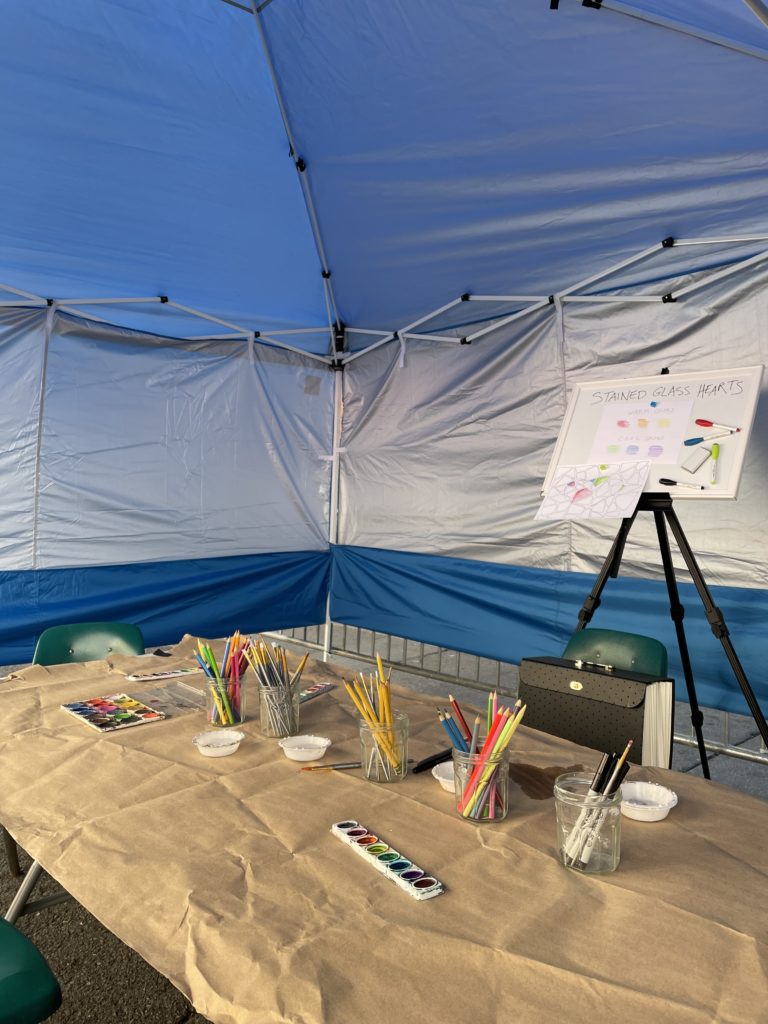
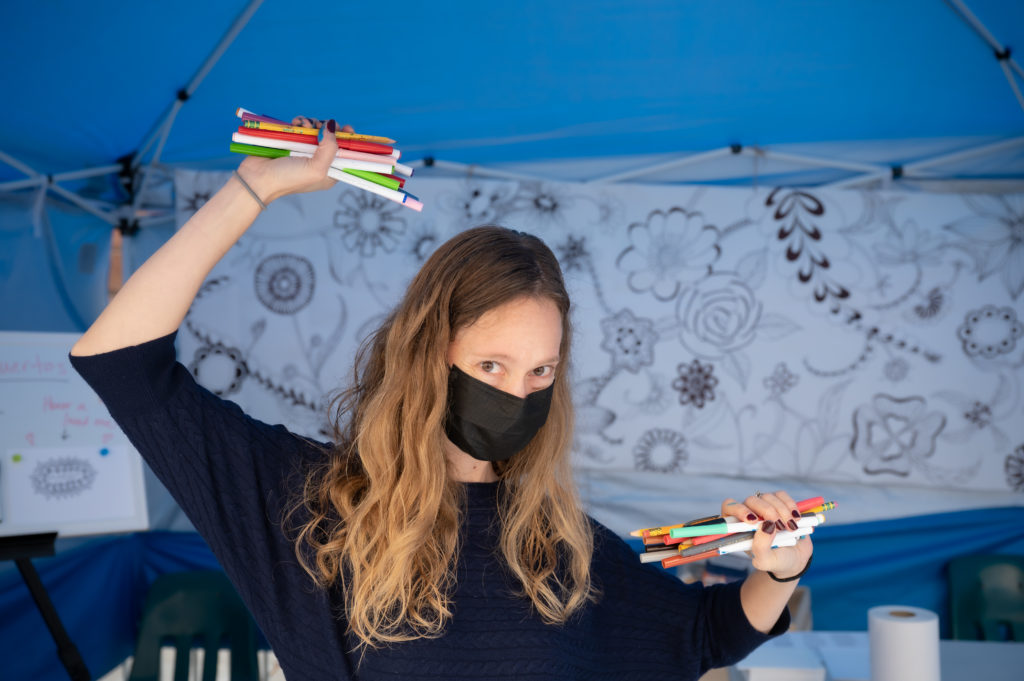
Every Tuesday and Thursday morning, Toby Simon sets up her tent and art supplies on the Tenderloin Hub, providing a class to the community that is aptly named, “A Space to Draw.” At surface level, the art class explores different forms of drawing and technique, allowing students to build upon their skills. But for many of the participants, A Space to Draw dually provides a space for healing, self-discovery, and reflection.  

The idea for A Space to Draw came about when Toby attended a volunteering event with The Kitchen SF, at GLIDE. Toby was struck by GLIDE’s mission of radical inclusivity and the breadth of services offered to the community. She then posed the idea of incorporating a space to make art at GLIDE and create a classroom where one did not exist before. She was soon popping up her tent in GLIDE’s parking lot, with clay, canvasses, and paints. The art class quickly became the highlight of the week for her students. 

A Space to Draw set up and ready for students   
  

“As an art educator, I think the greatest impact I can make is imparting a sense of growth mindset on the community,” Toby says.  “I think that a lot of the community members have experienced years of abuse, neglect, and bad luck, and years of this trauma can really be detrimental to self-worth and mental health. Students come in and realize that they have a voice, and they can share their ideas.” For Toby, learning new skills, such as art, is an important mechanism for building self-confidence, which in turn permeates into all aspects of a students’ life.  

Art teacher Toby Simon

In vulnerable communities, arts and culture can be powerful tools for community development, shaping infrastructure, transportation, access to healthy food, and other core amenities. In communities of color that have been systematically stripped of agency, art is an avenue for strengthening cultural identity, healing trauma, and fostering a shared vision for community.  

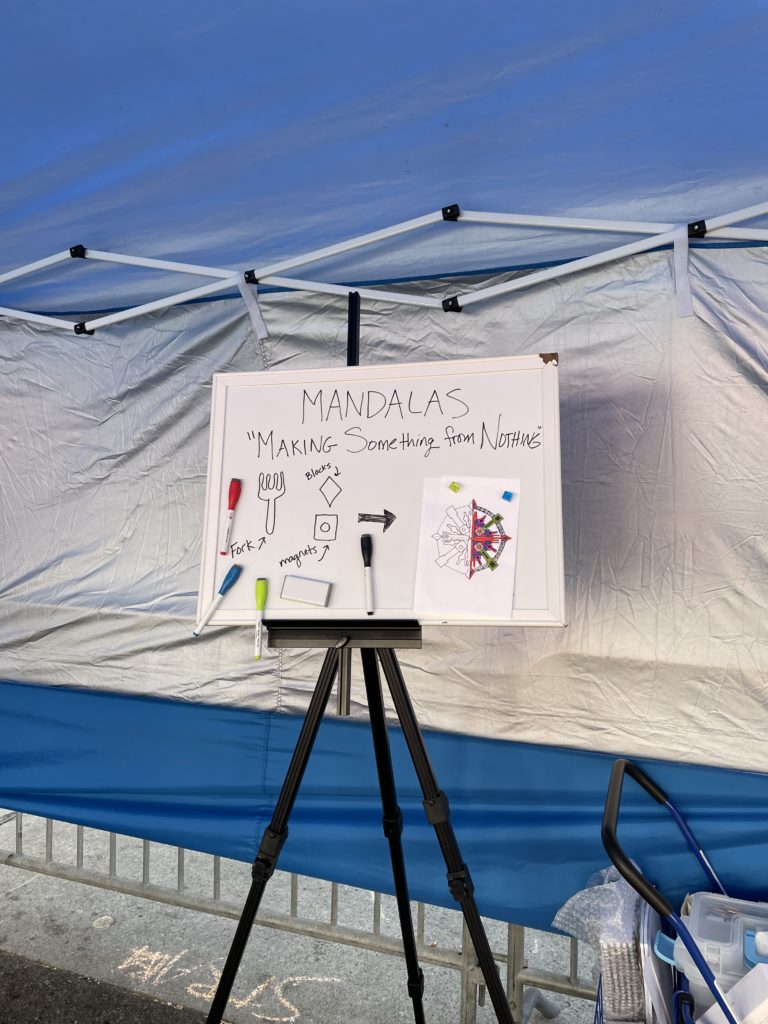
A Space to Draw consists of two classes, “Drawing From Life” and “Rhythmic Drawing.” Rhythmic drawing teaches mindful and meditative techniques such as pattern making, doodling mandalas, and coloring pages, all of which are simple, meditative forms of drawing and painting where students can get into a creative flow. Drawing From Life teaches techniques on how to draw realistic form, shading techniques, and figure drawing.  The class allows students to tap into their inner resources to have moments of self-discovery while creating pieces of art.   

“Make something out of nothing” a lesson on drawing Mandalas  

“Art serves as a form of communication,” Toby says. “People are constantly opening up, thinking about the significance of what they made.” Toby recalls a time when one student made a drawing that portrayed her desire to pursue an education. The student had made a shape on one side of the page, which represented her regret of not graduating 8th grade. On the other side, the student illustrated her ambition of returning to school and graduating.   

“A benefit of a drawing class is that it empowers people, women especially, who feel like they’ve lost their voice,” says Toby. “Experiencing trauma or constant marginalization severely impacts a person’s sense of self-worth. Our students have so much to contribute, and I simply offer them new methods of expressing themselves and a space to share their stories.”


GLIDE Voices is highlighting Filipino American History Month. We asked Lanie Igtanloc, Director of Family Youth and Childcare Center, what GLIDE value resonates with you this month and why?

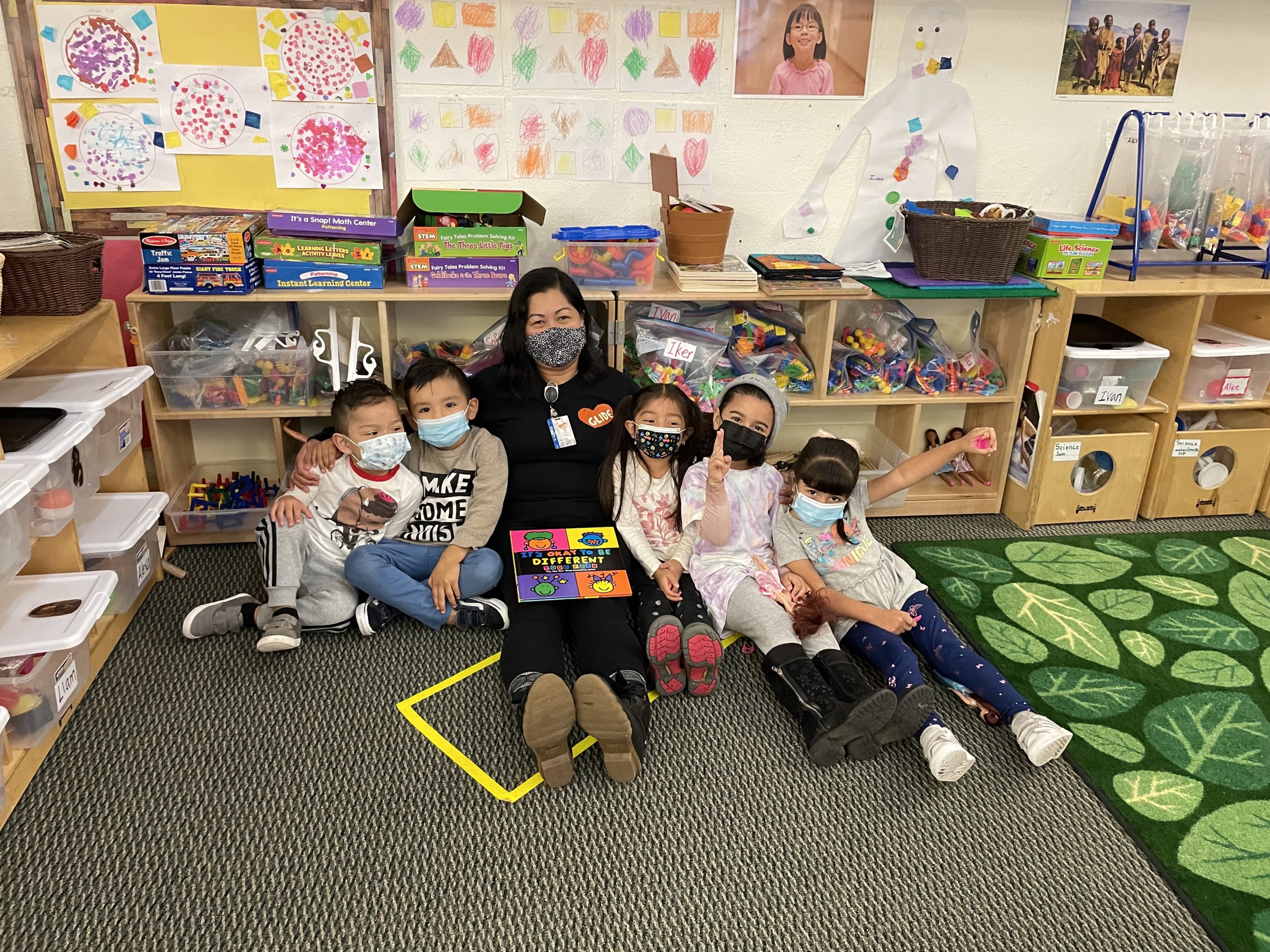
“One of the GLIDE values that resonates with me most is the value of For the People. At FYCC we welcome everyone; we help everyone regardless of who you are or what circumstances you have in life. FYCC will work with families no matter what; we are here for them. One of the best examples of this was during COVID, when we closed our Childcare and Afterschool program because of the virus. One of the things that we did following our site closure was call the families and children. We asked if they were okay, what they needed, and how we could help them through this crisis. Our teachers – together with our Family Resource Center thought to distribute food among our parents and families. We did this not only for our parents enrolled in our Center but for the entire Tenderloin community. FYCC became a food distribution site. This is what the value For the People is all about. We always think about our families, parents, and children. 

I grew up in the Philippines, in the Visayan region. As a Filipino coming here to the United States and sharing my culture here at GLIDE, I share similar values. Being ready to help each other is inspiring and enough to feel proud to be a Filipino. Beyond resilience, adaptability and courage are important to have in facing very difficult times, as well as always being ready to help anybody in need.  

What I love most about working at GLIDE is that you make a difference in the lives of children and families.” 

Lanie Igtanloc, FYCC Director

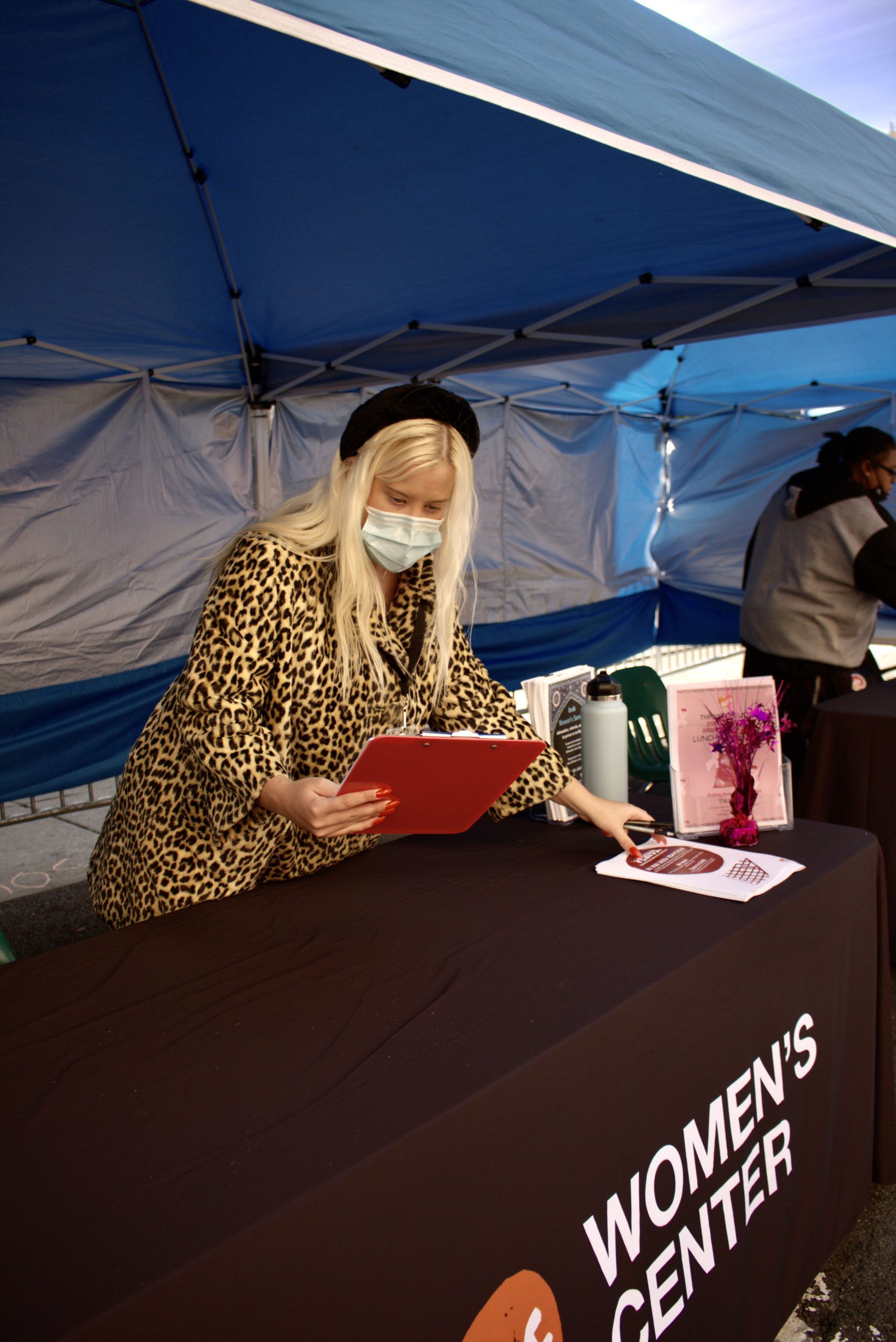
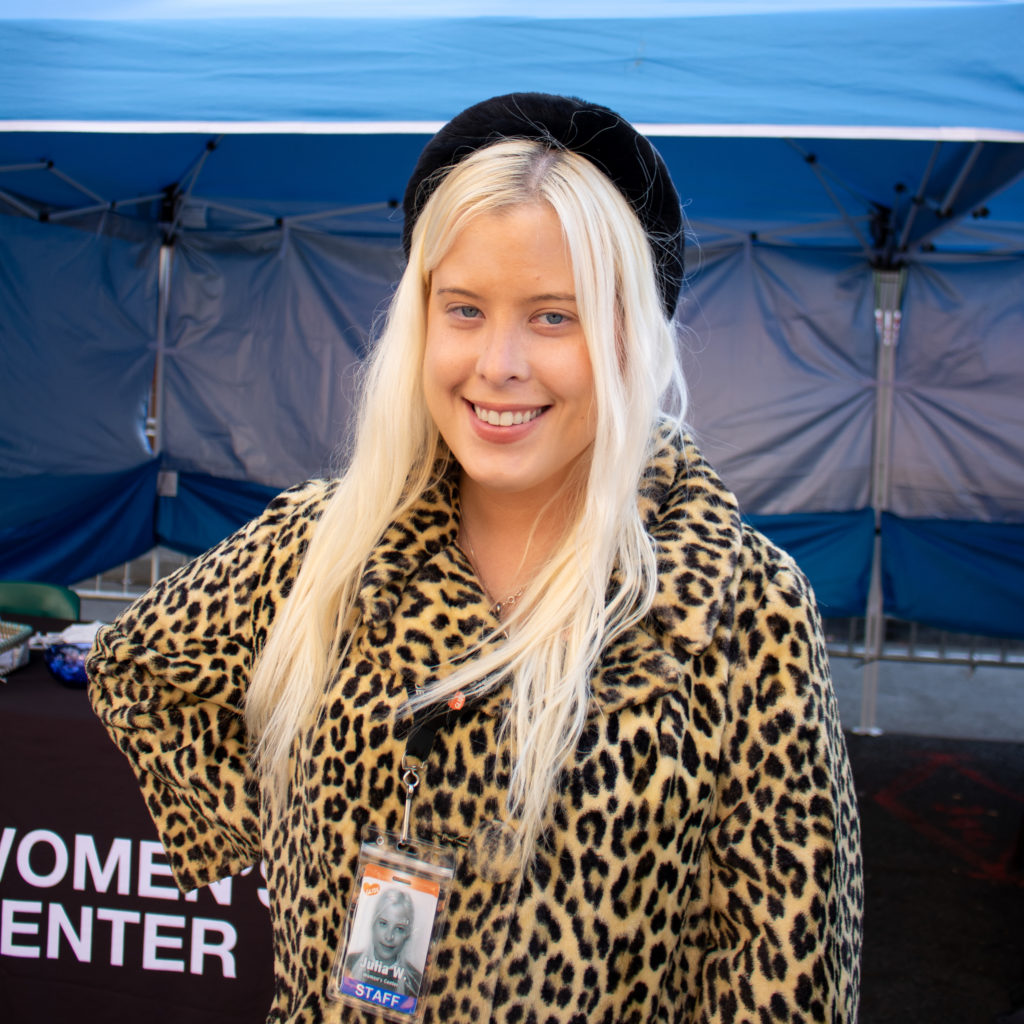
GLIDE Voices is honoring Breast Cancer and Domestic Violence Awareness Month, we asked Julia M. Williams, Case Manager for Women’s Center what GLIDE Value resonates with you most this month and why?  

“The GLIDE value that most resonates with me is Celebration. My mom has been in remission from breast cancer for five years now and we celebrate every day together. Her surviving cancer has taught us to never take our time together for granted and to cherish every moment. 

I’m a certified domestic violence counselor and what I try to do is provide help and support and share my story, because I think that can be really impactful. If I can make it out, I feel like that gives them courage that they can too. I generally like my clients to feel comfortable enough to share those things with me. I don’t really like to pry. So sometimes, it doesn’t come up unless I’m doing their needs assessment. But a lot of clients experience domestic violence, especially those who are experiencing homelessness as well.  

Domestic violence can look like a lot of things. In general, it’s really debilitating, and it’s not always physical. I think a lot of people look at domestic violence and think ‘Oh the person has to be physically assaulted for it to be considered domestic violence,’ but it can be emotional, it can be sexual, it can be financial. Even technological, like hacking onto someone’s social media, or tracking them through GPS. And it can result in a lot of physical and emotional issues. Things that come to mind would be chronic pain, PTSD, depression, substance use. It’s this all-encompassing issue that can have a lot of different faces. I think it’s really important for people to realize that it’s not always physical, it can be a lot of different things that are equally as traumatizing as physical violence. And it has no limits and no boundaries, it can be a lot to deal with. 

I’m a survivor of domestic violence and I’m also the daughter of a single mother. So, the unique needs of women are really close to my heart. I feel like women need a lot of services that are overlooked, even though 47% of the homeless population in San Francisco are women. So, I want to step in and provide that care for them.” 

Julia M. Williams, Women’s Center Case Manager

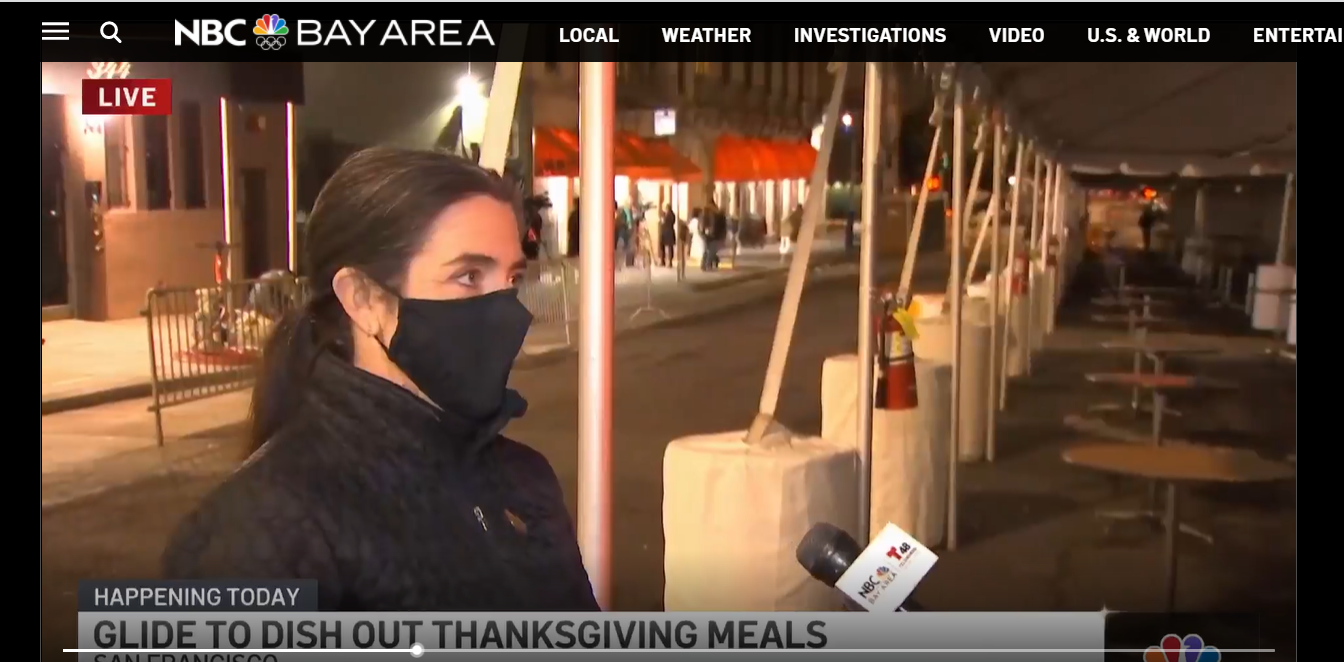
Throughout the past 18+ months of uncertainty brought on by the pandemic, GLIDE has been on the frontlines, helping those in need, innovating services, and expanding our reach and impact to meet rising demand. This Thanksgiving, we celebrated the resiliency of GLIDE and our community by serving 2,400 delicious holiday meals, and welcoming all with unconditional love. Read about GLIDE’s Thanksgiving celebrations in the news:

SF Bay Times, “Giving and the Joy of It”

KPIX, “Liam’s List: THANKSGIVING: GLIDE”

KQED, “Nearly 2 Years Into Pandemic, Food Banks Still Need Support. How to Help 

(and Find) One” 

KTVU, “Thanksgiving meals, vaccines served at Glide in San Francisco”

NBC Bay Area, “GLIDE Memorial Thanksgiving Giveaway”

NBC Bay Area, “GLIDE to dish out Thanksgiving meals” (5:30 a.m. interview with Jean 

Cooper) 

ABC7, “GLIDE holds annual Thanksgiving brunch in San Francisco” (9 a.m.)

KCBS, “Turkey with side of booster: Free Thanksgiving meals, vaccines served in 

Tenderloin”

KPIX, “Charities, Community Groups Serve Up, Deliver Warm Thanksgiving Meals For 

The Needy”

SFist, “Turkey Day Topline: Glide Is Serving Thanksgiving Meals and COVID-19 

Vaccines for 2021“

Oakland News Now, “GLIDE THANKSGIVING: Glide set to serve holiday 

dinner to the needy in San Francisco’s Tenderloin”

MSN, “GLIDE holds annual Thanksgiving brunch in San Francisco”

The San Francisco News, “No homeless left behind for the Thanksgiving”

ABC7, “Full list of Bay Area organizations to donate to this holiday season”