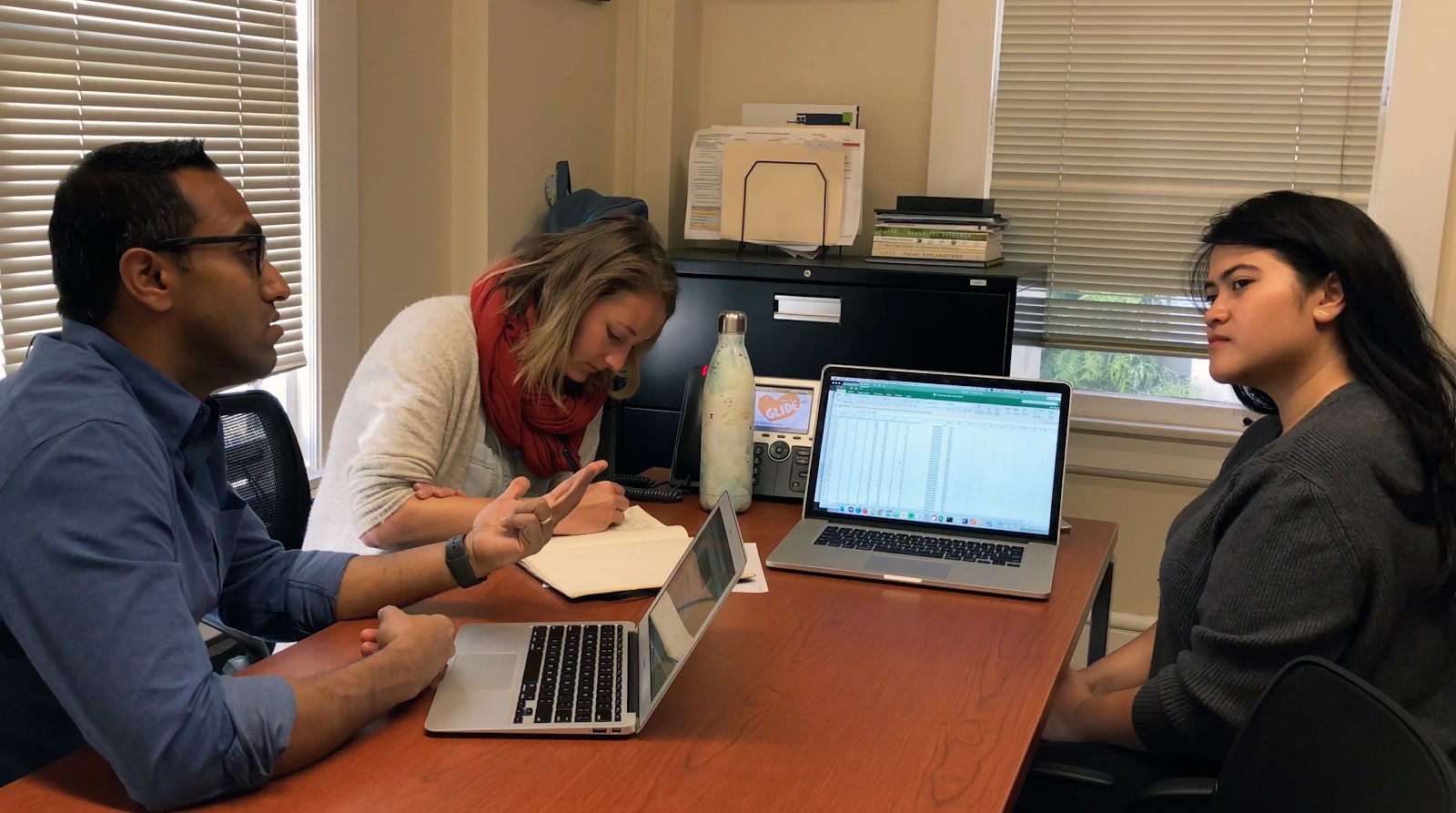
We are happy to feature this reflection by Precious Listana, Public Policy Fellow at Twitter, on some of the ways that Twitter gives back to the community by volunteering at GLIDE. Many thanks to Bano, Kania, and the entire Twitter crew for always making GLIDE a part of #TwitterForGood. Continue reading “From Serving Meals to Improving Data”
To truly protect and serve, we must see the human being in front of us as someone deserving of respect and compassion no matter their state or circumstance.
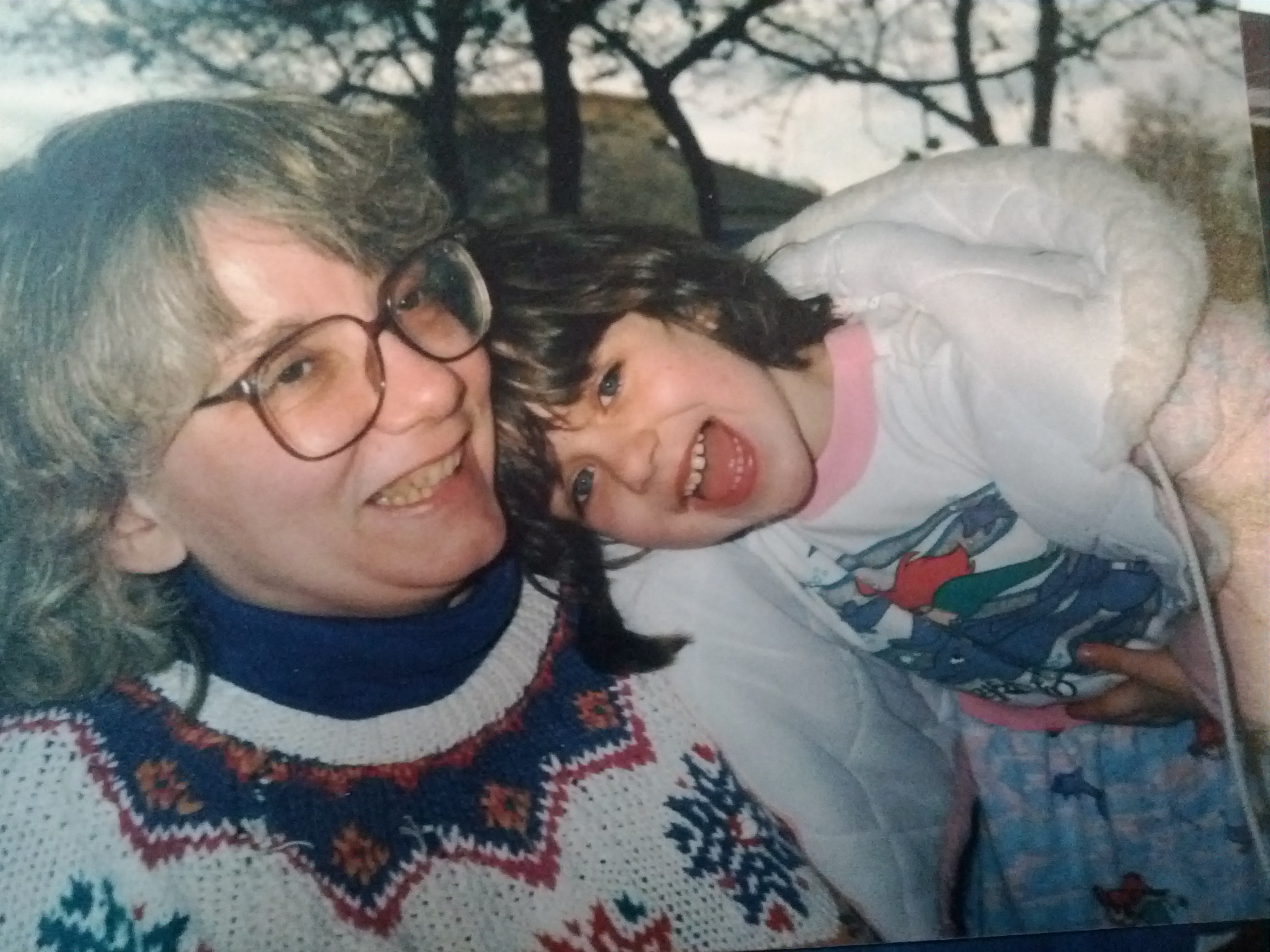
Laura Thompson, founding member of the GLIDE Legacy Committee, remembers her mother by living GLIDE’s values
GLIDE Church has a long-standing tradition of featuring voices from the community in a segment of Sunday Celebration called “I Am GLIDE.” Personal testimonies on the strength and power of unconditional love from our program participants, congregants, donors and volunteers provide what we often refer to as “the GLIDE sacred text.” We feature these inspiring stories here when we can. Recently, Laura Thompson, founding member of our wonderful GLIDE Legacy Committee, spoke to the congregation.
I was raised by a badass single mom.
She survived an abusive childhood at the hands of a schizophrenic mother and alcoholic father, and escaped to San Francisco in the 1960s as a young adult, where she found GLIDE. Continue reading “A Family Affair”
Thoughts from GLIDE staff who attended our pilgrimage to Montgomery
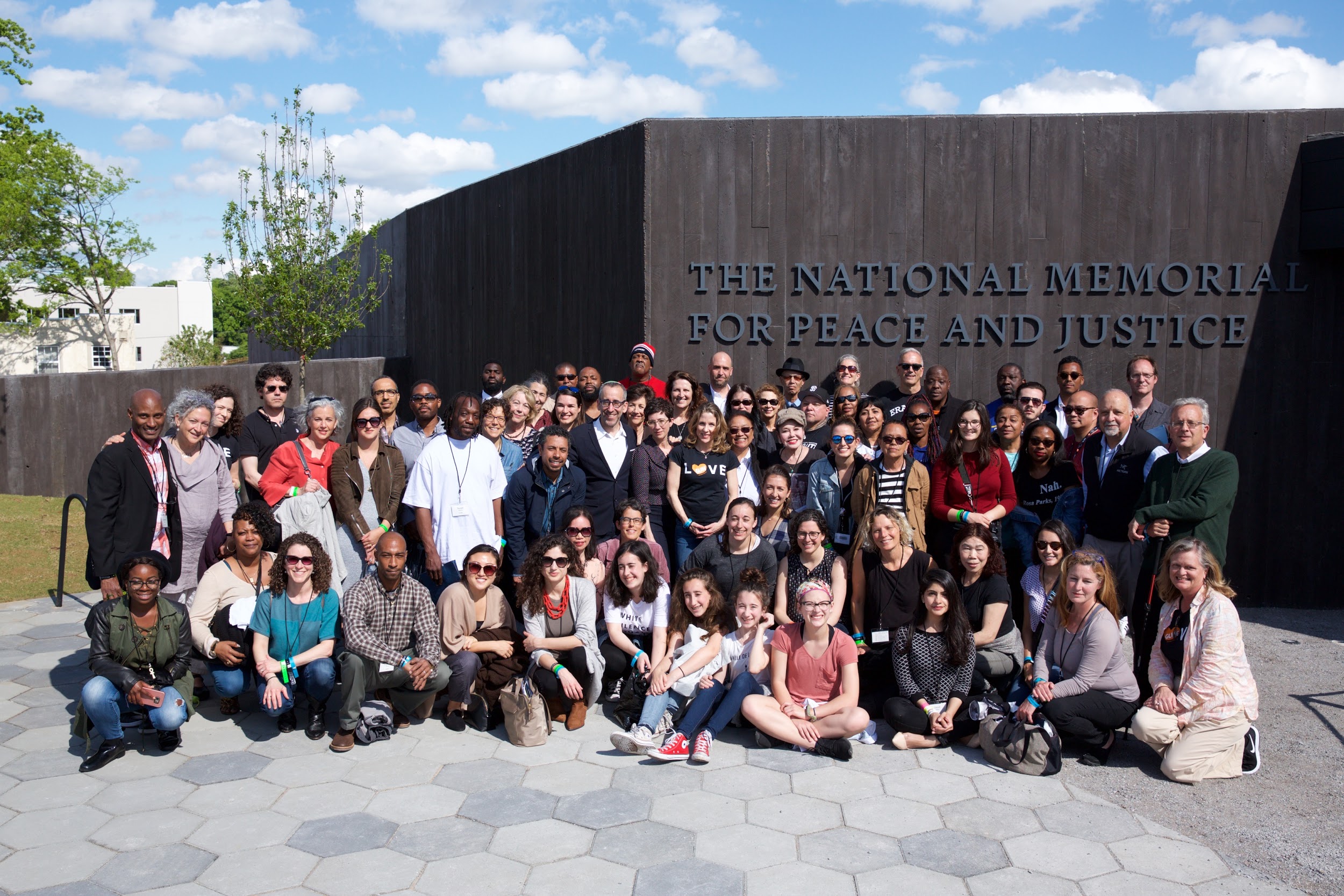
On April 25, a group of 85 people from GLIDE, The Kitchen, the Rafiki Coalition and Stanford Graduate School of Education traveled to Montgomery, Alabama for the opening of the Equal Justice Initiative’s Legacy Museum and National Memorial for Peace and Justice. The trip was the culmination of a series of courses organized by Rabbi Michael Lezak, Isoke Femi and James Lin of GLIDE’s Center for Social Justice focusing on the issue of justice and reconciliation. We have come back from Montgomery with a range of feelings and thoughts concerning the deep connections between the history of the country and the ongoing challenges we as a society face here in the Bay Area. GLIDE continues to work for personal and social transformation toward a more just and equitable world. The following reflections from members of the Alabama trip speak to the power of this pilgrimage on our own understanding and resolve around the nature of the work ahead. Continue reading “Reflections on Justice and Reconciliation”
Unconditional Love. Radical Inclusivity. And Doing Your Part.
GLIDE Church has a long-standing tradition of featuring voices from the community in a segment of Sunday Celebration called “I Am GLIDE.” Personal testimonies on the strength and power of unconditional love from our program participants, congregants, donors and volunteers. We feature these inspiring stories here when we can. Emily Cohen, Co-Chair of the GLIDE Legacy Committee, spoke to our congregation on April 29.
I grew up in Petaluma. I was raised Jewish and secular. My father is Jewish and my mother is I think what she would call a “recovering Protestant”. My childhood was good. It was safe. And I felt loved.
One thing I did not do growing up was go to church. I did go to Hebrew School but about a year before my Bat Mitzah I told my mom I wanted to be a Buddhist. I was 12. So I have always been spiritually curious. I have always believed that there is something much more magical and important to us than us. But I never believed it could be found in the walls of any church or religious institution. I never believed a church could be the vehicle for me to have a meaningful spiritual human experience… Until it was.
Emily Cohen (second from right) volunteering in the GLIDE kitchen with fellow Legacy Committee members.
The first time I came to GLIDE was with my father. We had no intentions beyond just checking it out. But after that service I felt like I had found something I had been looking for my entire life.
I continued to come back on Sundays , even when it meant skipping Sunday brunches with friends. I think it was confusing for people — all of a sudden I was going to church. “What has happened to Emily?”
But I was inspired by the message of GLIDE. Of their work for social justice and equality for all. Of unending compassion. And a commitment to serve people at the very margins — the places other religious institutions do not go.
For me, GLIDE has been a kind of mentor. It has shaped my sense of the world. Of what it means to be connected to humanity.
At GLIDE I’ve seen unconditional love through their work in harm reduction. In their free meals program. In their programs for survivors of abuse. For men unlearning violence. In their programs for children. In the Walk-In Center where someone can get a clean pair of socks and speak with a person willing to meet them where they are.
We live in a society that TALKS about being compassionate and loving your neighbor and serving and giving back. But we also live in a society that tells us every day to reject that message. To consume more and give less. To turn away from the things we don’t want to see or feel. To explain to ourselves that you are not my problem. Your suffering is your own fault. We live in a society that gives us every excuse to explain away our selfishness.
For me, GLIDE has been a kind of mentor. It has shaped my sense of the world. Of what it means to be connected to humanity. Of what it means to be compassionate. To understand that it might seem that I have nothing in common with the people sleeping outside of this church or waiting in line for their next meal. But the truth is, we have everything in common. For someone who is privileged , that can be a painful truth to face. Because then you know you’ll have to do something. GLIDE gives me a place to recognize how privileged I am and then to do something with it.
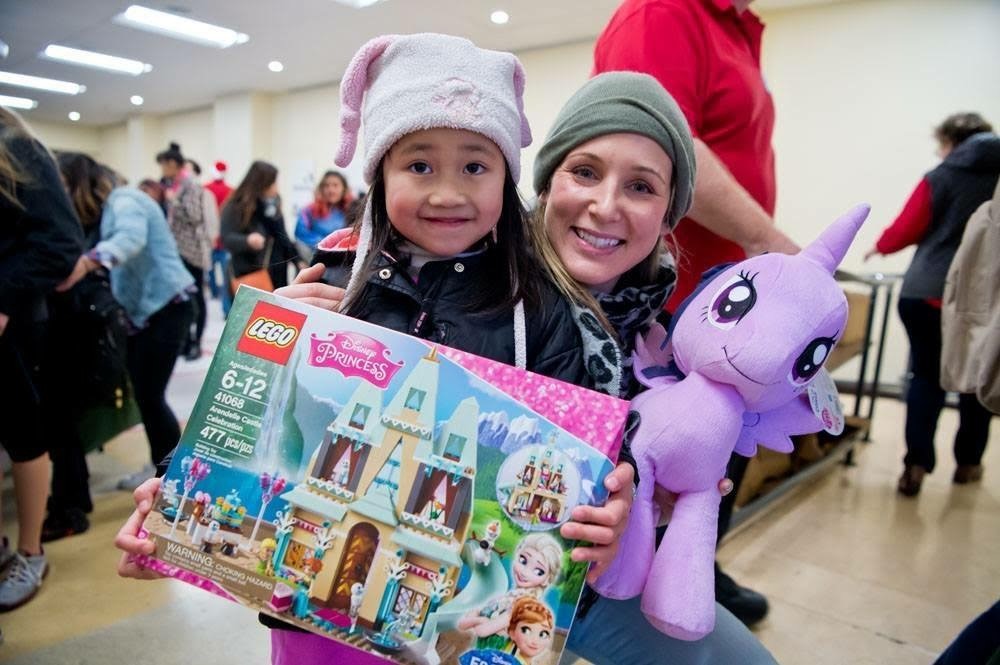
Emily volunteering at GLIDE’s Annual Toy Bay Giveaway, December 2017.
It is easy for people of privilege to talk about poverty. It is easy to talk about mental illness. It is easy to talk about affordable housing. Or homelessness. Or addiction. Or suffering. Or violence. Or racism. Or sexism. Homophobia. Xenophobia. It is NOT easy to work to change these things.
We have enough people in this world — and in this city — who do nothing. Who don’t give their time, energy or money to anything outside of themselves. We see this every day in the glaring inequality and disparity that we accept right here, right underneath our self-proclaimed “liberal values.”
Am I listening to the voice inside that reminds me that the men and women suffering outside are still a part of me?
Too many people believe it’s not up to them. But you are not one of those people. I know that because you’re here at GLIDE, a place that values and inspires action above everything else.
I call on the people sitting here today and the people listening at home to ask yourself: “Am I walking the walk? Am I listening and RESPONDING to the voice inside me that is trying to remind me of what it is to be human? To be connected? To love unconditionally and to give back in all the ways that I can? Am I listening to the voice inside that reminds me that the men and women suffering outside are still a part of me?
I look around this room — full of so many different types of people — in color, religion, upbringings, down-bringings, in age and gender, all here because we believe in or are curious about this idea of unconditional love and radical inclusivity. And I ask myself “am I giving enough back to this incredible place? Are you?”
GLIDE, to me, is radical because it does not wait for a better, safer, kinder future for the world. It creates that future.
GLIDE has provided an avenue to focus my energy, time and money towards something much more important than me. GLIDE has taught me what it really means to be just one person. Which is that I AM ONE PERSON! GLIDE has taught me what it means to step up and step in and say “I am somebody with something to learn and something to give.”
I use GLIDE as my vehicle because it is reflective of my values, beliefs and my desires for making this world — and our community—a better place. GLIDE, to me, is radical because it does not wait for a better, safer, kinder future for the world. It creates that future. But GLIDE can’t do it without you and me. So I’m asking you this morning to give more than you ever have. Whatever that means to you. Whether it is your time, your energy, your money. Step up. There is much work to be done.
I read a quote a few years ago and for me, it embodies GLIDE’s mission:
“Compassion is sometimes the fatal capacity for feeling what it is like to live inside somebody else’s skin. It is the knowledge that there can never really be any peace and joy for me until there is peace and joy finally for you too.”
Being an active part of GLIDE has changed my life and I am certain it will change yours too.
My name is Emily. And I am GLIDE.
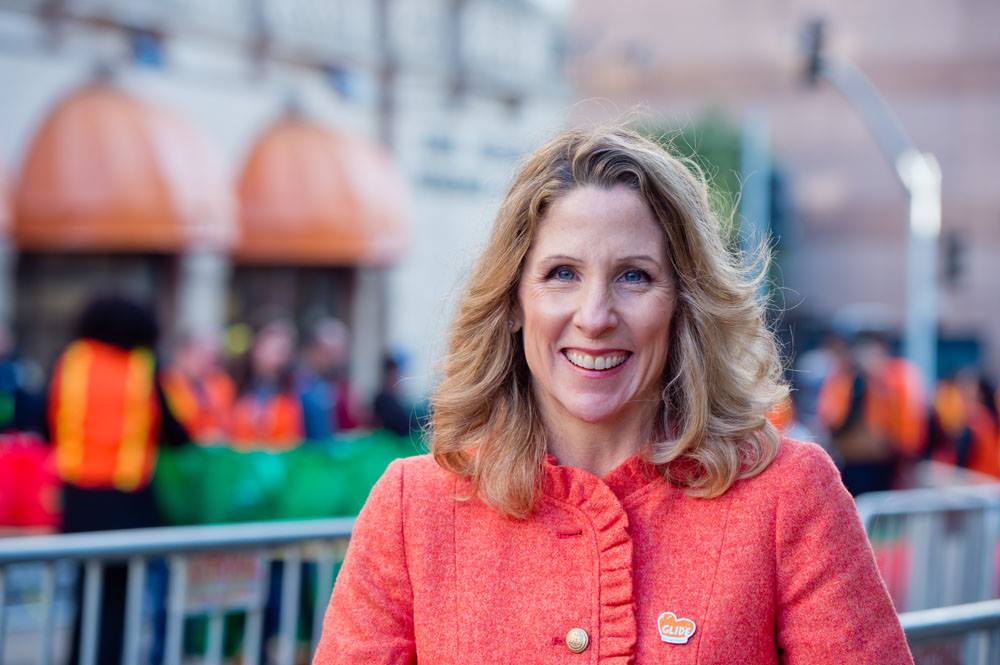
The 2018 GLIDE Legacy Committee. Emily is pictured in the front row on the far right.
GLIDE’s Karen Hanrahan reflects on the power and promise of women and girls
In celebration of International Women’s Day, I’d like to ask you what drives your own connection to GLIDE’s efforts on behalf of women and girls in the Tenderloin and beyond?Well, firstly, I was raised by a single mother, a strong woman and a role model who raised three children by herself and worked very hard to do that. I watched how hard it was in the 1970s to get divorced, to build a life that would take care of her children. Women of her generation had to break a lot of barriers.
When we talk about injustice, about inequality, what I have seen is that women and girls are still viewed as having less value. That was the case when I began working on human rights issues, and it continues to be the case in many places around the world. That for me was a calling, addressing this injustice and inequality. At the same time, I have had the extraordinary opportunity to form very close relationships with girls and young women in places from Afghanistan to Africa to the Middle East, and I have seen how courageous these girls and women can be—particularly if they are standing up for something they know they can be put in jail for or can bring great risk to them. But women and girls who make very courageous and positive changes in their community—it’s where real change can happen.
Karen with a group of children from GLIDE’s Family, Youth and Childcare Center.
What’s the significance of International Women’s Day for you? It reminds me of the power of women for positive change, in the U.S. and globally. We’ve learned, for example, that when you put money directly in the hands of women, their children live longer, their households do better, their communities do better. When women are in power in government, they tend to be agents for peace, rather than violent conflict. It’s a reminder of the power of women to make the world a better place. At the same time, the fact that we have only the one day is a reminder of how far we have to go. There are still too few women in senior positions in government, in the private sector, even in the public sector. There remain high levels of inequality. Women have the highest risk of being impoverished in the United States, actually. So we have a long way to go.
“… We all come into the world wanting dignity, respect and equality. I’ve seen incredible women, including young women and girls, pushing the boundaries of their circumstances, and pushing against the forces that are keeping them out of school or out of politics or forcing them into child marriages.”
When you look at the challenges facing women and girls in the Tenderloin, do you see things that are similar to those you saw in other parts of the world? A lot of people think the United States has made a lot more progress than most other countries, that it’s some sort of beacon of equality for women. But the #MeToo movement has shown just how common and deep the discrimination and abuse faced by women here really is. It happens everywhere around the world. Again, it comes from a lack of valuing women for who they are, turning them instead into these objects over which men will try to exercise some kind of power.
GLIDE Meals Navigator Pamela Brown helped prepare special gifts for our woman-identifying guests on International Women’s Day.
The Tenderloin has reminded me of certain cities I’ve been in around the world because of the state of poverty and homelessness in San Francisco, but also because of the dramatic differences in wealth. One of the fastest growing groups among the most marginalized are women and particularly women of color. So that combination [of growing inequality and a disproportionate impact on women of color] is happening here and on a global level. There’s another great common denominator among girls and women: We all come into the world wanting dignity, respect and equality. I’ve seen incredible women, including young women and girls, pushing the boundaries of their circumstances, and pushing against the forces that are keeping them out of school or out of politics or forcing them into child marriages. I think it comes down to that common human factor, wanting to be free and to have dignity.
“Overall, one of my objectives is to help GLIDE be a better place for women, as well as to grow our capacity to work with families.”
What about GLIDE’s work do you think is the most hopeful and relevant to women and girls today? I can say that generally GLIDE provides a place for everyone, and welcomes everyone no matter their circumstances and treats them with dignity and respect. But in all honesty I also see that women don’t always feel comfortable in a very male-dominated space, in terms of coming in that front door. I’ve talked to women in the Women’s Center about this, for example. One of the places I want to push us to improve is in ensuring that GLIDE is a friendlier place for women and girls, and provides them with a supportive environment. Their needs are sometimes similar but also often quite different from the men. So this is part of what I want to do at GLIDE.
And from a practical perspective, investing in women and girls and families in the U.S. is one of the smartest investments we can make because it’s one of the best ways to actually break cycles of poverty or prevent poverty in the first place.
So one of my objectives is to grow our capacity to work with families. We do already provide a wonderful environment in our Family, Youth and Childcare Center to support families and to provide early childhood education. That support allows women to continue their own educations and to remain employed. I don’t think everyone truly understands the value of a safe, high-quality place for families to put their children. It means women in particular can get onto a more sustainable path out of poverty—and we’re really going to grow that work.
———-
Karen Hanrahan is the President and CEO of GLIDE. She has 20 years of experience advancing human rights and building high-impact global initiatives around the world, most recently as a senior appointee in the Obama administration, where she served as Deputy Assistant Secretary of State in the Bureau for Democracy, Human Rights and Labor. In a variety of roles throughout her life and career, including as a United Nations aid worker and the chief program officer for the Center for Reproductive Rights, Karen has brought creativity and innovation to intractable challenges in economic development, global health and international human rights.
March 2, 2018
We are kicking off the first Friday of Women’s History Month with the words of one of the amazing mothers in our community who sends her children to GLIDE’s Janice Mirikitani Family, Youth and Childcare Center (FYCC). Gabby emigrated to San Francisco from Guadalajara, Mexico 15 years ago, and, like hundreds of other parents, has relied on FYCC to lovingly care for her children so that she can work, study and provide a warm home and hopeful future for her family.
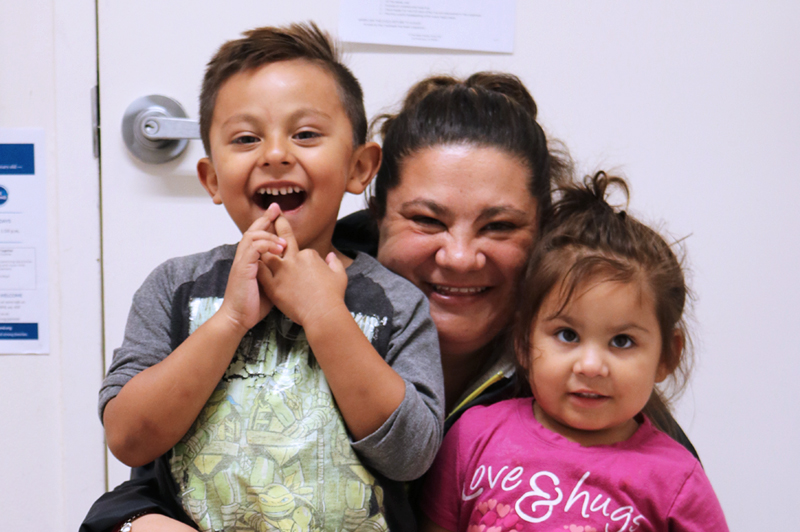
We’ve been around GLIDE for 13 years. I have two older boys who started at GLIDE’s Family, Youth and Childcare Center [FYCC] when they were babies. Now they’re teenagers, and now I have two little ones who are in preschool and the toddler room. I have a boy named Josiah, he’s four, and Jenny, who is two.
Right now, I’m getting financial aid, Welfare to Work and going to City College and studying child development. My dream is to become a preschool teacher. To me, the ages from three to five are very important because that’s when you learn the most, when you are learning to go to school. My interest is in helping kids prepare to transition to go to kindergarten. My kids are really supportive of me, and are always asking me if I need any help with my homework!
Well, every single day they get excited just to come to school. I think it’s the environment with the teachers. Every morning Jenny goes in and starts yelling the teacher’s name and runs to give her a hug. I’m really happy leaving my kids with people that love them. The teachers don’t just take care of them; they give them a little piece of their love.
So, every single day my kids ask: “Are we going to school?” “Yes.” “Yaaaaay!”
And then on Saturday they ask the same thing, and when I say “No,” they say, “Oh. When are we going back to school?” They’re just happy to be at school.
Thirteen years ago, I was looking for childcare for my son Jacob, and FYCC called me and said they had a space for me. I came in and looked around, and talked to La Monica [Director of FYCC]. At that time, she was the manager for preschool. And I loved it! Two days later Jacob started.
By my kids being in this program, I’ll be able to go to school. I’ll be able to take some classes that I need to finish my education and make a better future for my kids.
To me FYCC is very special in many different ways. I used to work here, too. The people around are really with you all the time and they give you love no matter what. What makes it special is that no matter what race you are, they still accept you and support you.
By my kids being in this program, I’ll be able to go to school. I’ll be able to take some classes that I need to finish my education and make a better future for my kids. Right now we’re having a hard situation in our family, which is the separation of parents, and I’m by myself with four kids. And FYCC helps me a lot with all the Christmas gifts [from GLIDE’s holiday toy drive]. It’s so helpful.
Programs like FYCC are important in San Francisco because, especially with afterschool programs, there is a place kids to go after school so they don’t get out of control. There’s a teacher to help them with homework. To me, the kids are the future, so if you have programs or resources that help them to grow up, it’s one of the best things that we as humans can do.
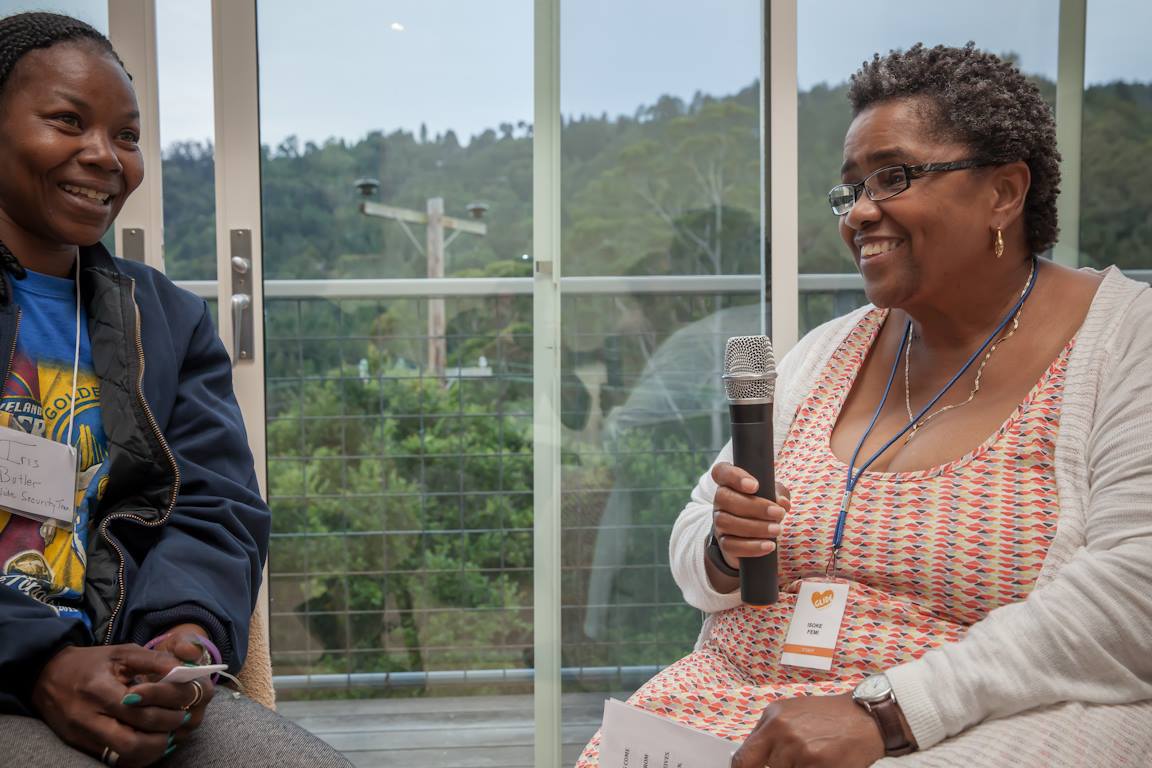
Isoke Femi on transformative learning and loving Blackness
We recently sat down with Isoke Femi, GLIDE’s Maven of Transformative Learning with our Center for Social Justice, to talk about the inspiration and philosophy that ground her approach to group facilitation, and what gives her hope for the realization of a just, equitable and loving future. Continue reading “Transformation Is Going to Happen”
Paul Harkin on what you need to know
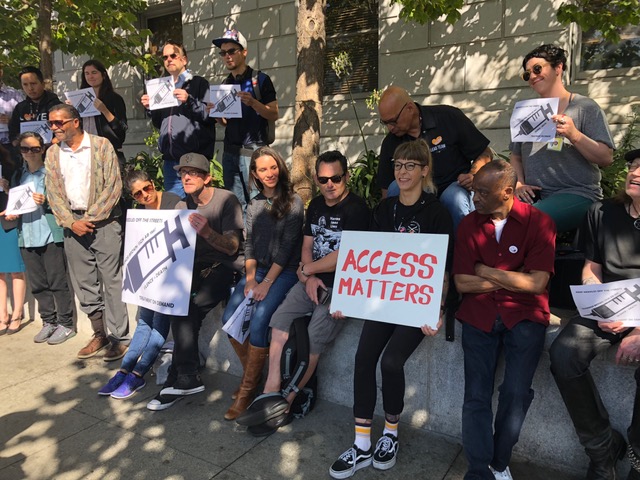
This month, Barbara Garcia, director of San Francisco’s Department of Public Health, announced that the city was looking to pilot two Safe Injection Sites (SIS) for intravenous drug users as early as July 1. This announcement comes amid a spiraling opioid crisis that has encouraged many city leaders across the U.S. to consider adopting some of the evidence-based approaches already working in other countries. Locally, Director Garcia’s announcement comes less than a year after the Board of Supervisors created a task force to investigate the feasibility of operating such sites in San Francisco. The task force’s findings strongly supported the idea.
With Director Garcia’s announcement, San Francisco is now poised to be the first city in the country to open a SIS. This development has great significance for the people and communities GLIDE has long served. In their outreach work throughout the Tenderloin, GLIDE’s Harm Reduction team is literally on the front lines of the opioid epidemic. Given the recent developments, we are reposting excerpts from an earlier interview with Paul Harkin, manager of GLIDE’s Harm Reduction Services, who speaks to the scope of the problem and to the arguments in favor of Safe Injection Sites (also known as Supervised Consumption Services) as a viable, compassionate and rational approach. Continue reading “Safe Injection Sites Are Coming to San Francisco”
Finding human connection and help while on the streets.
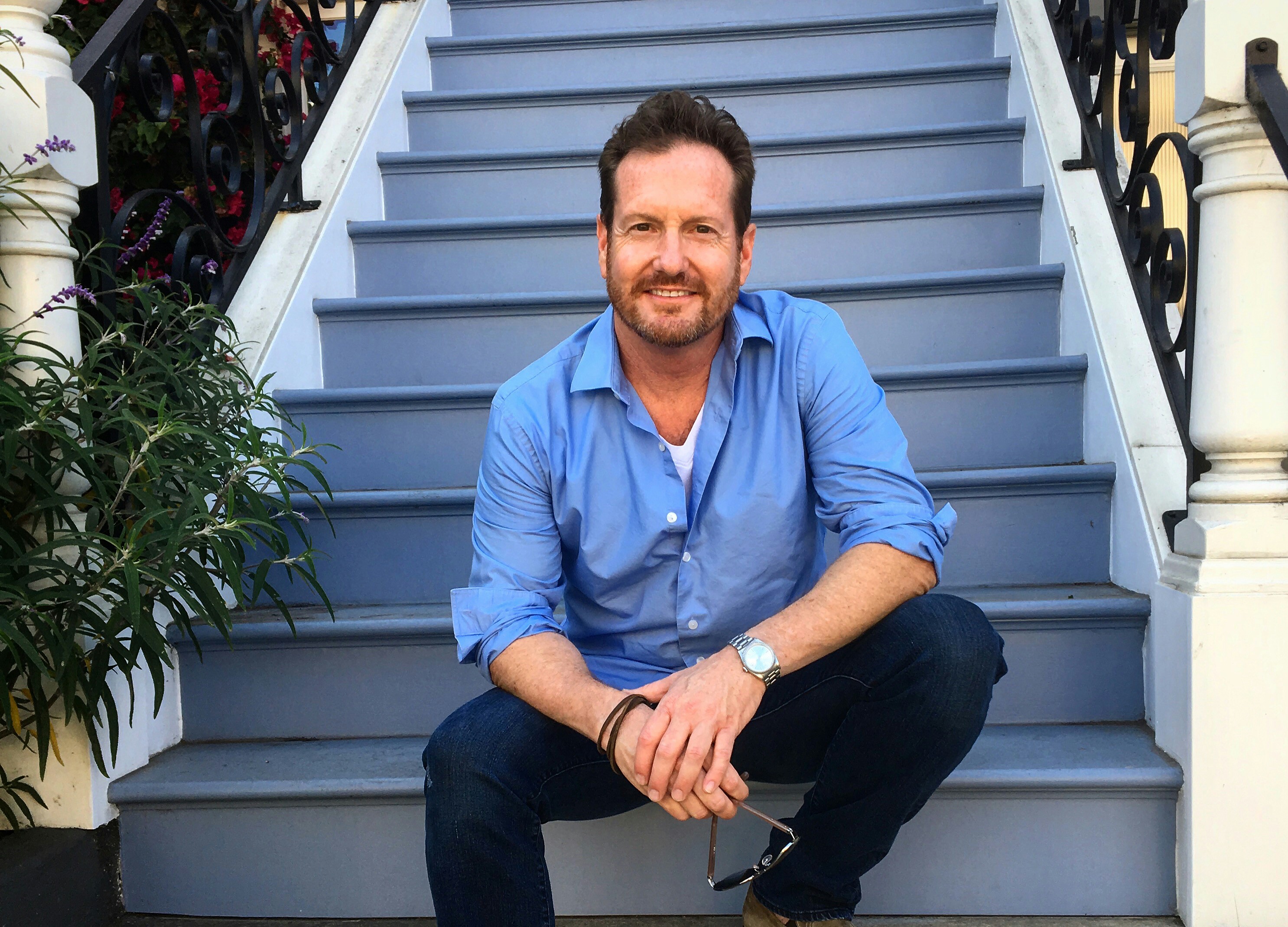
Homelessness can happen to anyone. Michael can testify to that. At one point in his life, Michael was someone who seemed to “have it all.” But life is unpredictable, and our footing is often more precarious than we think. Michael is now stable, doing well and pursuing a fulfilling professional and personal life again. He generously shared his story with us (edited and condensed in the following version) in the hope of encouraging both understanding and perseverance. We must remember to see ourselves in the faces of those who don’t have a home. Continue reading “"Just as meaningful as any meal"”