
By Dr. Gina Fromer, President & CEO 

Across the nation, families who fear their SNAP benefits will disappear on November 1st are scrambling to meet the most basic need of all – hunger.  In GLIDE’s zip code alone, 16,663 people will be affected by these changes.  

This potential SNAP shutdown tears at the very fabric of strong, compassionate communities — and we cannot, will not, let it happen. The good news is, thanks to a historic public-private partnership between the City of San Francisco and the Crankstart Foundation, SNAP benefits will eventually be replaced for San Francisco residents for the month of November.   

But we’re still worried about the families  facing empty tables on November 1st while they navigate their access to the city’s stopgap solution.  That’s why we’re preparing to serve 650 additional meals per day if necessary during the month of November.  

This will cost GLIDE an additional $151,325– but it will ensure no one goes hungry while they struggle with navigating the changes, and it gives us flexibility if the shutdown continues into December.   

We know that about half of GLIDE’s current clients rely on SNAP– and new people will be coming to our doors who never needed our services before.  The time to donate to GLIDE and help us navigate this crisis is now – can you support us today? No child should go hungry due to a government shut down!  

Later this month, our Center for Social Justice will be holding a panel where San Francisco’s local leaders will discuss  the food emergency crisis and actions we can take as a community.  We are still selecting a date for the panel, but you can RSVP here to “Say No to SNAP Shutdown and be notified when the date is finalized.  

As always, GLIDE will be providing support, assistance, and services to any who experience financial difficulty. We urge federal workers who have lost their pay due to the government shutdown to come to 330 Ellis St to take advantage of these services.  

We are moving forward because we know our community needs this– but we’re trusting all of you to give us the resources to make it happen. This is an incredibly emotional time for all of us; I can’t tell you much of a difference it makes when you open your hearts to give.  

You see, I’ve been there. When I was a young mother of three boys, I was the one who needed GLIDE’s free groceries. So my heart goes out to all those young parents who will be relying on the generosity of others to feed their kids next week. I know how it feels. My prayer is that NO ONE feels shame for seeking help. No one should feel like a failure when they’ve done nothing wrong. That’s why our Free Meals program treats people with respect and dignity, like customers in a restaurant– they deserve it. 

When you step up– when you help us distribute extra groceries and assistance– you’re making a difference to hardworking, frightened people who deserve to know where their next meal is coming from.  

Some of those people are stocking up on their pantry goods right now, preparing to weather the storm. Others won’t even know what’s happening until they swipe their SNAP card at the grocery store and the cashier looks up at them and says, “There’s a problem.” No matter what, places like GLIDE will take them in.  

The system may be failing our families, but we won’t fail them. Will you stand with us?  

lateefah simon glide 2025 august

In Notes of a Native Son, James Baldwin wrote,“Those who say it can’t be done are usually interrupted by others doing it.”

This fall, GLIDE showed up and showed out to get “It” done. “It” being the call to interrupt systems that hold people down, divide people, and stand in the way of true liberation. We sang, we danced and we marched to the tune of justice as the days grew shorter and the leaves turned colors. 

We heard the call of justice in the bright summer days of August. Congresswoman Lateefah Simon came to Glide Memorial Church and challenged us to find solidarity in the struggle and light in the darkness. She proclaimed, “God meets us during the storm, not after the storm.” 

glide summer gala swimming pool 2025

We took that message beyond the pews of the Church to deliver hundreds of backpacks to young scholars going back to school in the Tenderloin. We used it as a call for justice for hundreds of attendees at our Summer Gala (which was a last hurrah for the Phoenix Hotel and truly a bright moment for GLIDE). 

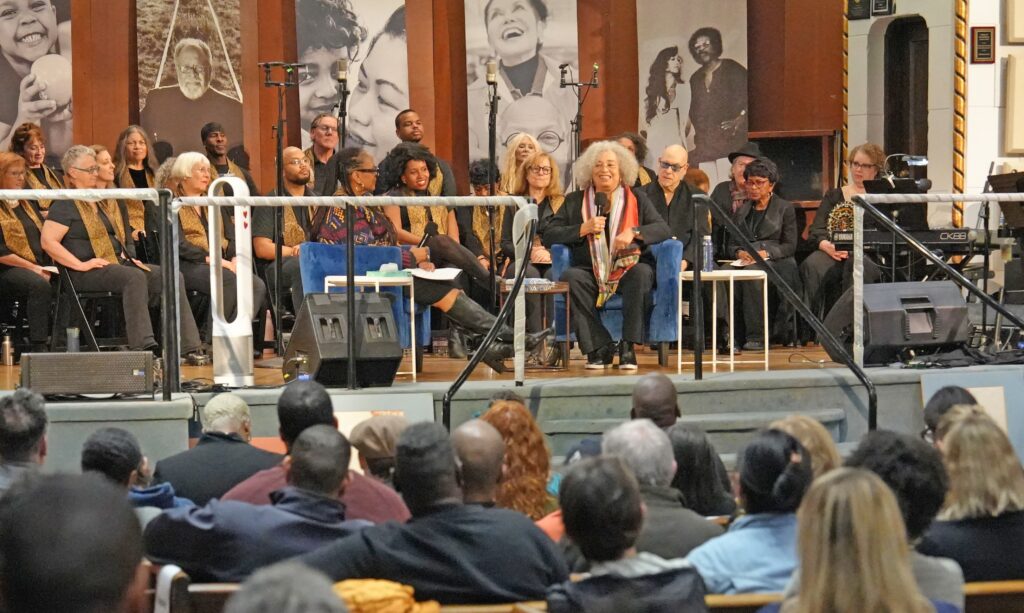
In the month of September, we turned our attention to Recovery. We celebrated Recovery Day at Boeddeker Park and hosted two panels focused on honoring those we’ve lost to the overdose epidemic and showcasing a radically inclusive approach to addiction and recovery. Recovery is a journey we never take alone—it’s a path we walk together. Whether your path is harm reduction, abstinence, or something in between, the message is clear: There is hope. There is help. And there is no wrong door to recovery. 

October took us to the streets—and across the country. Together with the California Congressional Black Caucus and Smart Justice, we traveled 2,405 miles to Alabama on a truth-telling pilgrimage tracing the legacy from slavery to mass incarceration. Back home, we welcomed Tenderloin Police Captain Matt Sullivan and his team to GLIDE to explore new ways to promote community safety. We closed the season with Phoenix Day, our joyful block party celebrating the love, resilience, and power of the Tenderloin.

Every season at GLIDE is a season of love in action, and a chance to interrupt obstacles that stand in our path to justice. If you missed us during Fall Into Justice, we invite you to join us for GLIDE’s legendary holiday celebrations—where we gather in truth, joy, and unconditional love.

Phoenix Day 2025
full pilgrims alabama 2025
Our full gathering of pilgrims

At GLIDE, we define a pilgrimage as “a journey of personal spiritual discovery that forever changes you.” We experienced that transformation firsthand during our recent Alabama Justice Pilgrimage with members of the California Congressional Black Caucus and Smart Justice—an experience that will reverberate through the halls of power across California. 

On April 26th-30th, 2026, we’re opening up our pilgrimage to the public for the first time ever.  Do you want to experience the same transformational learning journey as these legislators? You can buy tickets for the trip at glide.org/alabama or email alabamapilgrimage@glide.org with questions. 

You can also attend an informative webinar on what to expect from the trip on Thursday, October 23rd; register here.

csj naeemah alabama 2025
Naeemah Charles, leader of GLIDE’s Center for Social Justice, in earnest conversation

Through visits to museums and memorials that confront the unvarnished truth of racial terror in America—and through conversations with today’s civil rights leaders—legislators deepened their understanding of the enduring link between slavery and mass incarceration. Hearing these stories in person inspired a shared resolve to tackle the root causes of systemic racism in ways that policy discussions in the Capital alone could not.

ainka csj alabama 2025
Ainka Jackson, ED of the Selma Center for Nonviolence, Truth and Reconciliation, addresses the pilgrims

From the rural landscapes of Lowndes County to the historic streets of Selma and the heart of the Civil Rights Movement in Montgomery, we encountered both the beauty, pain, resilience, and joy that define this journey. 

rabbi michael alabama 2025 pilgrimage
Rabbi Michael Lezak, co-facilitator of the pilgrimage, speaking out with courage and conviction

We invite you to learn more about the movement unfolding today by watching Flushing Justice and HBO’s newly released The Alabama Solution. You can also view photos from our recent pilgrimage here, courtesy of A Kairos Moment.

coffee with cops

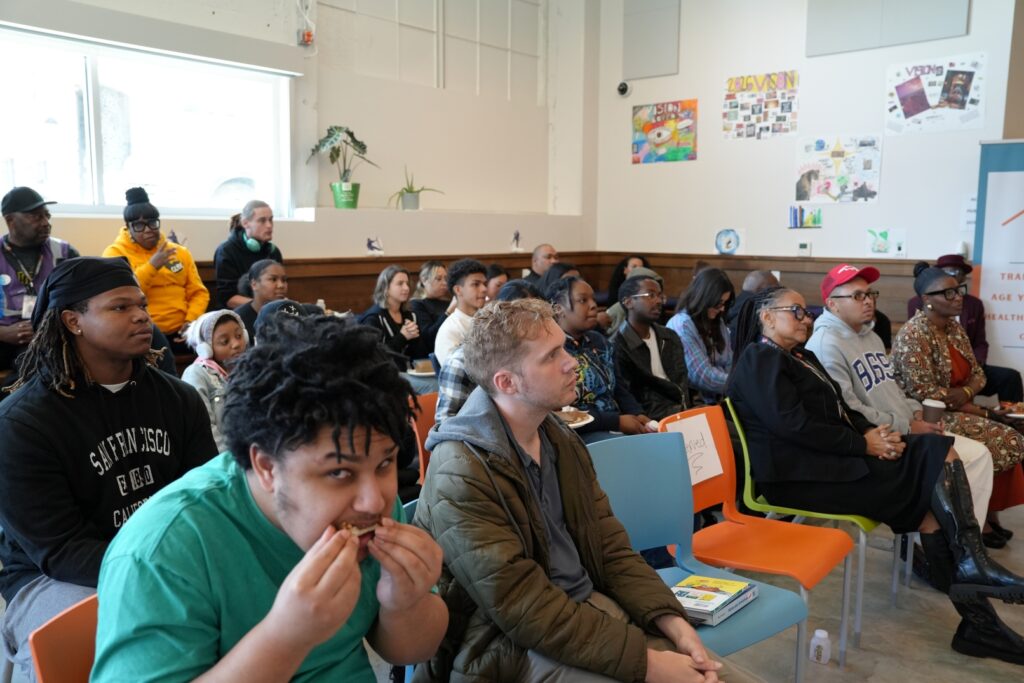
GLIDE’s Coffee with a Cop event wasn’t just about free coffee and pastries – it was about community. Nearly 40 people packed GLIDE’s Freedom Hall for a chance to speak with the new SFPD Tenderloin station captain, Matt Sullivan, and other SFPD officers this past Thursday, October 2.  

“You can say hello, you can voice your concerns,” said GLIDE’s Senior Director of Public Affairs, Francesca-Delgado Jones, kicking off the event. “This is a safe space.”  

The crowd represented a wide range of Tenderloin stakeholders: residents (both housed and unhoused), local workers, community groups, and of course, the police. In addition to new station captain Matt Sullivan, nearly fifteen other SFPD officers from the Tenderloin station showed up to engage with the community. Attendees and police milled about, speaking 1:1 or in small groups.  

Most attendees were motivated by the desire to see the Tenderloin improve. Constituents brought up issues like gun violence, drug use, lives lost, and the need to establish better working relationships between police and community groups on the ground.  

“Everything we do is for the community. But sometimes there are issues we’re not equipped to deal with, and so we have to call in law enforcement,” remarked Paris McBride, the Director of Clean Operations at the Tenderloin Community Benefit District. The Clean Operations Team walks around the Tenderloin picking up trash, cleaning graffiti, and power-washing sidewalks. “I came here today to spread the word about what we’re doing, so that when cops see us in the street in our blue vests, they know who we are.”  

“This was awesome, just to bring the community together. There should be more events like this,” remarked a congregant from Glide Memorial Church, who came to the event to voice his concerns about nighttime safety in the Tenderloin. “We need everyone to be involved. It’s not just going to be the police, because they can’t do everything.”  

Maurice Hull, a longtime San Francisco resident, appreciated the opportunity to voice his concerns to the police. “I grew up in the Tenderloin back in the 80s. This is my home. I’ve seen it change a lot over the years. I’m here to see what direction things might be moving in with this new captain and see if I can play a role.” His main concern is drug use in the neighborhood. “The drugs today are different. In the 80s, we had homeless people and we had crime, but we didn’t have the level of drugs that we have today.”  

For Captain Matt Sullivan, the event was a chance to help people feel heard. It was also a chance to deepen important relationships between the police and community groups like GLIDE that are working to protect and uplift residents of the Tenderloin. “We can’t do this alone,” Sullivan remarked. “We need to work together as a community.” 

SFPD Captain Matt Sullivan and Dr. Gina Fromer, President and CEO of GLIDE

While police and community priorities can sometimes diverge, there was one core theme that united all groups present: better safety in the Tenderloin.  

“I’ve been talking to people here in the Tenderloin, and they don’t feel safe. People need to be able to take the bus or go to local businesses,” Sullivan said. 

Police and community organizations like GLIDE all have a role to play in prioritizing safety for Tenderloin residents.  

We know that community safety means different things to different people. For example, GLIDE is a frequent critic of encampment sweeps, because the safety of homeless people is always in our thoughts first and foremost. To balance the safety needs of varying people, open and friendly dialogue is so helpful.  

At GLIDE, community safety includes keeping people fed, providing health empowerment and access, and making sure families have access to free childcare and after school services. Cleaning up the streets doesn’t mean sweeping people aside – it means inviting people in. Something as simple as having coffee together can make our neighborhood safer, because it opens the door to mutual understanding. 

A special thanks to Captain Matt Sullivan and the SFPD for this opportunity to create further neighborhood engagement. We’re looking forward to continuing these meaningful conversations.  

From left to right: Officer Hilary King, GLIDE Senior Director of Public Affairs Francesca Delgado-Jones, Officer Raylene Larot, & Officer Jennifer Gamble
manny's 2025 overdose
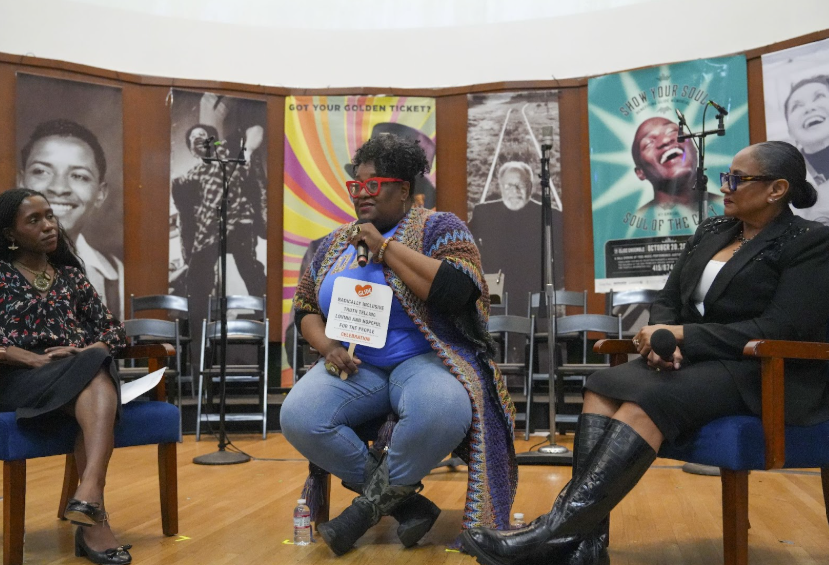
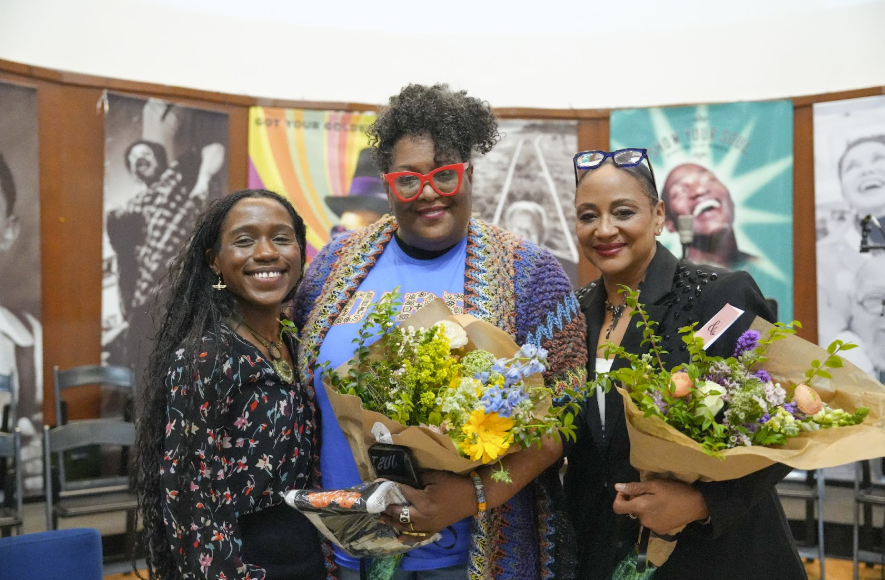
GLIDE President & CEO Dr. Gina Fromer (l), Lydia Bransten, Executive Director of The Gubbio Project (m), and Richard Beal, Director of Recovery Services at Tenderloin Housing Clinic (r)

At Manny’s in San Francisco this September, a timely and heartfelt conversation took place—one that’s not just urgent for our city, but deeply personal for so many. Moderated by Dr. Gina Fromer, President and CEO of GLIDE, the event featured two leaders on the front lines of addiction and recovery work: Richard Beal, Director of Recovery Services at Tenderloin Housing Clinic, and Lydia Bransten, Executive Director of The Gubbio Project. 

In a city grappling with a public health crisis and visible human suffering on its streets, the conversation wasn’t about quick fixes or ideology. It was about what works—what’s real—for different people. And what emerged was a shared truth: there is no single path to recovery. 

“Addiction is not just substance use. It’s what happens when someone loses hope.” 

Dr. Fromer opened the night by naming what so many San Franciscans feel but struggle to articulate. “Addiction is more than substance abuse,” she said. “It’s pain, it’s trauma, it’s loss. And the people hurting the most are often the ones we see every day on our streets.” 

GLIDE, rooted in radical inclusion and unconditional love, has long been a sanctuary for people seeking recovery, healing, and community. But Dr. Fromer wanted to make one thing clear: “There’s a false perception that GLIDE doesn’t do recovery. That couldn’t be further from the truth. We are recovery. We walk with people wherever they are—methadone, Suboxone, abstinence, harm reduction. It’s not one or the other. It’s a spectrum. And we serve all of it.” 

Two Paths, One Goal: Healing 

For Lydia Bransten and Richard Beal, this work isn’t theoretical. It’s personal. It’s lived. 

Lydia, whose own recovery journey brought her to this calling, recalled finding her purpose as an art therapist at St. Anthony’s. “I discovered a community of people who are beautiful and struggling,” she shared. “Everyone deserves dignity. We don’t give it to them—they already have it. What we offer is respect. We build trust, and that’s the foundation for healing.” 

Richard, a recovery counselor for more than 25 years, spoke from raw experience. “I didn’t know anything about AA or NA. I only knew the DA,” he said. “I was 12, selling 50-cent joints. I never had a job until recovery. Now, I look back and say: if I can do it, you can too.” 

Richard’s voice is deeply rooted in abstinence-based recovery, a model that saved his life—and the lives of many he’s walked alongside. But he also recognizes the value of harm reduction. “I’m grateful harm reduction exists,” he said. “But abstinence is the purest form of it. We can’t just hand someone a foil, or pipe, and walk away. If you value a life, you can’t let someone suffer without offering a path out.” 

“Fentanyl changed everything.” 

Both panelists agreed: the drugs on the streets today are deadlier than ever before. Fentanyl has upended decades-old models and demands urgent, adaptive care. 

“Harm reduction today isn’t what it was,” Lydia explained. “We’re seeing people who don’t even know they’re using fentanyl. It drags you deep. That’s why our harm reduction work includes medical care, a place to rest, connections to treatment, even art. We’re not just handing out supplies—we’re building a bridge to something better.” 

She shared the story of a woman who had been living on the streets for six years. “We helped her get her wounds cleaned. She started talking. Now she runs our art program. She’s not sober yet—but she’s getting there. She’s awake again. And that matters.” 

Richard, while critical of some harm reduction programs, emphasized that real recovery often starts with a relationship. “I’ve lost two brothers, my first wife, my nephew—to addiction. I can’t just sit back and hand someone a pipe. But I do believe in meeting people where they are—as long as we don’t leave them there.” 

Bridging the Divide 

The tension between harm reduction and abstinence isn’t new. What’s refreshing is the willingness of leaders like Richard and Lydia to talk—really talk—across that divide. 

“We’ve got to stop meeting in separate rooms,” Lydia urged. “We’re working with the same people. Instead of fighting on social media, let’s sit down and coordinate care.” 

Richard agreed. “If Lydia calls me, I show up. That’s why they call me the Ambassador for Recovery. We need each other.” 

Both called for more housing, especially drug-free and sober-living environments, more primary care and mental health services, and more culturally competent providers—especially Black therapists and doctors. 

“You don’t get to define my recovery.” 

What was perhaps most powerful throughout the evening was the shared insistence that recovery is personal. 

“Everyone’s journey is different,” said Lydia. “Some people stay on methadone or Suboxone for life. Some don’t. The goal is health. Dignity. A life worth living.” 

Richard echoed that sentiment: “You can be free. You don’t have to be a slave to addiction. Recovery is not just abstinence. It’s a spiritual transformation. It’s being alive.” 

And for both, the measure of success isn’t just sobriety. It’s connection. It’s community. It’s love. 
Looking Forward: What We Need Now 

If there was one takeaway from this conversation, it’s this: 

We cannot afford to treat addiction with a one-size-fits-all solution. 

We need recovery beds and harm reduction centers. We need safe use supplies and treatment referrals. We need drop-in clinics, job training, sober housing, and mental health care—all at once. 

We need to stop pitting providers against each other and start funding the full spectrum of care. 

And we need to center the voices of people like Richard and Lydia—people who have walked through fire and come back carrying buckets of water for the next person. 

Love Saves Lives 

As Dr. Fromer said in closing, “We all want the same thing: for people to be happy, housed, off drugs, and loved. Love saves lives. And everyone—no matter where they are on their journey—deserves that love.” 

Whether your path is harm reduction, abstinence, or something in between, the message from this conversation is clear: 

There is hope. There is help. And there is no wrong door to recovery. 

hispanic heritage month 2025

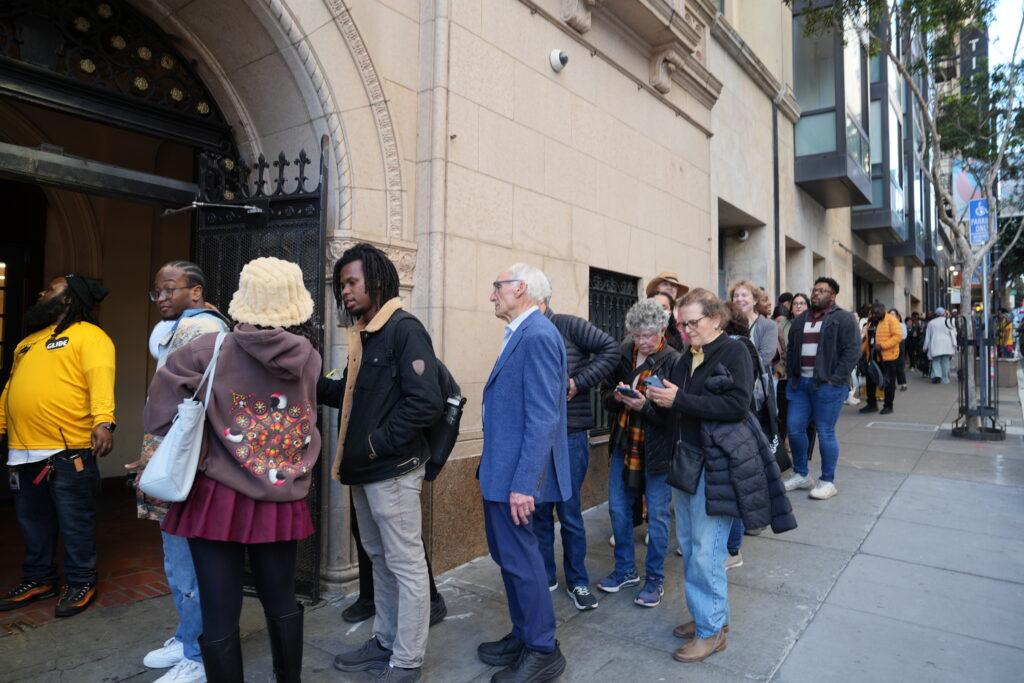
Hispanic Heritage Night filled the halls of GLIDE with the sound of conch shells and poetry on Thursday, September 18th. Activist Olga Talamente welcomed the audience into, “a space for indigenous wisdom to be passed down to future generations.”   

Then we were treated to a performance by Danza Xitlalli, performing the dance of the Mexica Nahuatl dressed in full regalia. Shells and feathers swung through the air as they performed dances in honor of earth, fire, healing powers of plants/life, and the four cardinal directions. Each was powerful.  

hispanic native dancing

After being reminded of ancient wisdom, the evening then turned towards present events. Two Latino preeminent poets (Yosimar Reyes and Leticia Hernandez) came up to perform and be part of a panel talking about their experiences. One the most powerful quotes of the night was from Yosimar, speaking on how taking care of his dying grandmother affected him: “I don’t have control over the policies that affect my community, but I can control how I take care of my loved ones.”  

We also can use our creativity to oppose the injustice we see and imagine a better world. “The signs of fascism are here, and we can stop it with our art,” was a word of both warning and hope that resonated deeply with the audience.  

hispanic heritage month audience

Hispanic Heritage Night is vital for reminding us about the importance of immigrants as their rights and existence are being attacked in our government and society. They’re integral parts of our society, coming for the American Dream and lifting us up with their hope and belief in our country As our speakers reminded us: “Solidarity, not charity. Now and forever! 

hispanic speakers 2025
tacing and Jason
Tacing Parker (L) and Jason Finau (R)

Two extraordinary leaders recently came on board to help shape the future of compassion and impact at GLIDE: Tacing Parker, our Chief Program Officer, and Jason Finau, our Senior Director of Health and Clinical Services.  

Tacing brings visionary leadership and a deep commitment to equity, guiding our programmatic work with passion and purpose. Jason leads with heart and expertise, ensuring our health and clinical services remain rooted in dignity, healing, and accessible care for all. Together, they embody GLIDE’s mission of radical inclusion and social justice, and we are thrilled to have them at the helm of this vital work. 

Below are a series of questions we asked both Tacing and Jason to fill in their picture of what working at GLIDE means for them and the work that they will be doing.  

Tacing Parker 

How did you get into your chosen field/industry? What inspired you?  

Early in life, my mother instilled a deep sense of community-centeredness and service. She believed that giving back was essential to being a good human, and she wanted that for her children.  Whether it was volunteering for local charity events, offering help to a neighbor in need, or standing in solidarity with those facing adversity, my family taught me that service wasn’t just an act—it was a way of life.  

I vividly recall the countless times we would come together as a family to support others, whether participating in community efforts, or simply offering a kind word to someone going through a rough patch.  It wasn’t just about giving material help; my mother and family emphasized the importance of showing up for others—of being present and compassionate in times of struggle. Her actions consistently demonstrated that even small gestures of kindness can have a profound impact, and that every act of service, no matter how seemingly insignificant, contributes to building a stronger, more connected community.  
Over time, I internalized this mindset, realizing that community is built on mutual respect, empathy, and shared responsibility. Growing up in this environment of service and support, I learned that we are all interconnected, and that our personal success is tied to the well-being of those around us. 

What are you most excited about working on at GLIDE?   

GLIDE is a great organization with a distinguished legacy of service to and in partnership with the community. As a multiservice organization, it offers numerous opportunities for contributing to a variety of roles and capacities. I am particularly excited by the opportunity to engage in supporting our leaders in a thoughtful way, building on the work that has been previously done by further aligning our programs and services to ensure they are integrated across the organization. 
What’s your go-to productivity trick or essential tool for getting work done?  

One of my primary strategies for ensuring the completion of tasks and projects is to be sure to allocate time for focused work on my calendar. Over the years, I often found myself attending meeting after meeting, only to realize that I lacked the necessary time to address the action items stemming from those discussions. Over time, I recognized that, given the significance of the work I was involved in, it was essential to set aside dedicated time for follow-up on meeting outcomes. To maintain productivity and stay organized, I typically reserve blocks of desk time throughout the week, aligning them with my to-do list to ensure continuous progress.  

What’s the best piece of professional advice you’ve ever received?  

I’m paraphrasing but one of the best pieces of advice I’ve received was, “Each of us has an opportunity to have an impact in the world, make sure yours is one you will be proud of.” 

Jason Finau 

How did you get into your chosen field/industry? What inspired you?  

I’m a social worker by trade and I was inspired by the women in my life to do this work. My maternal grandmother (Motiana Isala) and my mother (Fialelei Finau) provided the framework for what it means to be in community not just with your biological family, but with the community as a whole. In the Pacific Islander culture (my family is from American Samoa), we literally embody the “it takes a village” lifestyle. 

Because my mom was a nurse in the Navy, I spent a lot of my childhood growing up in hospitals, so I initially went to school to become a pediatrician. However, during my studies, I learned about social work and how the role of a social worker in the community aligned more with my career/life goals than becoming a doctor.  

I wouldn’t be here today if it weren’t for the phenomenal women I’ve met along the way (Prof Karen Baum, Dr. Sharon Elise, Sandra Teixera, and Raquel Wells to name a few) who educated me, motivated me, coached me, and who continue to inspire me to keep showing up in this work. 

What are you most excited to work on at GLIDE?   

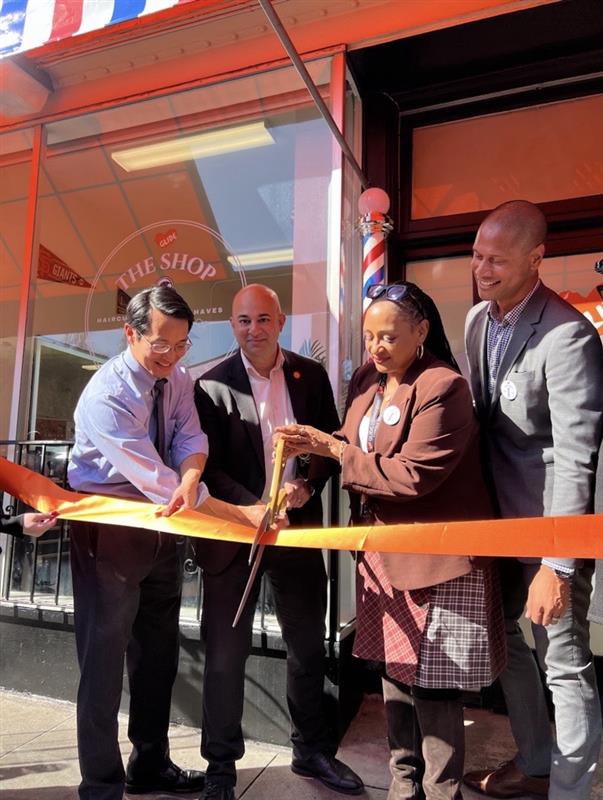
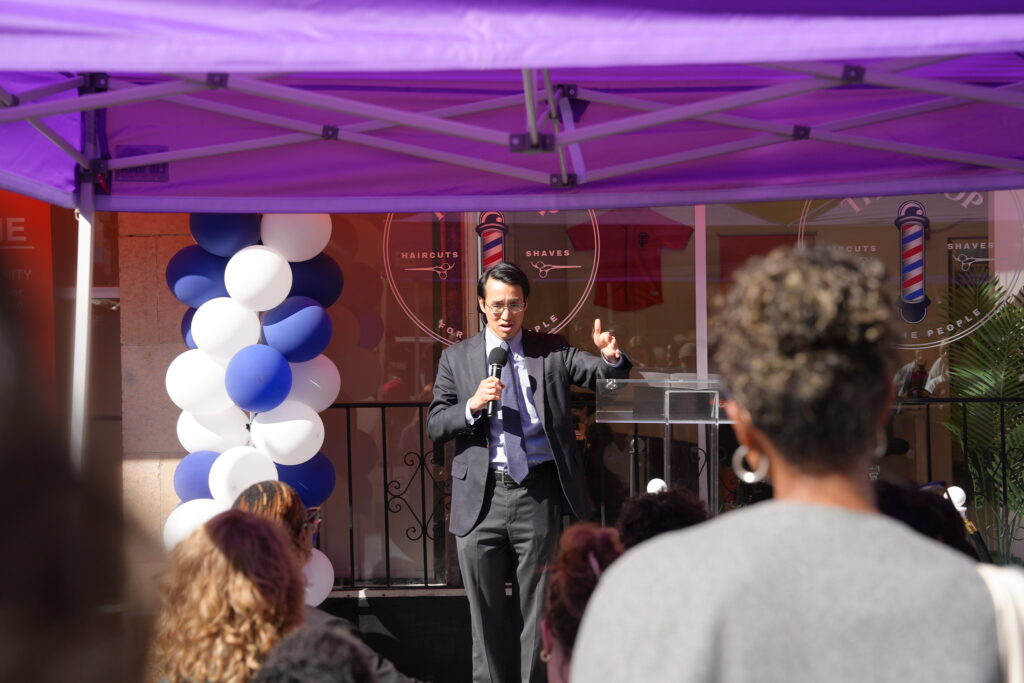
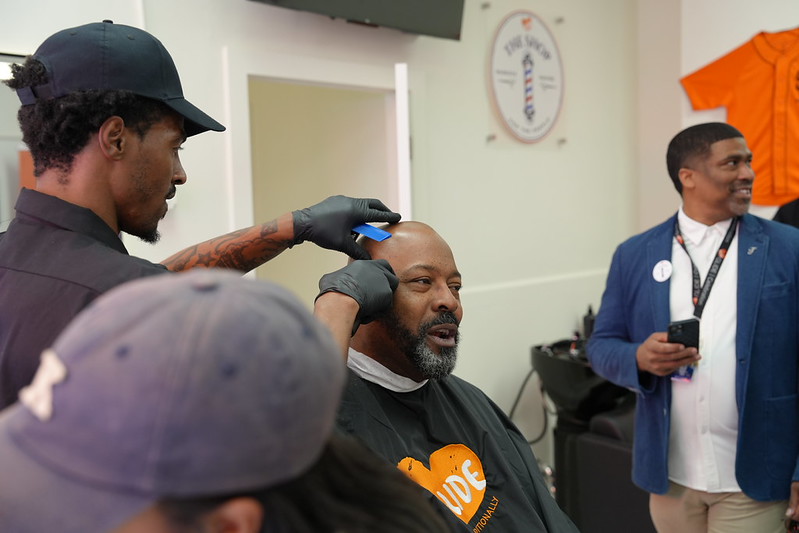
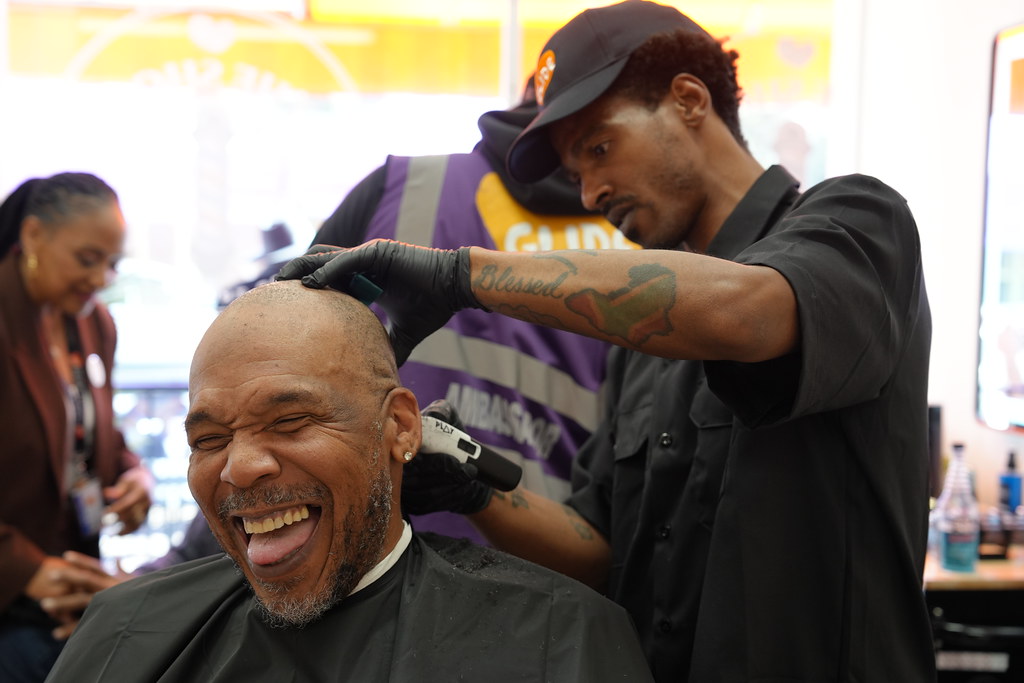
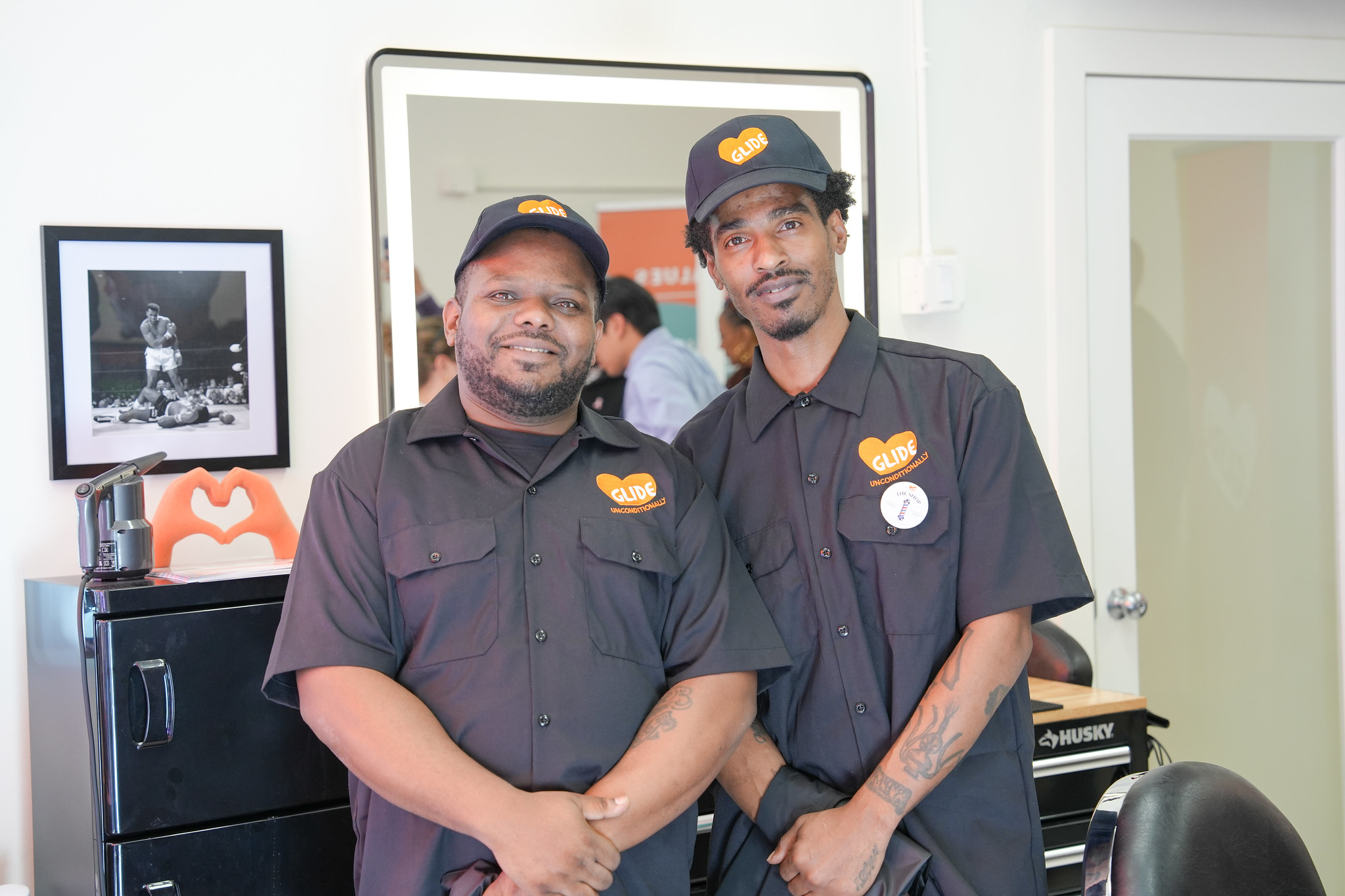
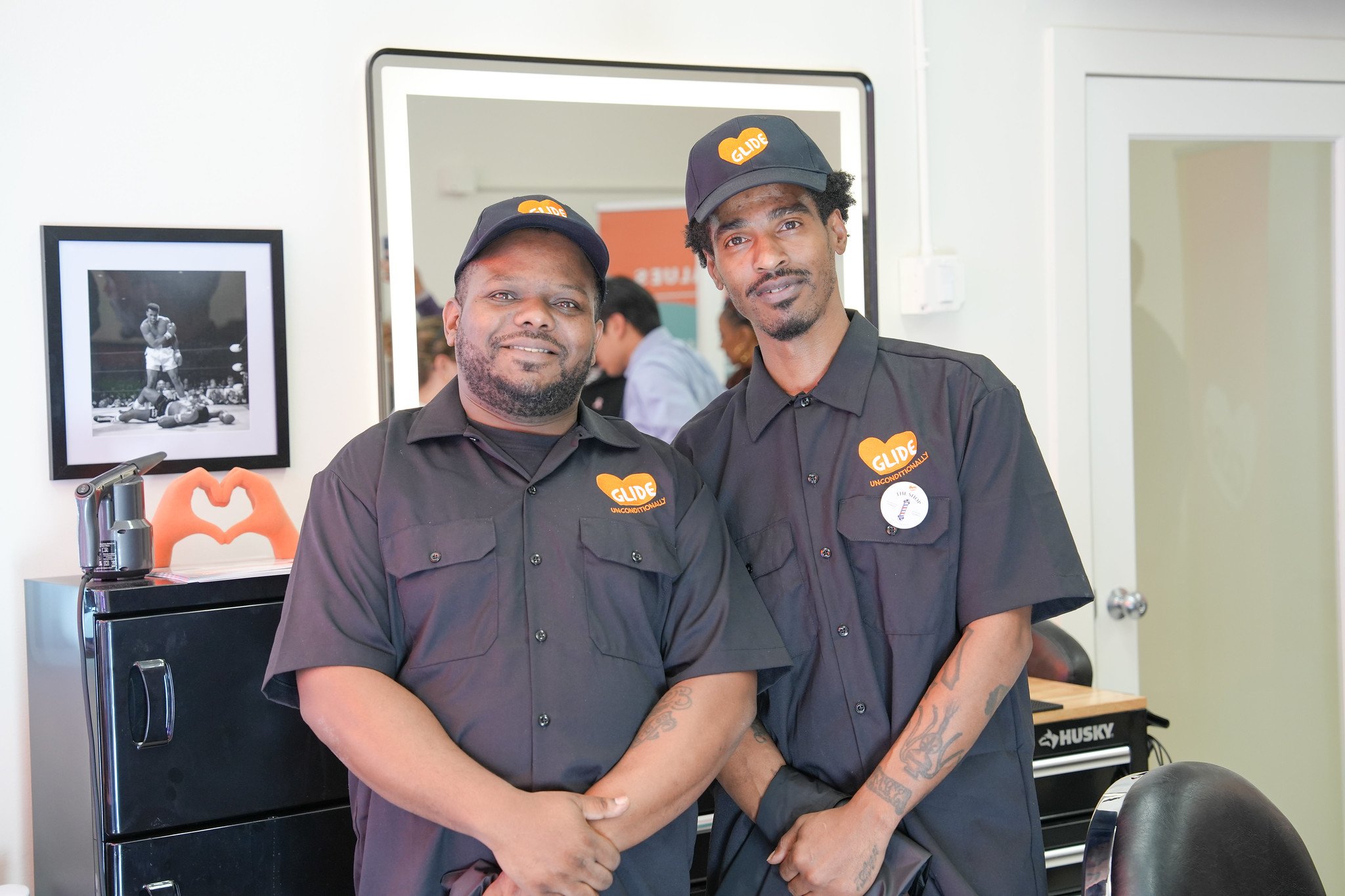
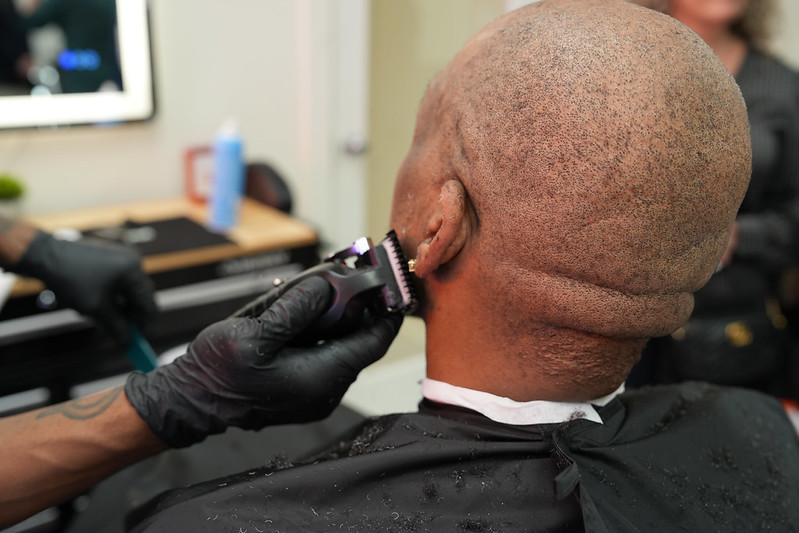
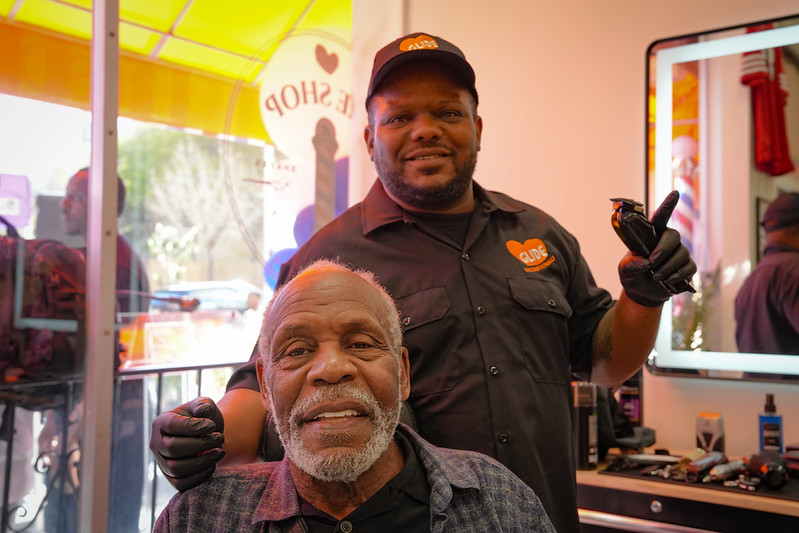
I am SUPER excited to help enhance our behavioral health services at GLIDE. Part of that goal will be launching Barbershop. Our hope is to create and foster a warm and inviting space for older Black men in the community where they can access grooming services and get connected to care to address the overdose fatalities, substance abuse, mental health struggles, and social isolation that is prevalent in that demographic. 

What’s your go-to productivity trick or essential tool for getting work done?  

Setting reminders for myself in Outlook to step away from my computer and take a walk. Engaging in any mindfulness activity during the day, even if it’s for 10-15mins, helps me to get out of my own way when trying to accomplish a task. 
 

What’s the best piece of professional advice you’ve ever received?  

When it comes to work, nothing is so urgent that you need to sacrifice your health (physical, mental, emotional, social, and/or spiritual) to get it done. 

maria valesquez
Maria Velazquez standing outside GLIDE’s Janice Mirikitani Family Youth and Childcare Center at 434 Ellis Street

When Maria Velazquez arrived in San Francisco from Mexico City in 2000, she carried with her the hopes of a better life for herself and children. With her teenage daughter Marisol by her side, she stepped into a new city filled with promise but also with challenges. Her young son Miguel stayed behind in Mexico for a time, cared for by Maria’s mother, until he could join his sister in their new home two years later. 

Maria’s sisters had already made the journey north, assuring her that San Francisco could offer more opportunities than she would find back home. Taking that leap of faith, Maria threw herself into work—three jobs at once: prepping food in a restaurant, serving rooms in a hotel, and stocking shelves in a shoe store. “It was a lot of work, but I was happy,” she recalls.  

Life grew more complicated as her family expanded. In her mid-thirties, Maria welcomed two more children, Aliyah and Lisandro. Caring for a baby while balancing work proved overwhelming, and Maria found herself struggling. By then, she was living across the street from GLIDE on Ellis Street, watching the comings and goings of families each day. Her sister encouraged her: Why don’t you go and ask them for help? 

That step through GLIDE’s doors changed everything. 

Maria remembers first meeting staff members Alana and Russell, who saw the strain she was under. “They called me a week later to say they had a place for Lisandro, who was just a toddler. Later, Aliyah joined too.” Soon, not only Maria’s children but also her grandson Kevin and her sister’s children became part of GLIDE’s Family Youth and Childcare Center (located at 434 Ellis Street). Together, they accessed preschool, afterschool programs, parenting classes, child development workshops, and summer camps that became the foundation of their growth. 

What made the difference, Maria says, wasn’t just the academics. “The kids learned so much—not just reading and math, but how to brush their teeth, how to use the bathroom, and how to behave. Their teacher was strict but very caring.” In their home, Spanish was the language of love and tradition, but it was at GLIDE where her children learned English, opening new doors for their future.

GLIDE’s Family Youth and Childcare Center supports the entire family, also referring parents and their kids to other GLIDE resources and programs

And more than 15 years later, things couldn’t be brighter for Maria’s children. Aliyah is 19 and studying mechanical engineering at UC Santa Barbara. Lisandro, nearly 18, is at Cal Poly San Luis Obispo. Her grandson Kevin is in high school at Galileo Academy in San Francisco. Maria beams with pride as she speaks of them, knowing that the foundation laid at GLIDE has helped carry them forward. 

But Maria also insists that GLIDE’s Family Youth and Childcare Center wasn’t just there for her children—it was there for her. “GLIDE helps not only the kids but also the parents. They always ask how you are doing, how things are at home, how your job is going. They care about the whole family.”  

Looking back, Maria’s gratitude shines through. “I only have good things to say about GLIDE. They took really good care of my kids, and I’ll always be grateful.” 

Her story is one of resilience, of a mother’s determination, and of the power of a community that embraces families through every stage of struggle and growth.

For Maria, GLIDE was not just a resource, it offered coordinated care across multiple areas of her life. In short, it was a lifeline. 

nikki bendana frc

Nicky Bendana’s life story is one of resilience, survival, and the healing power of community. 
She was born in Nicaragua and came to California in 1983, at age 12, as an orphan of the war. Her great-aunt brought her first to San Francisco, then to Mountain View and San Jose. But her early years in the U.S. were marked by hardship. “I didn’t speak English, and I was always scared,” Nicky recalled. “When I tried to tell people what was happening, no one listened.” She endured abuse at home and in foster care until Catholic Charities intervened and placed her in a safer environment. 

At 21, Nicky became a mother. But her relationship with her aunt grew even more strained after her aunt discovered she was gay. “She told me I was a sinner, that I didn’t belong in the family. She just threw me out,” Nicky said. Around this time, she also faced cancer and later survived a car accident. “Life kept knocking me down,” she reflected, “but I’ve always been a fighter. I don’t give up easily.” 

In 2009, Nicky found stability through a domestic violence shelter and later housing at the Verona apartments. That same year, she began volunteering at Glide. “At first I went just to help in the kitchen,” she remembered, “but soon I realized GLIDE was giving me so much more. GLIDE gave me friends, family, and a safe place where I could be myself.” It was the kindness of the people she met at GLIDE that lifted her most: “They didn’t judge me. They accepted me just the way I am.” 

Her life changed again when her daughter was unable to care for her children. Nicky stepped in, becoming both mother and grandmother at once. “I became mom and grandma at the same time — it was overwhelming,” she said. Suddenly caring for two infants only a year apart, she leaned again on community programs. “GLIDE’s Family Resource Center, SOMA prenatal services — they were my angels. They helped me with furniture, childcare, and food. But most importantly, they gave me encouragement when I felt alone.” 

Today Nicky is raising Christian and Marcos, now four and five. She describes them as her greatest blessing: “These kids gave me the will to live again. They gave me purpose.” She adds, “When I see them smile, I know everything I went through was worth it.” 

Nicky’s gratitude for GLIDE and similar programs runs deep. “GLIDE didn’t just help me survive — they gave me love, and that’s something I never had growing up,” she said. “That love changed everything.” She wants others, especially in the Latino community, to know support is available: “So many of us stay silent, thinking we must carry the burden alone. But I want people to know — you don’t have to struggle in silence. There is help, and there is hope.” 

Through war, abuse, rejection, illness, and poverty, Nicky’s voice and spirit endure. Her story is a testament to survival, community, and the unbreakable will to keep moving forward.