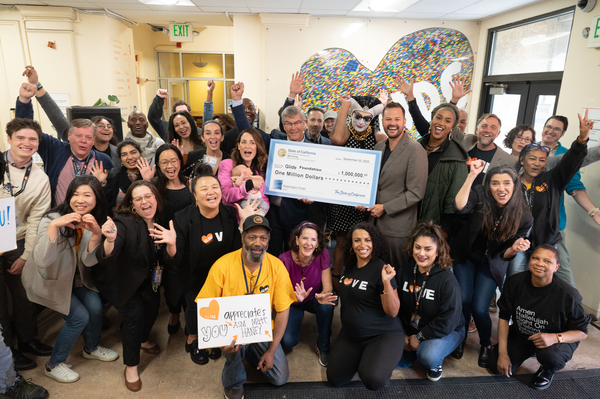
The tumultuous year we’ve just weathered brought unprecedented challenges, compelling us to confront change on an extraordinary scale. Amid global uncertainties, GLIDE remains steadfast in fostering love and alleviating suffering.
As we reflect on the trials of the past year, we will miss Cecil’s leadership but are inspired by Dr. Fromer as she takes the helm from interim CEO Malcolm Walter as our new President and CEO.
We are particularly optimistic because we know how to adapt and grow as an organization founded on the enduring values of unconditional love and radical inclusion.
In the words of Minister of Celebration Marvin K. White, “If your body needs feeding, GLIDE serves health and social services through our programs. If your truth needs feeding, GLIDE serves advocacy through our Center for Social Justice. If your spirit needs feeding, GLIDE serves faith through Glide Memorial Church.”
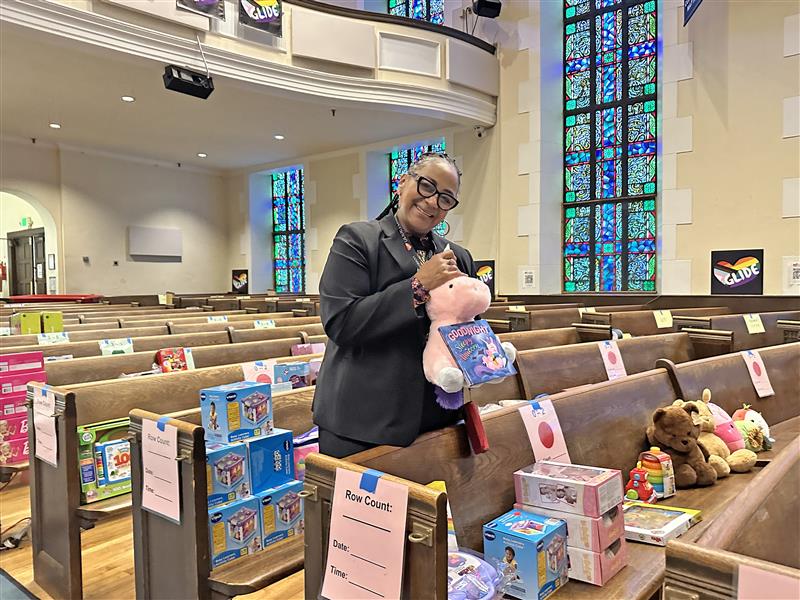
In total, 45 children ranging from 6 -10 years old attended the shopping spree in person. The remaining 55 preschool and toddler aged children received a $100 gift card from Old Navy so that they could make their purchases online ahead of time.
This is the 20th year that the shopping spree partnership with Old Navy has taken place and the second time, post – pandemic, that the shopping spree was in person.
Each child was paired up with a personal shopper at the Old Navy store in Colma and activities during the visit included a photo booth in Santa’s workshop, goodie bags, ornament making, and candy cane making stations!
Lanie Igtanloc, Director of FYCC, said “ The aisles of Old Navy is where fashion meets joy. This shopping spree is more than just clothes—it’s a symphony of gratitude and delight. Thank you to Old Navy and Gap Corporate for making this possible. We, at GLIDE, appreciate it. Our parents appreciate it. Our children especially appreciate it. Their smiles and laughter say it all”
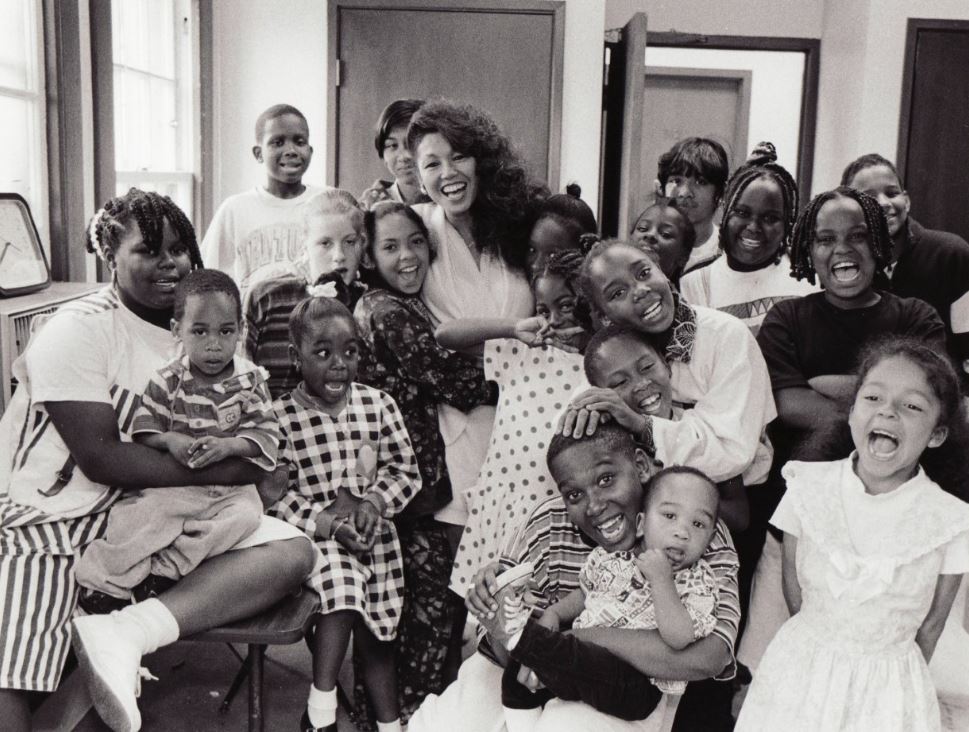
The Tenderloin is home to the highest concentration of children in San Francisco and many of those children attend FYCC and FRC. This shopping spree was able to serve a group of children that would otherwise not have the means to celebrate this holiday season with the pure joy that comes with holiday shopping in a retail store like Old Navy.
One of the children of FYCC, Adeya 8, summed the event up the best when she exclaimed, “I’m so glad I came!”
We at GLIDE, would like to thank Old Navy for their continued support for our community. Old Navy/Gap Corp has been a valued community partner and their impact is deeply felt within the families of FYCC and FRC.
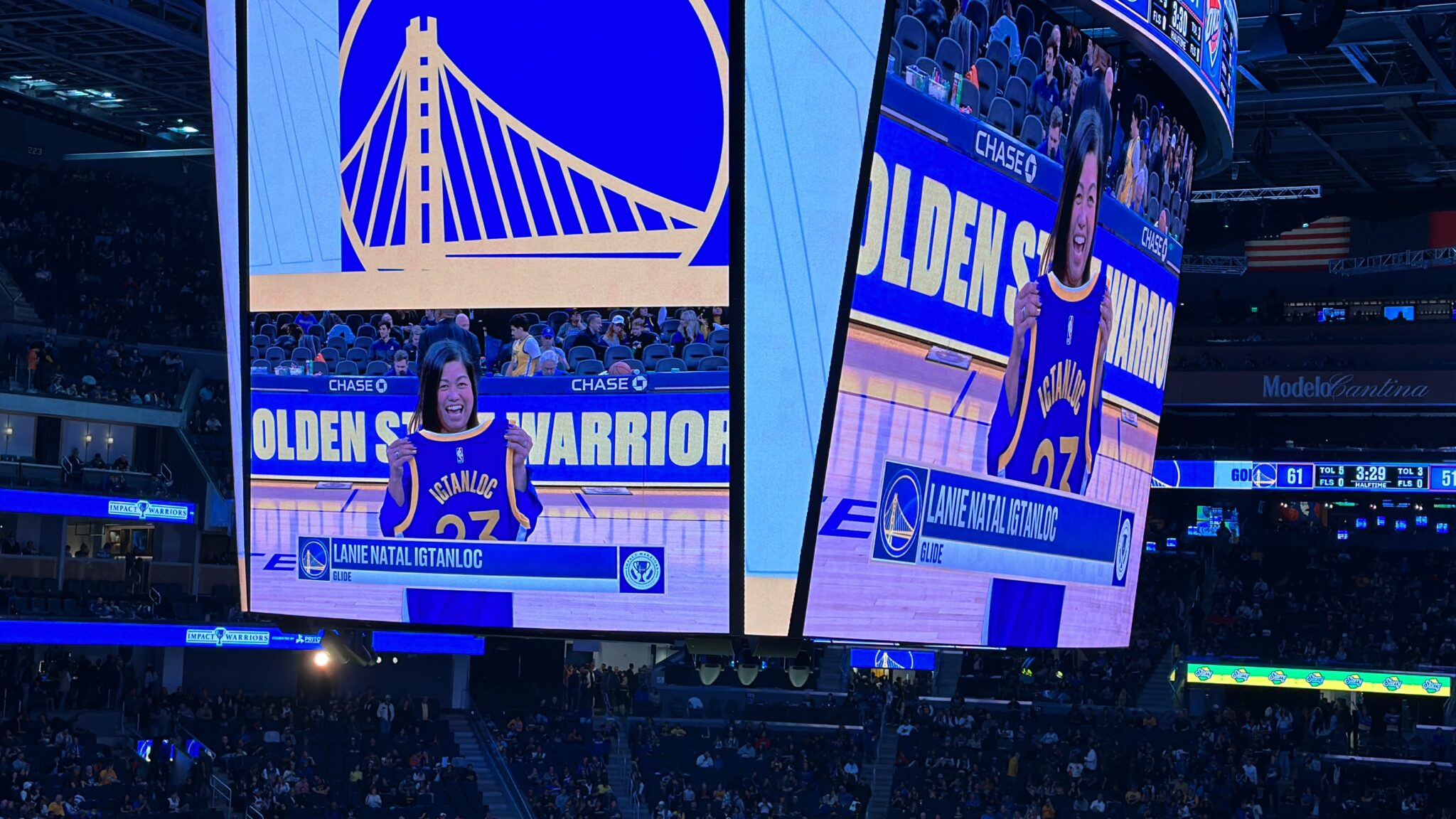
The Impact Award, conferred by the Golden State Warriors Foundation, is a prestigious symbol of commitment to community empowerment and positive change. This accolade is reserved for individuals who have demonstrated remarkable contributions to their communities, showcasing a spirit of service, innovation, and impactful leadership.
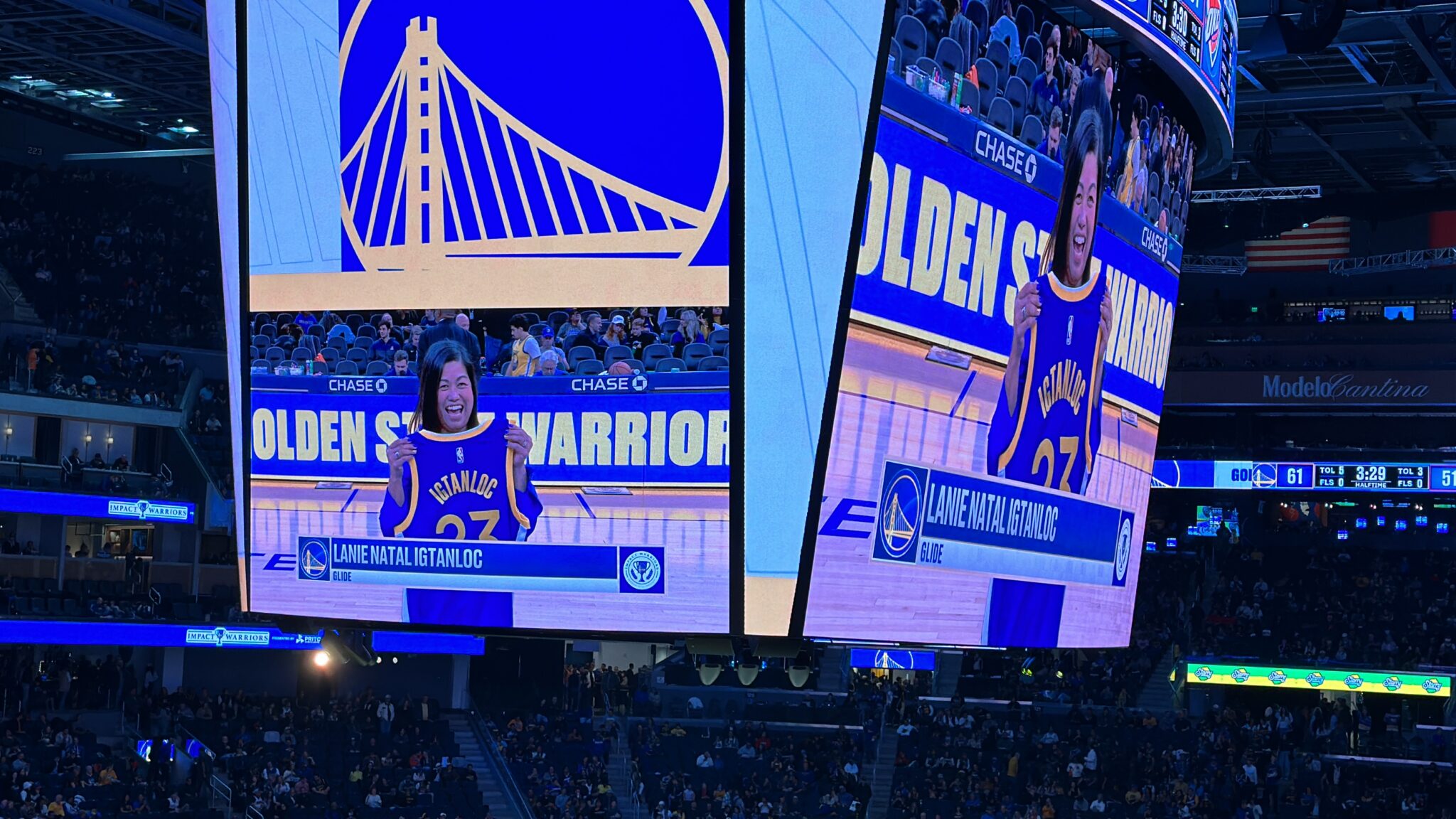
On the night of November 18, 2023, GLIDE celebrated a significant moment as Lanie Igtanloc, the Director of the Family Youth Childcare Center (FYCC), was honored with this distinguished award. The recognition was a testament to her leadership, dedication, and the tangible impact she has made in the community through the FYCC program.
Coinciding with Filipino American Heritage Night, the award ceremony unfolded during halftime at a Golden State Warriors game. Lanie, accompanied by our President and CEO, Dr. Gina Fromer, stepped onto the court amidst the vibrant energy of the game’s halftime. This moment was both a celebration of her achievements and a reflection of her cultural heritage. Lanie shares a poignant message reflecting on this honor: “Let us champion the values that make us strong.
Our partnership with the Warriors Foundation is crucial in amplifying the positive changes we strive to achieve in our communities. Together, we are committed to building a future where every individual has the opportunity to thrive, supported by the pillars of education, inclusivity, and empowerment.
Lanie Igtanloc’s receipt of the Impact Award on a night celebrating her cultural heritage and profound impact on the community is a beacon of inspiration for us all at GLIDE. It reaffirms our resolve to continue our mission, driven by leaders like Lanie and supported by partnerships that share our vision for a better, more inclusive world.
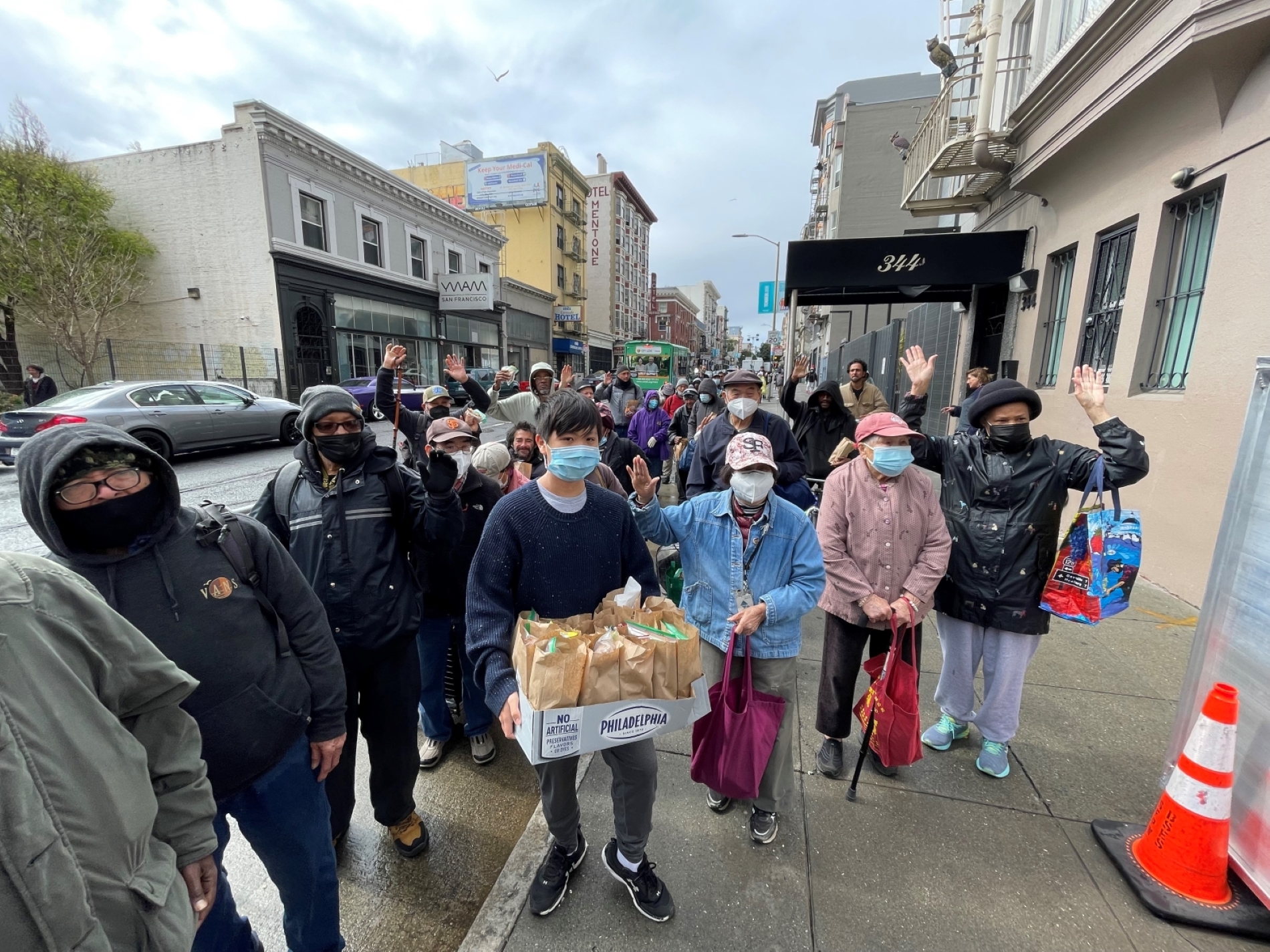
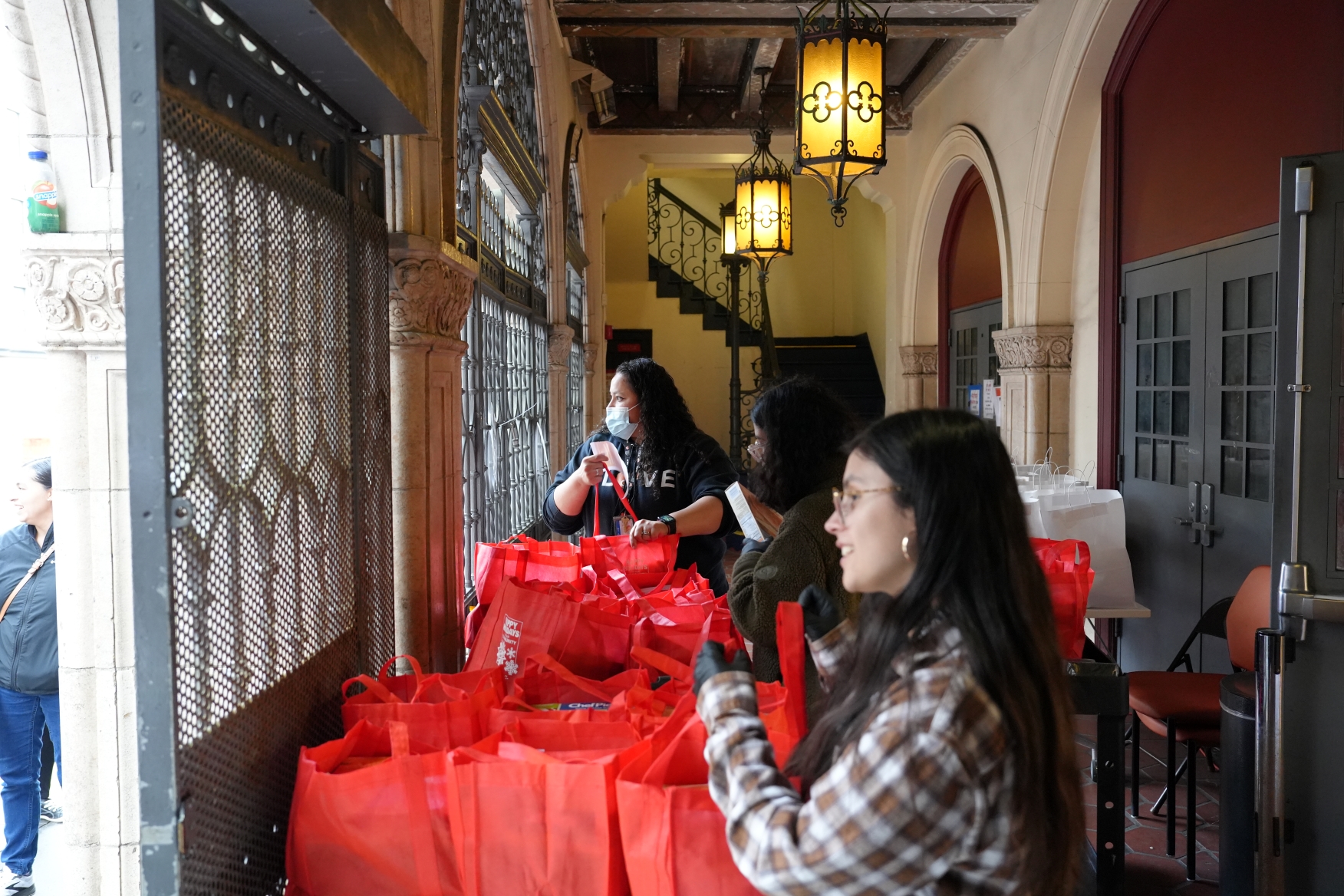
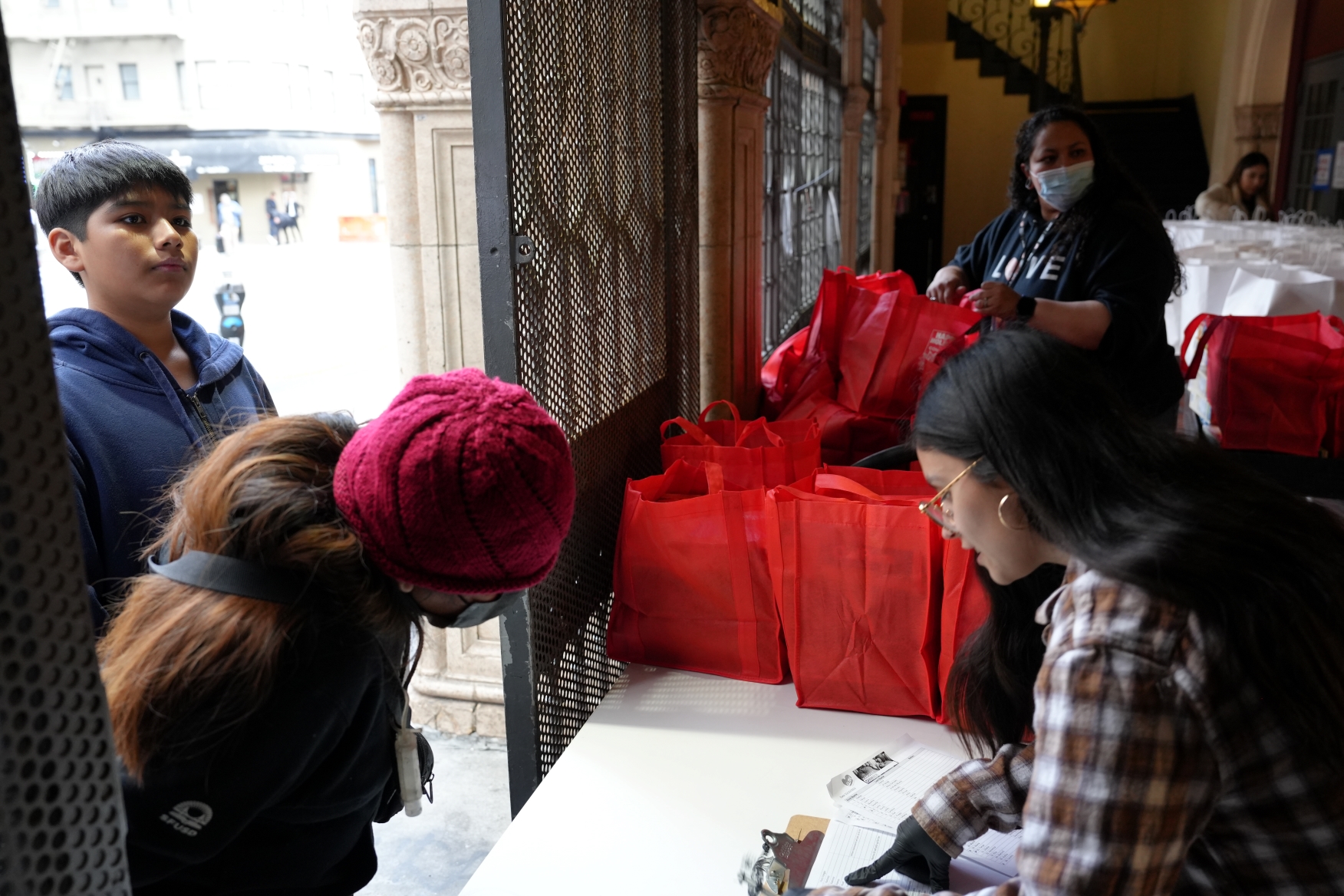
No amount of rainy weather can stop GLIDE when it comes to feeding our community a week before Thanksgiving.
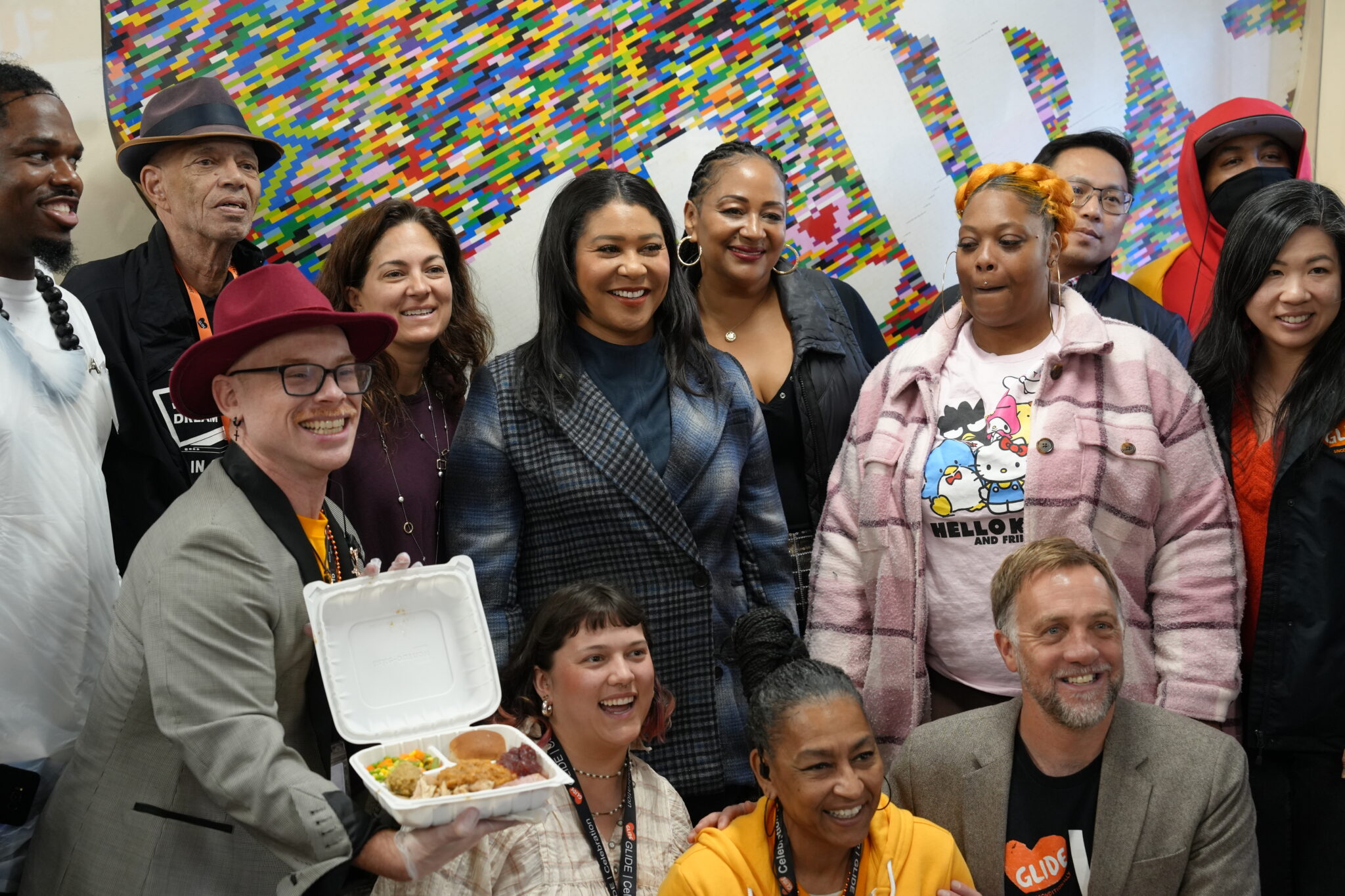
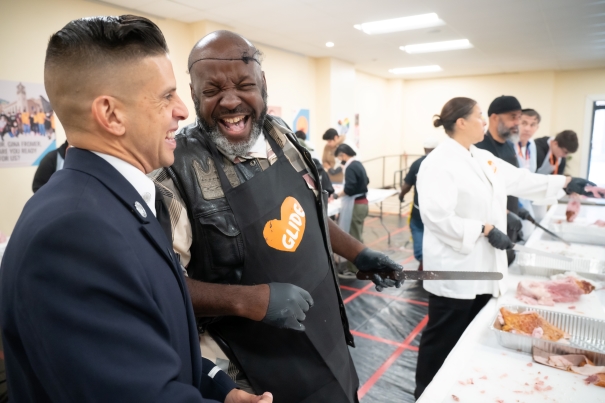
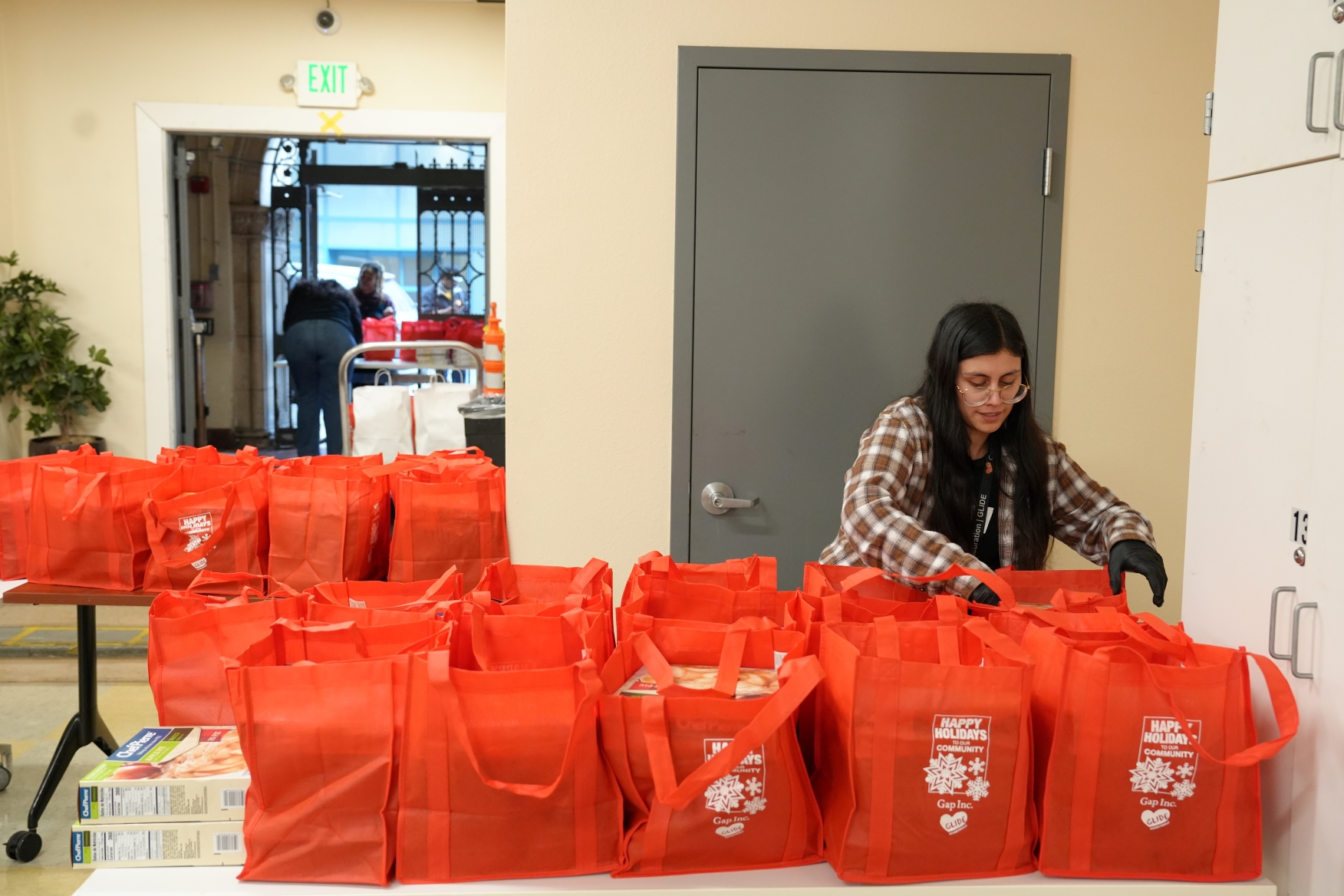
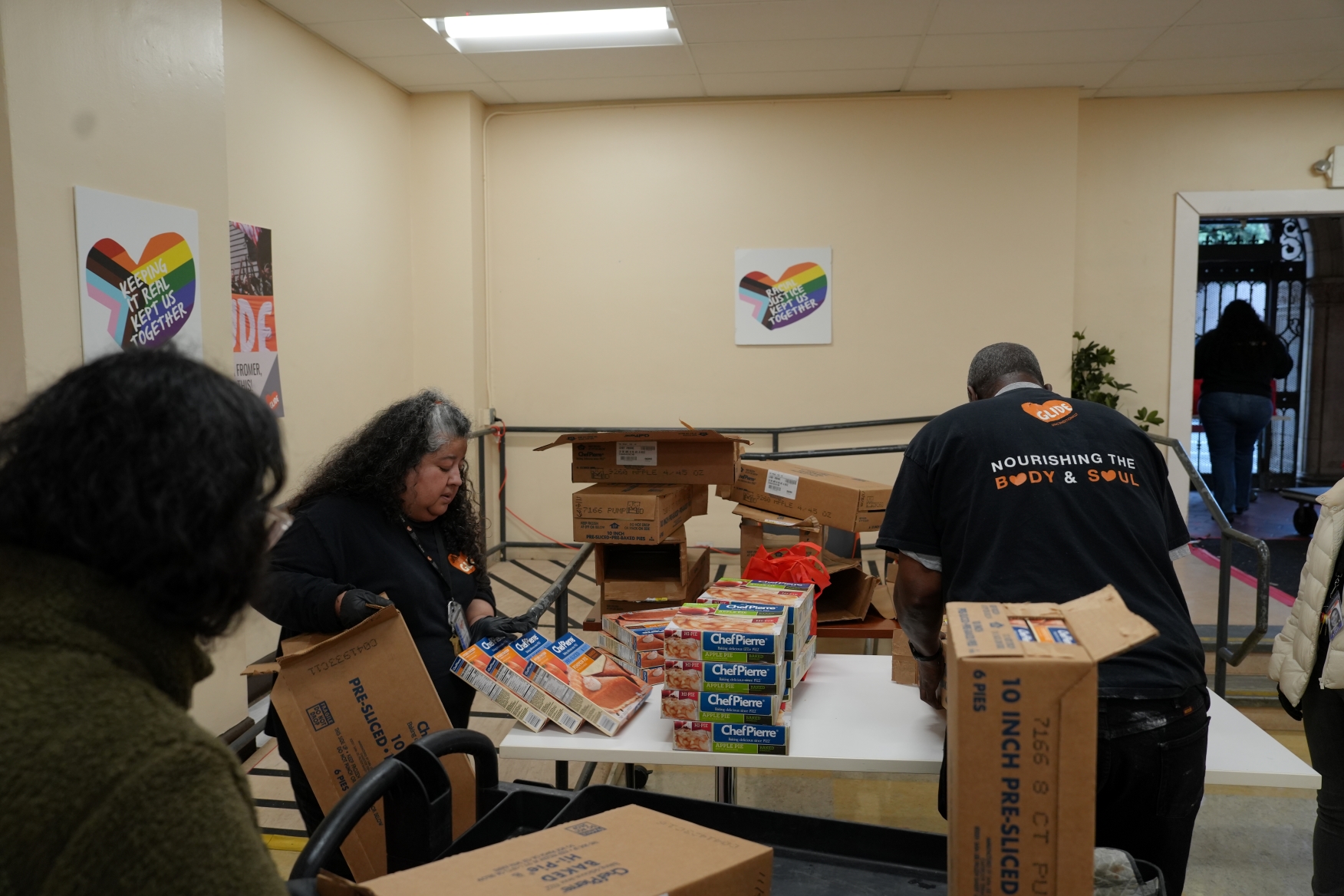
GLIDE’s Family Resource Center (FRC) hosted it’s annual (and eagerly anticipated) Harvest Dinner this past November 16, which traditionally kicks off the start of GLIDE’s holiday season.
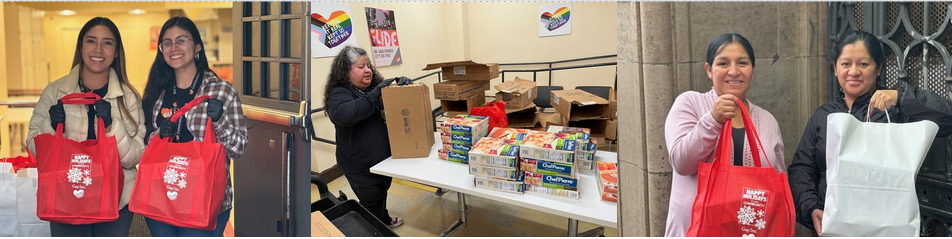
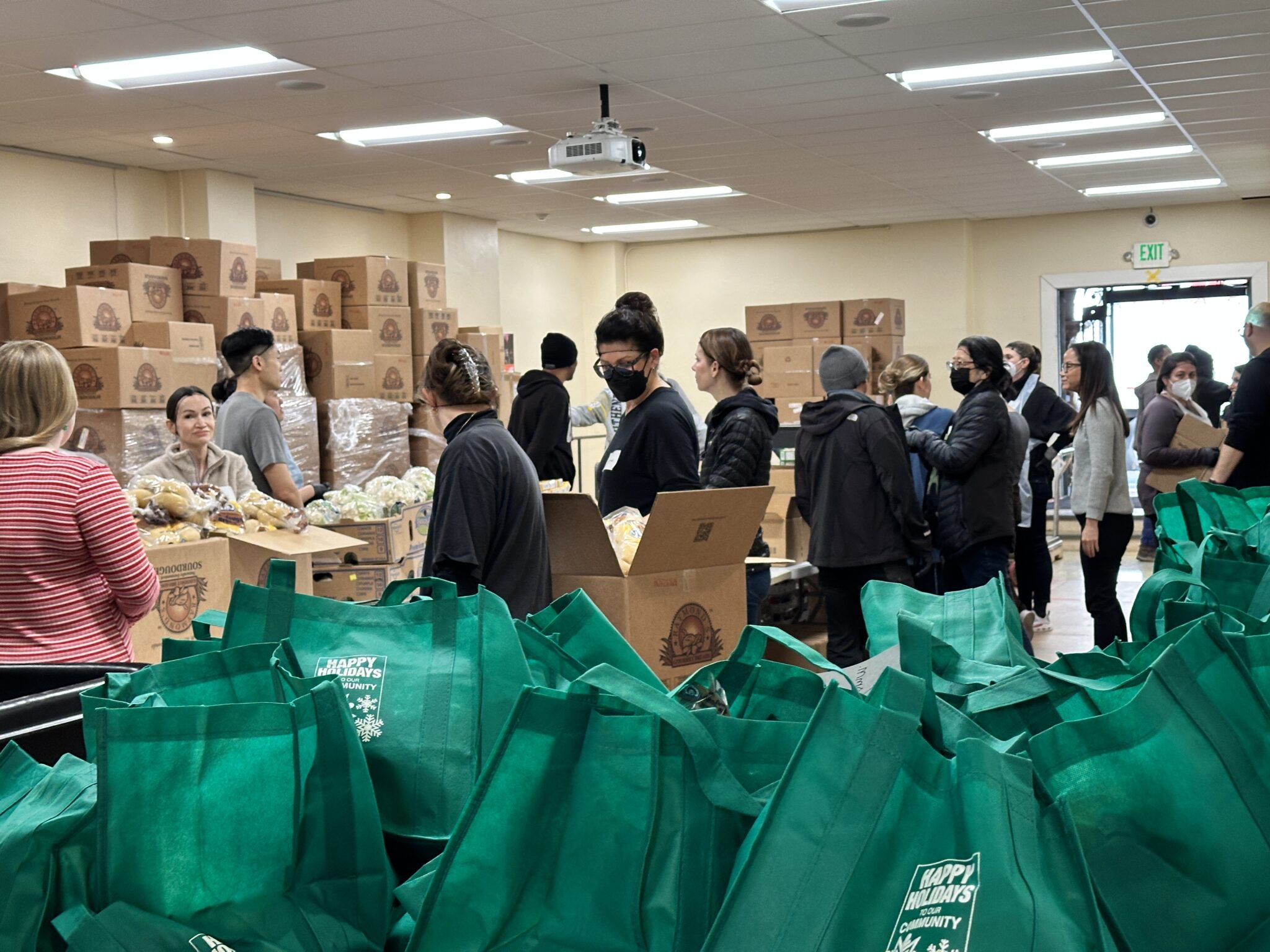
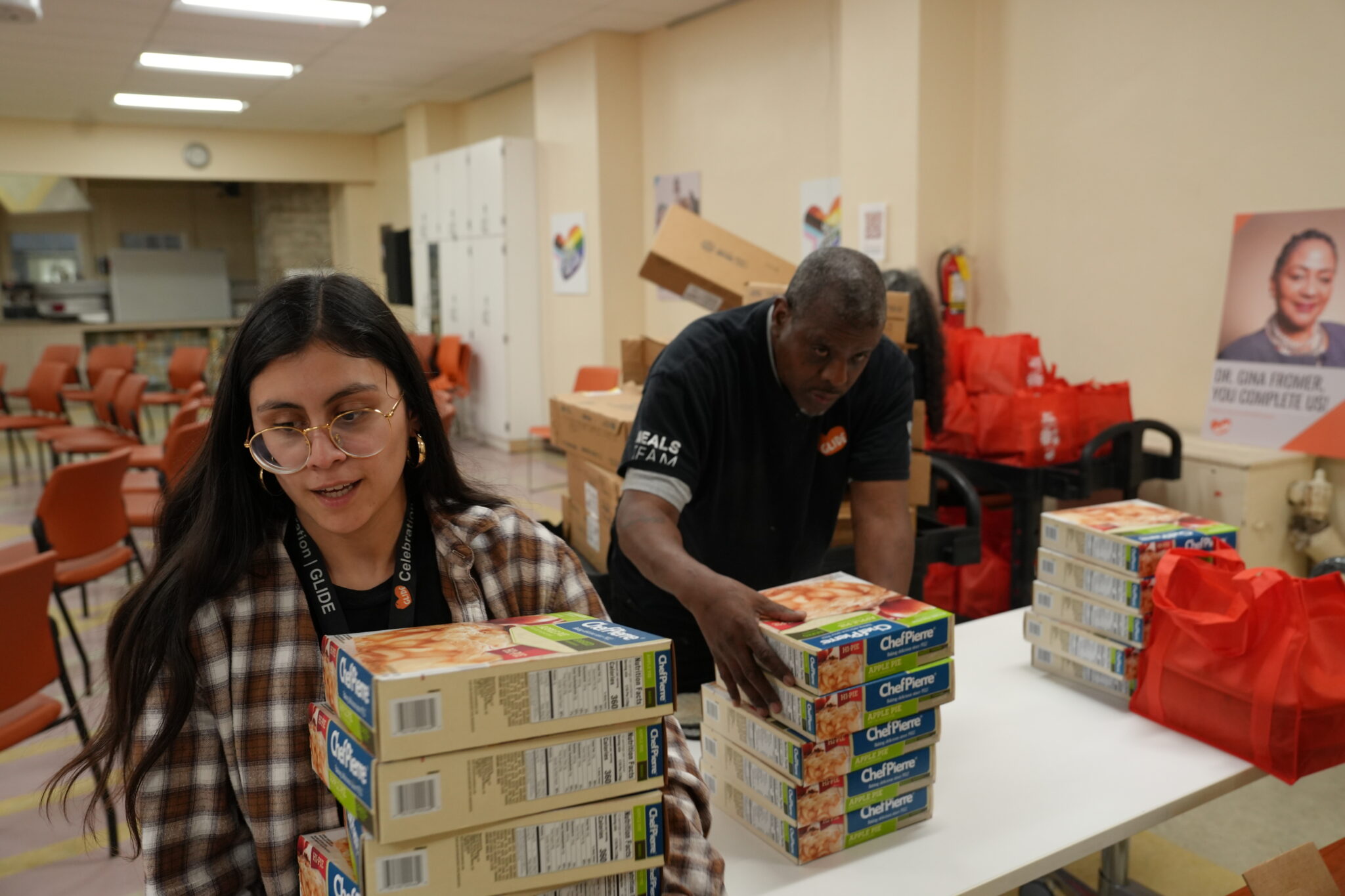
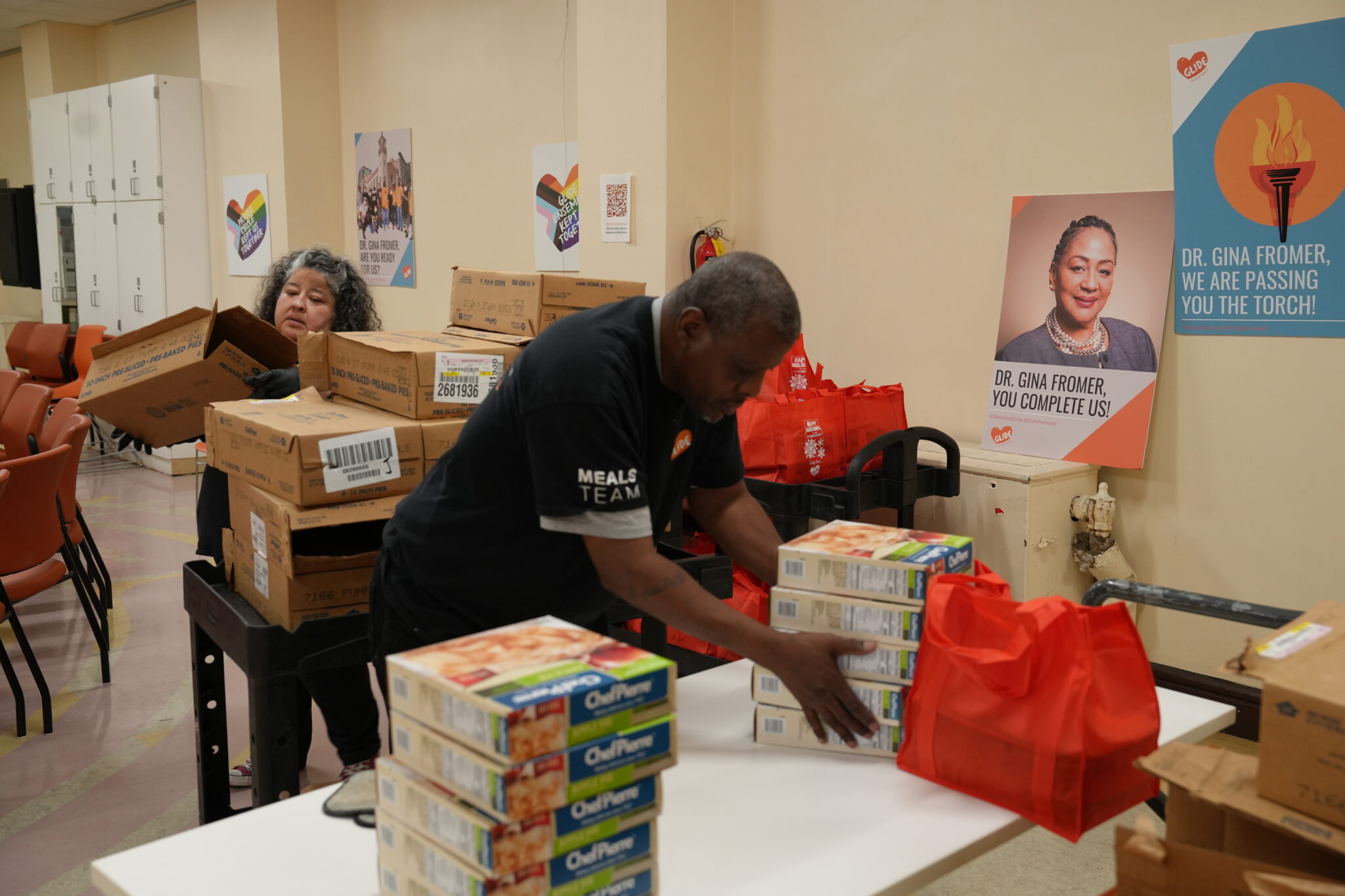
A delicious package of roast turkey, ham, mashed potatoes, veggie mix, pumpkin or apple pie (parents got to choose one), all lovingly prepared by our Meals Team awaited some 100 families, with each meal serving up to 6 people.
The Harvest dinner is traditionally a place where families gather the week before Thanksgiving to enjoy a dinner together in community. In pre-COVID times, the dinner was held in Freedom Hall.
But not wanting to cancel the dinner during a pandemic, the FRC decided to create the Harvest Dinner “On the Go.” Families come to GLIDE, receive a bag with their dinner to enjoy at home.
For FRC Manager Theresa Calderon, challenging economic times means making that special effort to get food out to as many people as possible. “I think inflation still is a factor. I think it’s great that Glide and the rest of the TL provides as much support possible for families to not go hungry during the holiday season,” said Theresa.
“One of my friends told me about GLIDE's Harvest Dinner. Times being what they are, I went ahead and applied to be a recipient. I was so happy. Not just the food but GLIDE also provided me with diapers and baby wipes..oh my god, GLIDE really helped me out!"
Gladys Aguilar
Inflation continues to eat away at people’s paychecks and for San Francisco resident, Gladys Aguilar, getting the chance to receive some extra food at this time of the year was a real savior.
“One of my friends told me about GLIDE’s Harvest Dinner. Times being what they are, I went ahead and applied to be a recipient. It took a while but I finally heard back that there was room for me. I was so happy. Not just the food but GLIDE also provided me with diapers and baby wipes…on my god, GLIDE really helped me out!”
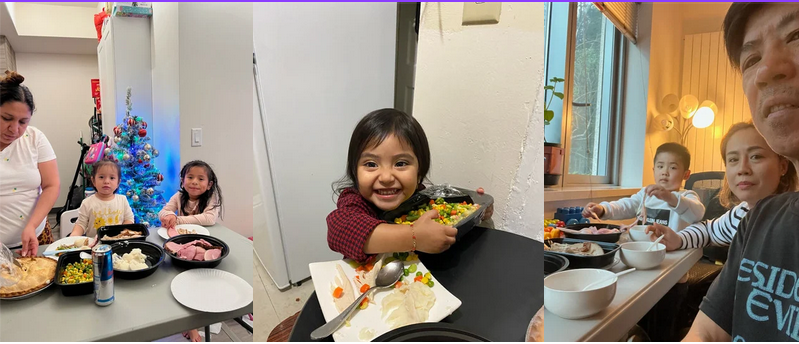
Families sharing photos enjoying a Harvest Dinner meal
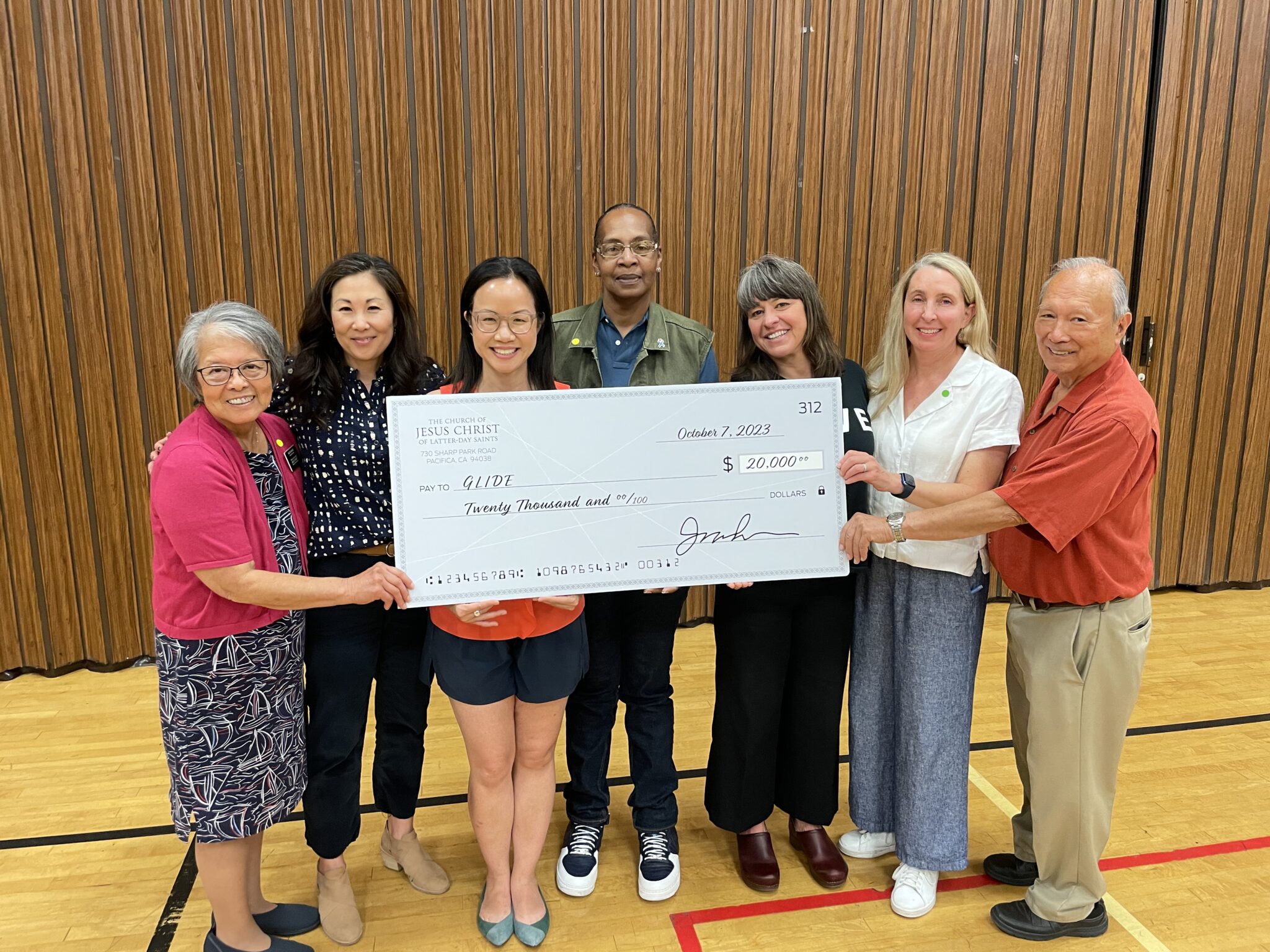
SIMPLY WONDERFUL! Recently, at the Women’s Conference of the San Francisco Stake Relief Society, GLIDE was the benefactor of a generous grant on the behalf of The Church of Jesus Christ of Latter-day Saints (LDS).
The LDS operates over 400 missions all around the world and caring for those in need is a foundational belief of the church. Built on principles of sustainability, community support and personal agency, they work to offer individuals and communities the tools they need to improve their own circumstances in permanent and meaningful ways.
“GLIDE is a wonderful organization that does exactly that [works to offer individuals tools they need to improve] in the city of San Francisco. And we are delighted to make a donation that will help women and children gather safely,” emphasized by LDS.
The grant will support:
The reopening of the GLIDE Women’s Center that has been closed since the start of the pandemic in 2020.
The acquisition of plants and planters for the garden at the Janice Mirikitani Family Youth and Childcare Center
Help fund approximately 576 hygiene kits for the GLIDE Walk-In center
The grant was a project of the church’s San Francisco Relief Society. Organized in 1842, the Relief Society is the women’s organization of The Church of Jesus Christ of Latter-day Saints. Now, nearly seven million members of the Relief Society provide temporal and spiritual relief to whom the church refers to as “ sisters and brothers around the world”.
The church stated that their, “San Francisco-based congregations look forward to a long and deepening relationship of service and support to the GLIDE community”.
“The two great commandments can guide us: first, to love God and, second, to love our neighbor. We show our love by serving”, says Russell M. Nelson, President of The Church of Jesus Christ of Latter-day Saints.
GLIDE leadership extends an infinite ‘thank you’ to those who have made this grant possible: Kinohi McLoskey, Rita Ogden, Brother Kenneth Mano, Sister Carolyn Mano, Patrice Mano, Rebekah Jackson, Nancy Yan.
We are thrilled to see the grant expand our mission at GLIDE of unconditional love and transformation while also nurturing our new relationship with the Church of Jesus Christ of Latter-day Saints!
“Remembering Janice: A Divine Poetry Rite”
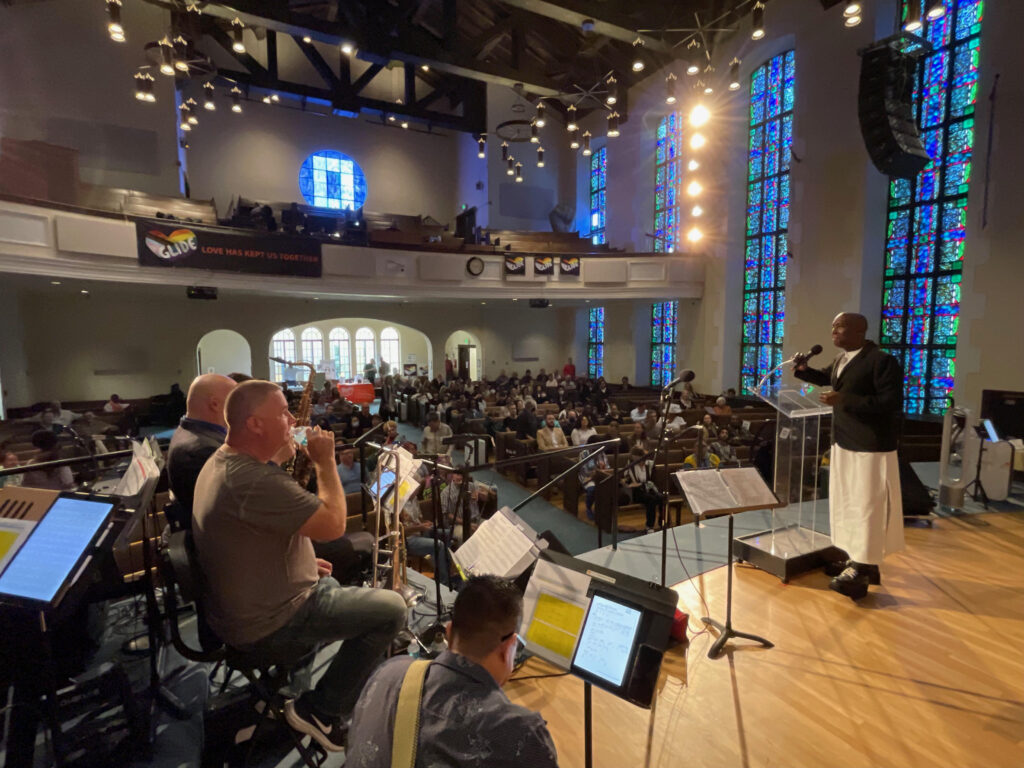
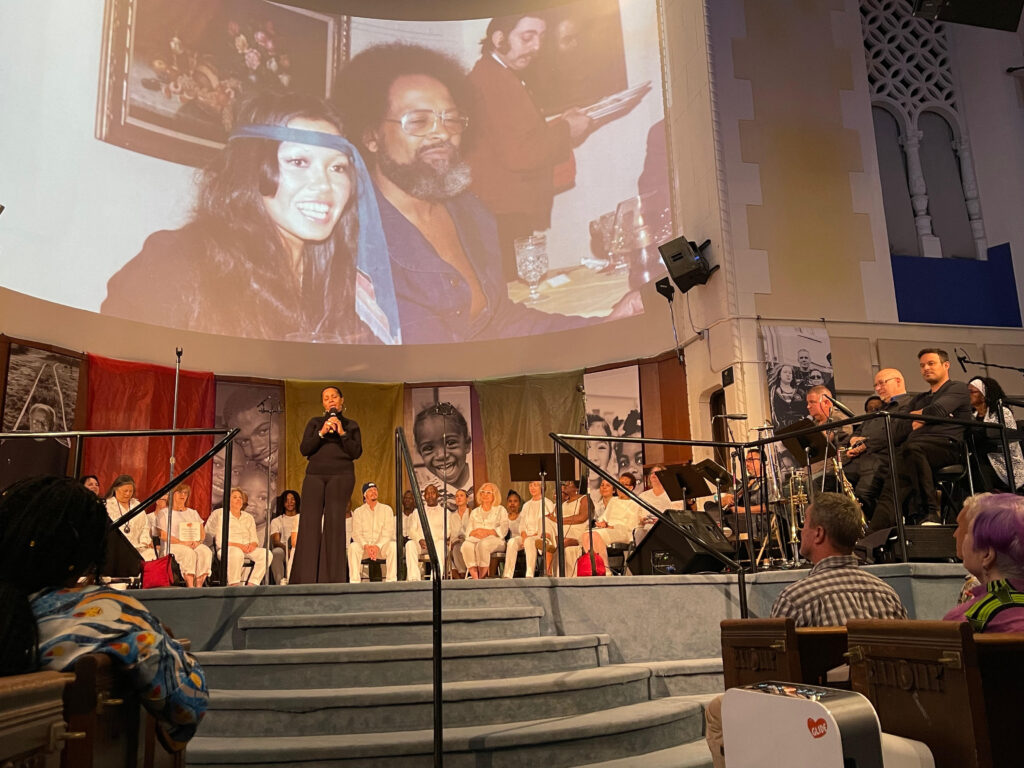
This year on July 30th, Glide Memorial Church held a Sunday Celebration in honor of Glide’s late co-founder, Janice Mirikitani, who died in 2021.
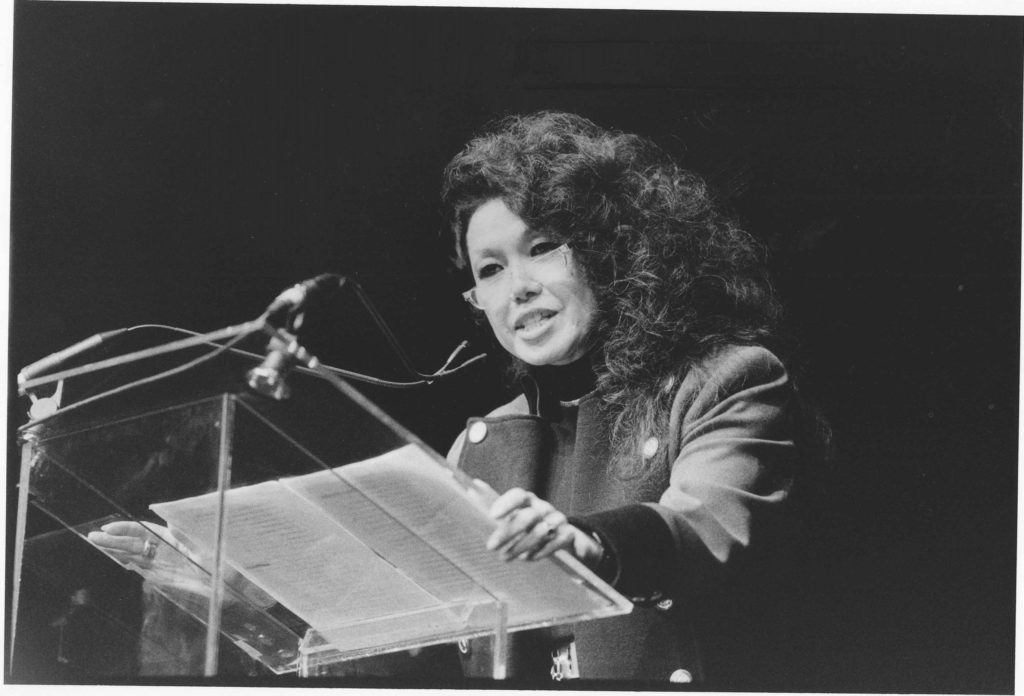
Janice co-created much of the early vision and the roots of GLIDE’s impact. Her work touched many areas in the Church and on the streets in the Tenderloin and in San Francisco. She took deep pride in serving the most marginalized communities, including women and children, education, recovery, mental health care, job training, and housing.
Janice Mirikitani survived her family’s internment during World War II and played a key role in establishing the Janice Mirikitani Family, Youth and Childcare Center (FYCC) in 1999. She served as San Francisco’s poet laureate and helped shape GLIDE’s identity as a social justice organization at the forefront of fighting poverty.
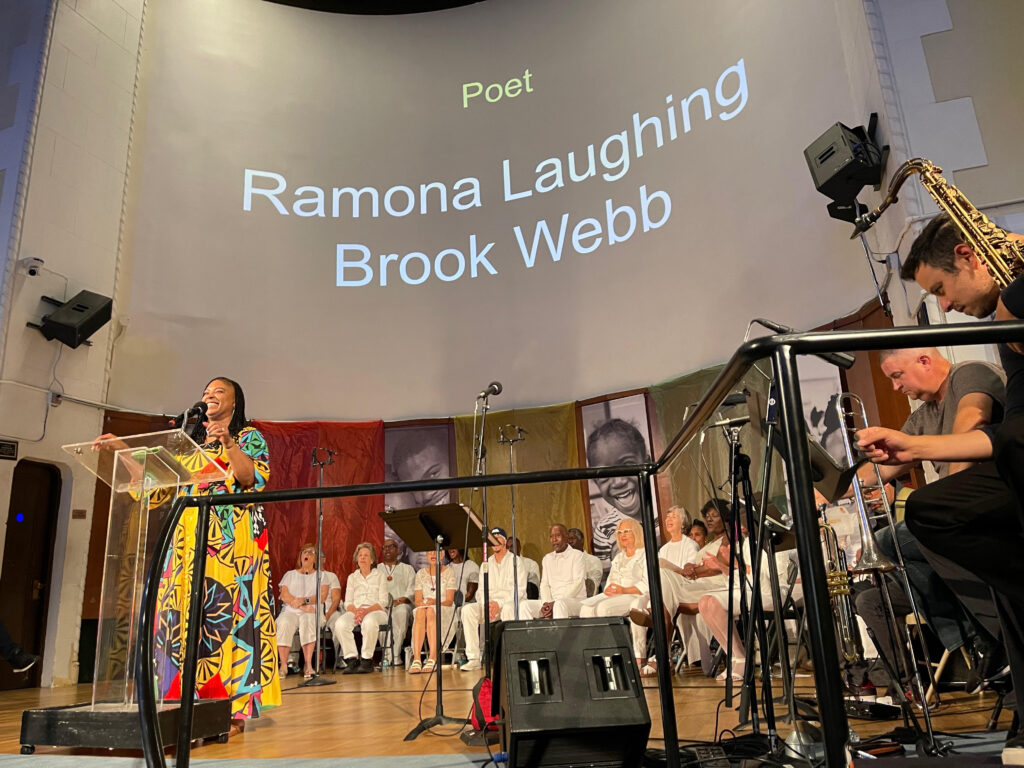
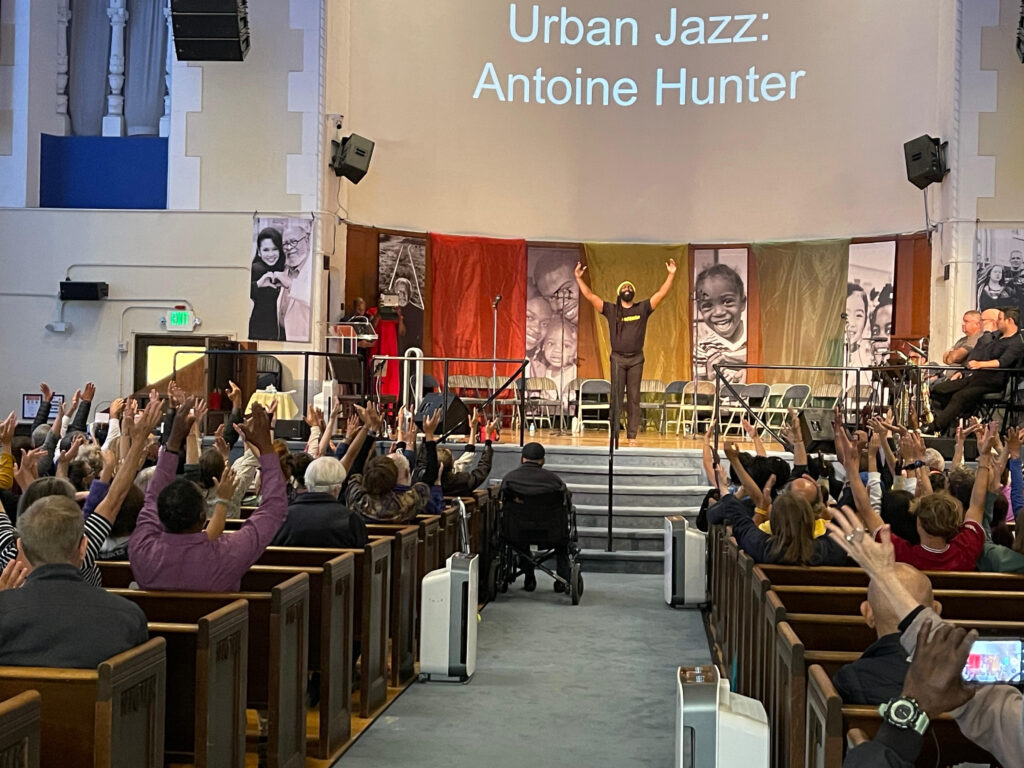
The celebration of Janice’s life featured Antoine Hunter and Zahna Simon of Urban Jazz Dance Company; Poet and Playwright, Ramona Laughing Brook Webb; and Minister of Celebration for GLIDE Memorial Church, Marvin K. White. Cecil Williams, GLIDE’s co-founder, along with their children were also in attendance.
The service began with the poem, “Who Is Singing This Song?” written by Mirikitani and recited by Minister Marvin K. White.
The famous GLIDE Ensemble dressed in all white attire and led the congregation in song with, “The Presence of the Lord is Here” and “Love Lifted Me”.
Minister White proclaimed “ We have to release Janice to be the ancestor. She is meant to be for all of us.” Throughout the celebration Minister White continued to celebrate Janice with the poetry she wrote throughout her lifetime.
Poet and Playwright, Ramona Laughing Brook Webb, began her moment with a land acknowledgement. to pay homage to our Native American ancestry. Webb was a friend of Janice and spoke about their first encounter, and what she learned from Janice throughout her lifetime. Webb said, “Janice has always been an incredible voice of transformation [for me]…”.
Dr. Sheryl Evans Davis, Executive Director of the San Francisco Human Rights Commission, followed Webb. Davis dedicated a song to sing in honor of Janice after stating to the congregation “She saw the needs of people and looked even deeper beyond that”.
After other melodies from the GLIDE Ensemble, Minister White welcomed Poet John Carpentier to the congregation. Carpentier was a friend of Janice during her life and read “We The Marvelous”, a poem he wrote that was inspired by Mirikitani.
Congregants were treated to a video montage from Janice reciting her original poetry, “You Did Not Come Here to Be Silent.”
A testimonial by witness Jeannine Kay and a special guest performance by Antoine Hunter of Deaf Woke followed.
The daughter of Cecil Williams, and stepdaughter of Janice, Kim Williams, spoke to Janice’s memory. She recited six self-written haikus in honor of Mirikitani.
The ceremony ended beautifully with words from Reverend Cecil Williams, Janice’s husband, and co-founder of GLIDE. Williams said with all his might and in perfect silence from the crowd, “I am still looking…and will always be looking for somebody who will stand up for change.” The GLIDE ensemble followed him with the song, “We Shall Overcome”.
Janice Mirikitani, with Unconditional Love, rest in perfect peace and infinite power.
This Juneteenth, a momentous occasion in African American history, GLIDE recognizes the profound significance of this day. Juneteenth commemorates the emancipation of enslaved African Americans, serving as a poignant reminder of the ongoing struggle for freedom, justice, and equality.
In this blog, we share a few heartfelt reflections from our staff members as they share their perspectives on Juneteenth and shed light on the enduring challenges faced by Black people in America. Their words emphasize the importance of continuous action and inspire us to work towards a more just and equitable future.
“Juneteenth represents how freedom and justice continue to delay for Black people in America. In the past, I’ve celebrated at events or with family and friends. Juneteenth represents how long it takes black people to get things owed to them.”
Angelo Turner, Chief Development Officer.
“Juneteenth commemorates the day Africans received emancipation. It’s a bittersweet day because while the government decided to favor human rights and equality, many rules, laws, and policies were implemented by our government to intimidate and disenfranchise African Americans. We still have a long way to go, but for Juneteenth, I’ll celebrate freedom, liberty, and equality.”
Kenneth Ward Jr., social media and Digital Content Specialist.
“Juneteenth represents a day that my ancestors were allowed to be equal amongst humans. Although this holiday will be celebrated in the future, it can’t be limited to a celebration. It’s a time for African Americans to put in work, meaning that I can’t just celebrate; I must actively do something for my community. My ancestors suffered, and I owe it to them to become successful and make an impact within my community because much work needs to be done.”
In embracing the essence of Juneteenth, GLIDE remains committed to fostering positive change and advocating for a society that honors justice, equality, and empowerment for every individual. The heartfelt reflections of GLIDE’s staff members remind us of the arduous journey endured by the Black community and the ongoing fight for freedom and equality. Acknowledging the milestones achieved on Juneteenth, we are inspired to continue working towards a future where systemic barriers are dismantled and all individuals can thrive. GLIDE’s unwavering dedication to social justice aligns harmoniously with the spirit of Juneteenth as we strive to create a truly inclusive, equitable, and supportive of the rights and aspirations of every person. Together, let us honor the past, embrace the present, and envision a future where justice and equality prevail.
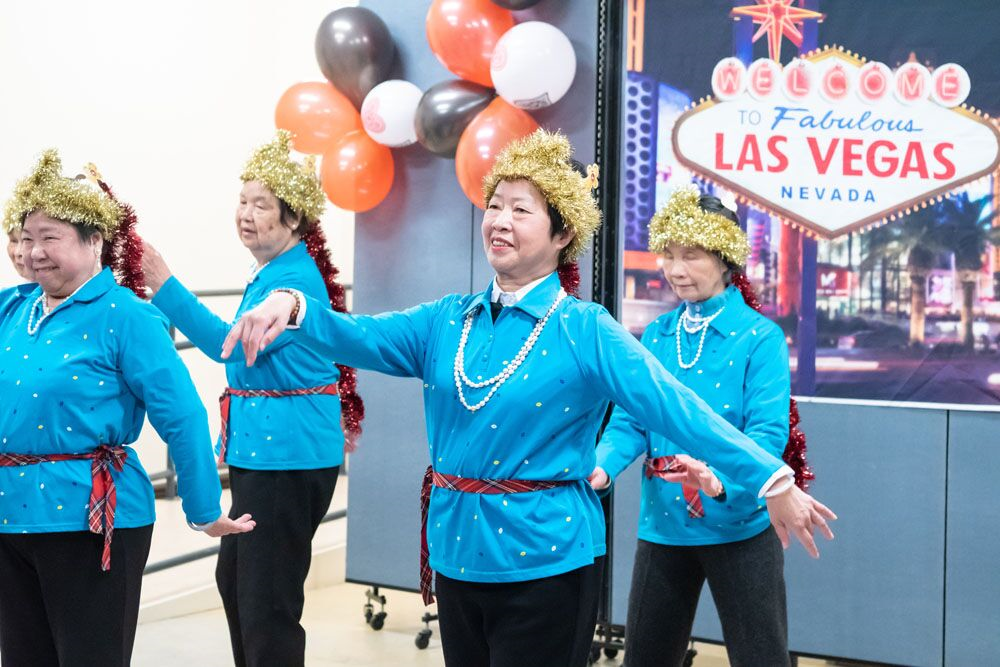
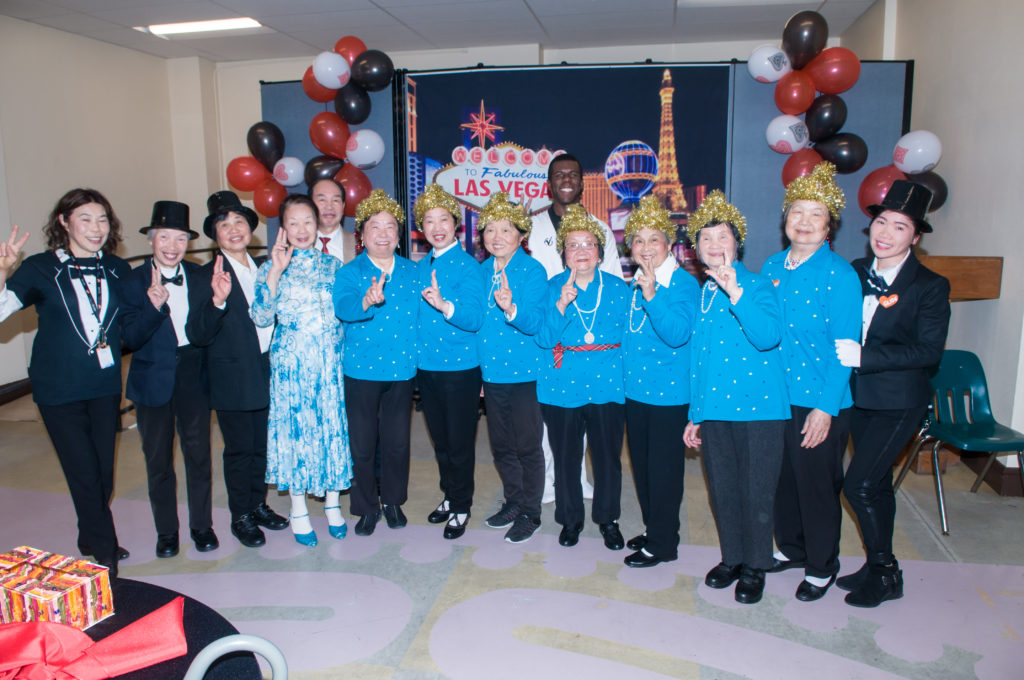
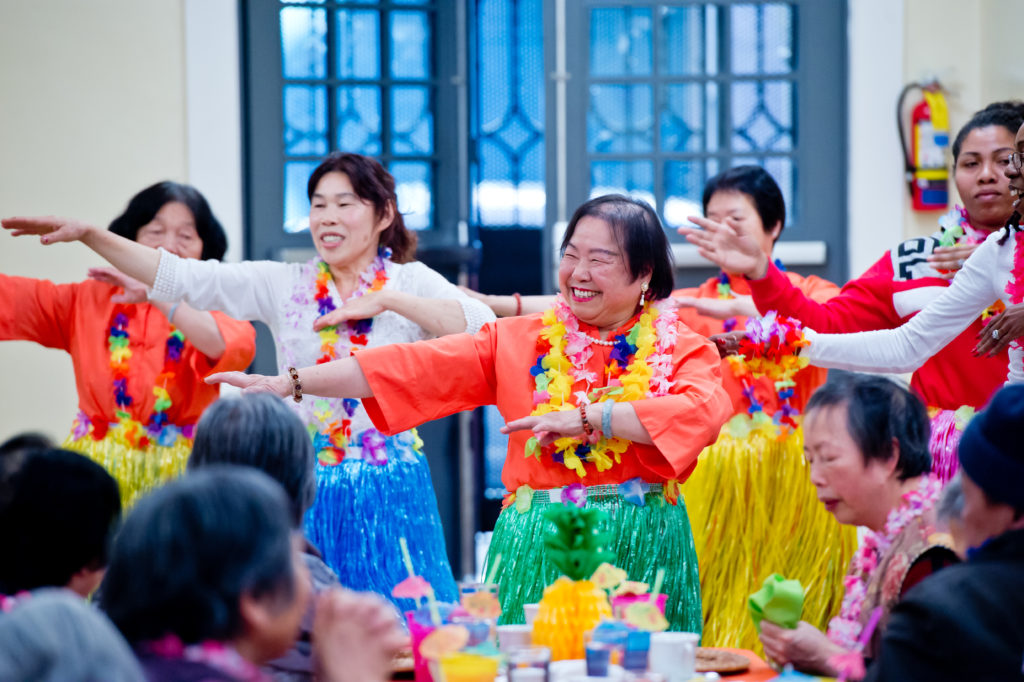
During the month of May, GLIDE celebrates Asian American, Native Hawaiian and Pacific Islander Heritage. In this story, we highlight the Glidettes, a delightful group of Asian-identifying seniors and performers who embody GLIDE’s mission to create a loving and inclusive community.
“For me, dancing is beautiful,” said Li Sucui, “It opens my heart like a flower, and it makes me happy.” At a spry 73, Li is a founding member of the Tenderloin Glidettes that come together each week to share in the delights of dance and song. Comprised mostly of GLIDE’s elder clients, the ensemble has garnered a reputation in the neighborhood for their spirited performances of both traditional Chinese dances and Western jigs. After an extended hiatus during the pandemic, the group is eagerly returning to in-person community events
Known in the community for their endearing dance and song, the Glidettes are eager to resume performances after two years of pandemic isolation.
The Glidettes formed four years ago out of a series of monthly “senior socials” held at Freedom Hall and led by Client Advocate, Tina Huang. “When I started working for GLIDE, I always fantasized about organizing a group that would represent Chinese culture,” said Tina. “I wanted to feature dancing – Not only traditional, like Chinese Lion, but also feature types from Western culture.” Hailing from Guangdong, just outside of Hong Kong, Tina came with her family to the United States in 1993. Six years ago, Tina came to learn about GLIDE and started as a volunteer.
GLIDE serves a diverse community, with those who identify as Asian and Pacific Islander making up 16% of our clientele. Tina’s knowledge of Taishanese, the principal language of the Yue Chinese, comes in handy in connecting with clients. “When I came to GLIDE, and saw the homeless outside, it was difficult for me. But I really wanted to do something and be of service. I am always thinking about how much more our city can do to help those who are less fortunate and faced with tough times in their life,” said Tina.
Tina, pictured left, dances with Li, center, at a senior luncheon in 2017.
Li, also from Guangdong, has been a resident of the Tenderloin for the past eight years, having arrived in the United States more than two decades ago. GLIDE first came to Li’s attention in 2016 when she visited 330 Ellis Street for breakfast as part of GLIDE’s Daily Free Meals program. She later ventured inside GLIDE and observed a group of seniors playing Bingo; she felt drawn to the welcoming environment and inspired to cultivate deeper connections with the community. She met up with both Tina Huang and Meals Navigator Diane Truong and the idea of having a senior group for dancing and singing was born.
Li took part in traditional Chinese dance back in Taishan and, like Tina, she wanted the group to expand its repertoire by learning movements from other cultures. “We worked together to create this group dynamic that was not only respectful of safety but used slow movements so everyone could take part. YouTube was a great teacher,” Li chuckled. One of the oldest Glidettes, Menyi Wong (87) has her son ship over dance outfits so that the group can dress up for performances.
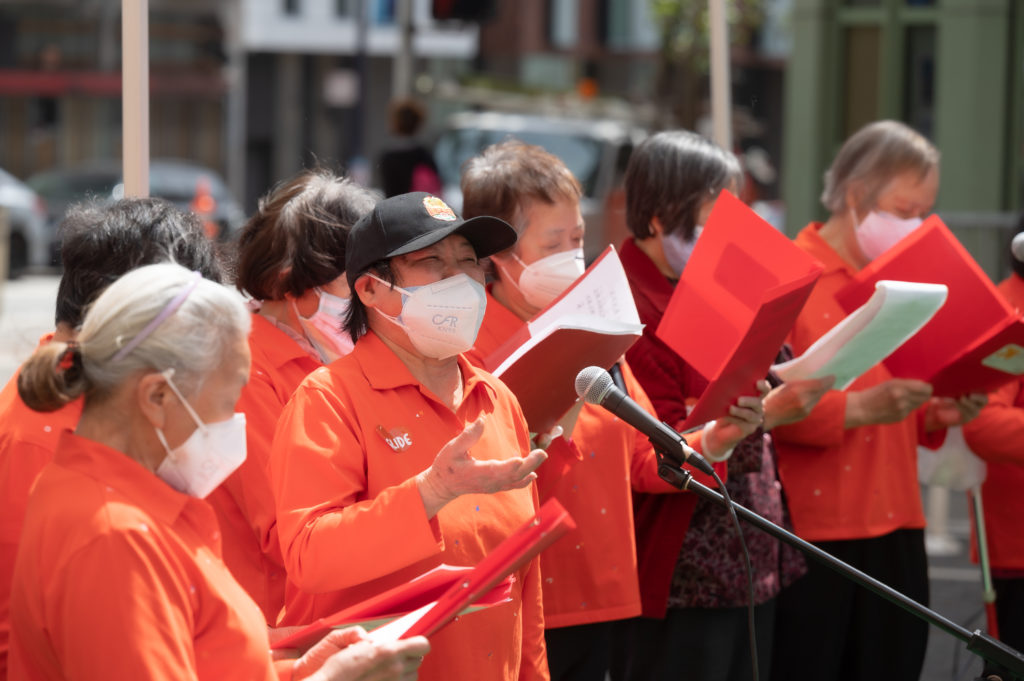
The Glidettes returned to in-person events in April, putting on a special performance at the Tenderloin Sunday Streets.
The Glidettes have performed at various city functions over the years and while the pandemic may have slowed down their schedule of appearances, the group recently returned to the stage in full GLIDE orange regalia for the Tenderloin Sunday Streets event in April. For the Glidettes, a resounding theme of happiness permeates among the group and it is the reason they keep coming together. “It improves our quality of life. It feels good, both mentally and physically,” said Tina. “And when we dance and sing, we are in our moment of joy.”
The Stories That We Were Told
A Reflection By Lilian Mark, Senior Director of Programs at GLIDE
During AAPI (American and Pacific Islander) Heritage Month, I celebrate all of us – the richness of our immigration history, our diaspora, our delicious foods, our beautiful languages, our songs and movements, and the history we will make from where we stand and the people we are able to bring along with us because of our stories, our truths, and our connectedness to one another.
“There is the story that we are told, the story that we believe, and the story that we repeat. “
I came to GLIDE in 2004 as an undergraduate intern with a curiosity, a desire, and an eagerness to learn, to be a part of, and to contribute to social justice work. I did not expect or know how much it would do for me. My heart opened big…noticeably big…and not just to the people and the things happening around me in the Tenderloin, but it opened me up to myself.
I don’t remember if I knew about Janice Mirikitani, GLIDE’s co-founder, before I arrived, but I do remember the first time I met her and the many moments that we shared after that. Jan walked through the world in her fullness – her pain, celebration, joy, despair, love, and hope. My conscious and unconscious stereotypes, biases, and perceptions about AAPI women at 19 years old were challenged by her. Jan’s accomplishments, strength, vitality, courage, and tenderness did not fit any box I had for AAPI women – and where did I get these boxes? Were they given to me? Inherited? And do I create and/or recreate on my own?
In her life’s work and in the 17 years that I knew her, Jan told her story. Her whole story. In GLIDE’s history of work, Jan’s willingness to be vulnerable and to feel her own feelings invited others to do the same. At GLIDE, we say we are all in Recovery – recovering from being human, from life, and from our individual and collective experiences. Storytelling is one way of healing, particularly for communities of color and marginalized communities where our identities and existence are constantly challenged. We are told we do not belong. We are not allowed to belong. Storytelling helps us to see how we share in sameness, how we are connected, and how we fit in. As with most minority groups, Jan’s story was not just her own. Her story is etched (literally) in Japanese American history in books, on monuments, in museums. Her story represents AAPI women who write, who poet, who dance, who art, who march, who overcome, who fight for justice. Jan taught me, showed me, led me to do my own work – to find my own voice, to understand my own history, to know who I am even if it takes a lifetime to learn it.
The completeness and cohesiveness of my family’s history as Chinese immigrants in America have many missing pieces. The missing pieces usually are not discovered until someone passes away and they reveal themselves as sentiments of the person’s past. I did not know that my father’s uncle was a “paper son” until he passed away. The “paper son and paper daughter” system was a way for Chinese immigrants to come to the United States illegally by purchasing identification documents to bypass the Chinese Exclusion Act. I did not know he attended UC Berkeley (my alma mater) briefly until his studies were interrupted by World War II. He picked fruit in Central Valley and eventually raised his family while running a liquor store in San Francisco’s Haight-Ashbury neighborhood. It was not until I was 30 years old, that this piece of family history finally helped me make sense of the confusion I had always experienced as a 7-year-old as to why there was this one much older Chinese relative who spoke perfect English – a phenomenon that did not exist elsewhere in my family. This story is not mine, and at the same time, it is mine. It may also be yours. I have always wondered what kind of difference it would have made if I had known more about my family history growing up.
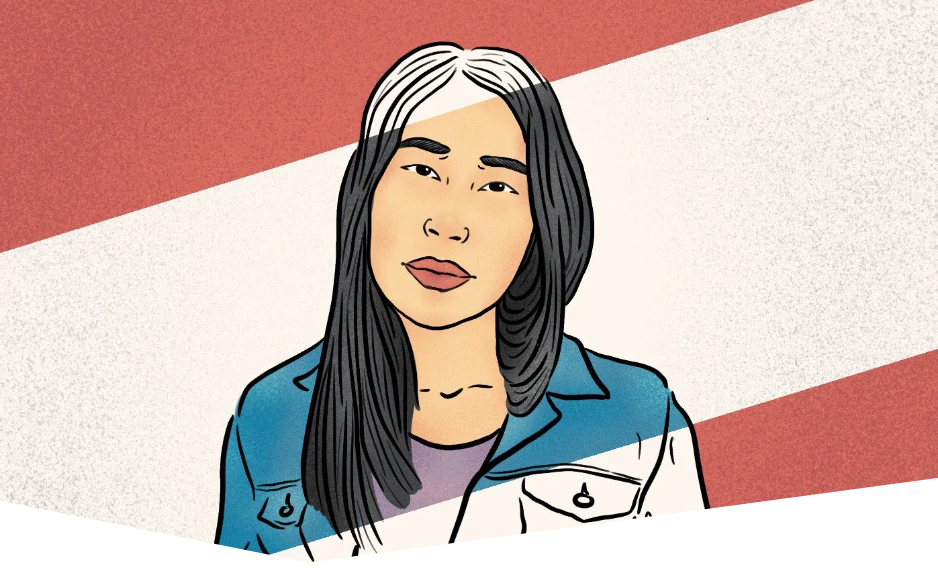
ILLUSTRATION BY ENKHBAYAR MUNKH-ERDENE
My search for my identity is a constant one. My proximity to my Chinese cultural heritage remains strong through my parents, my family, and my community, but in my daily life, I am enveloped by American, White culture. This experience of understanding, reconciling, and creating my own identity – who I am and whom I want to be as a Chinese American woman persists – the back and forth, the negotiations, the search for integration, the moments of reconciliation, the feelings of loss, and the gratitude for what is.
In my pursuit of my own story, I’ve learned this – there is the story that you are told, the story that you believe, and the story that you repeat. In my 20’s and 30’s, I spent a lot of time uncovering, learning, and understanding the stories and messages that were told to me about me – from parents, family, teachers, media, colleagues, strangers, world. Eventually, these stories meld with my own, the one that I am trying to create for myself, and every day I must decipher who is telling the story today and do I believe it. Am I strong enough? Am I meek? Meek like the stereotype for AAPI women and AAPI women in leadership roles? Am I enough, and do I believe that I am enough? What does enough look like? As I head into my 40s, I now must decide what the story is that I am going to repeat.
As a second-generation Chinese American woman who is also a parent to a young daughter, I feel the responsibility of this even more. I am careful, mindful, and whenever I am not too tired, I try to be intentional about the story I am repeating – about what it means to be Chinese American. For all the moments in my childhood when I had grimaced and felt embarrassed by my parents speaking Cantonese too loudly in public, I seek reconciliation in speaking only Cantonese to her and telling her that it is a gift to be able to speak more than one language. I call her only by her Chinese name because it is also a call out to our heritage. More than anything else, I hope that the story I believe about myself as a Chinese American woman and the story that I am repeating to her is one of love, joy, hope, and resilience.
For more than half a century, the history and promise of GLIDE have been closely intertwined with San Francisco’s Asian American, Native Hawaiian, and Pacific Islander (AANHPI) communities. As we celebrate AANHPI Heritage Month this May, I want to begin by honoring the AANHPI heroes who taught us – who continue to teach us – that GLIDE is strongest when we practice radical inclusion. We are most resilient when we extend unconditional love.
Janice Mirikitani, GLIDE Co-Founder and a sansei (third-generation) Japanese American, urged us “to make those connections with people who care about the total community, not just their community, not just a particular segment of the community.” Janice modelled radical inclusion in her work at GLIDE from 1965 to 2021 and in the AANHPI community. At GLIDE, she opened her heart to people who felt abandoned – especially survivors of domestic violence and people in recovery – welcoming them into the GLIDE community and helping them create stability in their lives.
She was joined in this effort by the Rev. Lloyd Wake, a nisei (second-generation) Japanese American who served GLIDE in many capacities – from minister of community life to head of facilities – from 1967 to 1989. Besides serving on Aion’s advisory committee, his many achievements beyond GLIDE included helping establish the Asian Law Caucus in 1972, the first legal aid and civil rights organization to focus on the needs of all AANHPI communities. He also helped build bridges between the AANHPI and LGBTQI communities. Rev. Lloyd once said, “The only criterion for action is love.”
Today, we at GLIDE stand on their shoulders as we address persistent challenges, including intergenerational poverty, systemic racism and a lack of empathy for those perceived as the “other.” These challenges have been especially acute since the start of the COVID-19 pandemic, which has taken a steep toll on AANHPI communities.
In 2020, Asian Americans in San Francisco suffered COVID case-fatality rates nearly triple that of other groups, in part because of unequal access to healthcare and health information. Meanwhile, hate crimes against AANHPI people in the city surged by more than 500 percent from 2020 to 2021, a result of political scapegoating and the history of violence against Asian immigrants in the United States. Today, hatred is not only expressed through attacks on the street – it also stings online. For example, Yelp recently reported an alarming increase in hate speech in reviews of AANHPI businesses posted to its platform.
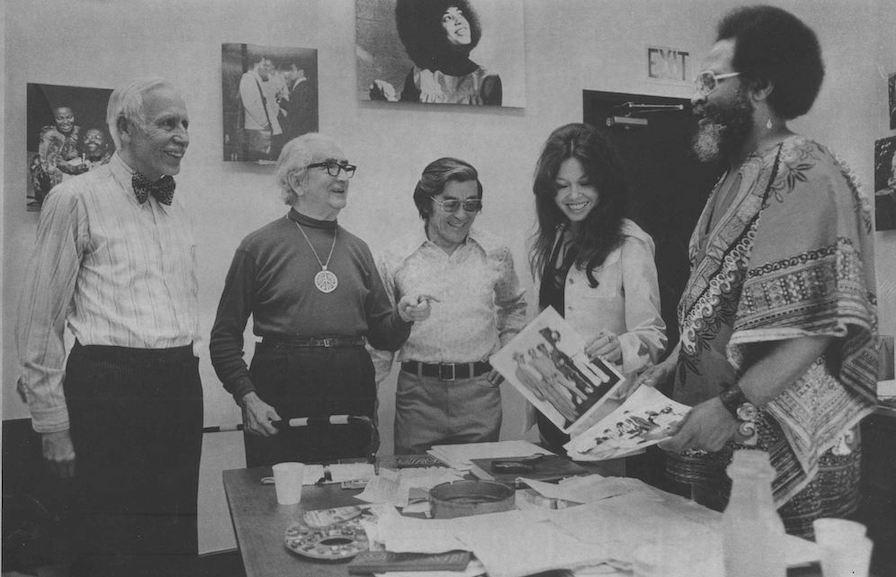
L to R: Rev. Edward L. Peet, Rabbi Abraham Feinberg, Rev. Lloyd Wake, Janice Mirikitani and Rev. Cecil Williams
It is GLIDE’s responsibility, it is our heritage, to stand with AANHPI communities in the Tenderloin and across the city in the struggle against inequality and hatred. We do this by extending love and care to our neighbors, amplifying the voices of AANHPI leaders, and creating connections among BIPOC (Black, Indigenous, and people of color) communities.
On May 25, as part of its Virtual Justice Series, our Center for Social Justice (CSJ) will host an online panel discussion of anti-Asian hate crime, its history, how the experience of hate crime is shared with other communities of color, the trauma it causes and how to heal. Panelists will include Janice Li, director of the Coalition for Community Safety and Justice and the first Asian American woman elected to the BART board of directors, and Gaynorann Siataga, a prominent activist and nonprofit leader in San Francisco and the Pacific Islander community. CSJ nurtures community among BIPOC activists to build an intersectional social justice movement and change public policy.
More than 15 percent of our clients identify as AANHPI. They come to GLIDE for free meals and pantry supplies, rental assistance, and family services designed to break cycles of intergenerational poverty. In the process, they meet multilingual GLIDE staff members, like Client Advocate Tina Huang, who can help them access the full range of resources they need to achieve economic independence.
Our senior services offer connections and skills that help maintain the well-being of our AANHPI elders. Our multilingual digital literacy classes, via our partner Community Tech Network (CTN), provide laptops to older Tenderloin residents (mainly AANHPI) and teach them how to use email and access essential resources online.
During the COVID pandemic, we launched a weekly pop-up vaccine clinic and roving vaccination teams that helped the Tenderloin neighborhood reach a 90 percent vaccination rate, protecting at-risk AANHPI residents from severe illness.
Our past and our present actions demonstrate the power of AANHPI communities not only to mobilize and advocate for themselves in the face of systemic racism and inequality, but also to join with others to fight for a world where no one is left behind. I am humbled and inspired both by our historic AANHPI heroes and by the many GLIDE staff and volunteers of AANHPI heritage who are today’s heroes: opening their hearts every day, welcoming people off the streets and transforming lives.
With love, Malcolm Walter, Interim CEO GLIDE Foundation