Chef Wing reflects on 10 years in the Daily Free Meals program

Cho Wing is approaching his tenth anniversary with GLIDE as a loved and valued member of our Daily Free Meals team. To mark the occasion, Chef Wing offers the following words on his journey. We are blessed to have him as a colleague and friend and deeply grateful for all he continues to give to our community—the nourishment, the dedication, the love! Congratulations, Wing!

I immigrated to USA and lived in the SF Bay Area in the summer of 2008. During the first two years, every morning I went to adult school to learn English and in the afternoon went to the library to read some Chinese newspapers to find some Chinese jobs, but all jobs were not so long. At last, I saw an advertisement in a Chinese newspaper about a Chinese organization holding a cooking class with a cooking school. The school fee was $2,400, three months learning, and three months paid internship. I thought maybe this class could help me find a job? The fee was too expensive, but the paid internship could earn back the school fee, even if I could not find a job. I didn’t lose much, and I could learn some cooking skills, so I joined the class. 

The school had Chinese and English teachers and had a big kitchen to learn cooking skills. The class was Okay, but when we finished the class, the school informed us that they could not find a paid internship for us. We could only do voluntary internships. My classmates were very unhappy, some classmates did not do it, only a few classmates and I accepted to be volunteers at GLIDE’s kitchen. That changed my destiny.

The cook who just cooked breakfast and lunch retired due to illness. At that time, the GLIDE kitchen could not find a new cook. The manager then, Bruce, temporarily replaced him. So, I helped Bruce to cook, and he taught me many cooking skills. I worked hard, he taught me patiently. I did this for about three weeks. The coordinator of the cooking school told me that Bruce liked my performance. So, I requested Bruce to give me a job. He replied to me, “Maybe.”

A few days later, I became an employee of GLIDE kitchen. That day was April 11, 2011. This year on April 11, I will be working in GLIDE for ten years.

During the first two years in the work at GLIDE, I was a little unhappy. Because I had worked in Chinese society for more than 40 years, and this was my first real contact with American society. Many living habits and working methods are also different. So, sometimes I would have some quarrels with my coworkers, but slowly everyone and I accepted the others. Actually, most people are friendly.

My work has gotten smoother, and the kitchen has been updated with many new pieces of equipment, making it easier for me to work. After working at GLIDE for nearly ten years, GLIDE not only gave me a stable income, but also let me contact more different people and learn more about social issues. It also made me feel successful at work and enjoy life.

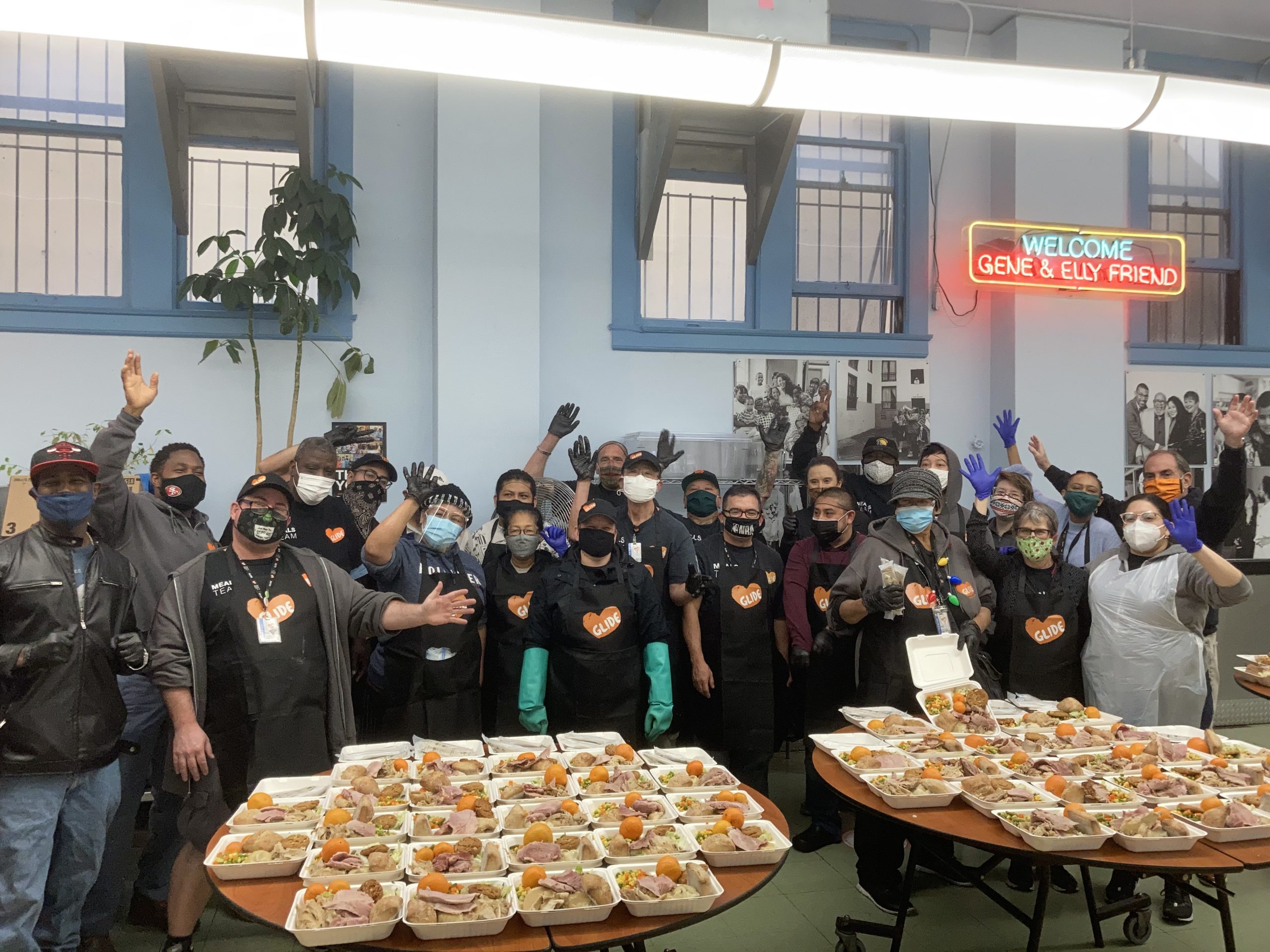
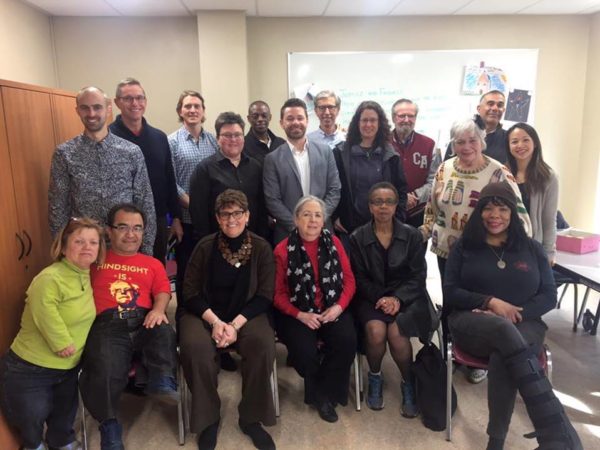
Cho Wing (center) and Daily Free Meals team colleagues with Christmas dinner, Dec. 2020.

Four years in, GLIDE Church’s congregational life group devoted to “courageous conversation” across the divides has learned a thing or two

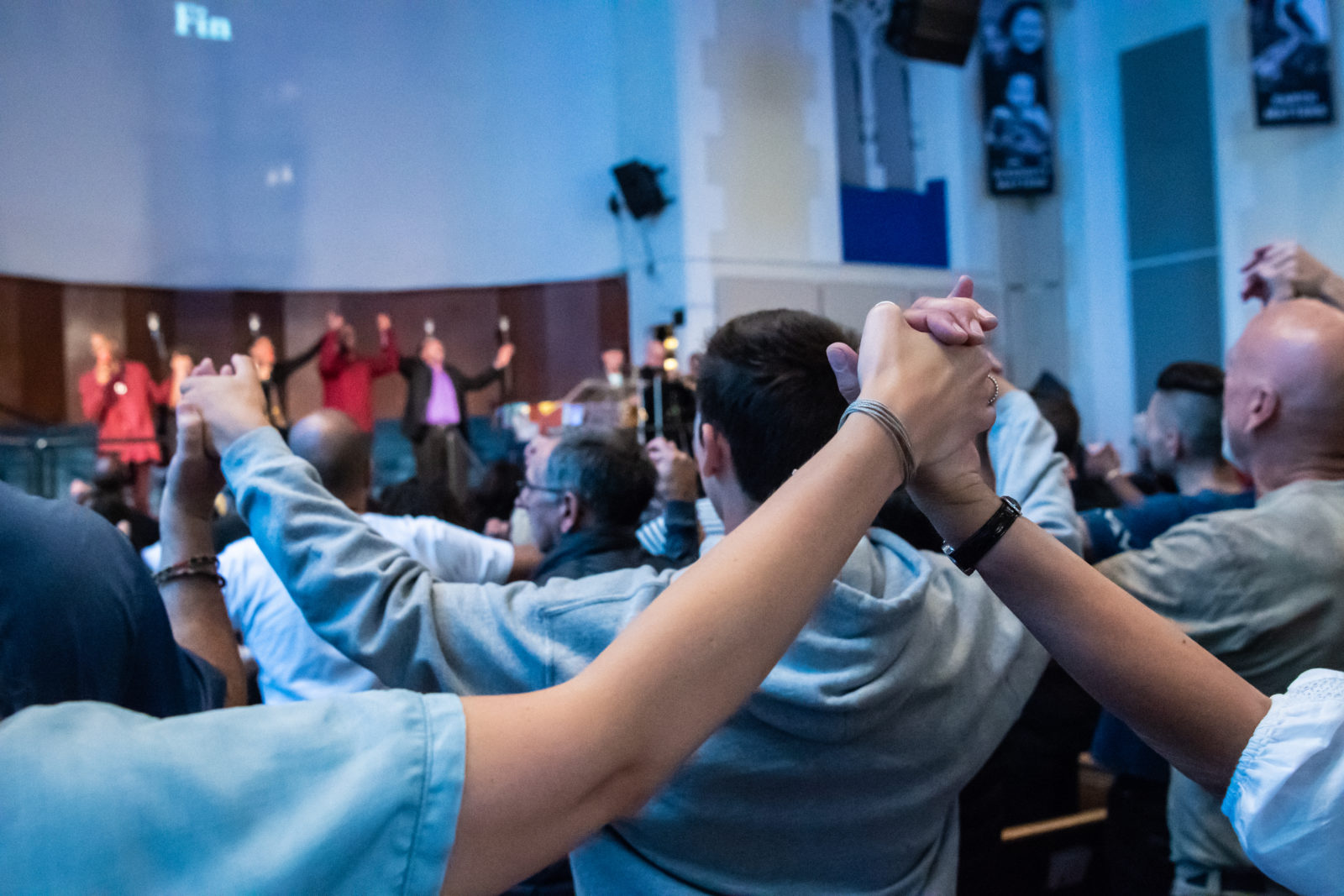
At GLIDE Memorial Church, we practice unconditional love. More than a mere platitude, unconditional love is an ethics. It teaches us that difference does not make someone fall out of the boundaries of beloved community. Unconditional love says difference is what will allow us to cover more creative, spiritual, philosophical, and political ground. In Different Together conversation circles, progressive and conservative, Republican and Democrat, learn to listen without judgement or losing ground of their beliefs. Instead, the participants dismantle the walls of racial, social, economic, and political histories that have kept people separated into ideological enemies. The work of Different Together creates a space of vulnerability and truth. It’s okay to be affiliated, enlisted, or a member of the winning or the losing party. It’s not okay to launch from that win or loss, into hate. Whether online or in-person it’s the “Together,” of “Different Together,” that brings people into proximity to all of humanity and back from the brink of our mutual annihilation.

Marvin K. White, Minister of Celebration

The following conversation with Different Together co-founders and facilitators Chris Collins and Winne Fink was conducted by Rob Avila and Casey Zhao from the communications team in December 2020. It has been lightly edited for length and clarity.

Different Together (originally called Bridging the Divide) is a congregational life group at GLIDE Memorial Church that formed after the last election in 2016. How do you describe the project and what are some of the foundational texts or guideposts you use?

Chris: I say that we create opportunities for courageous conversation between people who might not otherwise interact or might avoid each other. Much of that is the progressive and conservative divide, but it doesn’t necessarily stop there. That does not fully capture what our divisions are. Our divisions are also across race, across class, across religion. We try to be mindful of that and bring that in as part of our focus and our conversations. 

Was there one book or source that served as an initial framework for the group?

Chris: There are several books. One was by a sociologist named Jonathan Haidt called The Righteous Mind: Why Good People Are Divided by Politics and Religion. There’s one [by Jason J. Jay and Gabriel Grant] called Breaking Through Gridlock: The Power of Conversation in a Polarized WorldRoadmap to Reconciliation [by Brenda Salter McNeil] was another book that I consulted. So there have been a few that were instrumental. 

While you bring up books: I was also looking for a book that could help guide me through all this and I wasn’t really finding the one that I felt I really needed, so I’ve written my own. It’s actually being published in January. Hopefully, that will be a foundational text for other groups that want to do similar work across the country. I talk a lot about GLIDE in it and how GLIDE was a perfect place for a radically inclusive community to also be radically inclusive to people across the political divide as well. It’s based on my experience and the collective experience of the group, which I try to share. 

Winnie: We did start with books and we started with a workshop format for GLIDE-only folks, having discussions by using a particular author’s approach/theory. And I’m smiling because leading an in-depth discussion of a formal theory is not as comfortable for me. So when Chris said we’re going to workshop, Winnie, we’re going to use the Righteous Mind. I was like, Oh Lord. So that was learning for me. But I think we’ve also just evolved by realizing what people have really liked—when we do topics like gun control or taxes, those have been successful; the one we did on health care was really hot. That was probably our first one that was particularly contentious. We had a lot of on-the-ground learning about how to deal with that.

How do you deal with a contentious issue like that?

Winnie: You know, we do this thing on social media where you just one-dimensionalize the other side. They’re an asshole. It just becomes that simple. We’ve really tried to do a lot to get people to use empathy and turn it around. The interesting thing for me doing this project at GLIDE is that, yes, we say we’re inclusive, but it’s really been about people who are struggling the most. Right? We’ve not necessarily made a lot of effort [to reach] people who might have privilege the other way, or who might not be the ones that care in the same way or in the way that we think is enough or right.

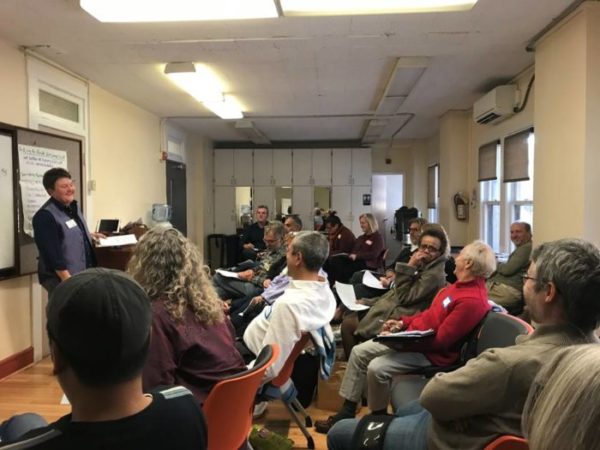
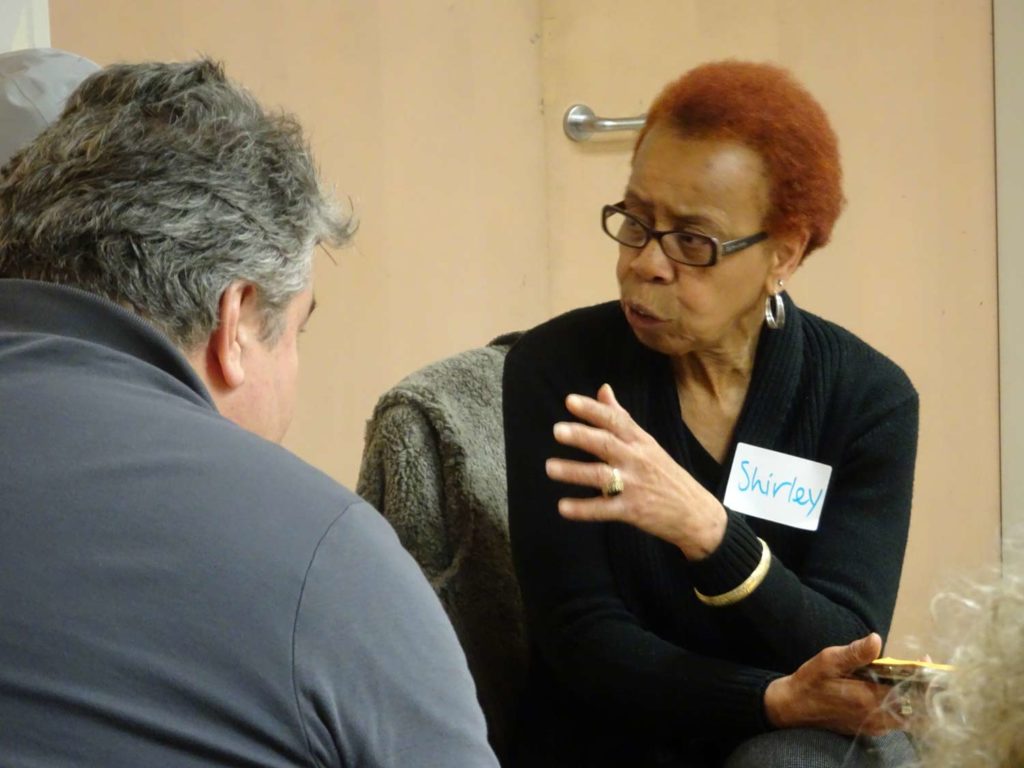
Shirley from Bridging the Divide

Tell me about the meeting that you held the day before Election Day?

Chris: The idea came about that the night before the election is going to be one that was going to be anxiety-filled for everybody, no matter where you fall on the political spectrum. Especially for us on the progressive side, we don’t know what’s going to happen, it’s probably not going to be pretty. No matter what the outcome of the election is, there are a lot of unknowns. Unlike any other year. So we wanted to have some sort of event where we can come and be grounded as we enter Election Day. 

We developed this conversation that would have an arc to it. Just to give you a sense of the structure of how we do this: We have a group of 33 people, we have some opening remarks, we present a question, we break up into small groups of four, come back as a big group. There’s a little bit of a debrief, and the next question, then you’re in a new group. We did that for a series of questions. What gives you anxiety about what’s to come? What has given you hope over the last few years?  

Winnie: We’ve been doing this enough where one of us, usually it’s Chris but I will also facilitate, we just sort of take it, we own it, we have a conversation, and we go. With this one we were extra thoughtful, careful. [Minister] Marvin opened us. David Fredrickson, he teaches mindfulness and compassion, he did a closing for us. As we return to the big group, we have people react in writing. We’ve learned that the more we can interact, and the more modalities we can learn, the better the experience is for folks. The idea is really getting people to be thoughtful and hear from each other and realize what I’m worried about is also what they’re worried about, and they think totally differently than I do. Get people to put their curiosity and empathy hats on, which is what the whole project is. Just very simply: be curious, be kind. It’s not that complicated but we don’t it very well collectively. 

Chris: The conversation ended on a note of, How do you want to be treated if your candidate doesn’t win? How will you treat other people if your candidate does win? It was naming the anxiety that’s there, naming how you feel about other people who disagree with you (that was one of the questions), and put all answers into the space and, in the end: OK, how do you want to be treated and how are you going to treat other people? Speaking personally, I felt that, going to bed that night, because of this event, I felt warmth, I had a full heart. That sense of community, across the political lines, before what was most likely going to be a toxic election, was very, very meaningful for me and I heard that reflected in many people that were there. 

Now that we are passed the election, what lies ahead for the group? 

Winnie: I think there’s some learning to do. For me, I joined [four years ago] because I didn’t know what to do with myself after the election, I was in anguish, lost, didn’t understand. I thought about where I grew up in a small town in Kansas knowing many or most of those folks who voted for Trump. That’s where most of us who wound up in that room from GLIDE [were coming from]. We just got whupped. How that felt.

Now I think there’s learning to be done on the other side of that. I don’t think what we have ahead is anything that radical other than keep going, be kind, and be curious. I don’t think it’s much harder than that. But figuring out how to do it—I do think what we’re really clear on is that we’re still ridiculously polarized. There are still so many people who don’t participate. At least on the left. My circles, most of my friends are pretty lefty, it’s hard to get them to come. They’re like, I can’t talk to those people. It’s hard for me to get my friends to participate. So, we’ve got work to do. I also think that it’s largely been the privileged arm of GLIDE membership who have participated so I’d be very interested in also expanding our membership and reach.

Chris: I think that’s beautifully said. I would also like to see us continuing to do outreach across the country and finding a church community in the South or somewhere that’s not anything like San Francisco and having a series of conversations with them. Maybe a series of three conversations. That type of outreach. Sometimes the conservative attendance is low, sometimes it’s not that bad. What we have seen in this project, and in the movement across the country, is that the participation leans on the progressive side. Even if that’s the case, we keep on finding the opportunity. When conservatives are ready to join, they are welcome to join. But if we have low numbers of conservative participants there’s still plenty of work for us to do. Winnie and I, as white people, we have lots of work to do to bridge divides with communities of color. That’s one example. 

Casey: I feel like within my generation, I’m 21, nobody really sits down and just has a conversation, it’s just aggressive, back and forth. I think there’s a lot of toxicity, especially within my generation, within politics. 

Chris: It’s interesting that you say that because, in talking about Different Together, there’s definitely a generational divide. I would say the participants are mostly 50, 55 and above. In my experience it doesn’t seem like the younger generation believes in this. I think older generations reflect on a time when politics wasn’t so toxic and want to go back to something that was like that, a little more friendly sport. Politics my entire life, going back to the 1980s, has been toxic. It’s just a different world that we’ve experienced. That is a struggle for this project and for the movement nationwide. 

Different Together is one of many Congregational Life groups meeting regularly, online for now, at GLIDE Memorial Church. Different Together meets on a monthly basis. To reserve a spot at an upcoming meeting, email DifferentTogether@glide.org. For more Congregational Life Online, visit this page on our website.

By Sarah Wunning and Satanjeev “Bano” Banerjee

Since the 1960s, GLIDE has relied on direct service volunteers to help provide safety net services (such as daily free meals) to the most vulnerable people in our community. Recently, we have been experimenting with a Skills-Based Volunteering (SBV) model, in which we use the specialized skills of volunteers to build capacity in different parts of the organization. At the same time, over the last decade, there has been an increase in San Francisco–based technology companies looking to engage with the local community, with employees eager to volunteer their skills to make an impact. 

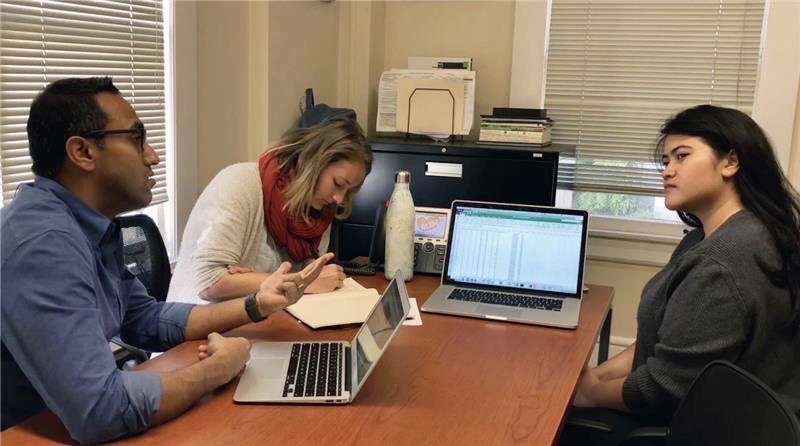
Twitter is one such company. Located only a few blocks from GLIDE, the company organizes a volunteer day for all of its staff twice a year called Twitter For Good Day (TFG). Traditionally, most TFG Day volunteering projects have been direct service in nature, such as serving meals at GLIDE and other similar nonprofits, cleaning parks, or assembling hygiene kits. In addition to these worthy projects, Twitter and GLIDE’s Data, Strategy and Evaluation team have partnered over the last couple of years to develop data projects that utilize volunteers with data skills.

The Challenges and Our Approach

Using the typical short-term volunteer model for data analysis comes with some unique challenges. Unlike many direct service volunteering projects, data volunteers need more context about the task, the data, and what kind of analysis will most benefit the organization.

Enabling short-term volunteers to do data analysis within three hours means doing a lot of prep work beforehand. Unfortunately, just as GLIDE staff often does not have adequate time for the actual analysis, there is also a shortage of bandwidth for the prep work. Our approach to tackling this challenge is to rely on one or two long-term volunteers to help with the data prep, including time-consuming tasks like data cleaning, anonymizing, setting up the logistics for the day, and recruiting volunteers from Twitter.

Coming up with the right type of project or question is also an important part of preparing for skills-based volunteers. The right balance of a project—one that is important but not urgent, impactful for volunteers to work on, and can be accomplished in three hours—can be difficult to find. Over the years, we have found that asking open-ended questions and mixing in questions that are not purely related to data analysis has created the most value for both GLIDE and the volunteers working on the projects.

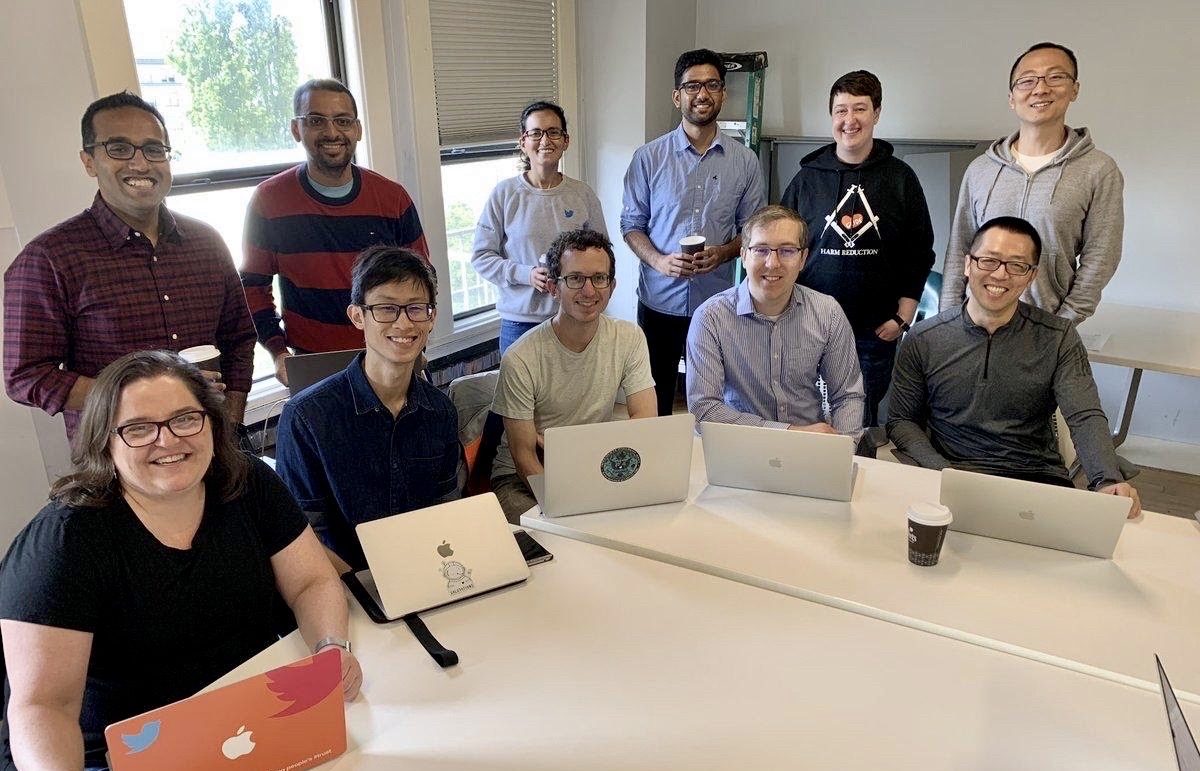
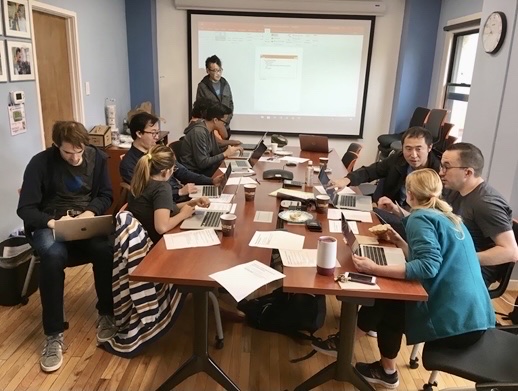
Data for Good team hard at work at GLIDE in 2018.

“Data for Good” — some highlights

Over the last three years, dozens of skills-based volunteers have worked on various projects at GLIDE. We call these joint efforts Data for Good. Below, we showcase just two of our several collaborative projects:

Analyzing demographics and who exactly GLIDE serves

GLIDE program staff have noticed GLIDE’s participant population demographics change over the years, and they wanted to know what the data shows—in particular, if there are certain population groups within the Tenderloin that are underserved by GLIDE’s programs. Volunteers received anonymized GLIDE program data, which they then sliced and diced by demographic information, such as age, gender, race, sexual orientation, etc. They then compared that information to similar San Francisco below-poverty census data and Tenderloin census data, and found that, overall, there were not any major gaps between GLIDE’s program participant data and the census data, and that trends were consistent between GLIDE and the Tenderloin neighborhood. This useful information has inspired GLIDE to redo this analysis on an ongoing basis, in order to identify any potential future gaps in service to the community.

Getting at an Unduplicated Client Count for the Daily Free Meals Program 

GLIDE serves three meals a day, 364 days a year. In order to remove barriers to food security, participants don’t sign in or fill out forms and clients can receive as many meals as they want in a day or mealtime. The only data we do have is the total number of plates served. A question that GLIDE has always been interested in answering accurately is: How many unique participants come to GLIDE’s Daily Free Meals in a year? We presented volunteers with this open-ended question to have them brainstorm possible solutions. GLIDE staff showed volunteers how a meal shift is run and how participants flow through the dining hall. The volunteers proposed using a lightweight survey coupled with statistical modeling to arrive at an accurate answer to this question. We are now following up by piloting these lightweight surveys, conducted while participants wait in line.

What We Learned

Data for Good has had six iterations so far. Across these sessions, we have learned various lessons that have helped us improve the program. We list them below in the hope that these learnings will be useful to other nonprofits.

  1. Champions Needed: Skills-Based Volunteering isn’t a common volunteering model for either nonprofits or for-profits, partly because it is difficult to do well. In order for SBV to be successful, it’s necessary to have people on both sides that are committed to its success over a long period of time. 
  1. Patience: With direct service volunteering, you often see immediate impact, whereas with SBV, it takes time to build up impact. For example, in the demographics analysis project described above, the first round of Data for Good activity answered some questions and laid the groundwork for future analysis. By doing more follow up analyses, we have built on this work over the course of several years and deepened our understanding of GLIDE’s program participants.
  1. Think Beyond Data: In the beginning, we thought narrowly about the types of projects that are suitable for Data for Good—mostly pure data analysis. Over the years, however, we have expanded to other kinds of SBV, such as creating slide decks from data reports, performing simple data clean ups, and conducting internet research. These kinds of projects are as impactful as data analysis, and volunteers enjoy getting to use skills outside of data analysis.

Skills-based volunteering or SBV has been an impactful addition to GLIDE’s volunteering program. It has allowed GLIDE to not only answer some longstanding questions but has also deepened our relationship with Twitter. Through this relationship, we have started working on other long-term projects, such as running our first in-house randomized controlled trial on the number of mail solicitations sent to donors. In the future, we hope to expand this model to other departments across GLIDE—and we hope that other nonprofit organizations and for-profit companies will also join us on this journey!


Sarah Wunning (center) is GLIDE’s Data Systems Manager and Satanjeev “Bano” Banerjee (left) is Machine Learning Engineer at Twitter. They would like to thank the following colleagues for their generous support of the work detailed above. At GLIDE: Kate Purdy and Caitlin Jolicoeur. At Twitter: Kania Azrina, JP Wong, Bhargav Manjipudi, London Lee, and Karl Robillard.

And, not least, thank you to all the Twitter volunteers who’ve participated in Data for Good over the last several years, we appreciate you!

San Francisco teen and GLIDE volunteer finds a creative way to support her community from home: cooking for a cause

With so much going on in the world right now, many of us wonder how we can step up to meet this moment, while keeping ourselves and our communities safe. One San Francisco teenager and longtime GLIDE volunteer creatively navigated these uncertain times and, in the process, raised much needed funds for GLIDE programs.

Ali Fishman, a San Francisco high school student, found herself tackling the art of cooking during the long days of shelter-in-place. She soon discovered her friends were doing the same thing. So Ali began requesting recipes from her fellow students. The responses delighted and surprised her—everything from “Tik Tok coffee” to “Mac and Cheese Balls.”

Cuisine can tell us a lot about a culture, and Ali found the collection of recipes to be a reflection of the times. “It was a funny depiction,” she admits, “of what is going in the world right now.”

Cooking for a Cause

As she passed the days at home with her family, Ali was acutely aware of those who did not have the privilege of staying safely at home, especially essential workers and people experiencing homelessness. “If I get to sit at home all day,” she reflected, “I might as well use it to do something good for the people who don’t get to be sitting at home.”

With this in mind, Ali decided to publish her newfound collection of recipes as a cookbook and to donate the proceeds to GLIDE.

Ali first visited GLIDE on a school field trip when she was in the fifth grade and has returned to volunteer through GLIDE’s volunteer program ever since. She still remembers what her tour guide told her class on that first trip: “GLIDE is a radically inclusive community. We serve anyone and everyone.” Ali says it’s an ethic that has informed her life ever since.

A recipe for action

For Ali, the best part of the fundraiser was engaging and collaborating with her broader community. Her social media followers sent in the recipes, her friend illustrated the book, her parents’ friend offered marketing support, and her school advisor mentored her along the way.

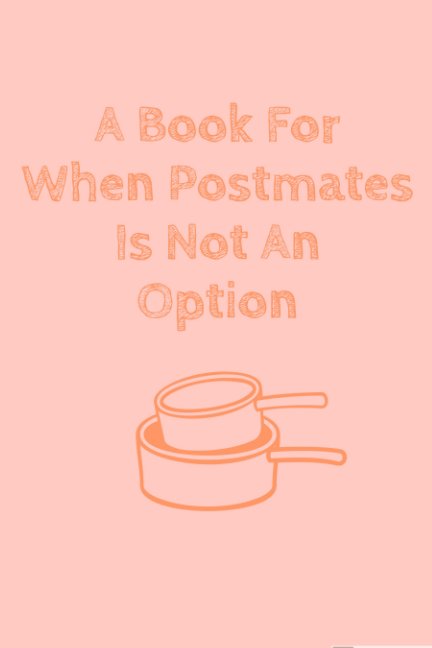
When the 70-page cookbook, entitled “A Book for When Postmates Is Not an Option,” was finished and posted online for sale, the response was another pleasant surprise. In a matter of weeks, she had sold well over 100 books and raised over $1,500 for GLIDE’s programs for individuals and families in dire need.

“Honestly, I was not expecting for people to love it so much,” says Ali. “When you are doing something in the moment, you’re thinking you are making something for a certain audience. But when friends share it with their networks, there is exponential reach.” 

Reflecting on her cookbook publication and fundraiser, Ali says, “the process has been fun and not a burden at all. We are all in the city together, we are all responsible for each other, and we are all supposed to be there for each other. I am making sure to be proactive.”

Cooking for a cause sound inspiring?

Ali’s tips for starting a fundraiser:

  1. Make it fun and exciting for you and the people that are going to be supporting you.  
  2. Make it community focused; get as many people involved as you can so that it’s a team effort, and there will be support for the final product.

While this is Ali’s first self-organized fundraiser, she sees now that when it comes to philanthropy, “young people need to take ownership.” She says this is especially true for teenagers.

“We are going to be adults soon enough, so the lesson that we are all supposed to be there for each other is vitally important.” ?

Ali seems to be at the forefront of a movement: Young people organizing fundraisers for GLIDE is trending! From holding virtual concerts to Instagram Live Yoga fundraisers, GLIDE’s youngest volunteers are stepping up and finding creative ways to contribute remotely during this physically distanced time. “A Book for When Postmates Is Not an Option” is available here.

While GLIDE hasn’t been able to host our in-person volunteer program during shelter-in-place, there are many ways to stay involved. If you have an idea for a fundraiser or donation drive of your own, please contact Lauren Bernstein, in GLIDE’s Fund Development department, at lbernstein@glide.org.

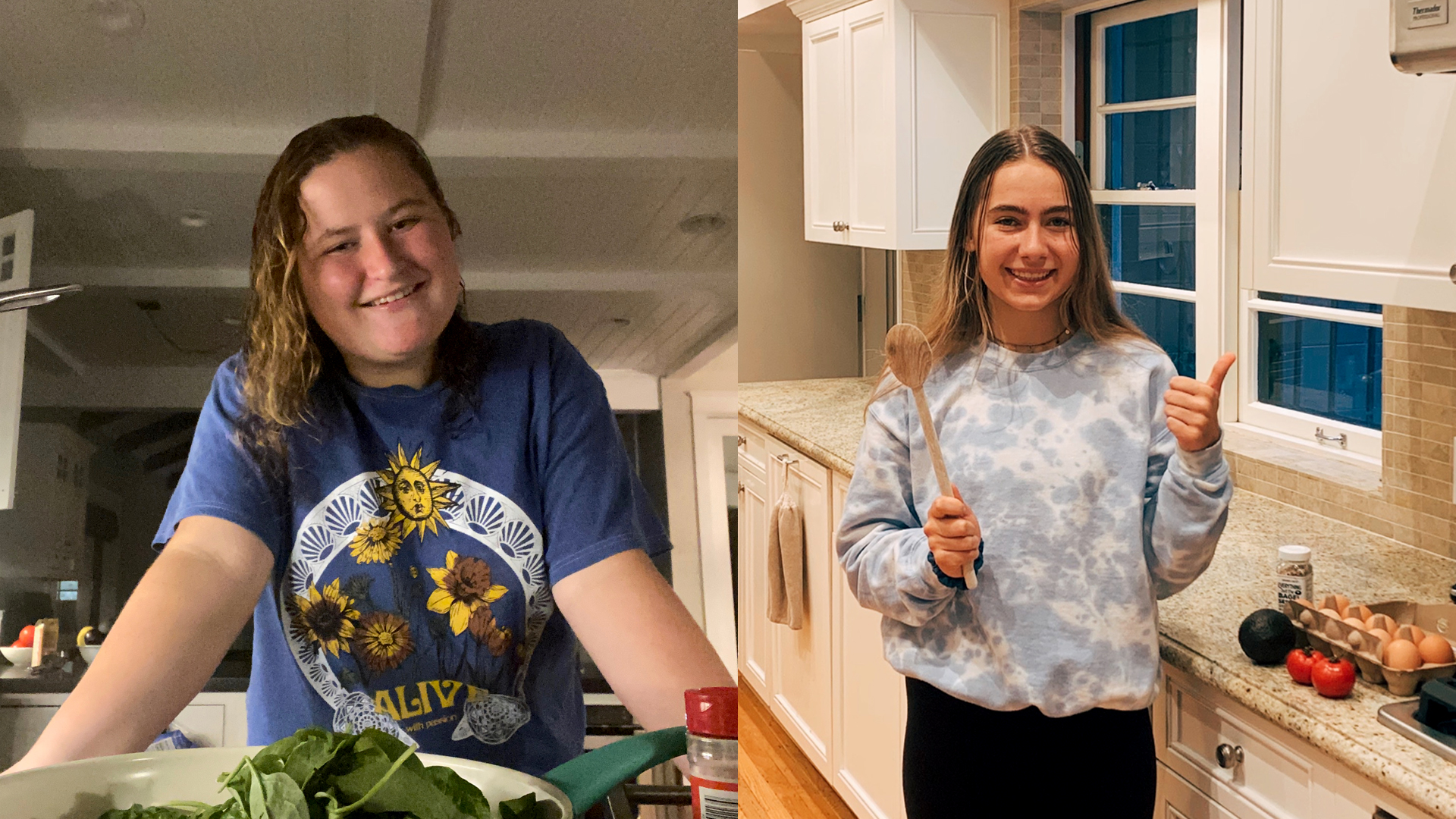
Banner image: Ali in the kitchen (left) and friend Natalie.

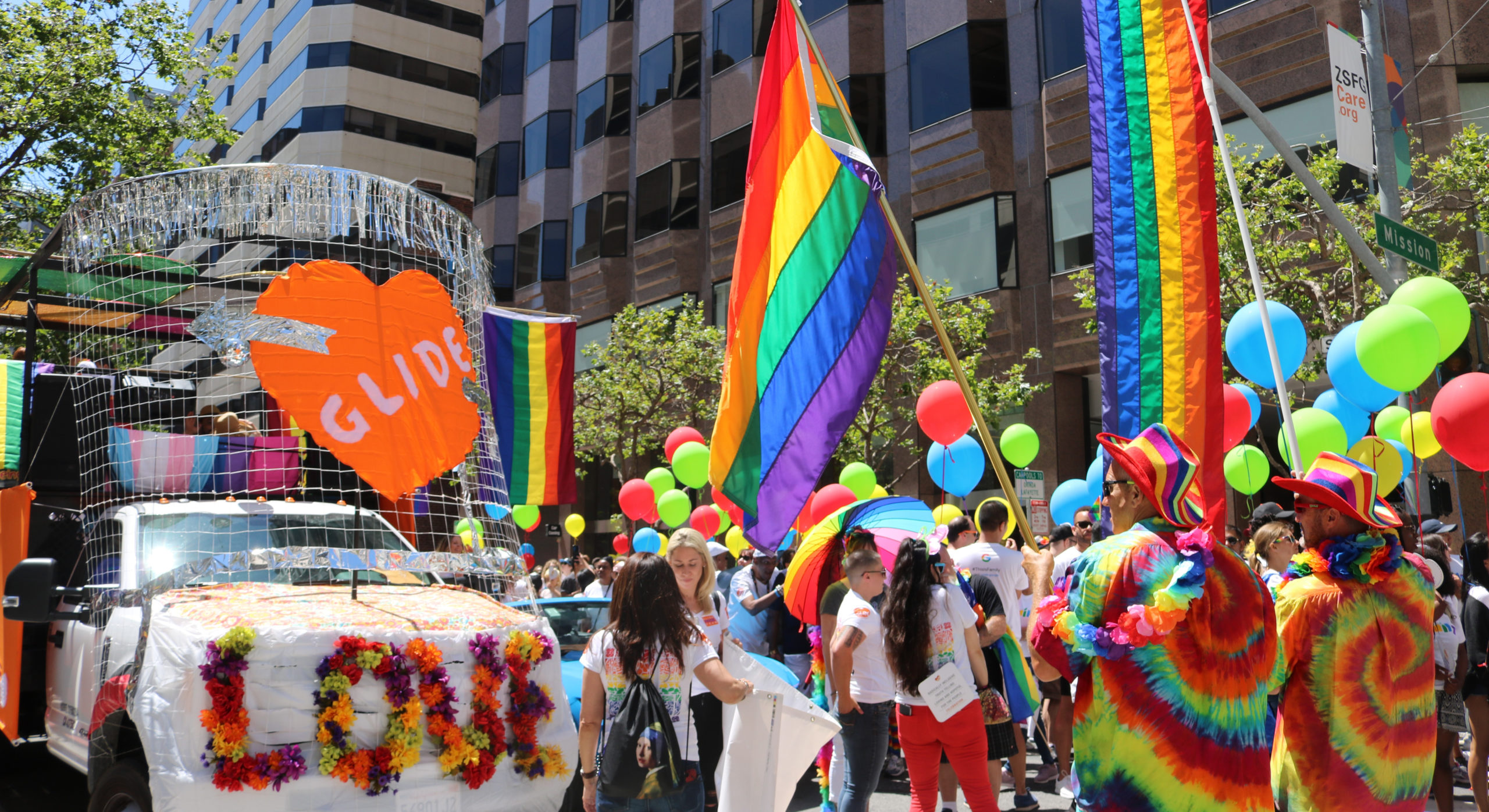
Amid the ongoing pandemic, the most profound social upheaval since the 1960s, we reflect on the origins of the LGBTQ liberation movement and GLIDE’s historical support of LGBTQ communities, including LGBTQ communities of color. Since the early 1960s, GLIDE has embraced the demand for and celebration of radical inclusivity.

GLIDE as a place for all people, whatever their experience or background or faith, goes back to 1963. In that year Reverend Cecil Williams joined a group of progressive pastors who together took an early stand for same sex couples, presiding over their weddings nearly four decades before the legalization of gay marriage in California.

At a time of intense criminalization of homosexuality, which included the practice of arrest and police violence leveled at LGBTQ communities, Rev. Williams and other GLIDE ministers were also among the founders of The Council on Religion and the Homosexual in 1964—along with the renowned LGBTQ rights pioneers and activists Del Martin and Phyllis Lyon. The San Francisco-based community organization joined LGBTQ activists and religious leaders in an effort to educate religious communities about gay and lesbian people and to speak out against homophobia and discrimination through inclusive, collective dialogue. It was the first organization in the U.S. to use “homosexual” as part of its name.


On January 1, 1965, the Council famously sponsored the Mardi Gras Ball at California Hall, to celebrate both the founding of the organization and the inclusivity it aimed to cultivate. Although the SFPD had issued a permit, the evening celebration was interrupted by a forceful police raid. The event would later become known as “San Francisco’s Stonewall.”

The following year, one of the first LGBTQ uprisings against police brutality took place in the heart of the Tenderloin, marking the beginning of the transgender liberation movement in San Francisco. The pivotal revolutionary act—among a group whose members included young people who had found a safe space and support at GLIDE—came to be known as the Compton’s Cafeteria Riot, which preceded by three years 1969’s famous Stonewall Riots in New York City. In her 2005 film, Screaming Queens: The Riot at Compton’s Cafeteria, filmmaker, author and professor Susan Stryker called the uprising, “the first known incident of collective militant queer resistance to police harassment in U.S. history.”

GLIDE’s commitment to the self-expression and liberation of each member of our community continues to this day. On August 26 of last year, the 53rd anniversary of the Compton’s Cafeteria Riot, GLIDE held a Reflection and Reconciliation Session in which leadership from the San Francisco Police Department (SFPD) listened to the lived experience of LGBTQ residents and formally apologized for a history of violence and injustice against the community. The community conversation was facilitated by GLIDE’s Minister of Celebration, Marvin K. White; Pastor Megan Rohrer, a trailblazing transgender Lutheran pastor and SFPD chaplain; and Commander Teresa Ewins, the highest-ranking member of the LGTBQ community in SFPD. Reconciliation is a road we’re still on, and one that requires real structural change. Meanwhile the hopes, needs and critiques that were courageously shared at the gathering were only the first in a planned series of ongoing listening sessions.

While we are a long way from justice and reconciliation, particularly for LGBTQ folks at the intersections of racial and economic injustice, vital victories continue to be won in the struggle for love and equality as the basis for a better world. In our second PRIDE Month during the struggle of the COVID-19 pandemic, we must remember to celebrate our victories — particularly the decisive 6-3 vote that came in June 2020, when the Supreme Court ruled that the section of the Civil Rights Act of 1964 that forbids discrimination in employment based on race, religion, national origin or sex extends to protections for gay and transgender people.

Even with this historic step forward, one which makes a profound difference in the lives of millions of people, it is still legal under federal law for landlords, stores, restaurants and hotels to discriminate against LGBTQ people.

We proudly celebrate the steps toward the better world we have fought for together with unconditional love and solidarity, and we also recognize that there is more to be done. The struggle continues. But this year’s Pride celebrations, both online and in the street, send the message loud-and-clear: The time for radical inclusivity is now!

By Erin Gaede

GLIDE’s Family, Youth and Childcare Center staff support families through exceptionally challenging times

Despite needing to temporarily pause all on-site programming, GLIDE’s Family Youth and Childcare Center (FYCC) has been busy supporting its families in ways tailored to the particular challenges—and increasing need—brought on by the COVID-19 crisis. From the first days of the shelter-in-place order, FYCC staff members mobilized to distribute food and other basic necessities from FYCC’s lobby door on Ellis Street, working tirelessly to provide vulnerable families and children in the Tenderloin with the support they desperately need.

“It was pouring rain on the first day of food distribution,” recalls FYCC Director Lanie Igtanloc of that afternoon in March. “I didn’t expect many families to come but, to my surprise, the parents were lined up.

“Despite the rain, you could see the tears and stress in their expressions,” she continues. “Many of them told me that they didn’t have the money to buy enough food or stock up on essentials. I just kept telling everyone the same thing, ‘We are here for you. We will continue to be here for you.’”

The coronavirus pandemic has given us all a new awareness of the landscape of limited choices. But for those whose choices were already highly restricted—low-income families whose lives were never safe or easy—the reality of this pandemic is starkly different. Navigating the structural disadvantages and restricted-access resources has only become more complex for people like FYCC’s hard-working but very-low-income parents, and the consequences of not succeeding have never been more dire. That’s why FYCC’s devoted staff have been stepping up.

Over 400 families are enrolled in FYCC. Before the arrival of the coronavirus, a typical weekday included afterschool programing for youth in grades K-5, a Family Resource Center offering parenting workshops and family case management, as well as licensed childcare and early education services for children 18 months to 5 years old. There were constantly family events and field trips happening simultaneously.

But in the last three months, the building has become unusually still, no longer animated by the joy and laughter of children or the multilingual conversations with parents picking up their kids or consulting with a teacher. Instead, all of this activity has had to adapt to the new circumstances brought on by pandemic.

“The building is typically so lively,” notes Anthony, the FYCC Building Coordinator. “As soon as you stepped inside, the space was alive with all the teachers and parents coming and going. Now it is quiet,” he says. “The silence stands out.”

Despite the silence on-site, Anthony and his colleagues have remained busy.

Many of the families who live in the Tenderloin, including many FYCC families, had jobs in the hospitality and service industries, and so were among the first to be out of work as the pandemic forced a general lockdown in the Bay Area.

Since the start of the pandemic in March, Anthony has been overseeing the emergency food distribution program at FYCC. “I have years of experience with operations,” he explains. “But I had no idea how food distribution works. I just knew I had to jump in. We weren’t going to let any of our families go hungry.”

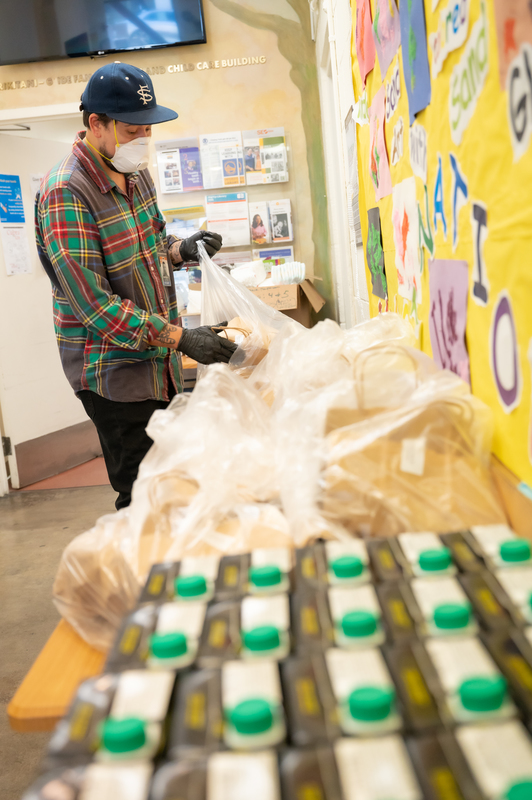
With the help of supporters like Project Isaiah and Gate Gourmet, First Five, GLIDE’s Daily Free Meals team, and generous donations from across our community, FYCC is able to distribute meals and critical supplies to families in the Tenderloin three days a week.

“We have been collecting feedback from parents on what to include in the distribution, to get a sense of what they really need,” Anthony explains. “The focus is on pantry items and dry goods, considering we don’t know how long this pandemic will go on.”

In the quest for creative solutions to the growing need, FYCC’s teachers have also started a series of online cooking classes, showing families how to prepare nutritious meals with the groceries they pick up at FYCC. Each bag includes a recipe tailored to the ingredients distributed that week and designed to ensure families get the nutrition they need despite the limited options available to unemployed parents.

Anthony makes care packages for distribution to families.

Helping families navigate resources and meet immediate needs

With many millions of Americans filing unemployment claims as a result of the COVID-19 crisis, more and more people are experiencing firsthand just how impersonal, invasive and confusing the process of receiving benefits can be.

“For the first two weeks, most the of the questions were about rent,” says Lanie. “We were overwhelmed with helping parents figure out how to apply for unemployment and navigate where to find financial resources.”

Of course, the pandemic also closed schools and daycares. And given the risk of contagion, support networks have become more limited. The stress of being unemployed in an increasingly precarious economy is compounded by having the children home all day, often in small, cramped spaces. And while the burdens of COVID-19 continue to mount for low-income families, immigrant families are facing a unique range of barriers.

“When school districts first started giving out meals, they required parents to bring a child and identification,” Lanie explains. “Many families were coming to FYCC for support because we don’t ask about their immigration status.” While the Unified School District eventually stopped asking for IDs, the trust established between the frontline staff at FYCC and families has proven to be essential in combatting the deepening inequality caused by the pandemic.

Beyond immediate needs

Selina is the Afterschool Program Manager and has worked at FYCC for over 11 years.

“I have known many of these families for years,” she says with affection in her voice. “They are basically an extension of my own family.”

FYCC teachers prioritize family engagement as part of a child’s education. Integral to the reinvention of afterschool online programming was the engagement of not only children, but their parents too. Through virtual platforms like Zoom and ClassDojo, parents and children bond in Baby and Me classes, read books together, and participate in science experiments and children’s homework assignments.

Technology poses an additional challenge to remote learning for low-income families. Many don’t have internet access or laptops. In an attempt to bridge the digital divide, FYCC staff are collaborating with the Unified School District as well as GLIDE’s Fund Development team to provide one laptop or tablet per family.

This online programming has proved especially important for immigrant families who relied on afterschool programs to help their children learn English. These online platforms are opening up new avenues for parents who previously were unable to participate in their children’s studies.

“Our entire staff speaks Spanish,” notes Selina, “but now the variety of linguistic options on these virtual platforms allow the families who speak Arabic and other languages to interact in ways they may not have felt comfortable with before.”

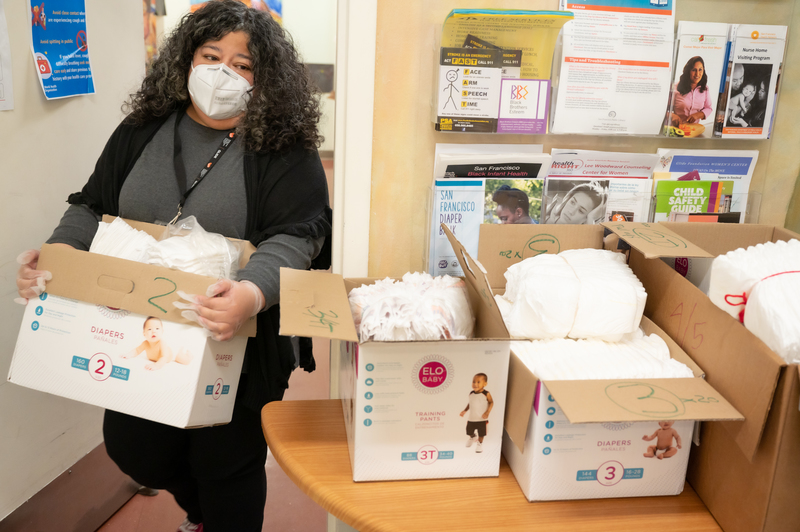
Theresa stocking up on necessities for young families.

In this together

As the shelter-in-place continues, FYCC staff members continue to improvise, expanding the range of available resources for the community, building up their inventory of everything from baby formula, feminine products, toilet paper and diapers to cleaning products, deodorant, information on dental resources, and ever more activities for the children—including books and art supplies.

The lift is a heavy one because the need is great.

“It often feels like we are walking a fine line of trying to provide everything but knowing we can’t,” admits Anthony with audible exhaustion. “We are doing the best we can to provide the resources most needed.”

As FYCC’s director, Lanie understands that her staff have much to deal with in their own lives, even as they devote themselves wholeheartedly to FYCC’s families.

“Many FYCC staff are in their 60s,” Lanie explains. “Most are living in the East Bay with long commutes with families of their own at home.”

“Not only are we fighting to advocate for low-income families in the Tenderloin, but we are trying not to become overwhelmed ourselves,” she says. “Each day requires motivation.”

She adds with pride, “The fact that my staff overcomes all the fear and all the obstacles for the sake of the welfare of families here at FYCC shows you the true power of community.”

By Erin Gaede

A message from GLIDE’s President and CEO


Dear Friends,

As the nation continues to demand change in the wake of the killings of George Floyd, Breonna Taylor and the countless other Black men and women whose lives have been cut short at the hands of police, GLIDE remains steadfast in our commitment to social and racial justice in all we do.

For nearly 60 years, GLIDE has been a leading social justice organization on the front lines fighting racism and promoting equality, radical inclusion, and unconditional love. Our work has taken many forms, from serving people on the streets and lifting people out of poverty and suffering, to protesting, advocating for policy solutions that change systems, and bringing hope, healing and inspiration with our legendary Sunday Celebrations.

At this critical moment, GLIDE reaffirms our commitment to Black, Brown, LGBTQIA, homeless, immigrant, and socially and economically marginalized individuals and families. Our staff makes this commitment every day in our programs, services, advocacy, community organizing and leadership.

  • Serving over 75% people of color, GLIDE’s services stabilize and lift up individuals and families struggling with the effects of systemic racism. Our integrated services include meals, harm reduction services, childcare, women and family services, case management, violence intervention, and housing resources.
  • GLIDE’s Center for Social Justice drives systemic change to overcome racism and inequity. In addition to shifting consciousness on racism and bridging the empathy gap, we lead advocacy and shape policy solutions to address homelessness, criminal justice reform, poverty, drug policy and the express needs of women and children of color.
  • GLIDE’s law enforcement training program interrupts patterns of discrimination and brutality. Rooted in empathy and service, it brings together police, district attorneys and other law enforcement professionals from around the country to come face-to-face, in service and dialogue, with people impacted by racism, homelessness, drug use disorders and more. Hosted in the Tenderloin, the program changes the perspectives of law enforcement officers and interrupts patterns of police brutality and discriminatory policing in communities of color.
  • GLIDE’s Racial Justice Pilgrimage Project promotes truth, justice and reconciliation, rooting participants in a deep understanding of our nation’s history of racism and its modern day persistence. With the aim of making progress against systemic racial violence and inequities, the journey begins with a deep examination of the history of racial oppression in the United States. Facilitated by GLIDE’s in-house racial and social justice experts, the project includes workshops, seminars and readings on the history of race and injustice. The program culminates with a group trip to Montgomery, Alabama, the heart of the Civil Rights Movement.
  • In partnership with UCSF, GLIDE is finding new ways to address systemic racial and economic inequities in health care. GLIDE is leading a group of senior healthcare leaders from UCSF through the Racial Justice Pilgrimage Project and ongoing trainings. In the coming year, 160 first-year UCSF medical students will make multiple visits to GLIDE as part of an experiential learning program. GLIDE and UCSF are also partnering to spur local government officials and the Department of Public Health to address systemic health inequities in San Francisco.
  • Leading social impact in the business sector. GLIDE is broadening our racial justice and empathy work to include transformative experiences for corporate leaders and their staffs. Similar to our work with healthcare leaders, GLIDE addresses inequities and empathy gaps in the corporate world through targeted trainings to top-level executives, as well as experiential work tied to GLIDE’s extensive volunteer opportunities on-site in the Tenderloin.

Whether in the daily work of our comprehensive services to the poor and marginalized or in our innovative trainings and public advocacy, GLIDE’s goal is to deepen understanding and empathy while increasing activism to address systemic injustices and policy reform.

We are right now in a defining moment for our country, in which the long struggle for racial equality is once again front and center in the nation’s consciousness and conscience. GLIDE remains committed, and we thank you for your continued support of our work.
 

In solidarity,

Karen Hanrahan
President & CEO

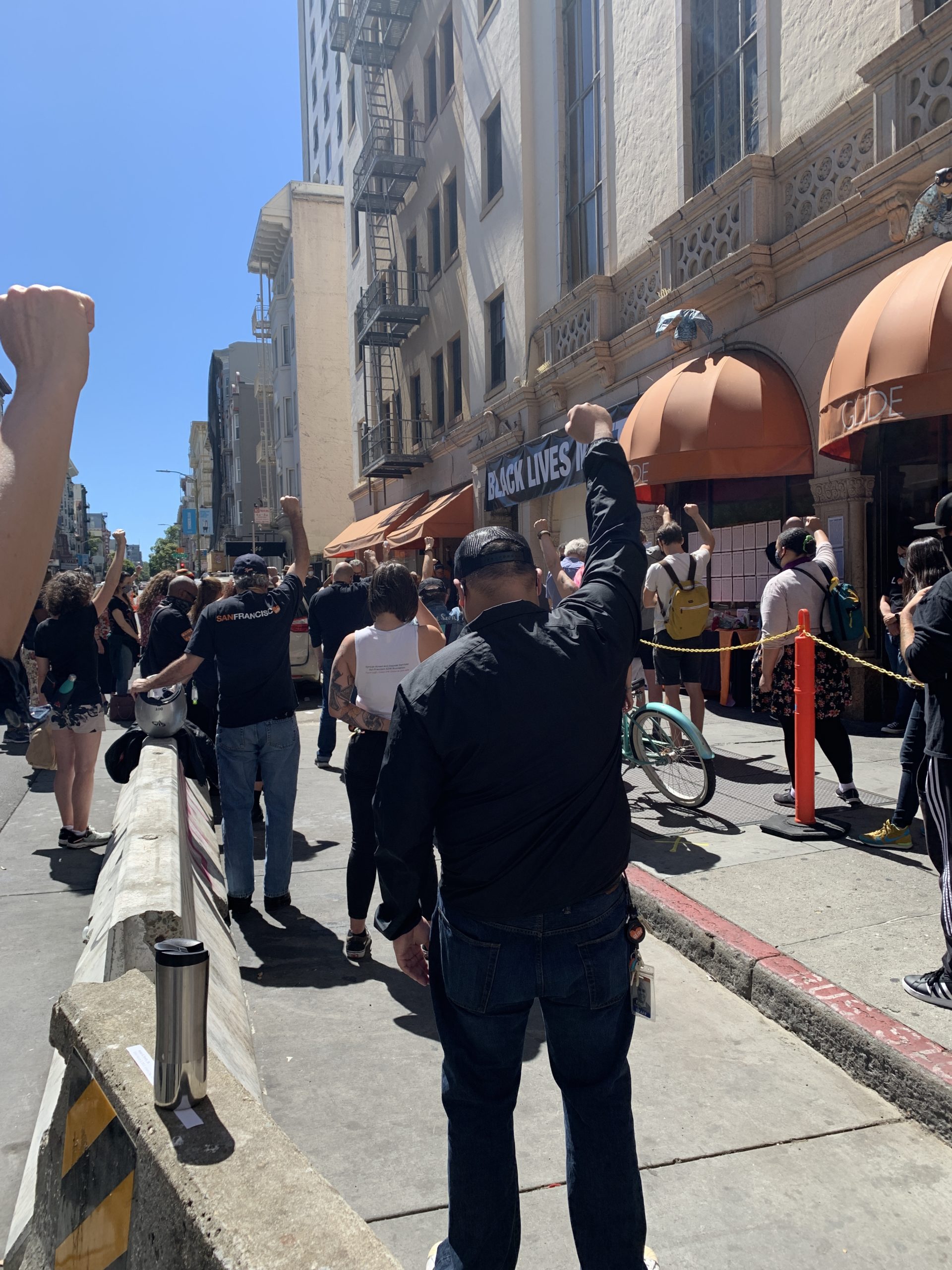
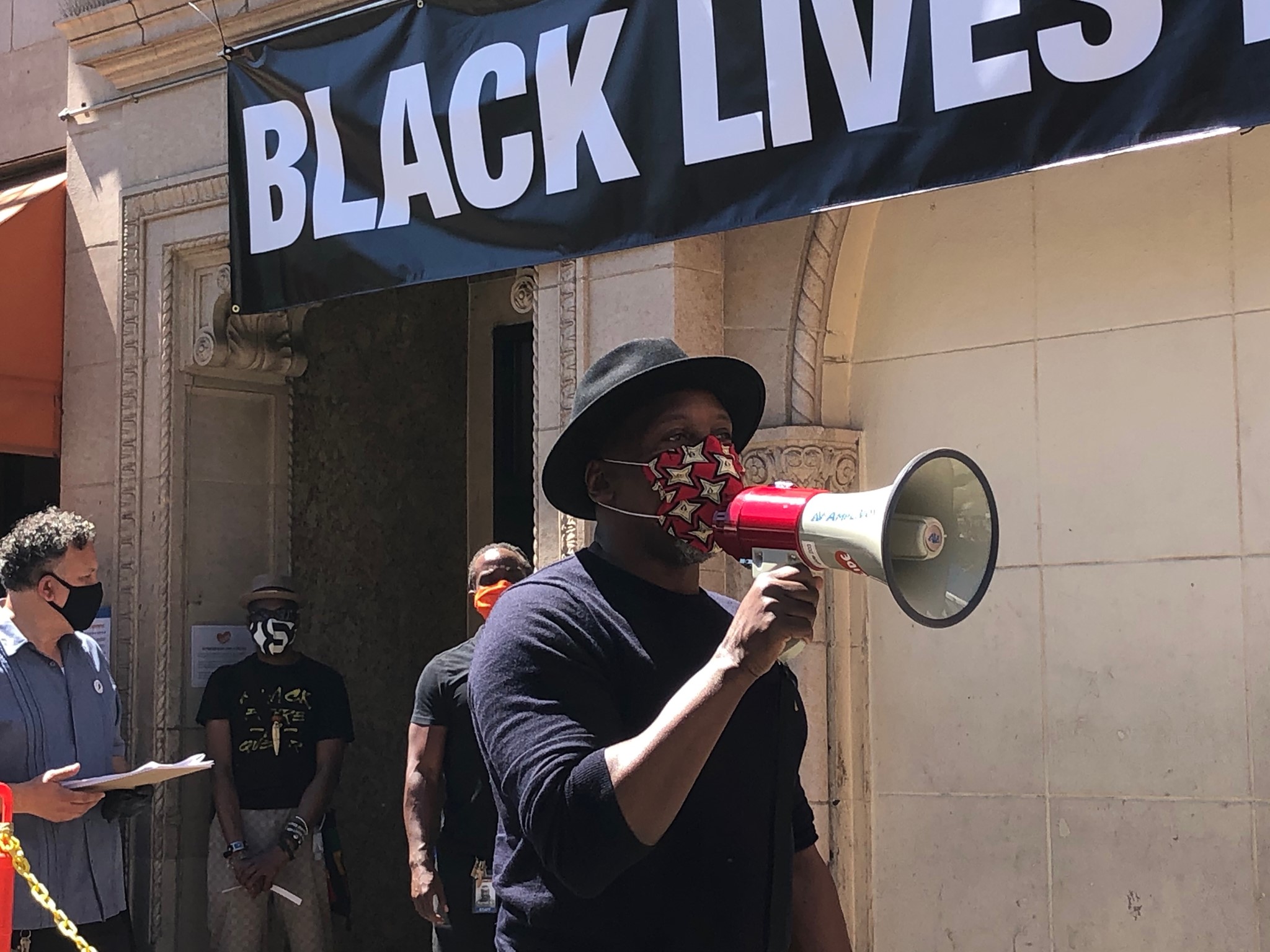
Minister Marvin K. White addressed GLIDE Staff at a vigil for Black lives lost to state and state-backed violence on June 9, 2020.

My job today is to remind you that the actions you take now and next are necessary. Because through your actions, you affirm that freedom is the goal and aim of this uprising. Yes, we are fighting for justice in the death of Ahmaud Arbery, George Floyd, Breonna Taylor, Tony McDade and Countless Named and Unnamed Black People Killed at the hands of the state and state actors but my job is to remind you that after justice, comes peace. And “after justice, comes peace” is a scientific and universal law right up there with Archimedes’ Principle of Buoyancy, Hooke’s Law of Elasticity, Bernoulli’s Law of Fluid Dynamics (Bernoulli’s Principle), Dalton’s Law of Partial Pressures and Fourier’s Law of Heat Conduction.

After justice, comes peace. Or out of the mouth of protestors, “No Justice, No Peace.” It’s not a threat, it’s holding Peace as the aim. It’s holding Peace as the truth! And peace is what we are fighting through the justice to get to and return to. And we’re close! How do I know? Because White Supremacy and Oppression rears its ugly head like a bully daring us to cross the bodies of murdered black people to get to Peace every time. And look at us, and look at y’all, standing up to police brutality, standing down racism, standing up to silence, and standing down white fragility. We close to Peace. Because Justice in the air.

And we do the many named and unnamed Black people, killed by the police, no favors, if we don’t move into the Peace that they were headed towards for over 400 years now! And Peace, across Faith, across Race, across Gender, across Sexuality, across Class, does not die with us. Death raises the possibility of Peace even more. Keep fighting for Peace.

No Justice…

No Peace…

No Justice…

No Peace…

No Justice…

No Peace…

No Justice…

No Peace…

No Justice…

No Peace…

https://www.youtube.com/watch?v=sEuxVoB6wOE

A letter to our community

Dear friends,

The pain of this last week is longstanding and deep within our community.

The unrest is the unrest of those who cannot rest.

None of us can rest until this murder and the long, long line of crimes against black and brown people move from being the inevitable to being the impossible in our country.

In the grief we feel for the loss of George Floyd—the incalculable value of his precious life—we hold, too, a profound grief for all the people of color, all the men and women, all the queer, trans and gender-non-conforming people who have had that knee on their neck unto death, too.

With a prescience that shakes us with sorrow and resolve all these many years later, Rev. Martin Luther King, Jr. warned, “As long as America postpones justice, we stand in the position of having these recurrences of violence and riots over and over again.”

We urge peace. And we know that the only basis for peace is justice.

We stand with the millions of people in this country, and around the world, in demanding justice—but with a special determination to act right here, right now in our own communities.

We must not let our humanity and all of our moral and practical energies stray from these facts (and many other terrible facts like them) about the conditions forced on our African American brothers and sisters:

— African Americans make up 5% of San Francisco’s population, yet represent 37% of those in our community experiencing homelessness.

— Nationally, African Americans are three times more likely to die from COVID19 than white Americans.

— African American imprisonment rate in the US is more than five times the rate among whites, and the rate at which they are shot and killed by police is more than twice as high as the rate for white Americans.

— Black women are three to four times more likely to die from pregnancy-related causes than white women, and twice as likely to die as women of other races.

— The 10 counties with the highest food insecurity rates in the nation are at least 60% African American.

The pain people are expressing in mass protests, the overwhelming majority of whom come together to express themselves in a peaceful and nonviolent way, is not new. The pain comes from centuries of systemic violence and police brutality against Black people.

GLIDE’s daily work and mission are focused on caring for, and walking with, those brutalized, traumatized, pushed out, or pushed to the ground by an unequal and unjust system.

We continue to strive toward a racial and social reality that embraces life, by truly loving and respecting each living soul.

There can be no rest and no peace without love, without justice.

Let us all recommit to seeing, again, in those who have been told otherwise, the remarkable and beautiful people they are. Let us say it again. Black Lives Matter. So that we might live fully and meaningfully in this supremely challenging time.

With love and solidarity,

Karen Hanrahan

President & CEO, GLIDE

A lifeline in a landscape stalked by poverty and the coronavirus

As most of San Francisco remains at a relative standstill to slow the spread of the coronavirus, GLIDE Harm Reduction Case Manager Felanie Castro is behind the wheel, crisscrossing the city seven hours a day.

Piloting GLIDE’s community outreach van, and accompanied by a rotating roster of GLIDE health systems navigators and other Harm Reduction staff (Rita Bagnulo, Ali Lazarus, Jason Norelli, Amy Rodriguez, Amber Sheldon, Mike Thompson), Felanie makes between 20 and 35 stops a day, supporting unhoused San Franciscans for whom social isolation and resource scarcity have only deepened in the context of the current public health emergency.

“Everybody I’m seeing is getting a meal and water, and if they have any SAS [Syringe Access Services] needs, they’re getting that,” explains Felanie during a recent phone conversation.

“I’m also screening people—asking them if they’re having a new cough, experiencing a fever, having shortness of breath. I have a non-contact thermometer that DPH [San Francisco Department of Public Health] gave me. And I’m passing out tents. I think I’ve passed out over 400 tents since the 25th of March. I’m passing out hand sanitizer and hygiene kits. Masks when I get them.”

In practice, mobile outreach is nothing new to Felanie and her Harm Reduction colleagues. GLIDE introduced its customized community outreach van—complete with a phlebotomy chair and other equipment for on-site testing—last year as part of a new program called OPT-IN.

OPT-IN, part of a five-year grant operated in partnership with DPH, is designed to further the reach of GLIDE’s Harm Reduction program in serving the most marginalized populations across San Francisco with successful health interventions for addressing the HIV and Hep C epidemics and other harms among the city’s unhoused residents.

But in the context of a global pandemic—and the necessary scaling back or shuttering of restaurants and most other businesses, all in-person cultural events and many city services—priorities have shifted. More than ever, Felanie and crew act as a literal lifeline to people living an increasingly precarious existence in makeshift encampments and enclaves that fan out from the city center—from SoMa and the Mission to Excelsior, Potrero Hill, Bayshore, Bayview Hunters Point, all the way to the far side of Candlestick Park and beyond to the water’s edge.

“I’ve seen over 2,400 people since the end of March. Distributed over 2,000 meals,” recounts Felanie.

“There are 10 to 15 locations a day that I visit all the time. I’ve been to certain places where they’re saying, ‘Thank you, because you’re the only person coming out here. You’re the only person to ever come out here. And you’re repeatedly coming out here.’”

“The distribution of water and hygiene kits is a critical intervention to prevent disease transmission among persons with no access to running water, such as in the Warehouse district,” adds Harm Reduction Program Manager Daniela Wotke.

In addition to basic necessities and harm reduction services, information has been another valuable offering to help guard the health of people living unhoused.

“I’ve been passing out some literature, too. Little half-page booklets. Dispelling some of the myths that they have,” says Felanie of the people living outside.

“It’s still abstract for a lot of people who are already kind of remote. I’m also giving them the information about MSC South. There are a lot of people who tested positive at MSC South. There are probably people who are positive who were at MSC South and who are out in the community. So physical distancing and having a mask are really things to pay attention to.

“I’m really good with boundaries,” continues Felanie. “I’m wearing my mask; I ask people to keep their distance. So, I lead by example in that respect. Different pockets have different levels of anxiety and stress over this—all coupled with their stress about, ‘Hey, how am I going to get food and water, and basic things to clean myself with, if you don’t come out?’”

To date, no one Felanie has screened for symptoms presented signs that would necessitate further evaluation at SF General. “I haven’t had anybody yet,” notes Felanie, “and I’ve screened maybe 350 people.”

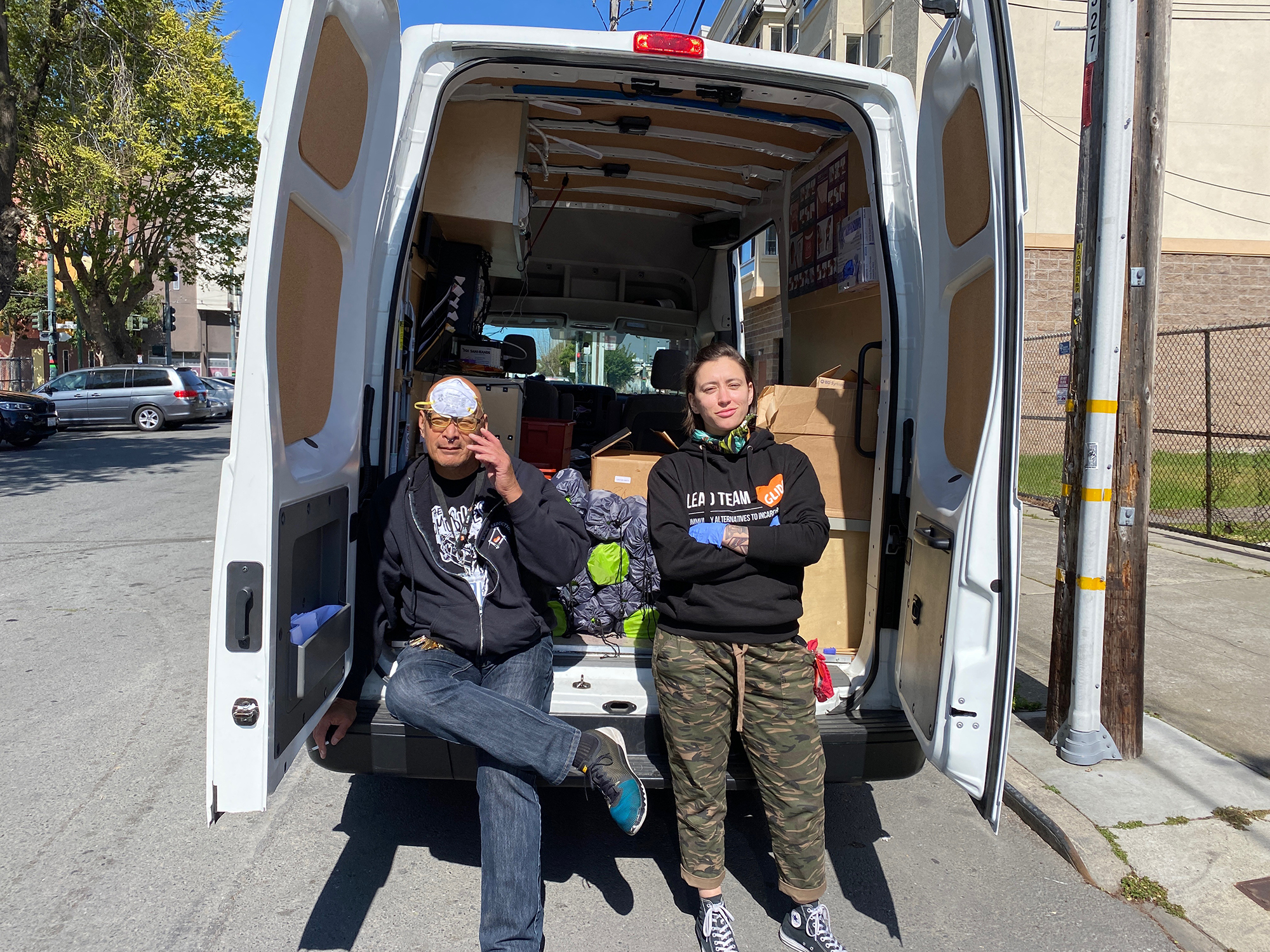
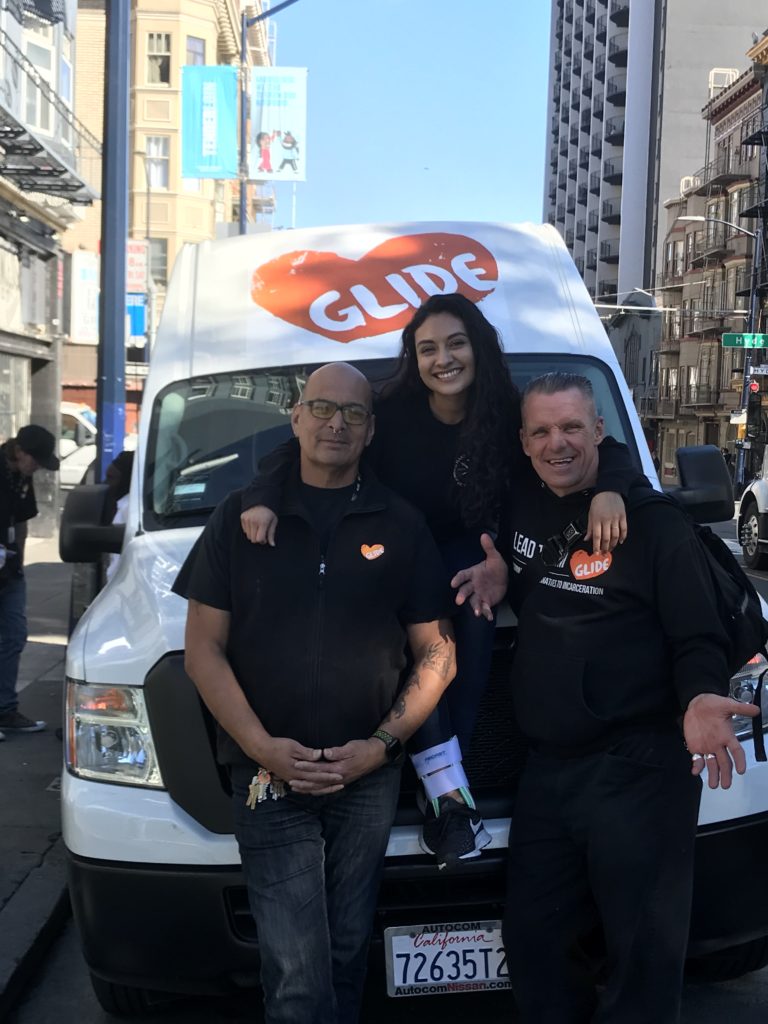
GLIDE Harm Reduction team members Felanie, Amy and Jason with the OPT-IN van on February 6, 2020. (photo: Rob Avila)

Fortunately, regular services like the ones offered from the OPT-IN van, including the basics of food and water and modest shelter, mean many unhoused city residents have the ability to shelter where they are without having to risk venturing into the more congested centers of town.

And, as Felanie makes clear, the outreach is a community effort:

In addition to logistical support from DPH, and the regular SAS outreach conducted by San Francisco AIDS Foundation (another member of the OPT-IN program), GLIDE’s OPT-IN team relies on a network of allies for sourcing such critical supplies as tents (Coalition on Homelessness), hand sanitizer (via homeless rights activist Christin Evans), meals (GLIDE’s Daily Free Meals team, with donations from Gate Gourmet and others), hygiene kits (The Sisters of Perpetual Indulgence), and masks (some homemade ones, some from a local drive instigated by District 6 Supervisor Matt Haney, to which many generous individuals contributed).

For now, the OPT-IN mobile outreach remains a vital and, for many, a unique line of support as unhoused people across the city weather a season of increased deprivation, uncertainty and risk.

“When you talk about Market Street all the way to the water on the East side, I can’t think of a street that I have not been on,” says Felanie. “There was one or two days when I was between Bayshore and the water all day. I put 50 miles on the van, just in that area. That’s going every single block.”