
matt haney, sacramento, 2024

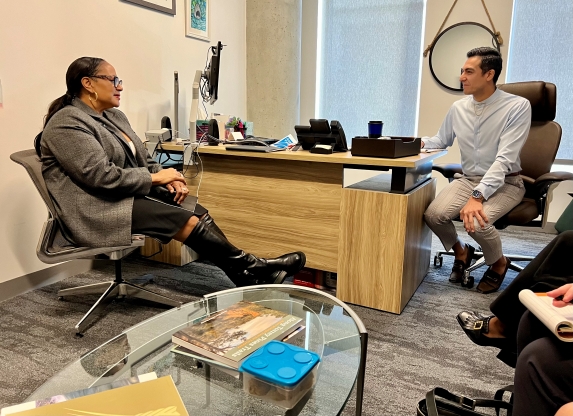
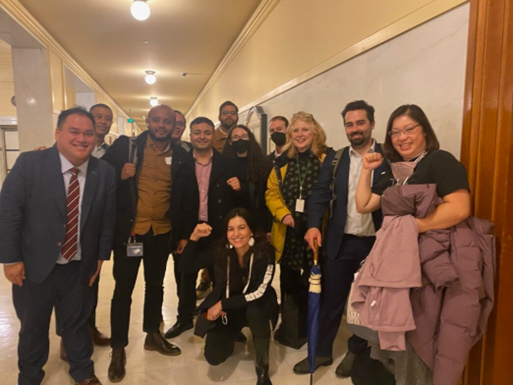
(From L to R: GLIDE Chief Communications and Public Affairs Officer Karl Robillard, Naeemah Charles, GLIDE Senior Director of The Center for Social Justice (CSJ), GLIDE President & CEO Dr. Gina Fromer, Assemblymember Matt Haney, GLIDE Senior Director of Public Affairs, Francesca Delgado-Jones, and GLIDE CSJ Policy Manager Eleana Binder.)
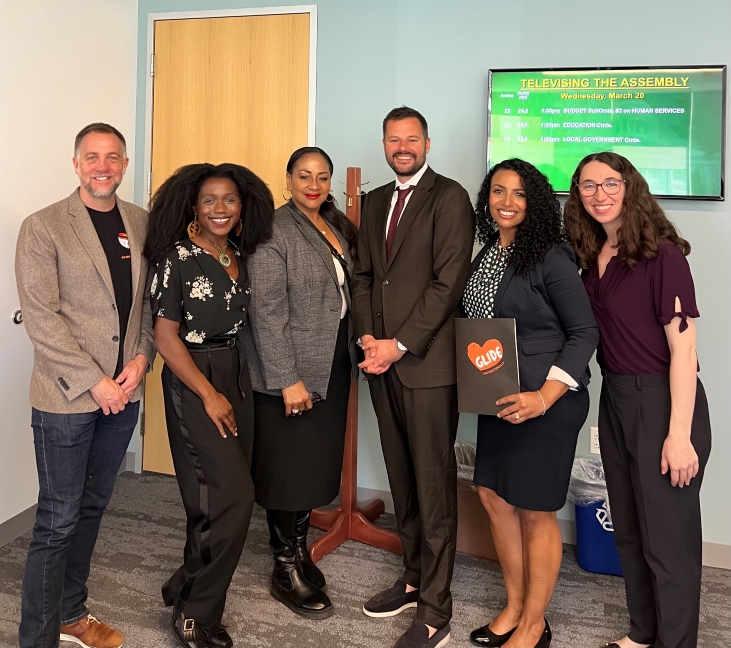
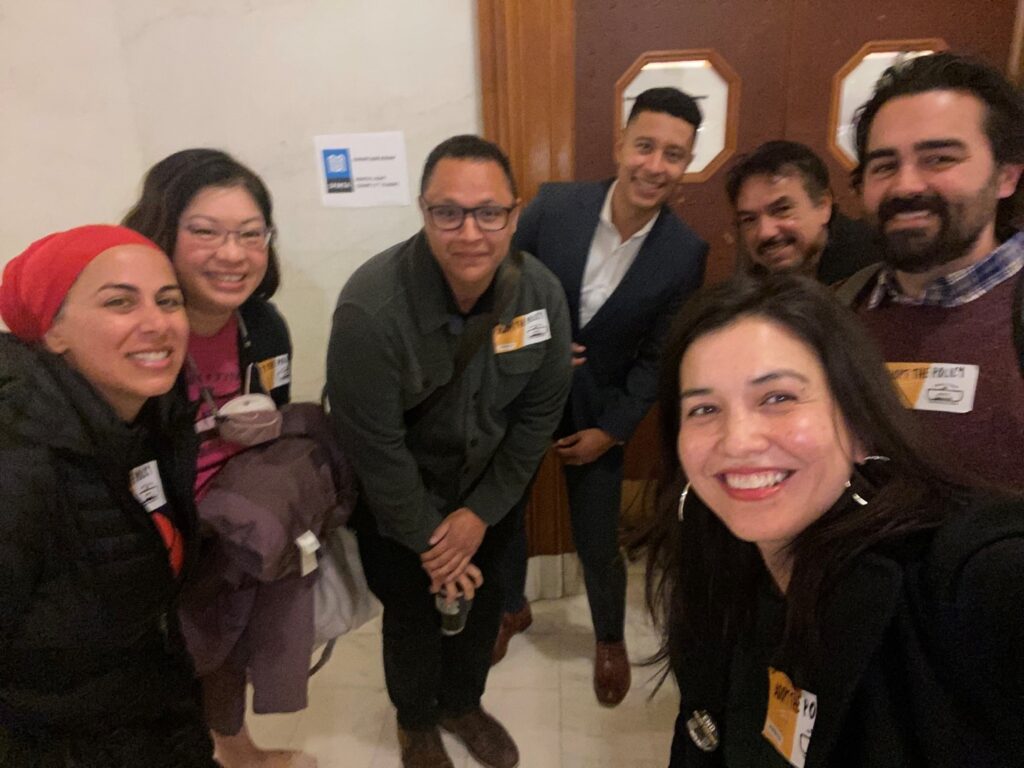
A small but mighty team at GLIDE wrapped up an exciting trip to Sacramento this week. We met with key legislative partners to advance our social justice policy agenda and share progress on our #GlideForward strategic plan.

At the highest level, GLIDE’s mission is to break cycles of poverty and marginalization by fighting systemic injustice, creating pathways out of poverty, and transforming lives. We saw this trip as a way to translate this ideal into concrete steps to improve lives for some of the most vulnerable people in our State.

Led by our president and CEO, Dr. Gina Fromer, we convened a group of leaders from our Center for Social Justice and Public Affairs teams to get the message out about GLIDE’s love agenda. Together, we walked the halls of the Capital to share the work we do with leaders from across the State on behalf of the people of the Tenderloin and San Francisco.
During the visit, we discussed a number of different bills passing through the State legislature that focus on nutrition services for seniors, transitional housing for LGBTQ+ youth, and a new bill that would allow marginally housed students the right to live in their cars on campuses.

We met with Assemblymember Matt Haney as well as staff from the Office of Lieutenant Governor Eleni Kounalakis, Assembly Budget Chair Jesse Gabriel and Assembly Members Mike Gipson, Tasha Boerner, and Mia Bonta.

GLIDE President & CEO Dr. Gina Fromer meets with Edwin Borbon, Legislative Director for Assemblymember Tasha Boerner

We also shared GLIDE’s key strategic priorities for the next year. These include the opening of our Women’s Center and mental health hub; modernizing our facilities; expanding our mobile services; envisioning a future where we house GLIDE clients; deepening our work to address substance use disorder; and formalizing a workforce development program to prevent recidivism. 

With the words of our Co-Founder Cecil Williams echoing in our hearts, “It’s always about the people,” we made the case that the voices of the most marginalized have a place in the halls of the Capital.

We left inspired by the people we met and eager to work together towards a more just and equitable world.

#GLIDEForward

GLIDE staff meets with a member of California Assemblyman Rob Bonta’s team.

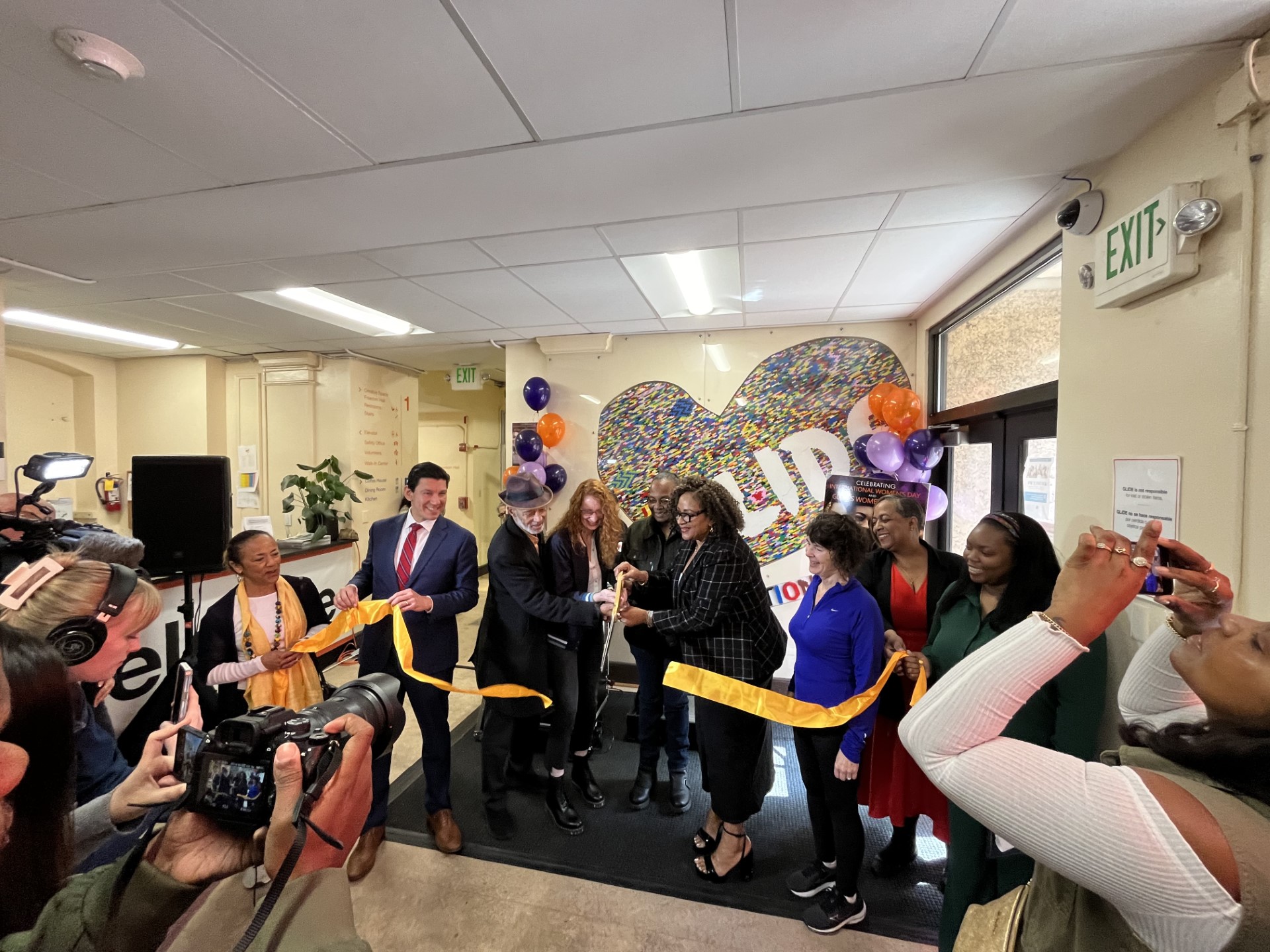
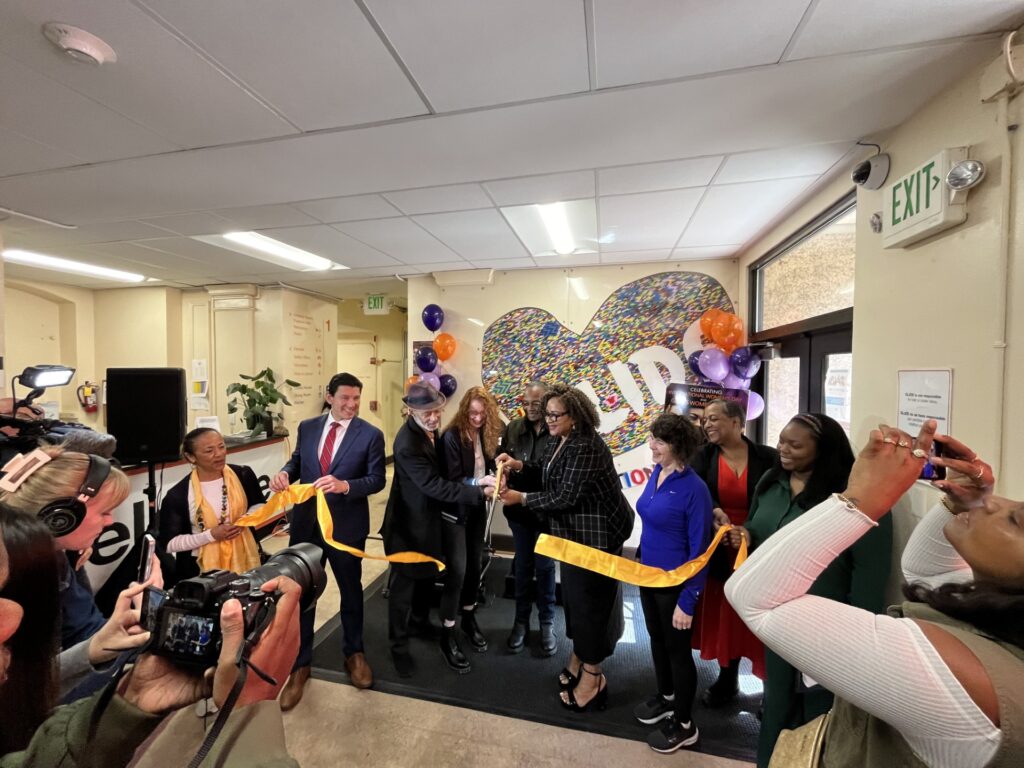
Cutting the ribbon  (From L to R) with San Francisco Assessor-Recorder Joaquin Torres (wearing red tie), GLIDE Board members Del Seymour and Mary Glide, Violence Intervention Programs Manager Saundra Haggerty, GLIDE President & CEO Dr. Gina Fromer, Board Member Crickette Brown Glad (in blue), Co-Executive Director of Black Women Revolt Pamela Tate-Roger, and Women’s Center staff member Terrie Kendrix.

Our hearts were filled with joy as we celebrated the official launch of GLIDE’s new Women’s Center on International Women’s Day! Check out the story on KTVU here.

“Jan’s legacy is here and now,” said our President and CEO, Dr. Gina Fromer. “Janice Mirikitani had a vision and we are bringing it full circle. Our new Women’s Center will serve as a dedicated resource and safety net for women who are experiencing hardship and putting them on the road to recovery, and we’re going to love up on you like GLIDE does.”

The Women’s Center services include case management, domestic violence counseling, outreach, food, clothing, housing assistance, and referrals to other community resources. These services support underserved women in their journey toward stability. The Women’s Center hosts drop-in hours and regular updates so please check back frequently.

womens center inside launch officeInside GLIDE’s new Women’s Center

GLIDE is also thrilled to announce an expansion of mental health services with the unveiling of the new Women’s Center.

“We have a dire shortage of mental health services across the Tenderloin and GLIDE will help women, in particular, struggling with their own mental health needs,” said Tami Minix, GLIDE’s new Senior Director of Clinical Services & Programs.

GLIDE’s Violence Intervention Programs and Women’s Center Manager Saundra Haggerty, was instrumental in the launch of the new Women’s Center. Saundra acknowledged, “We’re recognizing Janice’s efforts in securing women’s rights and ensuring they are accounted for. If you have friends who need support, let them know they have a place to come.”

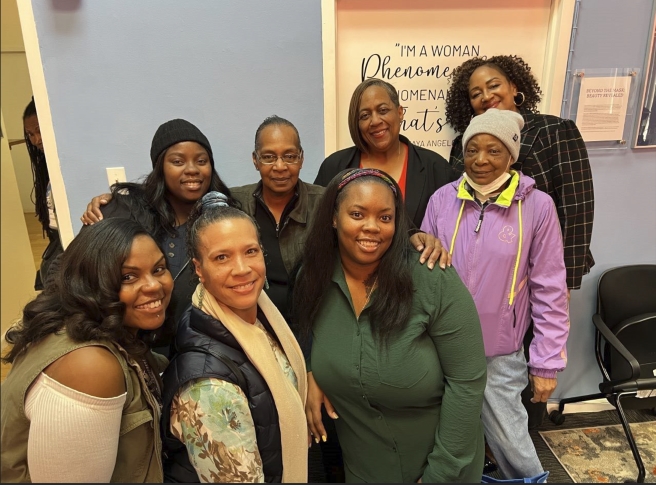
Women’s Center staff member Terrie Kendrix (in front wearing dark green), along with clients, Teresa Lindsay (in purple jacket), DeAna Pearson (corner left in front) and visiting guest Rebecca Jackson, Program Director of Center on Juvenile and Criminal Justice of Cameo House (to Pearson’s right).

Saundra added that since its soft-launch in January, the Women’s Center has already served more than 100 clients to date and found housing for at least four women. GLIDE is committed to providing a safe and supportive community for women to heal and thrive.

To all the women, we see you, hear you, and meet you where you are!

csj coalition

Members of GLIDE CSJ, the Coalition, and the Police Commission celebrating after the second vote in February 2024.

GLIDE’s Center for Social Justice (CSJ) in partnership with the Coalition to End Biased Stops worked tirelessly for two and a half years to pass DGO 9.07.
This policy limits racially biased pretext stops, consent searches, and improves traffic stop data reporting requirements by SFPD. In January 2023, the San Francisco Police Commission passed DGO 9.07, with a final vote on February 21, 2024.

This policy mandates the San Francisco Police Department to train its officers within 90 days before implementation.

It aims to decrease the systemic harms towards communities of color endured during racially biased traffic stops. A traffic stop is one way officers can investigate a driver or passenger(s) based on a preconceived hunch that a person is engaged in criminal activity, partaking in explicit or implicit bias.

Pretext stops do little to reduce crime and play an outsized role in maintaining the status quo, “driving while Black” in the United States. These pretextual stops do not improve public safety, instead, they create more distrust between law enforcement officers and BIPOC community members.

San Francisco mirrors the state and nation in over-policing communities of color via pretext stops. Even when controlling for location, time of day, and other factors, law enforcement officers stop and search Black people at higher rates than white people. Law enforcement officers use visible cues to determine the likelihood of criminality, which causes a disparate focus on young men of color.

Despite the disproportionate number of Black drivers and drivers of color being stopped and searched, the likelihood of the police finding contraband or weapons is lower for drivers of color than white drivers.

csj, staff,

Members of GLIDE CSJ, the Coalition, and the Police Commission celebrating after the first vote in January 2023.

Over the two and half years of organizing, CSJ and the Coalition to End Pretext Stops gathered community support and gained the support of over 100 organizations.

They organized press conferences, collaborated with elected and appointed officials, held listening sessions, wrote letters of support, and took part in police commission hearings to give public comment on DGO 9.07.

On the day of the first vote, January 11, 2023, CSJ and the Coalition hosted an hour-long press conference at City Hall, featuring members of the Board of Supervisors, victims of racial profiling by SFPD, and coalition representatives.

The passage of this policy was a communal effort in the fight for racial justice. CSJ and the Coalition need to keep on fighting in the next phase, ensuring the swift implementation of the policy and sharing information with the community so that they are aware of their rights.


legacy museum alabama
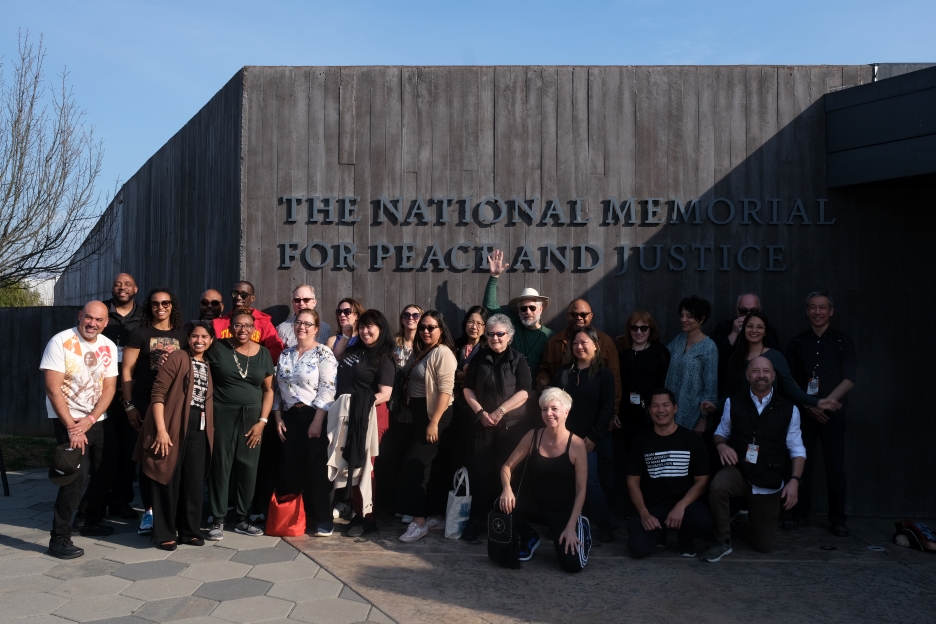
Equal Justice Initiative’s National Memorial for Peace and Justice

#PursuingProgress

This past February, a group of 50 people organized by GLIDE traveled 2,230 miles from San Francisco to the rolling hills of northern and central Alabama. The group included a team of doctors, nurses, and leaders at UCSF; formerly incarcerated men from GLIDE’s Men in Progress (MIP) program; and a diverse group of community leaders from across San Francisco.

The Alabama Pilgrimage, a transformative journey organized by GLIDE’s Center for Social Justice, is an immersive learning program aimed at uncovering the truth about American history.

Our journey began in Birmingham, AL at the 16th Street Baptist Church, the site of the tragic 1963 bombing that killed four young Black girls. From Birmingham we headed south to the heart of the black belt, a swath of central, southern Alabama known for the region’s rich, black soil. In the rural countryside of Lowndes County, we met with leaders from the Black Belt Unincorporated Wastewater Program whose work is focused on environmental racism for Black families (many who lack modern sewage infrastructure).

MIP participants Jamien Aaron Johnson (L) and Deshawn Dupre Brown (R) on the Edmund Pettus Bridge

men in progress alabama

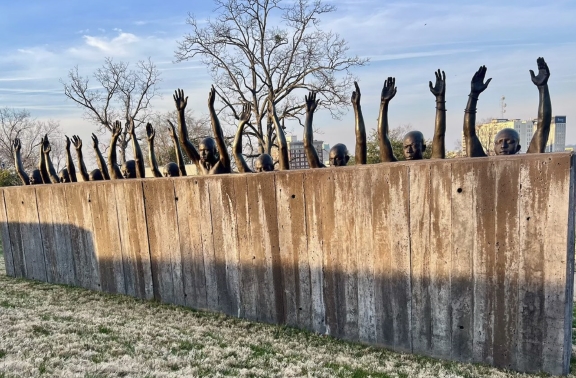
Continuing our pilgrimage, we arrived in Selma, traversing across the historic Edmund Pettus Bridge – a solemn reminder of the struggles endured during the Civil Rights Movement. Our path led us eastward to Tuskegee University, a beacon of excellence among Historically Black Colleges and Universities. Finally, our journey culminated in Montgomery, the epicenter of the modern Civil Rights movement where we visited the extraordinarily powerful Legacy Museum and National Memorial for Peace and Justice.

Through firsthand experiences, the pilgrimage sheds light on disparities in health and criminal justice outcomes while challenging prevailing narratives surrounding oppression, crime, and punishment. This five-day trip, now in its fifth iteration since 2018, stands at the forefront of GLIDE’s mission to confront systemic racism and injustice in America.

The journey is an intense and unvarnished look at America’s troubled history of racial discrimination. The aim of the trip is to become proximate to the lives of people who have experienced generational trauma and identify a process of reconciliation.

Raise Up statue at the National Memorial for Peace and Justice

raise up, alabama

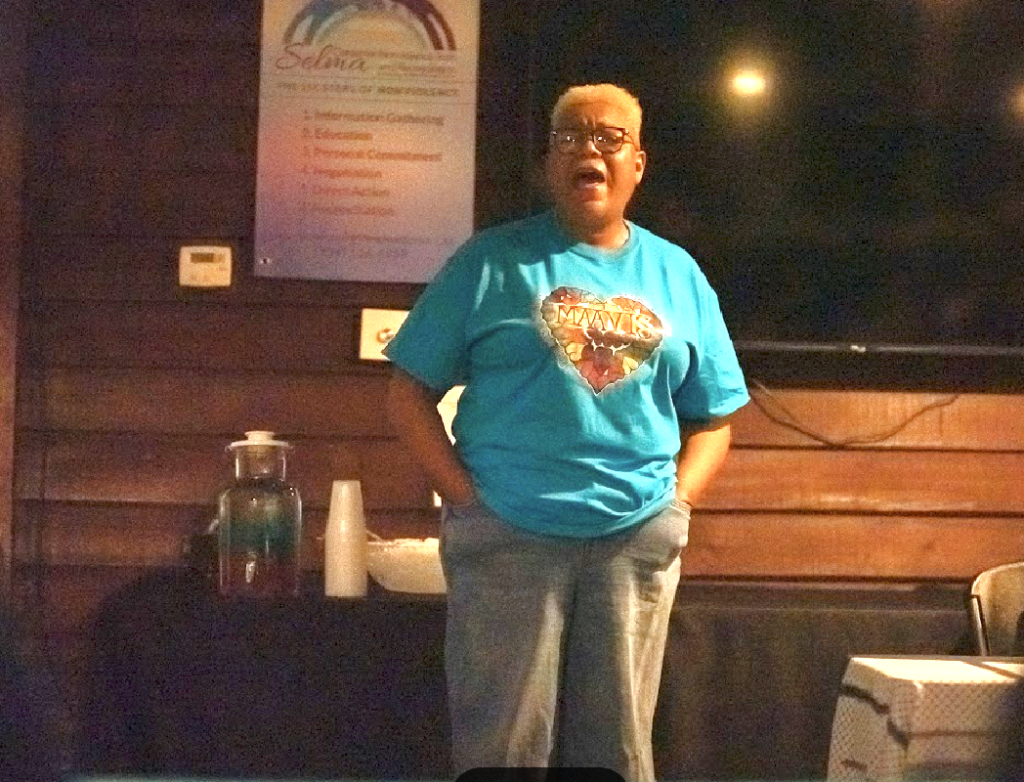
One of the brilliant community leaders we met at the Selma Center for Nonviolence, Truth, and Reconciliation, Mama Callie, offered a direct look into this work. As the sun set over the Alabama river – where 200 years ago thousands of enslaved people were transported up and down the river – the group listened spellbound as she shared her tragic yet inspiring lived experience with medical racism, gun violence, and incarceration. 

Mama Callie’s story begins on the day she heard her son was shot and lay dying in a hospital bed. As she rushed to the hospital to be with him, overwhelmed by fear and grief, she was told by the hospital staff to “quit her carrying on” before she could see him. In a moment all too familiar for many Black Americans, she was forced to detach from her emotions, stifle her grief, and conform to a social system that targets people who look like her.

Mama Callie

Several months later, Mama Callie found herself facing the man accused of killing her son in a courtroom. During his trial, she pleaded with the Judge to forgive him and consider leniency in his sentencing. She explained she did this out of a deeply felt personal faith in the power of redemption and forgiveness. 

Years later, a familiar man approached her in a chance encounter on the street. It was the man who killed her son. He hugged her and thanked her profusely for her ability to see his humanity despite the tragic circumstances, sparing him a senseless life of incarceration.

Mama Callie’s story was one of many deeply moving tributes we heard in Alabama. This journey exposed the deep seated wounds of generational trauma and systemic racism that continue to haunt people of color, even into death, as Mama Callie repeated several times.

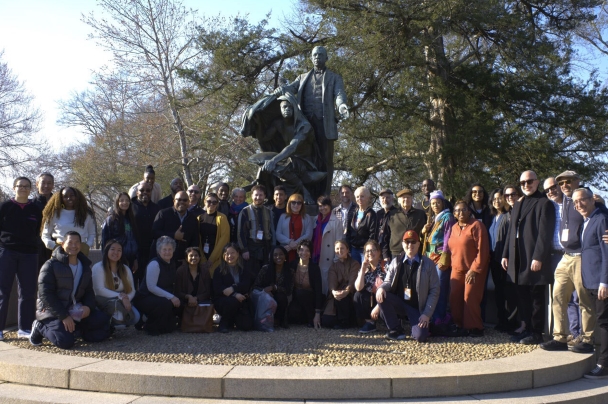
A stop at the Booker T. Washington sculpture at Tuskegee University

tuskegee, booker t washington sculpture alabama

The Pilgrimage illustrates a direct connection between the generational trauma of slavery and the disproportionate rate of mass incarceration and health disparities Black Americans continue to face in our country today.

Over the next few weeks, we’ll share stories of incredible personal transformation from the participants on this trip and changes we commit to at GLIDE and with our partner organizations towards the goal of full reconciliation to atone for our troubled past. We will also debut a five minute documentary on this experience called #PursuingProgress later this spring.

We invite you to join us on this journey as we share these truths with you towards GLIDE’s goal of a more just, equal, and loving world.

National Memorial for Peace and Justice Alabama

Francesca now serves as GLIDE’s Senior Director of Public Affairs and Communications. In 2021, she joined GLIDE in the Executive Office as board liaison and managed special, cross-departmental projects lead.

Currently, Francesca leads efforts to advance and lift GLIDE’s voice and mission by advancing key strategic organizational priorities for GLIDE and strengthening relationships with elected officials, members of the media, and community leaders. 

Prior to GLIDE, Francesca was an education systems project manager at WestEd, a nationwide education non-profit, where she ensured consistent alignment of team projects, designed and conducted research projects, facilitated community engagement sessions, and contributed to strategic planning processes. 

In 2015, Francesca received her Master’s in Public Policy from the University of California, Berkeley. During this time she worked with the local HOPE SF initiative and interned for the Obama Administration’s anti-poverty Promise Zones initiative at the U.S. Dept of Housing and Urban Development.

Prior to graduate school, Francesca was a Probation Officer supervising high-risk, adult offenders in Seattle, WA. When Francesca is not at GLIDE, she is keeping her two young children busy with her husband and two dogs.

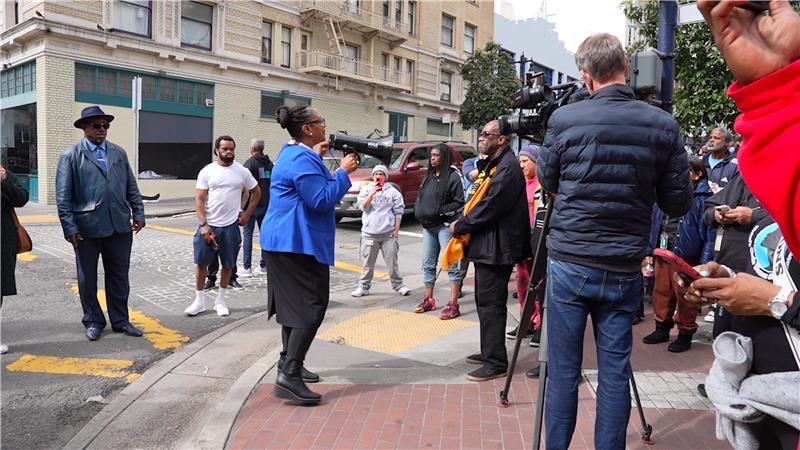
gina, bullhorn, proposition 1, 2024, february

Earlier this week, I attended a rally outside of Boeddeker Park here in the Tenderloin to address the dire consequences of the fentanyl epidemic.

At this rally, I shared a message that GLIDE stands ready to combat the overdose epidemic ravaging our community using any effective tools at our disposal.

I joined fellow community members to mourn the tragic and preventable deaths from this epidemic and share how GLIDE is actively working to expand treatment programs that address this public health crisis.

This includes reducing risk for drug users through proven health interventions, promoting full abstinence and sobriety, and creating safer spaces for the community at large.

I want to reassert and clarify GLIDE’s commitment to this work. Since the beginning of the AIDS and crack epidemic, GLIDE has implemented harm-reduction strategies to curtail the spread of disease and reduce stigma and shame.

GLIDE strongly believes in embracing this approach to minimize the risks of drug use rather than criminalizing substance use disorders.

We are committed to working with the community, the City and those directly impacted to address the overdose epidemic we are experiencing at an unprecedented level. At GLIDE, we believe Harm Reduction promotes health across a broad continuum.

We are resolutely committed to addressing a public health crisis that has taken more than 800 lives from us in 2023 alone. One overdose is one too many. 

Overcoming the overdose epidemic is not a one-size-fits-all all approach. GLIDE provides a 360-degree view of this issue, with services ranging from Safe Syringe Access to Narcotics and Alcoholics Anonymous.

We meet people where they are, in the spirit of radical inclusion and unconditional love, recognizing that substance use is a health issue (not a criminal issue) and therefore is addressed most effectively through public health interventions. We strongly believe the best way to treat a disorder is through data-driven and effective public health interventions. 

Our message is simple. 

For anyone who walks through the doors at GLIDE – we see you, we love you, your life matters, and we will accept you exactly as you are. To fight the overdose crisis, we have more work to do, and we won’t stop until we see this crisis abate. As the President & CEO at GLIDE, you have my assurance I will continue to lead GLIDE in this fight.

gina, fromer


Dr. Gina Fromer
President & CEO
The GLIDE Foundation

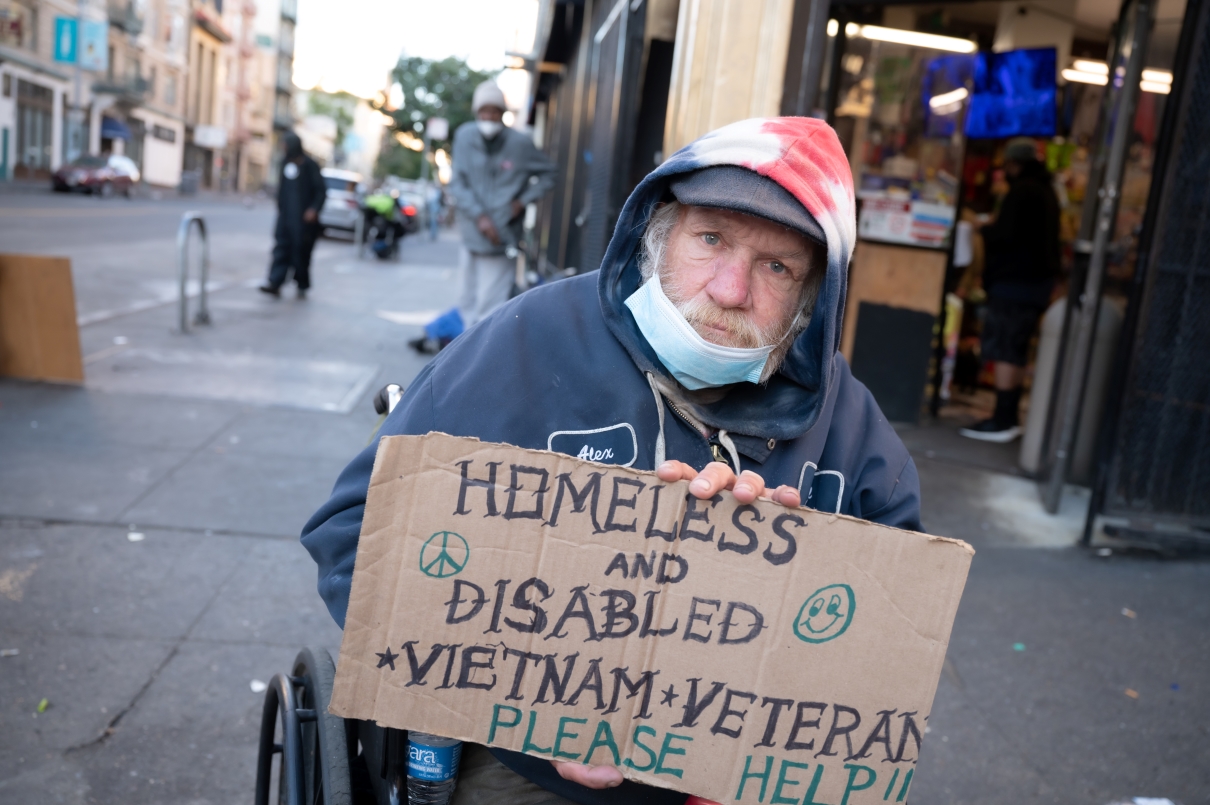
veterans, homelessness,

Join GLIDE in supporting Proposition 1

California stands at a pivotal moment in its history. Our homelessness crisis has reached unprecedented levels, with our state now home to 28% of the nation’s unhoused population despite comprising only 12% of the country’s residents.1

The numbers speak volumes, but behind each statistic lies a human story of struggle, trauma, and resilience. 

As the President and CEO of the GLIDE Foundation, a beacon of hope in San Francisco’s fight against poverty, the challenges faced by our most vulnerable communities are personal to me. 

Three decades ago, I was a young mother of three, navigating the hardships of poverty in Bayview Hunters Point. It was organizations like GLIDE that offered a vital support network, empowering me to break the cycle of poverty that holds people back from pursuing lives filled with dignity, purpose, and opportunity. 

But my journey is just one among many, and countless others, who continue to grapple with the harsh realities of homelessness and mental health challenges. Homelessness is the most  complex and pressing public policy challenge facing our
society.
2

A comprehensive study by UCSF on people experiencing homelessness found that two-thirds of participants had experienced multiple forms of trauma throughout their life, increasing their vulnerability to homelessness and contributing to their mental health and substance use challenges.

In March, California voters will have an important decision to make. Proposition 1, the Behavioral Health Services Program and Bond Measure, will expand mental health and addiction services for tens of thousands of Californians each year.

This bond measure will create housing for over 11,000 Californians with the most severe mental health needs to live, recover, stabilize and thrive, and provide $1 billion to ensure our veterans experiencing homelessness, mental health and substance use issues are given the care they deserve.

This proposition represents a lifeline for tens of thousands of individuals struggling with severe mental health and addiction issues. 

By expanding access to vital services and creating supportive housing environments, Proposition 1 offers a path toward stability and recovery for those in need. 

At GLIDE, we understand the transformative power of compassion and support. However, our efforts are hampered by a chronic lack of resources. Proposition 1 helps address this critical gap by providing the funding necessary to scale up our programs and reach those who need it most. 

In partnership with Code Tenderloin, Executive Director, Donna Hilliard supports Proposition 1. Ms. Hilliard said, “As a mother who has a son who struggles with mental health challenges, I understand the need for supportive housing. Many mothers lose sleep at night worried that their child may be taken to jail for an incident that happens because their child is struggling with mental health. Real-time help is needed. Treatment, not jail is the answer.”

GLIDE and Code Tenderloin are gateways out of poverty. Yet, the mental health struggles so many poor people face, and the dire shortage of services, is one of the biggest barriers to break cycles of poverty.

To fix this, we need the resources available through this bond measure, estimated to be between $2 billion and $3.5 billion annually.

I speak from personal experience when I say that poverty is not just about financial hardship; it is also about the emotional toll it takes on individuals and families.

Growing up, my own family could barely afford the essentials, let alone therapy or mental health services. Proposition 1 offers hope to those who, like me, have faced adversity and persevered to find a way out.

There is no easy solution to the homelessness crisis, but Proposition 1 represents a significant step in the right direction. As the President and CEO of the GLIDE Foundation, I urge you to join me in voting YES on Proposition 1.

Together, we can break the cycles of poverty and marginalization that are holding communities across California back.


gina, fromer

Dr. Gina Fromer 
President & CEO of the GLIDE Foundation 


1. Housing & Homelessness (n.d.) California State Auditor – Housing & Homelessness. Available at: https://www.auditor.ca.gov/issues/briefs/housing-and-homelessness (Accessed: 12 February 2024).

2. University of California San Francisco. (2023, June 20). California Statewide study investigates causes and impacts of homelessness | UC San Francisco. California Statewide Study Investigates Causes and Impacts of Homelessness | UC San Francisco. https://www.ucsf.edu/news/2023/06/425646/california-statewide-study-investigates-causes-and-impacts-homelessness

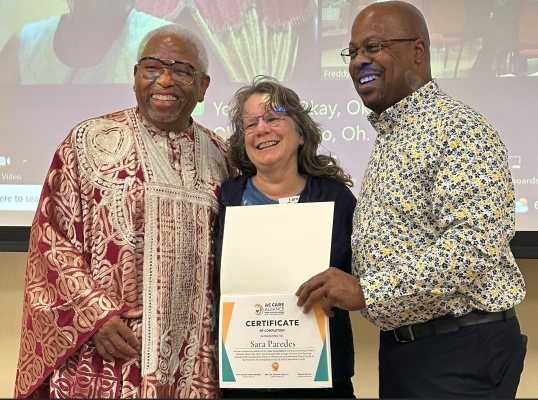
stupski, sarah, paredes
Stupski Network participant Sara Paredes

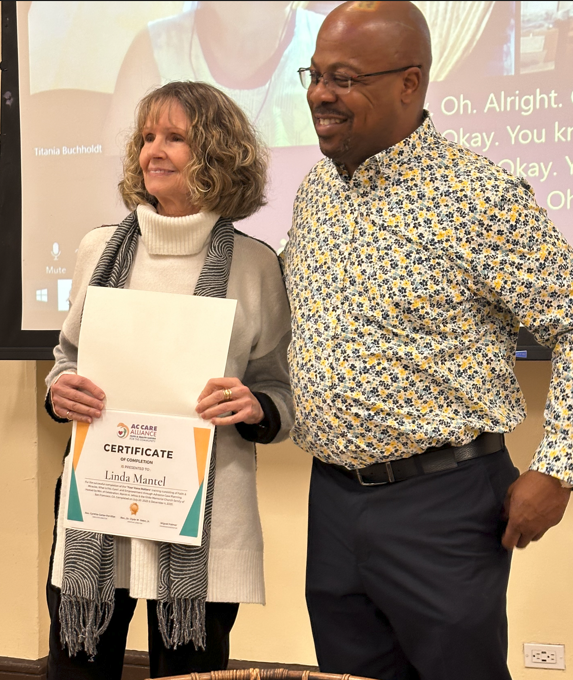
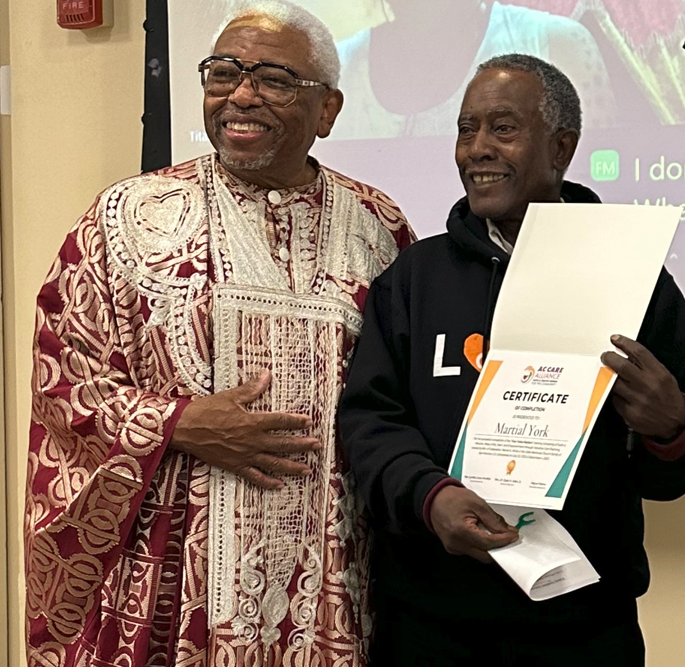
Stupski Network Participants Receive Certificate of Completion

This past February saw Glide Memorial Church (GMC) celebrate approximately 36 individuals made up of community leader volunteers, GLIDE staff, and partners who completed training through the Stupski Community Care Network, for purposes of learning how to identify congregants and community members who need care, or are caregivers for those in need of care, and their families who care for them.  

The network is a collaboration with the MERI Center for Education in Palliative Care (UCSF/Mt Zion) and the Alameda County Care Alliance (AC Care Alliance).  

The celebration included recognizing and handing out certificates to those who completed two or more training courses created by MERI & ACCA.

Linda Mantel receiving her Stupski Community Network training certificate. Stupski Training Coordinator, Miguel Palmer is to her right.

“I am so grateful to have had the opportunity to participate in the Stupski Community Care Network training and program,” said a beaming Linda Mantel. “The training sessions were excellent, and I learned a great deal about palliative care — what it is and how it works for those experiencing a terminal illness and facing end of life.” 

Because of population ageing and an associated increase in prevalence of chronic conditions across OECD countries, the number of people in need of end-of-life care is growing and expected to reach 10 million people by 2050, according to The Organization for Economic Co-operation and Development (OECD). 

Worldwide, only about 14% of people who need palliative care currently receive it, according to the World Health Organization. 

Stupski training participants learned how to have conversations about serious illness, advanced illness, multiple diagnosis, palliative, and/or end of life stage care needs.

This is done with hopes of providing resources and matching participants and their caregivers with much needed resources; such as: healthcare providers, food resources, essential medical equipment support, care giver respite, and many other needs that may exist to increase health, quality of life, or alleviate challenges & needs.  

“The objective was and is an important step for any of us to begin the conversation about healthcare choices that we will all confront sooner or later,” said Community Care Minister, Martial York. 

martial york stupski

Community Care Minister Martial York receives his Stupski Community Network training certificate. To his left is Dr. Reverend Clyde Oden Jr., retired Pastor and Associate Director of the Alameda County Care Alliance (AC Care Alliance).

“From my perspective I/we do not begin the conversation about health care and end of life decisions until we are in crisis mode, which is not by any means the best time to start the discussion. The questions that the Stupski project brought to my attention were when and with whom do we have this conversation,” added York.  

“We talk about death and going to “heaven or hell”, but the important conversation is about how we die,” summarized York. “It’s how we approach the dilemma of serious illness among family, friends, or loved ones when approaching the end of life.”

The Stupski project training was a step forward for participants into having the types of conversations that are many times held too late or made to seem too uncomfortable to talk about.  

Future trainings will be offered to GLIDE participants in the near future for Stupski through the AC Care Alliance. In the meantime, those interested can contact Freddy Martin,Congregational Life and Community Engagement Manager via email at fmartin@glide.org with any questions.

As an Asian-American, I often find myself caught between two worlds, forever stuck in the hyphen that is “Asian-American.”  I am neither Asian enough nor entirely American, perpetually viewed as an outsider. 

I arrived in the United States at the age of 7, retaining only fragments of memories from my early years in Vietnam. I strived to assimilate into American life. The allure of blending seamlessly with my peers and embracing Western custom often eclipsed the traditions my parents sought to uphold.

My parents, uncles, and aunts tirelessly tried to preserve our cultural identity through old customs and traditions for the kids in the extended family. However, as a child and teenager, I viewed these practices as outdated, tired, and unnecessary.  

During Lunar New Year, the adults in my extended family would pull all kids out of school. We would gather at my Grandma’s house to exchange New Year greetings with blessing words such as 恭喜发财 (gōng xǐ fā cái) or 万事如意 (wàn shì rú yì). Red envelopes would be given to the children followed by traditional Chinese meals and a trip to the local temple.

As a child, I would go through the motions, looking forward most to the money inside the red envelopes, without truly appreciating what it represented—a token of love and a symbol wishing us luck for the new year. 

As the years pass, and with a few gray hairs and two little kids, I often reflect and question who I am- why I think the way I do and why I act the way I do. I’ve gravitated towards my Asian roots, finding comfort in learning more about the threads woven together to make up the fabric of my confusing “hyphenated” identity. Ironically, I am now the one trying to uphold the customs for my kids.

I now realize that Lunar New Year, and other holidays, is more than just a series of rituals and celebrations; it is a profound reflection of our collective Asian-American identity. It serves as a bridge between our past and present, connecting the old world with the current. The New Year’s vibrant red decorations, the tantalizing aroma of traditional dishes, and the joyous gatherings with family create a mosaic of cultural richness. For one moment, we are transported to a seemingly simpler time. That sense of nostalgia and connection with one’s root is powerful and fills us with hope for the future. 

Recently, Tina Huang, GLIDE’s Client Advocate at our Walk-In Center, held a spectacular Lunar New Year celebration for the Asian seniors in our community. She, along with our facility crew, transformed Freedom Hall with vibrant decorations.


Seeing all the smiling faces was truly special and heartwarming. The parade of seniors adorned in traditional qi pao gave a sense of being transported to ancient times. The clapping, laughter, and chatter were magical. 

I wish everyone a Happy Lunar New Year, Happy Chinese New Year, CHÚC MỪNG NĂM MỚI, Xīnnián kuàilè (新年快乐),  Manigong Bagong Taon, Haengbokan Saehae Doeseyo (행복한 새해 되세요), and in all other ways in which it is expressed.

A personal reflection by:
Tri Nguyen, GLIDE’s Director of Marketing and Digital Communications

homeless, board, megan, del, seymour, funding,
San Francisco Local Homeless Coordinating Board members (from left to right) Cedric Akbar, Rommie Nottage, (GLIDE Board Member) Del Seymour – Co-Chair, Dr. Megan Rohrer- Co-Chair, Kelley Cutler and Mercedes Bullock

GLIDE works tirelessly to help the houseless with any manner of support, including working with the city of San Francisco to secure more funding for safe housing and a continuum of care.  

This past February 5th, the Local Homeless Coordinating Board (LHCB) announced that thanks to its work, the City and County of San Francisco was able to secure $53,794,910 in Department of Housing and Urban Development (HUD) funds for Continuum of Care awards.  

This year’s award is a $770,000 increase from last year, with new funds supporting the planning of a new permanent supportive housing project and an increase in fair market rates.  
 
“I’m so grateful, and while there will always be more to do, this makes for a strong leap forward to ensure every San Franciscan is housed safely and securely,” said Dr. Megan Rohrer, GLIDE’s Senior Church Communications Specialist, who serves as co-chair of the LHCB, along with Del Seymour, GLIDE Foundation Board member.  

The LHCB serves as an advisory body to the Department of Homelessness and Supportive Housing (HSH) and ensuring a unified homeless strategy that is supported by the Mayor, the Board of Supervisors, City departments, nonprofit agencies, people who are homeless or formerly homeless and the community at large. The LHCB works at permanent solutions to address a range of services required by individuals threatened with or who are currently experiencing homelessness. 

The LHCB oversees the annual Point in Time (PIT) count of the homeless and sheltered individuals living in San Francisco, the coordinated entry process that triages shelter and supportive housing resources and provides oversight for the HUD Continuum of Care grants.  

This year’s 2024 Continuum of Care Renewal Awards will include:   

  • $42.2 million for 29 renewal permeant supportive housing projects that serve chronically homeless, veterans, and youth  
  • $318,000 for one new permeant supportive housing project, which will provide 98 affordable homes for low-income seniors in the Richmond District  
  • $445,00 for one Transitional Housing (TH) project serving youth    
  • $6.4 million dedicated to four Rapid Rehousing projects that serve families, youth, and survivors of domestic violence  
  • $750,00 for two Homeless Management Information System projects    
  • $2.1 million for three Coordinated Entry projects that serve families, youth, chronically homeless, and survivors of domestic violence  

“I’m very happy to see how well this scoring procedure went towards San Francisco as we received a much-needed gift of additional funding for affordable housing projects,” said a beaming Del Seymour. “The teams from the Mayor’s Office and HSH really came through for us. I can’t wait to hand out the keys.” 

We thank Del, Megan, and HSH and all who helped to secure these vital funds for our community! 

megan, del, seymour, mlk, 2024, march
Dr. Megan Rohrer and GLIDE Board Member Del Seymour at the 2024 MLK March