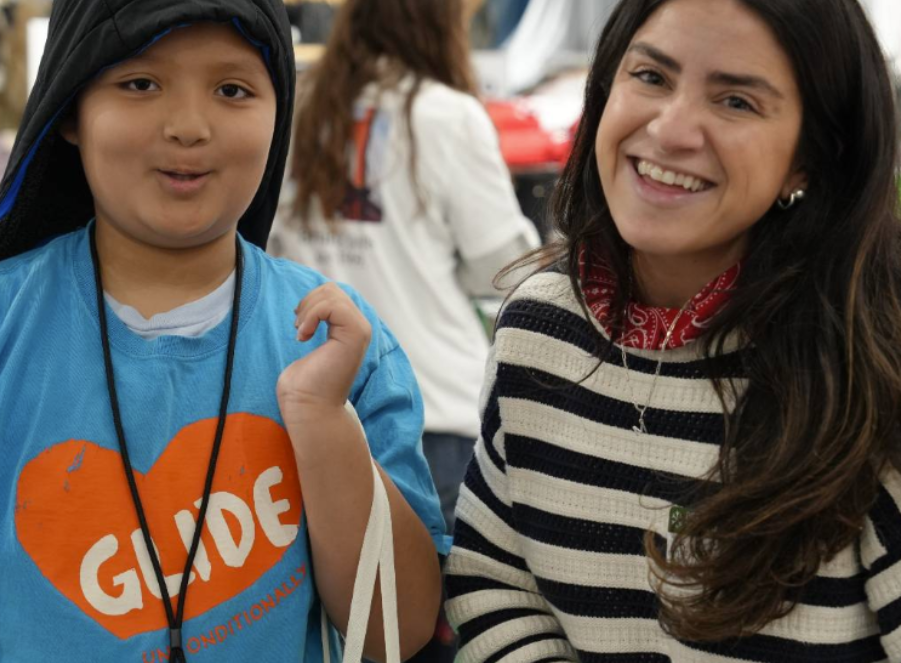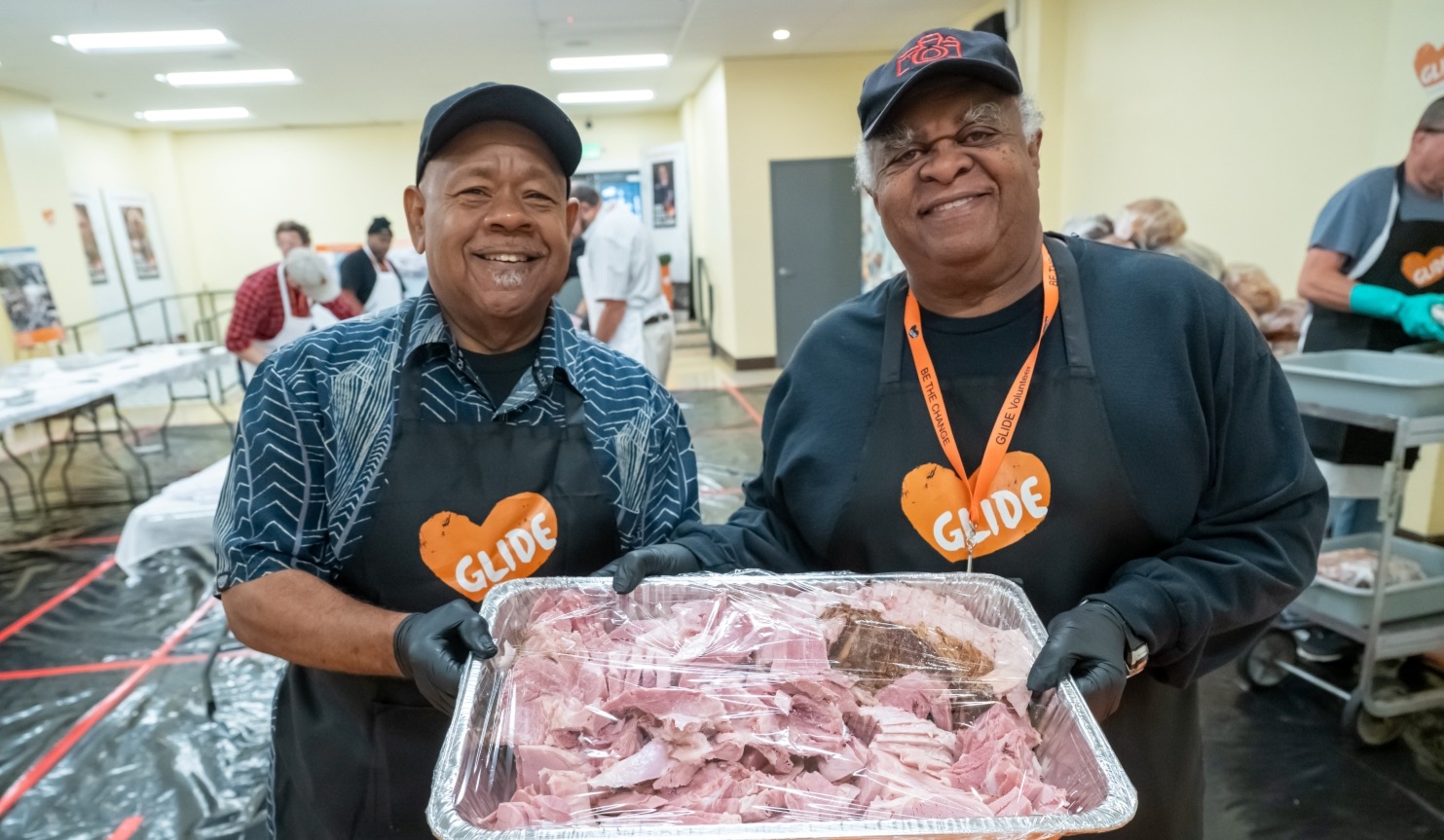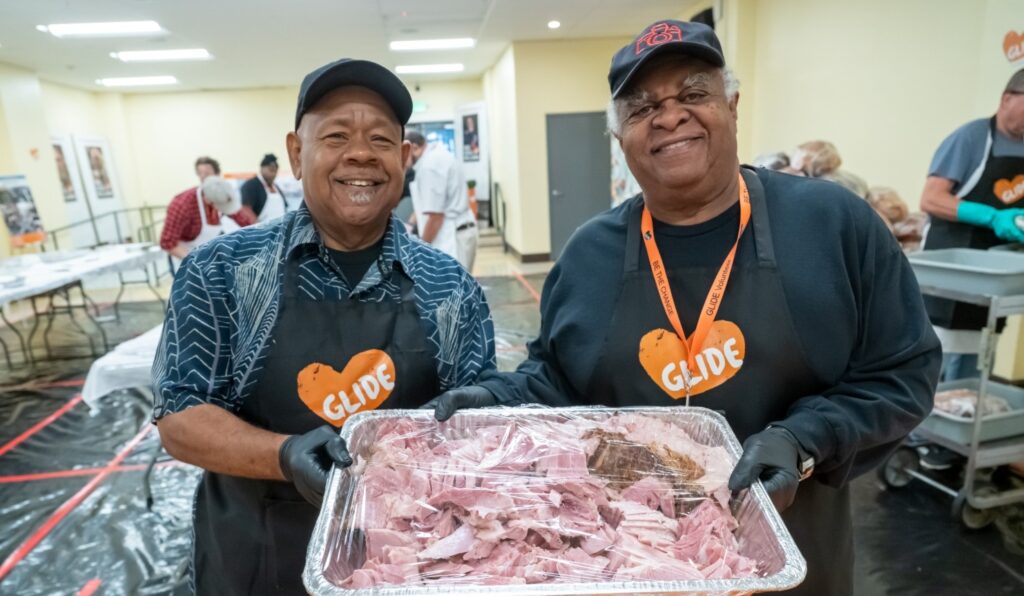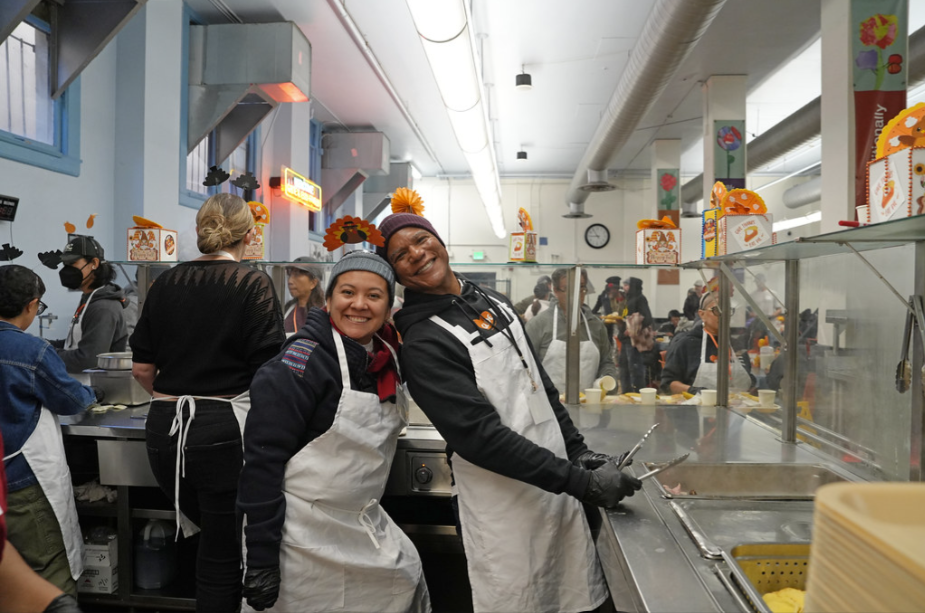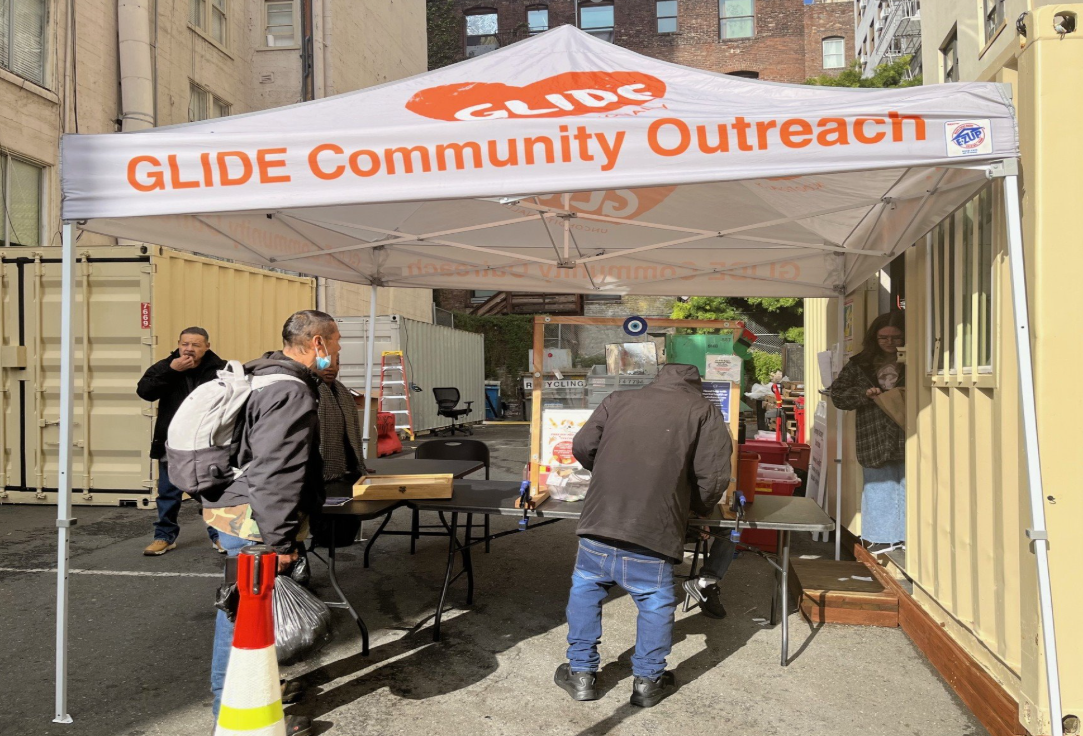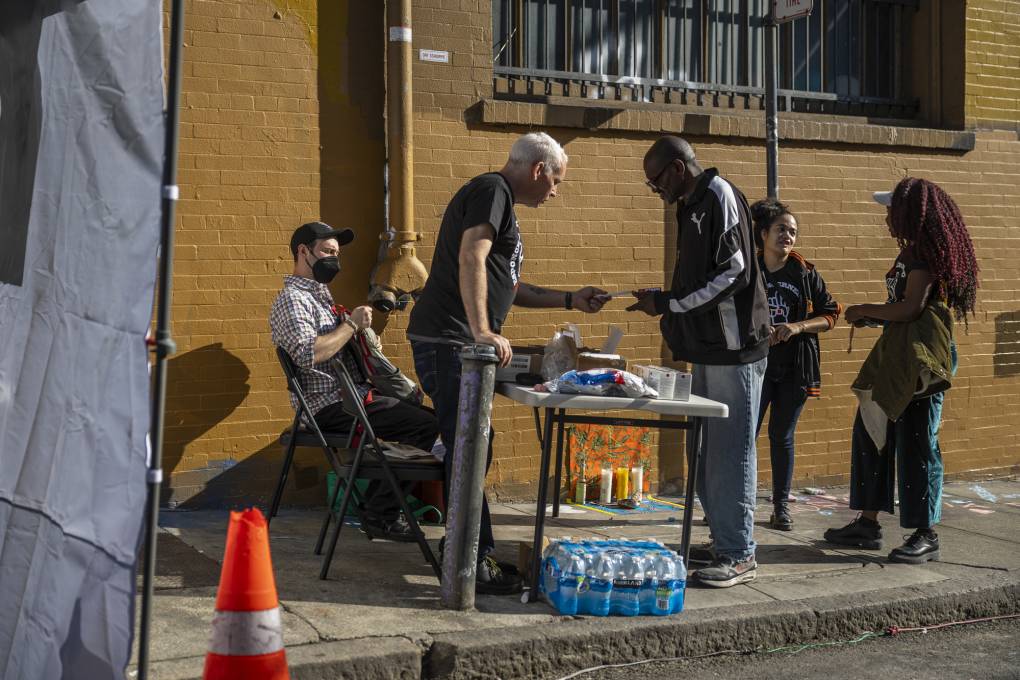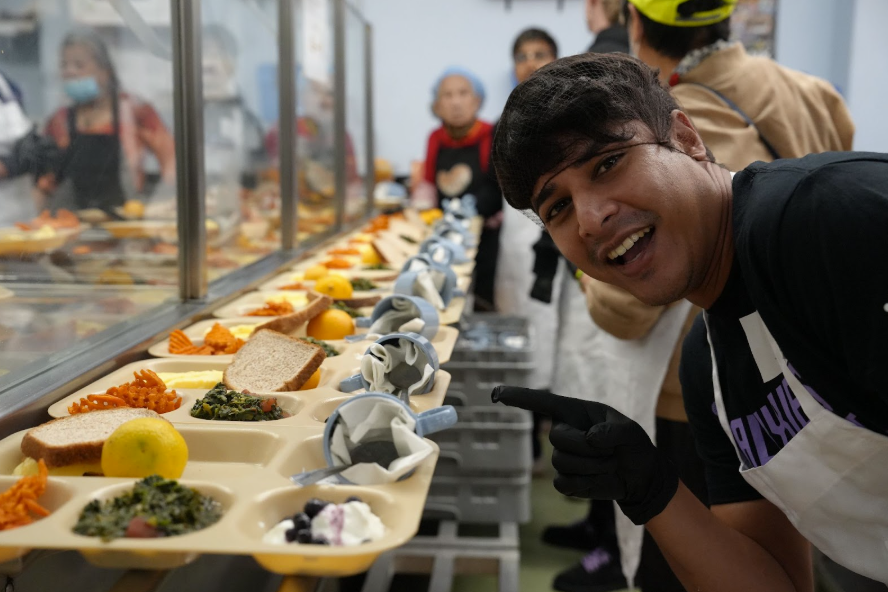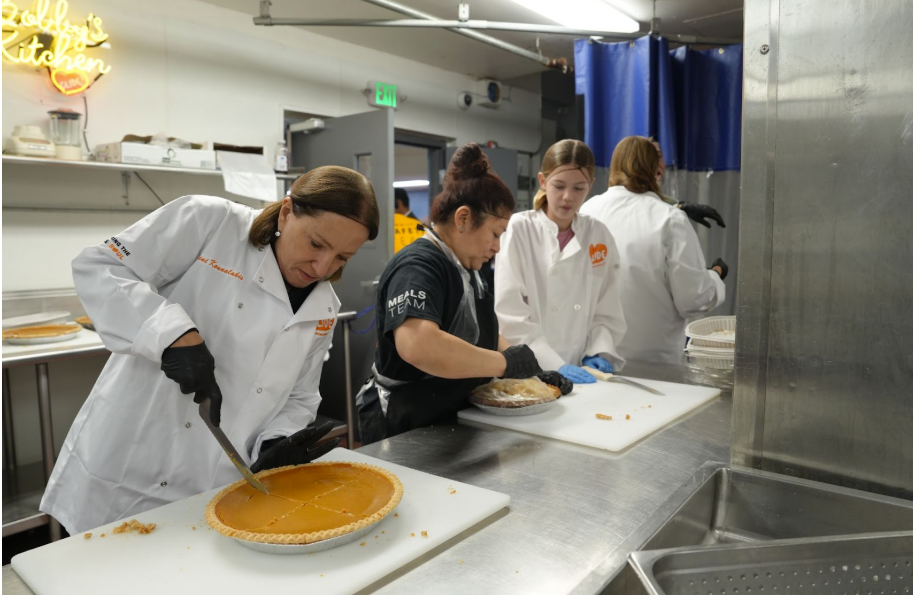

This Thanksgiving, our community’s generosity shone brighter than ever. Because of your kindness, we filled our kitchens with abundance—130 turkeys, 70 hams, hundreds of pounds of holiday favorites, and dozens of gallons of rich, comforting gravy. We served approximately 2,500 meals, with all the fixings, both here at GLIDE and through our outreach deliveries.

Have a look at this year’s photo gallery and see for yourself what made this year’s Thanksgiving at GLIDE so special!

thanksgiving carving 2025

But the true impact stretches far beyond the holiday table. When someone comes to GLIDE for a meal, they often discover a doorway into so much more—healing through recovery programs, connecting in women’s groups, support that prevents homelessness, and a community that welcomes them just as they are.

For every person who donated, volunteered, or lifted us up in spirit, please know: you didn’t just brighten a single day. You helped open possibilities for people rebuilding their lives. And those stories are resonating throughout our city.

On Thanksgiving morning, the San Francisco Chronicle shared the journey of Roderick Hughes, who worked at GLIDE for 30 years before retiring earlier this year, now returning for a meal. “I have seniority over most of the people working here,” he said laughing as he waited in line. “I love GLIDE because this is my home,” Hughes said. “It always made me feel like I am somebody.”

NBC Bay Area interviewed one of our long-term volunteers, Kara, who spoke about the significance in her life of giving back to the greater community each time during Thanksgiving.

KTVU Fox News spoke with a family who drove all the way from Foster City to donate some turkeys to GLIDE. “This is what you should do on Thanksgiving,” said Richard Pasquinelli. “We’re fine. We have a roof over our head. We eat very well; we’re safe and we’re healthy and a lot more so than the people who are being served here at GLIDE.”

We were also honored to share the day with SF Fire Chief Dean Crispen, State Assemblyman Matt Haney, Supervisor Bilal Mahmood and other city leaders.   

None of this would be possible without you. Thank you for every act of care, every plate served, every moment you choose to stand with GLIDE. And if you feel called to keep spreading warmth this season, we’d love to welcome you as one of our volunteers!

As we move through this season of generosity and reflection, please know how deeply grateful we are for you and for everyone who helps make GLIDE’s mission real.

Wishing you a joyful and peaceful holiday season! 

thanksgiving meals kitchen 2025

There is no single right path for recovery from substance use. 

Rather, recovery exists along a spectrum — from safer use and harm reduction all the way to full abstinence. At GLIDE, we embrace that full continuum, with a goal of reducing harm, saving lives, and supporting people in building healthier futures on their own terms.   

As GLIDE President and CEO Dr. Gina Fromer puts it, “There’s no one-size-fits-all approach to recovery.” 

How GLIDE Supports Recovery  

As GLIDE founder Reverend Cecil Williams liked to say, “We are all in recovery.” We might be addicted to work, addicted to distractions, or addicted to a substance of some kind– but addiction and recovery are a universal part of the human condition. There is no “us and them.” Reverend Cecil didn’t want folks to judge people on the street for their addictions– he wanted us to realize how much we all had in common. 

GLIDE’s Health Access and Recovery Team (HEAT) is at the forefront of addressing the substance use epidemic in San Francisco. Our team offers a variety of services in an effort to meet people where they’re at – everything from medications for opioid use disorder (MOUDs) to referrals to detox services.  And in September of 2025, we started a contingency management program for folks who want to overcome addiction to stimulants, like methamphetamine. 

We also offer a range of abstinence-based recovery services for those who need it: Narcotics Anonymous, Alcoholics Anonymous, and Cocaine Anonymous. 

GLIDE believes recovery from substance use is a spectrum, and we serve all parts of that spectrum. Harm reduction services, sober housing and abstinence-only recovery programs, all have their part to play in the City’s recovery.    Models which exclude or stigmatize those still using drugs can push people further into isolation, unsafe use, and overdose risk. That’s why it’s so important to have the full spectrum.

The Need for Wraparound Services 

Helping folks address their substance use or addiction requires more than just a one-time meeting. That’s why at GLIDE, we focus on the whole person, not just their addiction. If we can get people in the door with our harm reduction or health services, then we can build our relationship with them over time. We can help them find housing, test them for transmissible diseases, help them towards employment and stability. 

Black Men Over 55 Disproportionately Affected by Substance Use 

Systemic racism perpetuates inequity in overdose deaths.  In San Francisco, black men over the age of 55 are dying from overdose at a disproportionately higher rate– and the disparity is worse in San Francisco than in any other major city. 

That’s why one of GLIDE’s priorities is opening “The Shop,” a barbershop that will connect our low-income clients not only with free haircuts, but with low threshold case management and emotional support. Barbershops are research-proven effective targeted interventions for community-building and stabilization in the lives of older Black men specifically, and they also have a proud history in the civil rights movement. 

“Love Saves Lives”

In fall of 2025, we hosted a conversation at Manny’s Cafe between two leaders in substance use recovery who sit at opposite ends of the spectrum: one an advocate for harm reduction, and one an advocate for abstinence. Although the conversation was heated, there was something both leaders had in common: a belief that love saves lives.   “Love goes a long way for people who are walked over, stepped on, and ignored,” said our President & CEO, Dr. Gina Fromer, who moderated the panel. 

Lydia Bransten, CEO of the Gubbio Project, uses her work to help clients access harm reduction services. She understands the need for abstinence-based recovery, but wishes that the abstinence-only camp was more understanding that recovery is a spectrum: “I respect your journey of abstinence. All I’m asking is that you respect our clients’ journeys too, regardless of if they come to recovery in a different way,” she shared. 

Recovery organizations should work together: we’re all fighting the same problem – we just have different ways of amending that problem. “You don’t have to agree with me, but our destinations are the same,” Dr. Gina says. “People healthy, off drugs, and off the streets.” 

Why This Matters: Saving Lives and Reducing Stigma

The fundamental goal of our approach is overdose prevention. In a city deeply affected by fentanyl and overdose deaths, we have always acted as frontline responders. Our belief is clear: even one overdose is one too many. 

We believe our approach helps reduce stigma and shame — both major barriers to seeking help. By not requiring abstinence as a precondition for care, we lower the threshold for engagement, letting more people connect with services earlier. 

By embracing multiple pathways to recovery, GLIDE supports individualized journeys. Some will move toward abstinence; others might need the help of medications; others might continue to relapse for years. What matters is that we provide the support and accountability necessary to save lives and break the cycle of addiction. 

Recovery requires community. Wherever you are in your recovery journey, you can find a community at GLIDE.

Contingency management might sound like complex bureaucratic jargon. But the core tenant of the program is simple: reward people for making healthier choices. 

“Looking to change your stimulant use? Want to earn gift cards for reaching your goals?” 

That’s the message printed on flyers decorating GLIDE’s lobby, advertising the new Contingency Management Program that began in September. 

Over the course of 3 months, participants hoping to break free from addiction to drugs like methamphetamine, amphetamines, or cocaine will participate in individual and group programming at GLIDE. In exchange, they can receive up to $555 in gift cards for successful completion of sobriety milestones. 

It’s a method of treating drug use that’s scientifically backed and proven to work, evidenced by numerous studies over the past 30 years. 

“It’s a good way to give people something measurable to check off. We try to be flexible,” explains Whit Bastian, the Operations Manager for GLIDE’s Health Access and Empowerment Team (HEAT). “If someone is struggling with substance use, and they know they’re not going to be perfect, they can at least start to think about what stopping their substance use might feel like.” 

What is Contingency Management? 

Contingency management (CM) is an evidence-backed substance use disorder treatment. The program provides incentives or rewards (like gift cards) to people who exhibit positive behavioral change (like reducing drug use). 

CM has also been used for other behavioral changes, not just substance use treatment. GLIDE’s Senior Director of Health and Clinical Services, Jason Finau, has seen contingency management used in outpatient clinics and other non-profit organizations. “I’ve used contingency management in medication adherence,” says Finau, detailing a program that worked with people struggling to manage their HIV medication. “Overall we saw a lot of success. By the end of the program, there was a significant improvement in medication management.” 

Behavioral science has proven time and time again that positive reinforcement can be a powerful motivator for behavioral change –  like getting a gold star on a chore chart as a kid. As we see in many recovery efforts, recovery is not a one-size-fits-all approach. Contingency management might not work for everyone, but it can be extremely effective for some. 

A Day in the Contingency Management Program  

The program runs for 12 weeks, with participants meeting at GLIDE 3 times a week (Monday, Wednesday, and Friday). Each day includes 3 parts: a urinary analysis, a one-on-one check in with a case manager, and group therapy. 

First, participants take a urinary analysis – more commonly known as a pee test. If someone’s UA is negative for stimulants, they receive a gift card reward. If the test is positive, they don’t get the reward that day, but they’re still encouraged to attend group and 1:1 sessions. There’s no judgment, no punishment, and no dismissal from the program.

Gift card amounts increase with each consecutive negative test. The first incentive is $5. After six times in a row testing negative, participants move up to the $10 gift card amount. If someone tests positive, they are dropped back down to the lowest incentive level until they build up their negative streak again. Then they can return to the highest level they previously achieved. 

Participants can also earn incentives for meeting health-related goals like going to the dentist, getting new glasses, or completing a Hep C screening — up to $10 per goal, with a cap of three goals. 

Next, participants have a one-on-one check-in with a case manager at GLIDE. Case managers help monitor individual needs and connect participants with other services at GLIDE

Finally, participants engage in group therapy with everyone else in the CM Program. 

The Power of Group Therapy 

Case manager check-ins and group therapy are not incentivized, but many choose to stay for them anyway. 

One of the big goals with contingency management is just getting people in the door. And at GLIDE, the power of CM goes beyond the gift cards. The real engine of transformation is community.

“Group therapy is the big intervention,” says Whit Bastion. “You start to make more friends who have the same goal as you.”

Jason Finau agrees: “People might first be coming for the incentive. But the more they come back, the more they feel seen. The group gives them a space to talk about grief, anxiety, depression — and to know they’re not alone.”

This kind of peer connection can be life-changing.

A New Tool in Treating Stimulant Use 

GLIDE’s contingency management program focuses specifically on treating stimulant use, not opiate use. 

Although the opioid crisis and the increase of fentanyl-related deaths get the most political coverage, studies have shown that methamphetamine and other stimulants are the most commonly used drugs among unhoused people. Many people on the street use stimulants to stay awake at night and protect themselves against violence or getting their belongings stolen. 

And though GLIDE’s program is limited to stimulant use, the participants are tested weekly for the whole spectrum of drugs. That way, case managers know if participants are taking other drugs in addition to stimulants and can respond appropriately. 

Bastian agrees that monitoring client needs is a crucial piece of what the program does. “We want to present ourselves as people who care, as people who won’t judge. When people feel that they can’t talk to you about their drug use, that’s when the overdose deaths occur.” 

Looking Ahead

The CM program launched in September and is still growing. With the recent hiring of two case managers — both with lived experience — the team is gearing up for expanded outreach and engagement. 

Jason Finau hopes to see a larger program expansion in 2026. “We’re hoping to get groups of up to 25 participants at a time,” he explains. “After folks graduate from the program, I want them to stay involved, maybe even come back as peer leaders for the new groups.” 

Contingency management isn’t a cure-all. But it’s compassionate, data-driven, and it’s already working for many in our community.

If you or someone you know is using stimulants and looking for a path toward stability, GLIDE’s CM program offers more than just a reward. It offers connection. It offers support. It offers hope.

lt governor Kounalakis

Valkyries and Lieutenant Governor Kounalakis Volunteer

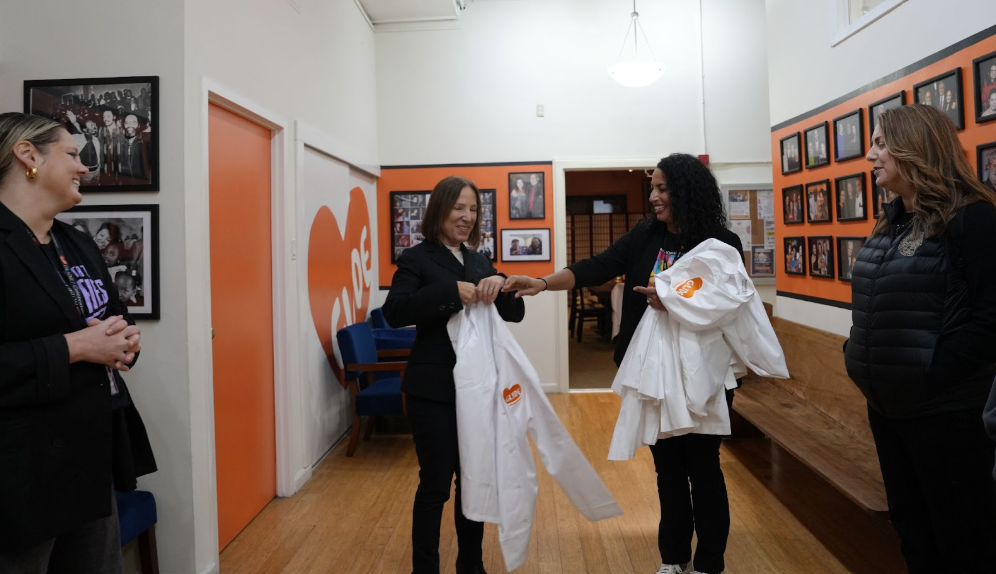
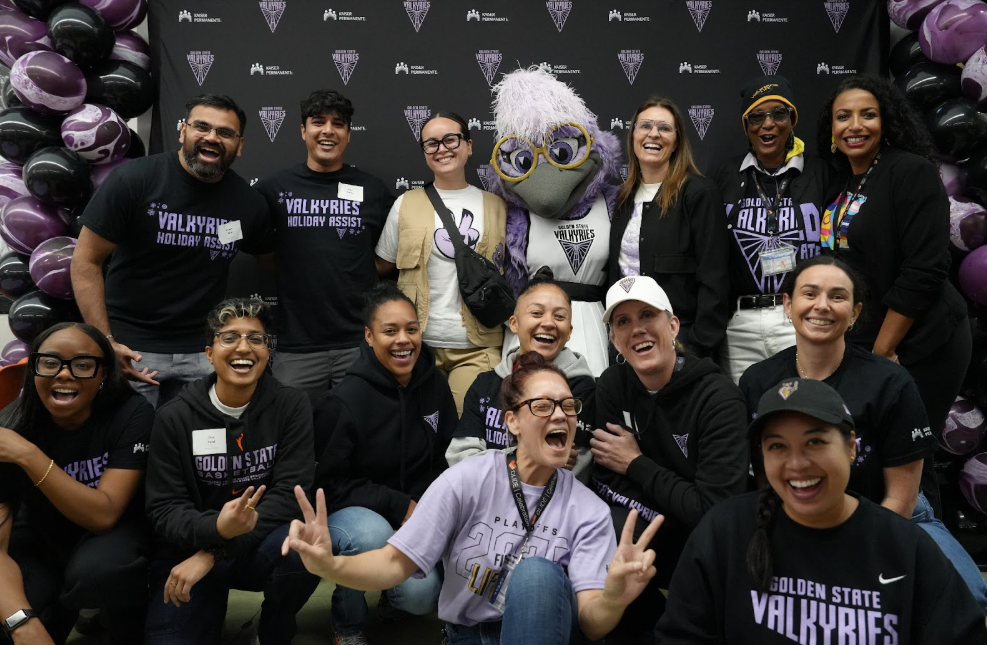
Valkyries staff and season-ticket holders kicked off their “Holiday Assist” program by volunteering at GLIDE’s Tuesday breakfast service during our incredibly busy Thanksgiving week.  After the breakfast rush, Lieutenant Governor Eleni Kounalakis and staff helped us prepare for the holiday by pre-slicing pumpkin pies.

Our clients were delighted that the Valkyries brought their famous mascot, a friendly purple bird named Violet, and several posed for photos with the engaging creature. Katie Stockberger, the Valkyrie’s VP of Corporate Partnerships, also handed out free Valkyries-branded socks to clients. (Unhoused people often urgently need socks for basic hygiene, warmth, and feet protection).

Valkyrie Mascot

Katie explained, “This volunteering event is the kick-off of our Holiday Assist program in partnership with Kaiser Permanente– we will keep on going all the way to the Christmas Holiday. Our inaugural season has been rooted in community– so we want to give back to community!” 

The Valkyries are making food insecurity the focus of their volunteering journey because of how many Californians struggle with it. Although California produces nearly half of the nation’s fruits and vegetables, more than 1 in 5 Californians — about 8.8 million — struggle with food insecurity.

valkyrie young man

Veronne Clark, Valkyrie’s Director of Community, said, “We’re truly interested in letting people know we are here for them. Even in the off season, we want to keep on giving back– and giving joy, most importantly!” In GLIDE’s past fiscal year, 290 organizations sent groups of volunteers to GLIDE.  “Our kitchen staff makes homemade meals, but 100% of the prep and delivery relies on volunteers,” said Lindsey Coonan, GLIDE’s Director of Volunteerism.  If you wish to volunteer at GLIDE, sign up for a shift here.

Lieutenant Governor Eleni Kounalakis said, “GLIDE brings out the best in all of us in the community. The St. Francis prayer says, ‘It is in giving that we receive.’ Well, when you offer opportunities to give back, that helps the volunteer as much as the person receiving.”

Kounalakis chef costume

95% of our volunteers in our volunteer survey say that volunteering at GLIDE helps them feel more connected to San Francisco. If you want a deeper bond to this beautiful city, consider donating or giving back.

valkyries and glide staff

Priya David Clemens, the journalist hosting Holiday Jam, opened with a story of covering GLIDE’s Thanksgiving back when she was a “baby reporter.”  After she raced around doing the interviews, one of GLIDE’s Meal staff offered her a free meal. “I was hungry and cold,” said Priya, “and on a reporter’s salary you never turn down a free meal!”

When the baby reporter wrapped her footage with, “reporting live from San Francisco,” a man came up to her and said, “You’re not just reporting from San Francisco! You’re reporting from the Tenderloin. And there ain’t nothing tender about the Tenderloin.” Her response struck at the very core of GLIDE’s mission.  “That man was so wrong,” Priya said.  “I had just been in the tender, beating heart of the Tenderloin–  that is GLIDE!”

Holiday Jam - 40th Anniversary

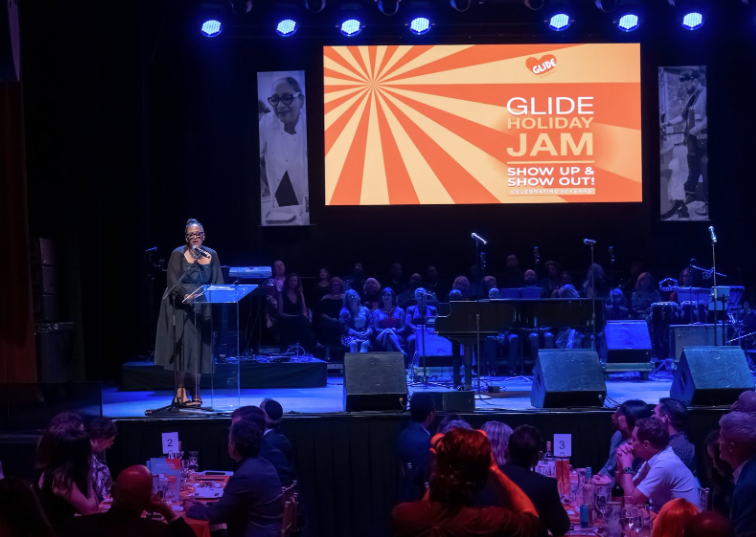
Holiday Jam, covered this year by the San Francisco Chronicle, was a celebration of GLIDE’s unique qualities– not only tenderness, kindness, and love– but soul and culture, funk and fun, jazz and justice.  Dominique Hammon’s edgy beats on the electric violin roused the crowd to merriment as they filtered in, enjoying treats like GLIDE’s famous fried chicken.

The Change Band and the Glide Ensemble, dressed in their most festive and glittering clothing, got the crowd on their feet, singing and swaying.  Then Miles Turk, (son of Glide Ensemble member, Cheryl Serame-Turk and longtime Director of Music at Glide, the late John F. Turk) performed onstage with Follow the Music, melting hearts with a version of The Beatle’s Blackbird.   

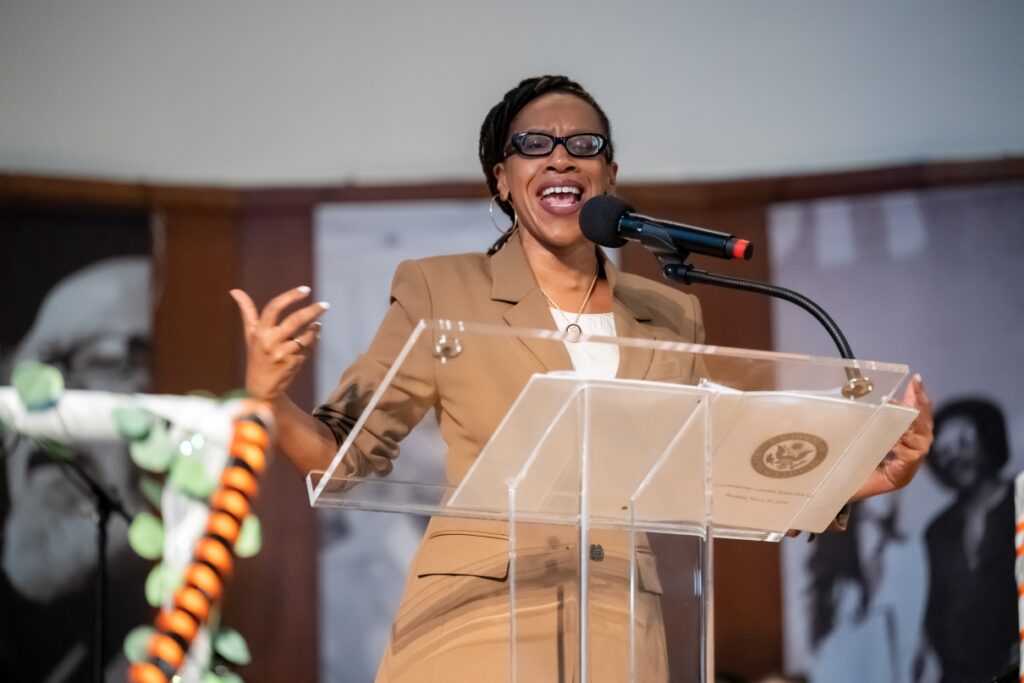
Dr. Gina Fromer, GLIDE President & CEO, roused the crowd with talk of GLIDE’s mission.  “Last year, I made a promise that when injustice got loud, we got louder,” she said, “We have kept that promise.”

gina speaking holiday jam 2025

When she shared how Cecil Williams Community Ambassadors saved lives from overdoses, someone enthusiastically yelled, “Hell yeah!” from the balcony. (GLIDE is the kind of church where “Hell yeah,” is a form of, “Amen.”)

glow red holiday jam 2025

GLIDE is a place where we translate love into action. “A healthy GLIDE is a healthy San Francisco. And a healthy San Francisco can lead a nation that is hurting and ready for renewal,” Dr. Gina said to the audience, “But that depends on you. You are the future of GLIDE. Your actions tonight will write my next year’s speech.”

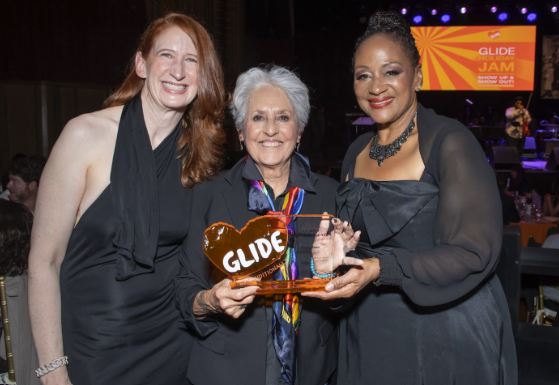
Mary Glide (chairman of GLIDE’s board and great-great-grandaughter of Lizzie Glide, the builder of Glide Memorial Church) presented the inaugural Lizzie Glide Spirit Award to Joan Baez. She praised Joan Baez for a lifetime of justice work– from Vietnam War protests to singing at the No Kings march. “For more than 60 years, Joan has used her remarkable voice to inspire and mobilize people towards justice… Whenever justice is at stake, Joan shows up,” Mary Glide said.

Joan then led the room in a spontaneous performance of the spiritual, “Wade in the Water,” a Glide Memorial Church classic, with an amazing liberatory history.  Joan then offered these words of inspiration to the crowd: “We may not be able to turn back the tide, but we can sure save some fishes,” she said. “And until the tide is able to turn, people will need looking after, and GLIDE will look after them.” 

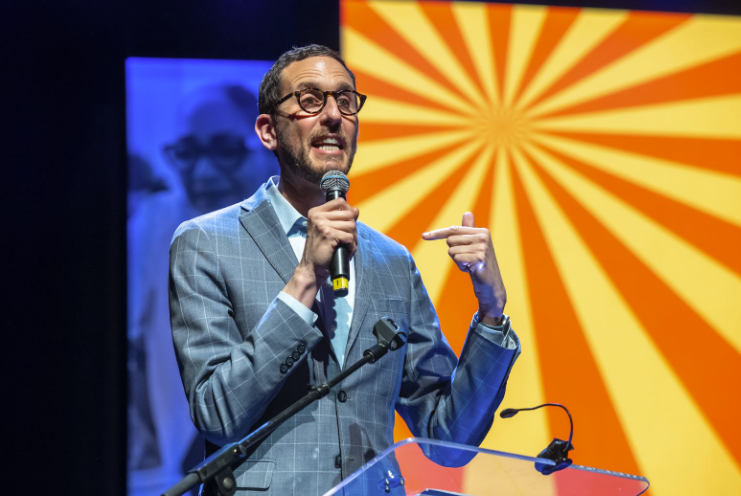
State Senator Scott Weiner addressed the crowd with enthusiastic words of support and solidarity: “With GLIDE’s leadership and San Francisco’s leadership, we’re going to make sure everyone has healthcare and food, because that’s how we roll. Love will conquer hate!” And we played a video of support sent by Speaker Emerita Nancy Pelosi: “In the Tenderloin and beyond, GLIDE is showing up, serving hundreds of extra meals a day, and reminding us that compassion is stronger than any shutdown.”

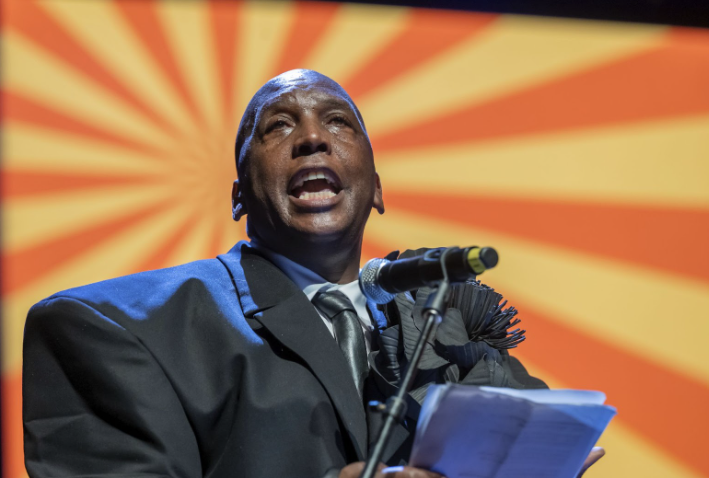
Minister Marvin K. White reminded us of the spiritual questions of our day: “Do we reflect love or do we reflect fear? Do we reflect mercy, or do we reflect empire?  Don’t let them tell you who you are or overwrite who God made you to be…. Let us do together what fear says cannot be done alone!”

marvin holiday jam 2025

Ruby Ibarra followed in the theme of social justice with an electrifying multilingual rap, as she explained to the audience that she sings about reclaiming power. “I see a room full of changemakers who are reclaiming power with me,” she told the audience, before singing the song “Someday,” which is about maintaining hope in the face of anti-immigrant racism.

Riveting video testimony from GLIDE’s Case Manager Angela Coleman followed as she shared her story about finding recovery at GLIDE and fighting against poverty on the front lines (Angela connects people to rental assistance, preventing homelessness). 

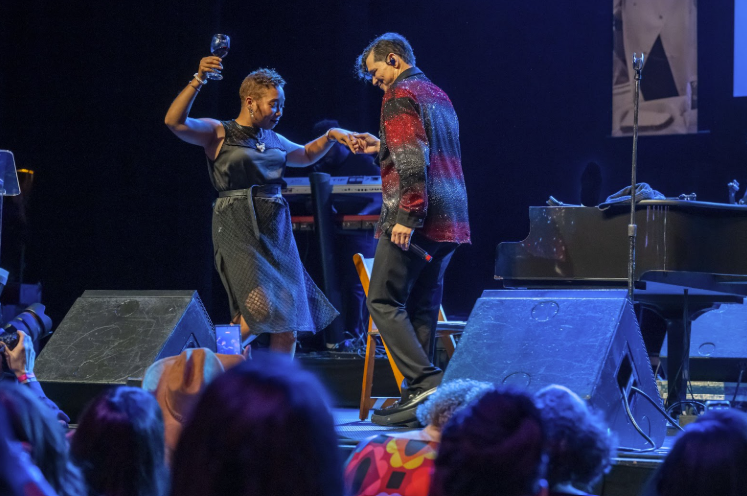
A festive auction brought in many generous donations towards GLIDE’s mission–  and then, the legendary El DeBarge got the audience singing and dancing alongside him. He even brought up a member of the audience to waltz with him on stage. 

debarge dancing holiday jam 2025

All of us at GLIDE are wishing you a joyous and merry holiday season. If you missed this epic concert and would like to support GLIDE’s work it will soon be available for streaming on GLIDE’s website, you can give below.

By Dr. Gina Fromer, President & CEO 

Across the nation, families who fear their SNAP benefits will disappear on November 1st are scrambling to meet the most basic need of all – hunger.  In GLIDE’s zip code alone, 16,663 people will be affected by these changes.  

This potential SNAP shutdown tears at the very fabric of strong, compassionate communities — and we cannot, will not, let it happen. The good news is, thanks to a historic public-private partnership between the City of San Francisco and the Crankstart Foundation, SNAP benefits will eventually be replaced for San Francisco residents for the month of November.   

But we’re still worried about the families  facing empty tables on November 1st while they navigate their access to the city’s stopgap solution.  That’s why we’re preparing to serve 650 additional meals per day if necessary during the month of November.  

This will cost GLIDE an additional $151,325– but it will ensure no one goes hungry while they struggle with navigating the changes, and it gives us flexibility if the shutdown continues into December.   

We know that about half of GLIDE’s current clients rely on SNAP– and new people will be coming to our doors who never needed our services before.  The time to donate to GLIDE and help us navigate this crisis is now – can you support us today? No child should go hungry due to a government shut down!  

Later this month, our Center for Social Justice will be holding a panel where San Francisco’s local leaders will discuss  the food emergency crisis and actions we can take as a community.  We are still selecting a date for the panel, but you can RSVP here to “Say No to SNAP Shutdown and be notified when the date is finalized.  

As always, GLIDE will be providing support, assistance, and services to any who experience financial difficulty. We urge federal workers who have lost their pay due to the government shutdown to come to 330 Ellis St to take advantage of these services.  

We are moving forward because we know our community needs this– but we’re trusting all of you to give us the resources to make it happen. This is an incredibly emotional time for all of us; I can’t tell you much of a difference it makes when you open your hearts to give.  

You see, I’ve been there. When I was a young mother of three boys, I was the one who needed GLIDE’s free groceries. So my heart goes out to all those young parents who will be relying on the generosity of others to feed their kids next week. I know how it feels. My prayer is that NO ONE feels shame for seeking help. No one should feel like a failure when they’ve done nothing wrong. That’s why our Free Meals program treats people with respect and dignity, like customers in a restaurant– they deserve it. 

When you step up– when you help us distribute extra groceries and assistance– you’re making a difference to hardworking, frightened people who deserve to know where their next meal is coming from.  

Some of those people are stocking up on their pantry goods right now, preparing to weather the storm. Others won’t even know what’s happening until they swipe their SNAP card at the grocery store and the cashier looks up at them and says, “There’s a problem.” No matter what, places like GLIDE will take them in.  

The system may be failing our families, but we won’t fail them. Will you stand with us?  

lateefah simon glide 2025 august

In Notes of a Native Son, James Baldwin wrote,“Those who say it can’t be done are usually interrupted by others doing it.”

This fall, GLIDE showed up and showed out to get “It” done. “It” being the call to interrupt systems that hold people down, divide people, and stand in the way of true liberation. We sang, we danced and we marched to the tune of justice as the days grew shorter and the leaves turned colors. 

We heard the call of justice in the bright summer days of August. Congresswoman Lateefah Simon came to Glide Memorial Church and challenged us to find solidarity in the struggle and light in the darkness. She proclaimed, “God meets us during the storm, not after the storm.” 

glide summer gala swimming pool 2025

We took that message beyond the pews of the Church to deliver hundreds of backpacks to young scholars going back to school in the Tenderloin. We used it as a call for justice for hundreds of attendees at our Summer Gala (which was a last hurrah for the Phoenix Hotel and truly a bright moment for GLIDE). 

In the month of September, we turned our attention to Recovery. We celebrated Recovery Day at Boeddeker Park and hosted two panels focused on honoring those we’ve lost to the overdose epidemic and showcasing a radically inclusive approach to addiction and recovery. Recovery is a journey we never take alone—it’s a path we walk together. Whether your path is harm reduction, abstinence, or something in between, the message is clear: There is hope. There is help. And there is no wrong door to recovery. 

October took us to the streets—and across the country. Together with the California Congressional Black Caucus and Smart Justice, we traveled 2,405 miles to Alabama on a truth-telling pilgrimage tracing the legacy from slavery to mass incarceration. Back home, we welcomed Tenderloin Police Captain Matt Sullivan and his team to GLIDE to explore new ways to promote community safety. We closed the season with Phoenix Day, our joyful block party celebrating the love, resilience, and power of the Tenderloin.

Every season at GLIDE is a season of love in action, and a chance to interrupt obstacles that stand in our path to justice. If you missed us during Fall Into Justice, we invite you to join us for GLIDE’s legendary holiday celebrations—where we gather in truth, joy, and unconditional love.

Phoenix Day 2025
full pilgrims alabama 2025
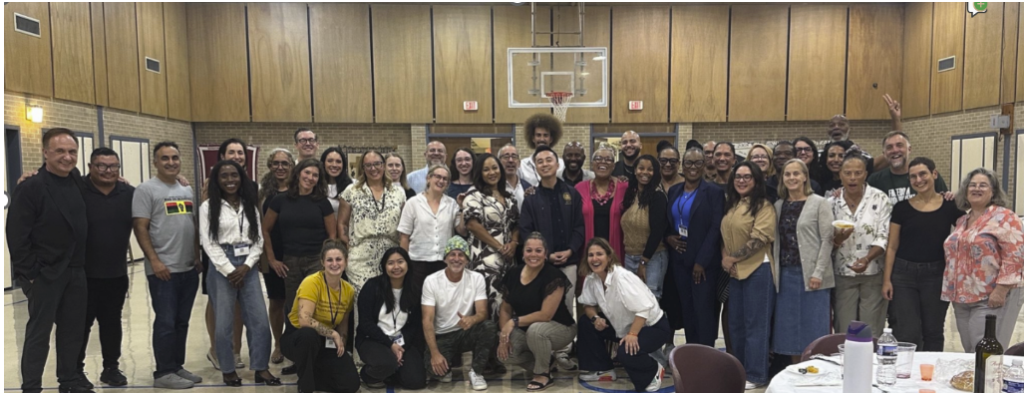
Our full gathering of pilgrims

At GLIDE, we define a pilgrimage as “a journey of personal spiritual discovery that forever changes you.” We experienced that transformation firsthand during our recent Alabama Justice Pilgrimage with members of the California Congressional Black Caucus and Smart Justice—an experience that will reverberate through the halls of power across California. 

On April 26th-30th, 2026, we’re opening up our pilgrimage to the public for the first time ever.  Do you want to experience the same transformational learning journey as these legislators? You can buy tickets for the trip at glide.org/alabama or email alabamapilgrimage@glide.org with questions. 

You can also attend an informative webinar on what to expect from the trip on Thursday, October 23rd; register here.

csj naeemah alabama 2025
Naeemah Charles, leader of GLIDE’s Center for Social Justice, in earnest conversation

Through visits to museums and memorials that confront the unvarnished truth of racial terror in America—and through conversations with today’s civil rights leaders—legislators deepened their understanding of the enduring link between slavery and mass incarceration. Hearing these stories in person inspired a shared resolve to tackle the root causes of systemic racism in ways that policy discussions in the Capital alone could not.

ainka csj alabama 2025
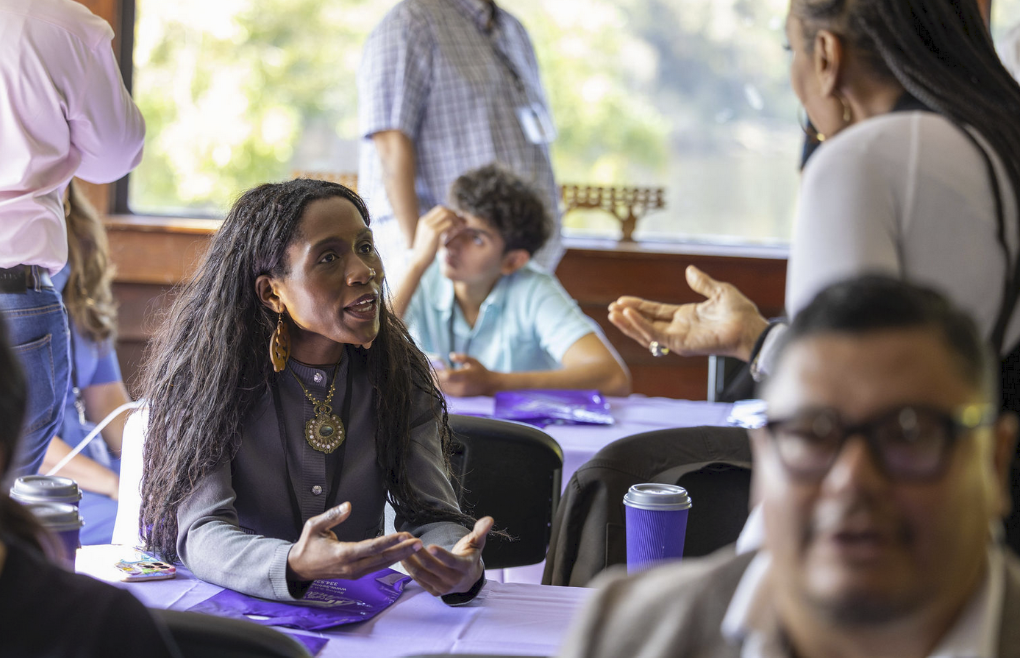
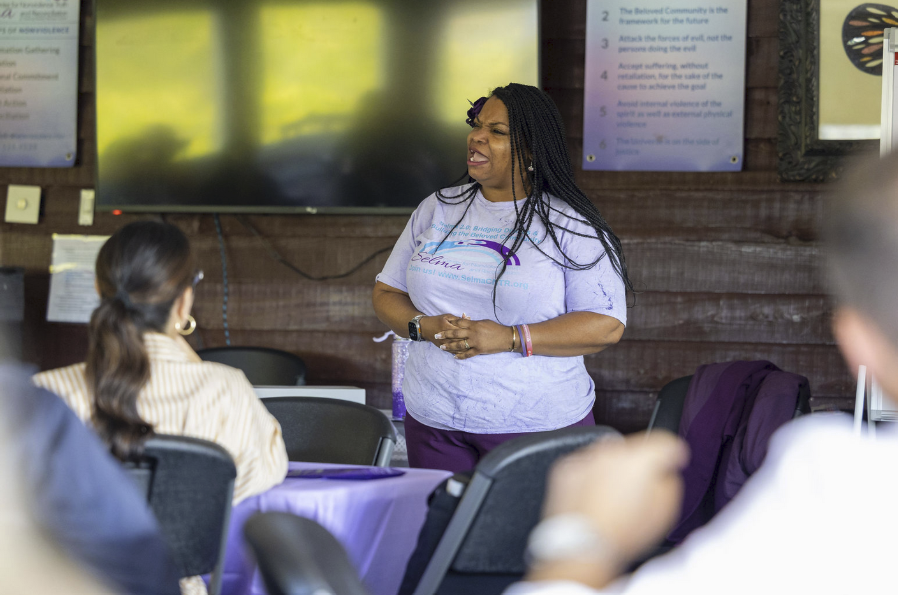
Ainka Jackson, ED of the Selma Center for Nonviolence, Truth and Reconciliation, addresses the pilgrims

From the rural landscapes of Lowndes County to the historic streets of Selma and the heart of the Civil Rights Movement in Montgomery, we encountered both the beauty, pain, resilience, and joy that define this journey. 

rabbi michael alabama 2025 pilgrimage
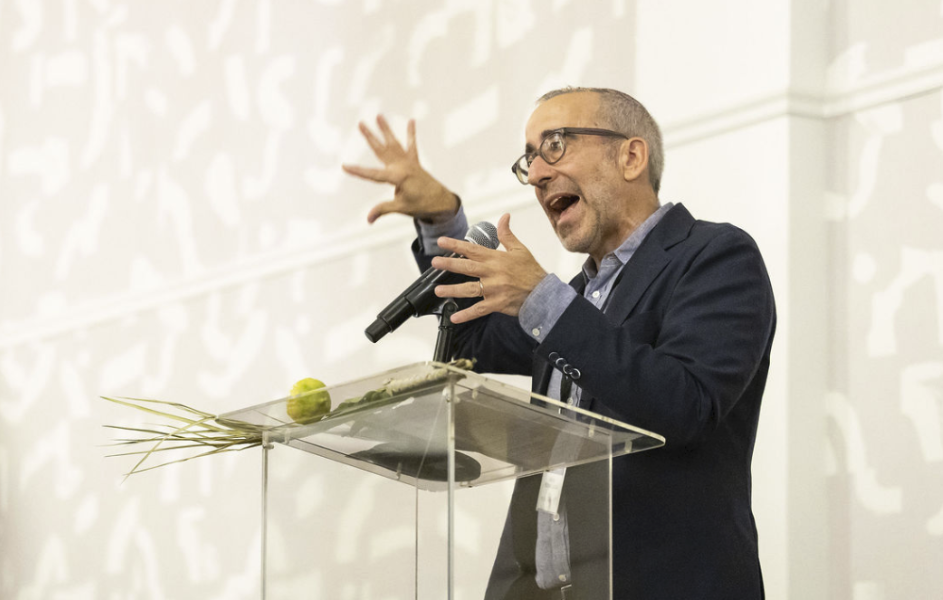
Rabbi Michael Lezak, co-facilitator of the pilgrimage, speaking out with courage and conviction

We invite you to learn more about the movement unfolding today by watching Flushing Justice and HBO’s newly released The Alabama Solution. You can also view photos from our recent pilgrimage here, courtesy of A Kairos Moment.

coffee with cops

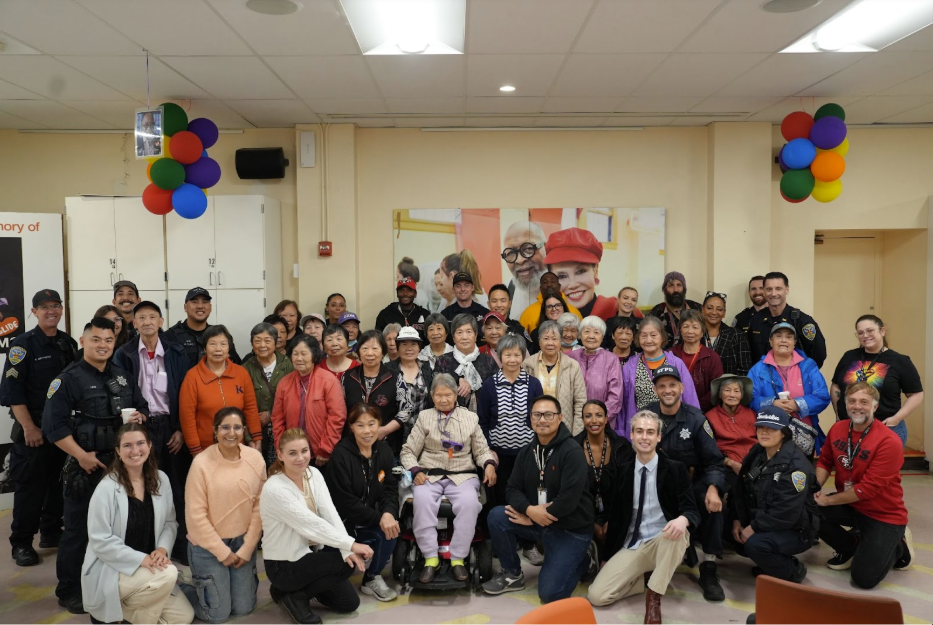
GLIDE’s Coffee with a Cop event wasn’t just about free coffee and pastries – it was about community. Nearly 40 people packed GLIDE’s Freedom Hall for a chance to speak with the new SFPD Tenderloin station captain, Matt Sullivan, and other SFPD officers this past Thursday, October 2.  

“You can say hello, you can voice your concerns,” said GLIDE’s Senior Director of Public Affairs, Francesca-Delgado Jones, kicking off the event. “This is a safe space.”  

The crowd represented a wide range of Tenderloin stakeholders: residents (both housed and unhoused), local workers, community groups, and of course, the police. In addition to new station captain Matt Sullivan, nearly fifteen other SFPD officers from the Tenderloin station showed up to engage with the community. Attendees and police milled about, speaking 1:1 or in small groups.  

Most attendees were motivated by the desire to see the Tenderloin improve. Constituents brought up issues like gun violence, drug use, lives lost, and the need to establish better working relationships between police and community groups on the ground.  

“Everything we do is for the community. But sometimes there are issues we’re not equipped to deal with, and so we have to call in law enforcement,” remarked Paris McBride, the Director of Clean Operations at the Tenderloin Community Benefit District. The Clean Operations Team walks around the Tenderloin picking up trash, cleaning graffiti, and power-washing sidewalks. “I came here today to spread the word about what we’re doing, so that when cops see us in the street in our blue vests, they know who we are.”  

“This was awesome, just to bring the community together. There should be more events like this,” remarked a congregant from Glide Memorial Church, who came to the event to voice his concerns about nighttime safety in the Tenderloin. “We need everyone to be involved. It’s not just going to be the police, because they can’t do everything.”  

Maurice Hull, a longtime San Francisco resident, appreciated the opportunity to voice his concerns to the police. “I grew up in the Tenderloin back in the 80s. This is my home. I’ve seen it change a lot over the years. I’m here to see what direction things might be moving in with this new captain and see if I can play a role.” His main concern is drug use in the neighborhood. “The drugs today are different. In the 80s, we had homeless people and we had crime, but we didn’t have the level of drugs that we have today.”  

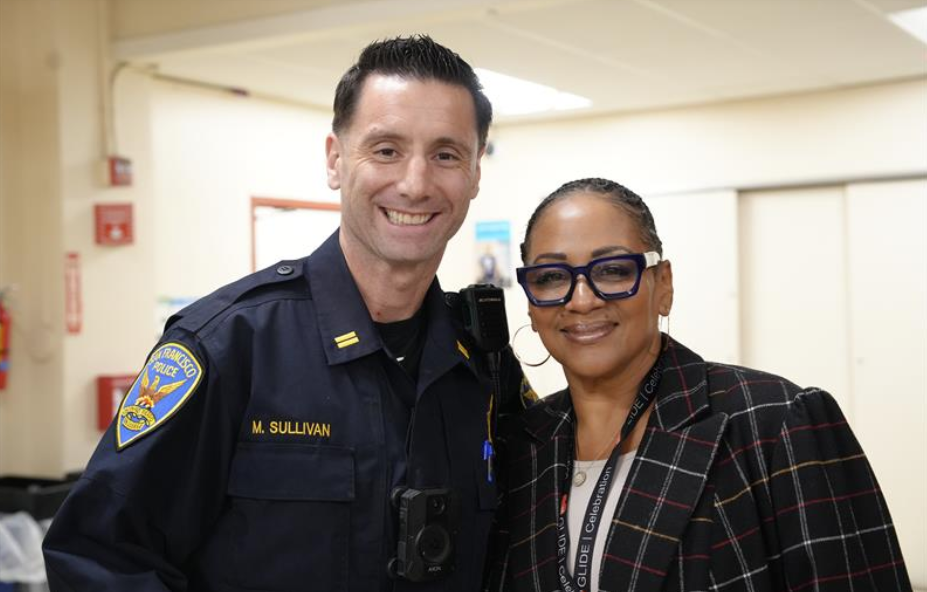
For Captain Matt Sullivan, the event was a chance to help people feel heard. It was also a chance to deepen important relationships between the police and community groups like GLIDE that are working to protect and uplift residents of the Tenderloin. “We can’t do this alone,” Sullivan remarked. “We need to work together as a community.” 

SFPD Captain Matt Sullivan and Dr. Gina Fromer, President and CEO of GLIDE

While police and community priorities can sometimes diverge, there was one core theme that united all groups present: better safety in the Tenderloin.  

“I’ve been talking to people here in the Tenderloin, and they don’t feel safe. People need to be able to take the bus or go to local businesses,” Sullivan said. 

Police and community organizations like GLIDE all have a role to play in prioritizing safety for Tenderloin residents.  

We know that community safety means different things to different people. For example, GLIDE is a frequent critic of encampment sweeps, because the safety of homeless people is always in our thoughts first and foremost. To balance the safety needs of varying people, open and friendly dialogue is so helpful.  

At GLIDE, community safety includes keeping people fed, providing health empowerment and access, and making sure families have access to free childcare and after school services. Cleaning up the streets doesn’t mean sweeping people aside – it means inviting people in. Something as simple as having coffee together can make our neighborhood safer, because it opens the door to mutual understanding. 

A special thanks to Captain Matt Sullivan and the SFPD for this opportunity to create further neighborhood engagement. We’re looking forward to continuing these meaningful conversations.  

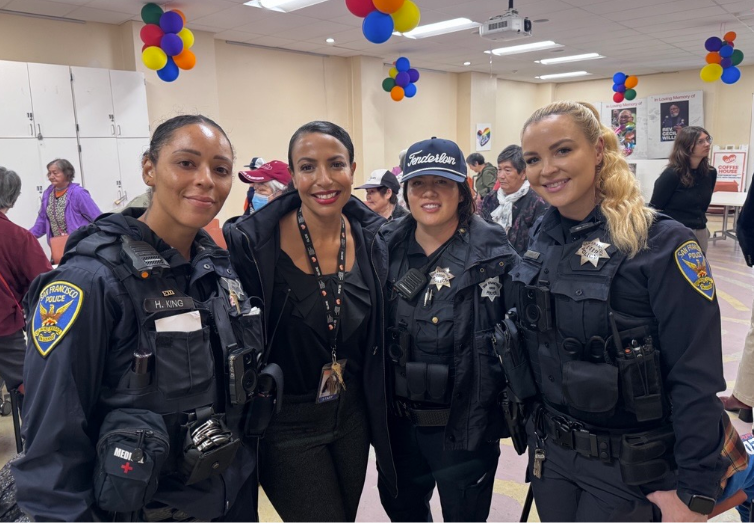
From left to right: Officer Hilary King, GLIDE Senior Director of Public Affairs Francesca Delgado-Jones, Officer Raylene Larot, & Officer Jennifer Gamble